How to Play Learning Games: A Parent's Guide to Educational Gaming
Kids learn best when they're having fun — that's not a parenting myth, it's backed by decades of research. Learning games tap into natural curiosity and turn skills like counting, reading, and problem-solving into something children actually want to practice. But with hundreds of options out there, knowing how to play learning games effectively (and how to choose the right ones) makes a real difference in what your child actually gets out of screen time.
This guide walks you through everything: how educational games work, what to look for by age, how to manage time wisely, and where to find the best learning games online free — no downloads, no subscriptions, no fuss.
How Educational Games Support Learning
Play is how children make sense of the world. Before kids can absorb abstract concepts like "the number 7" or "the letter B," they need to encounter them in context — touching, sorting, matching, responding. Educational games create that context digitally.
Well-designed learning games work because they follow core principles of effective instruction:
Immediate feedback. When a child picks the wrong answer, the game responds instantly. No waiting for a teacher to grade a worksheet. The child tries again, often without frustration, because it feels like part of the game rather than a test.
Progressive difficulty. Good educational games don't dump everything on the player at once. They start simple — recognizing a number, matching a color — then slowly add complexity as the child succeeds. This mirrors how teachers structure lessons, but the pace adapts to each individual child.
Repetition without boredom. Repetition is essential for building fluency. A child needs to encounter the number 4 dozens of times before it sticks. Educational games make repetition feel like replay, not rote work.
Intrinsic motivation. Stars, badges, level completions — these small rewards keep children engaged long enough for real learning to happen. The reward isn't the point; it's the hook that makes the child want to try again.
Take Learning Numbers 0 to 10 as an example: it bundles four distinct mini-games around the same core concept — number recognition — so a child practices the same skill in different ways without realizing they're doing structured repetition. That's smart design.
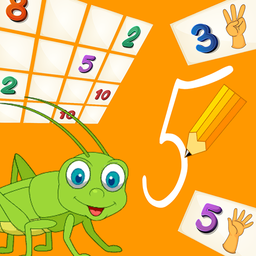
Learning Numbers 0 to 10
Staring at the screen during a dull afternoon break often leaves you craving something productive yet fun. Learning Numbers 0 to 10 arrives as the per...
▶ Play FreeThe subject range of effective learning games is also wider than most parents expect. Yes, math and reading get the most attention. But there are great games covering spatial reasoning, logical thinking, vocabulary, visual pattern recognition, memory, and even emotional intelligence. The key is matching the game to what your child needs at a given developmental stage.
Choosing the Right Learning Game by Age
Not every learning game works for every age. A game built for a 7-year-old will frustrate a 4-year-old and bore a 10-year-old. Here's a practical breakdown:
Ages 3–5: Preschool Foundations
At this age, children are building the absolute basics: numbers 1–10, letter recognition, colors, shapes, and simple cause-and-effect thinking. They need games that are visually bright, require minimal reading, and give very immediate feedback. Touch-friendly interfaces work best, and sessions should stay short — 10 to 15 minutes maximum before attention naturally drifts.
Look for games that use characters children already love or find appealing. Bright animations and silly sounds aren't just entertainment — they signal safety and engagement to a young child's nervous system.
Learning for Kids - Learn Numbers & Colors is a strong pick for this age group. It uses colorful interactive adventures to introduce numbers and colors in a way that genuinely feels like play rather than instruction.
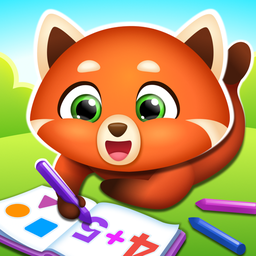
Learning for Kids - Learn Numbers & Colors
Learning for Kids - Learn Numbers & Colors turns screen time into a productive session where toddlers master counting and animal sounds with ease. You...
▶ Play FreeLanguage exposure at this age is also incredibly valuable. Daddy and Panda Learning Languages with Songs uses music and interactive cartoon elements — both of which are proven accelerators for language acquisition in early childhood. Even 10 minutes of playful language exposure daily adds up significantly over months.
Ages 6–8: Building Core Skills
Children in early primary school are ready for more structured challenges. They can handle progressive level systems, read simple instructions, and sustain focus for 20–30 minute sessions. This is the sweet spot for math games with multiple levels, reading and writing games, and early logic puzzles.
Learning to Count! offers 16 progressive levels that build from basic counting through simple arithmetic. That kind of structured progression mirrors classroom pacing but lets a child move at their own speed — faster on good days, revisiting earlier levels when something doesn't click.
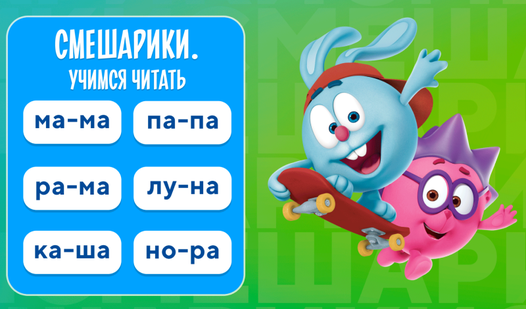
For literacy, Smeshariki. Learning to Read stands out because it was developed in collaboration with teachers and psychologists — not just game designers. It covers alphabet recognition, phonics, reading, and early writing in a cohesive system. That pedagogical grounding shows in how the content is sequenced.

Smeshariki. Learning to read
Mastering the alphabet is often seen as a tedious chore, but turning it into a vibrant adventure changes everything for a curious toddler. Smeshariki....
▶ Play FreeAges 9–12: Critical Thinking and Strategy
Older children are ready for games that require sustained thinking, planning ahead, and working with abstract rules. Classic puzzle formats — crosswords, number puzzles, logic grids — work well here because they provide real cognitive challenge without requiring advanced reading or complex motor skills.
Sudoku is a perfect example: purely logical, no language barrier, infinitely replayable, and genuinely demanding at higher difficulty levels. Mathematical Crossword blends vocabulary and arithmetic in a format that's familiar but uses both sides of the brain simultaneously.
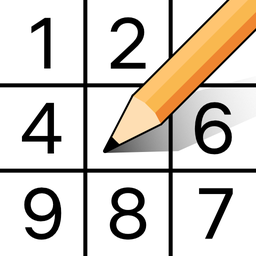
Sudoku
Logic puzzles have a unique way of sharpening the mind while providing a satisfying sense of accomplishment when every box finally clicks into place. ...
▶ Play Free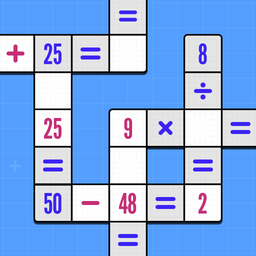
Mathematical crossword
Drag numbers and operators into empty grid slots to solve equations and complete the logic grid. Mathematical crossword challenges you to balance rows...
▶ Play FreeBalancing Screen Time and Educational Value
One of the most common questions parents ask about how to play learning games effectively is: "How much is too much?" It's the right question, but the framing matters. Screen time isn't inherently good or bad — it's about what's happening on the screen and how it fits into the rest of the day.
Here are practical principles that actually work:
Set time before starting, not after. Telling a child "you can play until I say stop" creates conflict. Agreeing on 20 minutes before the session starts means the expectation is clear from the beginning. A visual timer children can see works better than a clock they can't read.
Stay present at the start. You don't need to sit next to your child for the entire session, but spending the first few minutes together lets you see what the game is actually teaching. Ask questions: "What did you just do there? Why did that answer work?" This verbal processing helps consolidate what they're learning.
Use natural stopping points. Many educational games are designed with level completions, mini-game breaks, or natural pause points. Teaching children to stop at those points — rather than mid-activity — makes transitions easier and less emotionally charged.
Alternate game types. Don't let every session be the same kind of game. Mix number games with word games, fast-paced reaction games with slow puzzle games. This variety exercises different cognitive muscles and prevents the narrowing effect of doing only one type of task.
Connect games to real life. After a counting game, count something real — stairs, apples, cars on the street. This bridging between digital and physical anchors the learning and shows children that what they practiced actually means something outside the screen.
Brain Training is a useful addition to a rotation because it combines multiple cognitive skills — memory, attention, processing speed — rather than drilling a single subject. It's a good complement to subject-specific games.

Brain Training
Keeping your mind sharp is just as important as hitting the gym for your physical health. Brain Training keeps you on your toes with a huge library of...
▶ Play FreeBest Free Learning Games for Different Subjects
One of the biggest advantages of learning games online free is the sheer variety available without cost barriers. Here's a practical breakdown by subject area:
Math and Numbers
Math is where educational gaming genuinely shines. The feedback loop — right answer, progress; wrong answer, try again — maps perfectly onto how arithmetic practice works. Games can provide the kind of drill-and-feedback loop that worksheet practice offers, but with far better engagement.
Beyond dedicated math games, puzzle formats like Mathematical Crossword build numerical thinking through a different angle — spatial arrangement and constraint-solving rather than direct calculation.
Words Crosswords extends the same structured-puzzle logic into vocabulary and spelling. Children who struggle with worksheets often engage far better with the same content in puzzle format because the goal feels like solving, not testing.
Words Crosswords
Language is a vast landscape of hidden patterns that reveals itself the moment you start connecting random characters into meaningful sequences. Words...
▶ Play FreeScience and Exploration
Games that simulate real-world systems — ecosystems, physics, construction — build scientific intuition even without explicit instruction. Children learn through observation and experimentation, which is exactly what scientific thinking requires.
Merge Animals: Evolution gives children an intuitive feel for biological diversity and evolutionary progression. It's not a biology textbook, but it consistently exposes children to animal names, habitats, and the concept of progression from simple to complex.

Merge Animals: Evolution!
Stuck in a boring meeting or just waiting for your coffee to brew and craving a mental distraction? Merge Animals: Evolution! is the perfect remedy to...
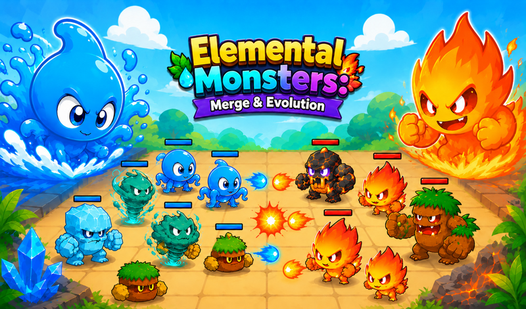
▶ Play FreeElemental Monsters: Merge & Evolution operates on similar principles with a more fantastical frame — useful for children who need the hook of imagination before they'll engage with systematic thinking.

Elemental Monsters: Merge & Evolution
Mastering the power of nature requires more than just raw strength when you are commanding a legion of mythical beasts. Elemental Monsters: Merge & Ev...
▶ Play FreeCreative and Spatial Skills
Not all learning is academic. Spatial reasoning, creative thinking, and planning skills are equally important — and often undertrained through traditional schooling.
Construction Truck 2: Building Games for Kids develops spatial reasoning and early engineering thinking through construction scenarios. Children solve physical problems — what goes where, how pieces fit — which directly supports later mathematical and scientific thinking.

Construction Truck 2: Building Games for Kids
Heavy machinery captures the imagination of young builders who dream of moving mountains and constructing massive structures. Construction Truck 2: Bu...
▶ Play FreeToca World Online is broader — a creative sandbox where children construct narratives, manage characters, and make decisions. This kind of open-ended play builds executive function, creative problem-solving, and social understanding in ways that structured games can't.

Toca World Online
Design your dream lifestyle by pulling characters, furniture, and unique items across vibrant scenes in Toca World Online. You spend your time constru...
▶ Play FreeRacing for Kids - Learning Game about Cars combines the high engagement of racing games with learning content about vehicles and transportation — a smart combination for children who are passionate about cars but resistant to traditional educational formats.

Racing for Kids - Learning Game about Cars
Young drivers take the wheel in Racing for Kids - Learning Game about Cars to experience high-speed fun across vibrant, obstacle-filled tracks. Player...
▶ Play FreeLogic and Pattern Recognition
Classic Puzzles covers the foundational logic skills that underpin all other academic learning: pattern recognition, spatial reasoning, sequential thinking. These skills transfer across subjects — a child who gets good at puzzles gets better at math, reading comprehension, and science simultaneously.

Classic Puzzles
Fans of logic challenges and relaxing pastimes will find Classic Puzzles to be the perfect digital escape for their spare time. This browser based puz...
▶ Play FreeLearning Games Unblocked: Playing Anywhere
A common concern for parents and teachers is access. Many schools and networks restrict gaming sites, which means children can't use recommended games in school computer labs or on school networks. Learning games unblocked — games accessible without restrictions — solve this problem for classroom or library settings.
FreeJoy.games hosts all the games listed in this article without restrictions and without requiring downloads or account creation. They run directly in any browser, which makes them genuinely accessible whether your child is at home, at school, or at a grandparent's house with an older computer.