How to Play Tower Defense Simulator — Complete Strategy Guide for Beginners
If you've ever wondered how to play tower defense simulator games and found yourself overwhelmed by wave after wave of enemies before you could even figure out what you were doing — you're in the right place. Tower defense is one of the most satisfying genres in gaming once it clicks, but that first hour can feel brutal if nobody explains the fundamentals.
This guide covers everything: the core mechanics, where to place towers, when to upgrade, how to survive boss waves, and which free TD games are worth your time right now.
Tower Defense Basics — How TD Games Work
At its core, every tower defense game works the same way: enemies travel along a path (or multiple paths), and your job is to stop them from reaching the end. You do this by spending in-game currency to place defensive towers alongside that path. Enemies that reach the goal cost you lives or points, and when you run out, you lose.
Simple concept. Brutal execution.
Here's what most beginners miss: currency management is the real game. You start with limited cash, enemies come in waves, and every second you hesitate is a second your towers aren't earning kills. Spend too fast and you place weak towers in bad spots. Save too long and the first wave breaks through.
Most TD games have three currency loops running simultaneously:
- Starting gold — what you get before wave 1
- Kill income — cash per enemy killed, often scaled to enemy health
- Interest/passive income — some games reward you for banking gold between waves
Understanding which loop your current game prioritizes changes everything. Games that reward passive income punish you for spending aggressively early. Kill-income games reward you for clearing waves fast with efficient towers.
Enemy types you'll encounter:
- Standard units — basic cannon fodder, move at normal speed
- Fast units — low health but zip past slow-firing towers
- Armored/boss units — tanky, require high single-target damage
- Swarm units — huge numbers, need area-of-effect (AoE) towers
- Flying units — often ignore ground-based obstacles, require specific tower types
Every TD game introduces these in variations, but you'll recognize the archetypes once you've seen them a few times.
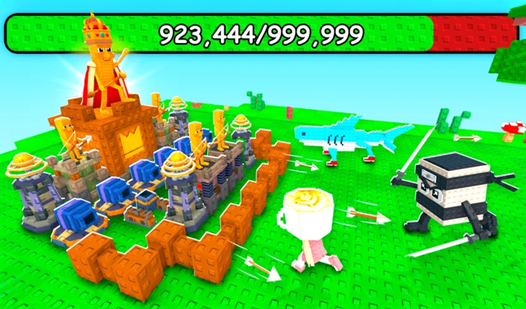
Obby: Brainrot Tower Defense
Fans of strategic challenges will find endless excitement in Obby: Brainrot Tower Defense as they defend their base against relentless waves. This int...
▶ Play FreeTower Placement Strategy — How to Play Tower Defense Simulator the Smart Way
Placement is where tower defense separates casual players from strategic ones. A perfectly upgraded tower in a bad position is useless. A basic tower in a choke point destroys everything.
The golden rule: maximize coverage time.
The longer an enemy spends in range of your towers, the more damage it takes. This means:
Corners and bends are gold. Enemies slowing to navigate a turn spend more time in your kill zone. Place your strongest single-target towers on the outside of curves — they'll track enemies longer.
Overlapping fields of fire. Don't spread towers evenly across the whole map. Cluster them so that every tower's range overlaps with at least one other. A tight kill zone with 4 towers beats 8 towers spread thin.
AoE towers at choke points. If the path narrows anywhere, that's your splash damage tower's home. A single AoE tower at a bottleneck can handle swarm waves that would shred a line of single-target towers.
Range towers at entry points. Long-range snipers placed where enemies first appear start dealing damage before anything else can. That extra 10-15% damage per enemy adds up massively over 30+ waves.
Early wave strategy: Place your first 2-3 towers before wave 1 begins. Cover the first bend in the path and the longest straight stretch. Don't try to cover the whole map — you can't afford it, and you don't need to yet.
Mid-game adjustment: After wave 5-8, you should have enough data to know where enemies are getting through. Fill those gaps rather than spreading to new areas. Reactive placement almost always beats trying to plan the whole board upfront.
Late-game positioning: By the final third of a campaign, you're optimizing. Sell towers in weak positions and reinvest in proven spots. That mid-range tower you placed in round 3 because you were desperate? By round 25, it probably deserves to be replaced with something better suited to your actual strategy.
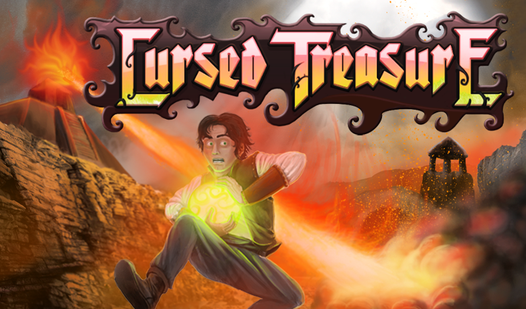
Cursed Treasure
Strategy enthusiasts who enjoy playing the villain will find Cursed Treasure incredibly addictive as they safeguard their hoard from meddlesome heroes...
▶ Play FreeUpgrade Paths — When to Upgrade vs Build New Towers
This is the question that trips up players at every skill level. You've got 500 gold. Do you upgrade your existing turret to level 3, or build two new basic towers?
The answer depends on three factors: what's coming next, what you already have, and which upgrade actually matters.
The case for upgrading:
Upgrades in most TD games follow a power curve — level 3 isn't just 50% better than level 2, it's often 3x better. Many towers unlock entirely new mechanics at higher tiers: splash damage, slow effects, or multi-target firing. If you're one upgrade away from that breakpoint, prioritize it over spreading thin.
Also, a single maxed tower takes up one space. Two basic towers take up two. Map space is finite, and late-game you'll want those spaces for specialized towers.
The case for building new:
Coverage gaps kill runs. If there's a stretch of path with zero tower coverage, one fast enemy gets through cleanly. Two basic towers covering different segments beats one upgraded tower covering only half the path.
Early waves also favor quantity over quality. Enemies in rounds 1-5 have low health — overkill with an upgraded tower wastes DPS. Basic towers that "just barely" kill enemies are actually optimal in the early game.
A practical framework:
- Rounds 1-10: Build wide, upgrade sparingly (only when at a tier breakpoint)
- Rounds 10-20: Start focusing upgrades on your 2-3 best-positioned towers
- Rounds 20+: Sell weak towers, max out key positions, fill specific coverage gaps
Support towers change the math. If you have a tower that slows enemies, upgrading your damage dealers becomes dramatically more efficient. Always factor in synergies — a slow tower + high DPS tower combo outperforms two high DPS towers placed separately.

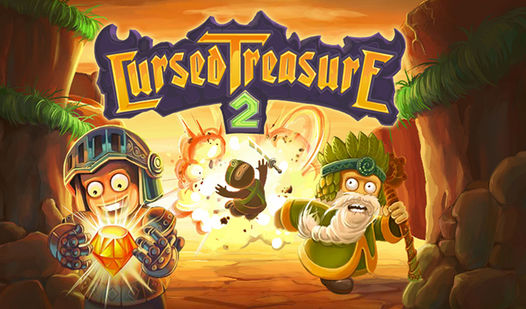
Cursed Treasure 2
Being the villain is far more rewarding when you have a hoard of shimmering gems to protect from meddling heroes. Cursed Treasure 2 flips the script o...
▶ Play FreeWave Management — Preparing for Boss Waves
Learning to read incoming waves is what separates players who brute-force their way through easy difficulties from players who comfortably clear hard modes.
How to play tower defense simulator waves effectively:
Most games show you the upcoming wave composition before it starts. Never skip this screen. A wave of 50 fast enemies needs completely different preparation than 5 armored bosses. Knowing what's coming gives you the precious 10-30 seconds between waves to adjust.
Between-wave checklist:
- Check what's in the next wave (enemy type, count, speed)
- Spend leftover gold — sitting on unspent currency means wasted damage potential
- Sell and reposition one tower if you noticed a coverage gap last wave
- Prioritize AoE upgrades if a swarm wave is incoming; single-target if it's armored
Boss wave preparation:
Boss waves are telegraphed in most games — either a visual indicator or they appear on a set interval (usually every 5 or 10 waves). Three or four waves before a boss wave, start banking gold specifically for emergency towers.
Boss enemies typically have:
- Massive health pools (single-target high-DPS towers are your priority)
- Special abilities (speed bursts, shields, regeneration)
- High reward on kill — don't let them escape
For boss waves specifically: slow them first, burn them second. If your game has a tower that applies any kind of movement debuff, this is where it earns its keep. A boss moving at 50% speed takes twice as many hits on its way through your kill zone.
The "panic build" mistake:
When a boss wave hits and you're not ready, the instinct is to spam-build cheap towers everywhere. Resist this. Cheap towers placed randomly rarely save a run — they just drain gold you needed for a real fix. If you're going to panic-build, place that tower exactly where the boss is most likely to spend the most time in range.
Endgame wave scaling:
In most TD games, waves don't stop — enemies just keep getting stronger. At a certain point, you're playing tower management more than tower placement. Sell towers that can no longer meaningfully damage current enemies. Reinvest in whatever scales hardest in your build. Know your win condition: are you racing to survive wave X, or trying to push the highest wave possible?

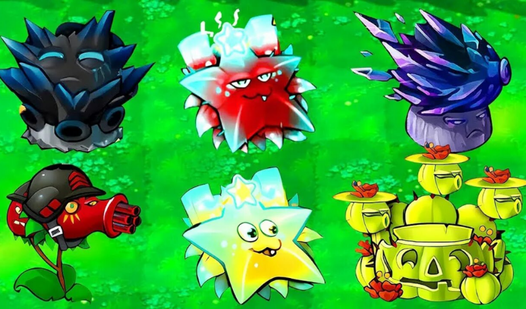
Plants vs Zombies: Unlocked All Plants
Staring at a blank screen during your lunch break is a recipe for frustration when you really need a quick mental escape. Plants vs Zombies: Unlocked ...
▶ Play FreeBest Free Tower Defense Games to Play Right Now
Knowing theory is great. Actually playing is better. Here are the best free TD games available online — each one teaches different skills.
Obby: Brainrot Tower Defense takes the classic wave-defense format and wraps it in a chaotic, high-energy style. You place and upgrade towers to handle increasingly absurd waves of enemies. Great for learning the basic placement loop without a heavy tutorial.
Obby: Brainrot Tower Defense
Fans of strategic challenges will find endless excitement in Obby: Brainrot Tower Defense as they defend their base against relentless waves. This int...
▶ Play FreeCursed Treasure is one of the cleanest examples of TD design anywhere. You're defending gems from waves of heroes (the enemies here are actually the "good guys" in the lore), which means the enemy types are varied and interesting. The upgrade tree is deep enough to reward replays. Perfect for learning how upgrade timing affects difficulty.
Cursed Treasure
Strategy enthusiasts who enjoy playing the villain will find Cursed Treasure incredibly addictive as they safeguard their hoard from meddlesome heroes...
▶ Play FreeCursed Treasure 2 picks up where the original left off and adds more tower types, more complex maps, and harder enemy waves. Once you've finished the first game, this is the natural next step. The gem protection mechanic adds stakes that basic "lives" systems don't — you can afford to let some enemies through, but the penalty accumulates.
Cursed Treasure 2
Being the villain is far more rewarding when you have a hoard of shimmering gems to protect from meddling heroes. Cursed Treasure 2 flips the script o...
▶ Play FreePlants vs Zombies: Unlocked All Plants is the iconic TD experience that introduced millions of players to the genre. Starting with all plants available from the beginning changes the game significantly — instead of gradually learning the roster, you're dropped into strategic decision-making immediately. The variety of plant abilities is a masterclass in how different tower types should counter different enemy types.
Plants vs Zombies: Unlocked All Plants
Staring at a blank screen during your lunch break is a recipe for frustration when you really need a quick mental escape. Plants vs Zombies: Unlocked ...
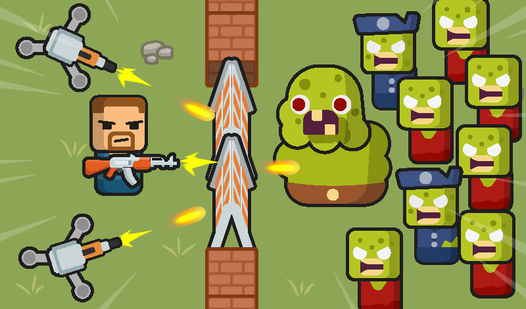
▶ Play FreeZombie Horde: Build & Survive combines tower defense with base building, giving you more variables to manage. You're not just placing towers — you're constructing structures, setting traps, and managing a survival setup against zombie hordes. This one rewards players who've already mastered basic TD mechanics and want more complexity.
Zombie Horde: Build & Survive
Staring at the clock while waiting for your next meeting or class to end is a drag, but Zombie Horde: Build & Survive turns that boredom into an adren...
▶ Play FreeMore games worth trying:
AOD - Art Of Defense brings an artistic, polished approach to the formula with multi-lane defense and a satisfying progression system.

AOD - Art Of Defense
Deploy strategic defenses to intercept waves of relentless enemies in AOD - Art Of Defense as you fight to secure the future of humanity. You command ...
▶ Play FreeStack Defence adds a vertical stacking mechanic that changes how you think about tower positioning entirely — height matters as much as horizontal placement.
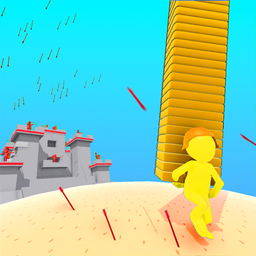
Stack Defence
Staring at the clock during a long afternoon usually means it is time for a quick mental reset. Stack Defence is the perfect antidote to boredom, offe...
▶ Play FreeTrap Craft 2 leans hard into the trap-building side of the genre, rewarding creative combo setups where traps chain into each other.
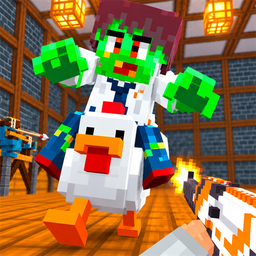
Trap Craft 2
Craft intricate defensive grids and unleash firepower to survive endless waves of relentless monsters in Trap Craft 2. This high-octane experience ble...
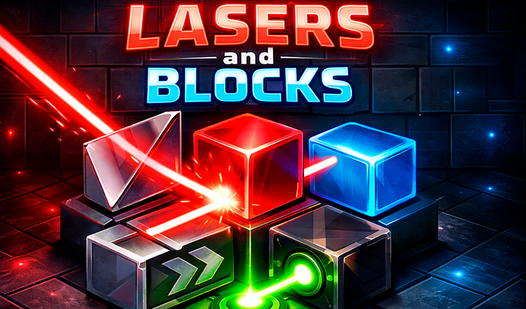
▶ Play FreeLasers and Blocks introduces beam-based tower mechanics — angles and reflection matter, which adds a puzzle element to standard TD gameplay.
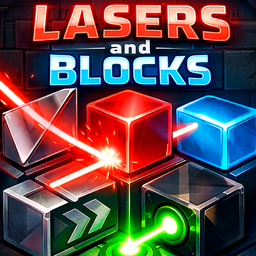
Lasers and blocks
Mastering the physics of light is the ultimate challenge for any armchair strategist looking to test their brain. Lasers and blocks turns simple geome...
▶ Play FreeHEXSTORM: Tears of Arcadia uses a hex-grid map system, which completely changes placement calculus. Each tower covers a different footprint, and flanking paths require entirely new strategic thinking.
How to Play Tower Defense Simulator in Roblox — Key Differences
If you're specifically looking at how to play tower defense simulator in Roblox, the core strategy translates directly — but there are platform-specific quirks worth knowing.
Roblox TD games (and there are hundreds of them) typically feature:
Multiplayer co-op lanes: Instead of solo defense, you're splitting a map with 1-4 other players. Communication matters — if two players both cover the same lane and nobody covers the third, you'll lose fast. In the absence of voice chat, place your first tower visibly in an uncovered area to signal your intent.
Tower purchasing lobbies: Many Roblox TD games have a pre-game lobby where you select your tower loadout. Treat this like team composition in any multiplayer game. If your squad is heavy on AoE, add a single-target sniper. If everyone is running snipers, offer to run support/slow towers.
Progression gating: Roblox TD games love locking strong towers behind gameplay progression, level gates, or in-game currency earned across multiple sessions. Early on, you may not have access to meta towers. This makes fundamental strategy (placement, timing, upgrades) even more important — you can't just outspend the difficulty.
Event waves and hidden mechanics: Roblox TD games frequently add hidden objectives, event-specific enemies, and secret tower unlock conditions. Check the game's community wiki before trying hard modes — community knowledge is often the difference between struggling for hours and breezing through.
The good news: everything in this guide applies directly. Good placement beats bad placement regardless of platform. Wave management is wave management whether you're playing solo or with four strangers.