Best Learning Games Online Free — TOP 20 Educational Browser Games
Learning doesn't have to feel like work. The best learning games combine genuine educational value with the kind of fun that keeps players coming back for more — and the good news is that you can find hundreds of them for free, right in your browser. Whether you're a parent looking for something meaningful to put in front of your kids, a teacher hunting for classroom tools, or just someone who enjoys sharpening their mind during a lunch break, learning games online free are one of the most underrated resources on the internet.
This guide covers the TOP 20 best learning games available right now, plus a broader grid of titles worth bookmarking, a breakdown by subject and age group, and a look at the science behind why games are so effective at making knowledge stick.
TOP 20 Best Free Online Learning Games
These ten titles were chosen for their educational quality, replay value, and accessibility — no downloads, no accounts required, just open the browser and play.
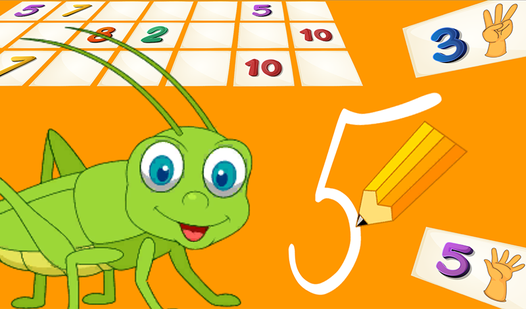
1. Learning Numbers 0 to 10
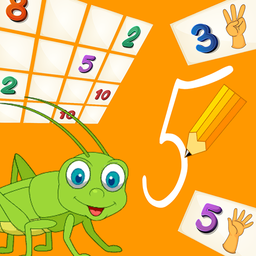
Perfect as a first math experience for young children, this game breaks number recognition into four distinct mini-games. Each activity approaches the concept from a slightly different angle — matching, tracing, identifying — so kids aren't just memorizing but actually building a mental model of what each number means. The visuals are colorful and cheerful without being overwhelming, and the pace adjusts naturally to keep little learners engaged rather than frustrated.
Learning Numbers 0 to 10
Staring at the screen during a dull afternoon break often leaves you craving something productive yet fun. Learning Numbers 0 to 10 arrives as the per...
▶ Play Free2. Learning to Count!
Once a child has the basics down, this game takes them further with 16 progressive levels that move from simple counting to basic arithmetic. The progression feels earned — each new level introduces just enough challenge to stretch abilities without causing the kind of friction that makes kids want to quit. Teachers consistently praise games structured this way because the scaffolding mirrors good classroom pedagogy: build confidence early, add complexity gradually.
3. Racing for Kids — Learning Game about Cars
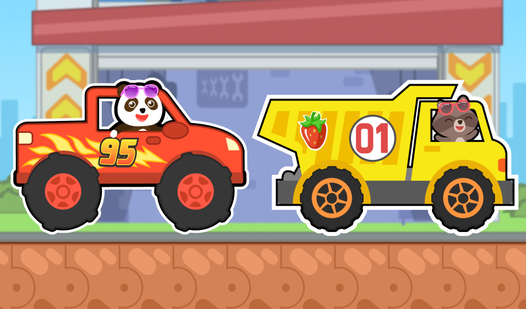
Not every child responds to traditional flashcard-style learning, and this game understands that. Wrapping vehicle education inside a racing format means kids are motivated by the game loop itself — the thrill of speed and characters — while quietly absorbing information about different types of cars and obstacles. It's a smart design choice that works particularly well for kinesthetic learners who need movement and action to stay focused.

Racing for Kids - Learning Game about Cars
Young drivers take the wheel in Racing for Kids - Learning Game about Cars to experience high-speed fun across vibrant, obstacle-filled tracks. Player...
▶ Play Free4. Daddy and Panda Learning Languages with Songs
Language acquisition in early childhood is deeply tied to music. Children learn nursery rhymes before they learn grammar rules, and this game leans into that completely. Songs and animated cartoons carry the vocabulary and phrases, making them stick in the way that pure repetition never quite manages. Designed specifically for preschool children, this is a gentle, warm introduction to multilingual learning that feels more like storytime than school.
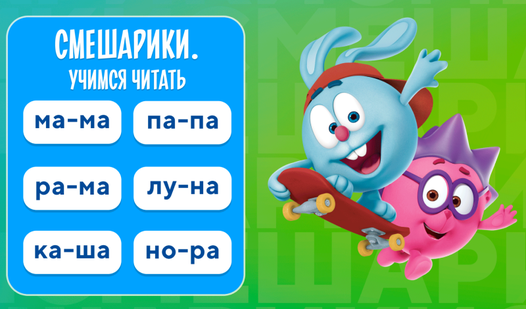
5. Smeshariki: Learning to Read
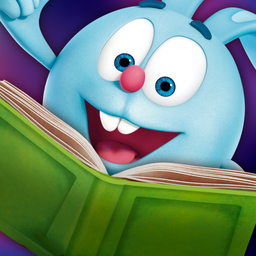
Developed in collaboration with teachers and psychologists, this reading game has the kind of curriculum credibility that most browser games lack. The alphabet lessons and writing exercises are sequenced according to how children actually develop literacy skills, not just what seems logical to an adult. The familiar Smeshariki characters give children a comfortable, trustworthy environment — an important psychological factor when learning something as foundational as reading.
Smeshariki. Learning to read
Mastering the alphabet is often seen as a tedious chore, but turning it into a vibrant adventure changes everything for a curious toddler. Smeshariki....
▶ Play Free6. Learning for Kids — Learn Numbers & Colors
Numbers and colors are often taught together in early childhood programs because they reinforce each other — color-coded groupings make quantity easier to visualize, and counting colored objects gives abstract numbers a concrete anchor. This game uses that same dual-track approach, wrapping both concepts in joyful little adventures that keep preschool children clicking and discovering. The art style is deliberately bright and simple, keeping the focus on the concepts rather than the visual noise.
Learning for Kids - Learn Numbers & Colors
Learning for Kids - Learn Numbers & Colors turns screen time into a productive session where toddlers master counting and animal sounds with ease. You...
▶ Play Free7. Sudoku Master
Sudoku is one of the cleanest logic training tools ever invented. Every puzzle requires exactly the same core skill set — systematic elimination, pattern recognition, and hypothesis testing — and Sudoku Master offers hundreds of hand-crafted puzzles across multiple difficulty tiers. Unlike apps that generate puzzles algorithmically (and occasionally produce unsatisfying near-misses), these puzzles have been checked for quality. For anyone who wants to build analytical thinking habits, this is a daily practice worth adopting.
Sudoku Master
Fill every row, column, and 3x3 square with numbers one through nine to conquer the grid in this brain-teasing classic. Mastering Sudoku Master requir...
▶ Play Free8. Brain Training
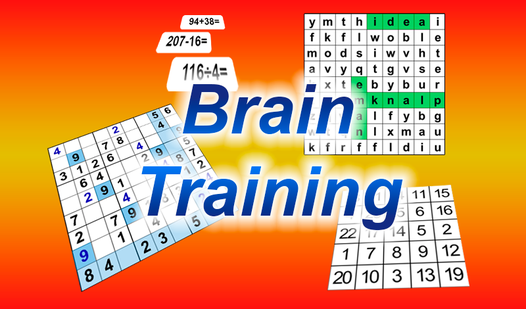
Rather than focusing on one skill, Brain Training works across the full cognitive spectrum: memory, logic, attention, and processing speed. The exercises rotate so that different mental faculties get worked in each session, which reflects how modern neuroscience actually recommends approaching cognitive fitness. It's accessible enough for older children but genuinely challenging for adults — a rare quality in browser-based brain training tools that often skew too easy to feel meaningful.

Brain Training
Keeping your mind sharp is just as important as hitting the gym for your physical health. Brain Training keeps you on your toes with a huge library of...
▶ Play Free9. Words from Words
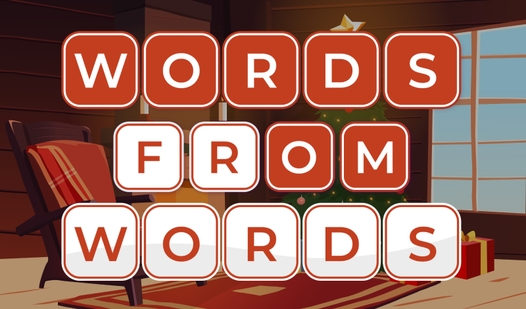
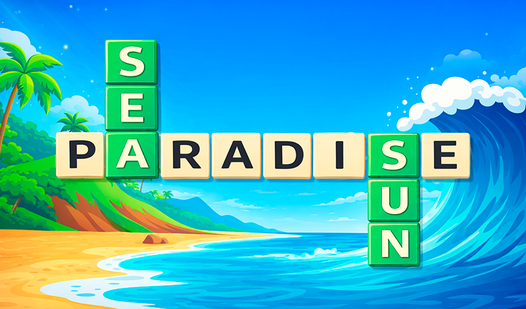
Give players a long word and challenge them to build as many smaller words as possible from its letters. Simple concept, deep gameplay. Words from Words trains vocabulary, spelling intuition, and lateral thinking simultaneously — players naturally start to see letter combinations as building blocks rather than fixed units, which has measurable benefits for reading fluency. The competitive element (chasing your own best score) adds replay value that keeps word enthusiasts coming back long after they've found the obvious answers.
Words from Words
Language is a vast playground where even a single long noun hides dozens of shorter secrets waiting to be unlocked. Words from Words challenges your v...
▶ Play Free10. Mathematical Crossword
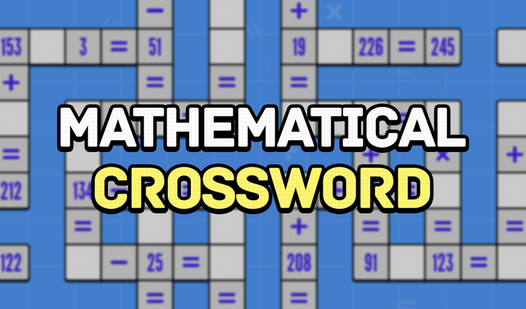
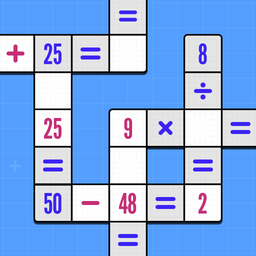
Crossword puzzles train language skills. Mathematical crosswords train arithmetic — and they do it in a format that feels familiar and satisfying rather than like a worksheet. The randomly generated puzzles mean no two sessions are identical, and the adjustable difficulty makes this suitable for a wide age range. Students who struggle with traditional math exercises often respond differently to the puzzle format, because the goal shifts from "get the right answer" to "solve the puzzle" — a small psychological reframe with a big impact on engagement.
Mathematical crossword
Drag numbers and operators into empty grid slots to solve equations and complete the logic grid. Mathematical crossword challenges you to balance rows...
▶ Play FreeLearning Games by Subject — Math, Science, Language
The best learning games online free tend to cluster around a few core subject areas. Here's how the landscape breaks down:
Math and Logic
Math games are the most common category, and for good reason — arithmetic, pattern recognition, and logical deduction translate naturally into game mechanics. Counting games, sudoku, crosswords, and arithmetic puzzles all live comfortably in this space. The key quality marker to look for is whether the game teaches mathematical thinking or just arithmetic speed. Drill-style games have their place, but games that require reasoning — like sudoku or mathematical crosswords — build skills that transfer beyond the game itself.
Brain Training falls into the broader cognitive skills category, covering memory and attention alongside pure logic.
Language and Literacy
Reading, vocabulary, and language learning games are the second major cluster. Word-building games like Words from Words develop vocabulary organically, while structured reading programs like the Smeshariki game provide curriculum-aligned literacy instruction. Language learning through music (Daddy and Panda) targets a different age group and a different mechanism — immersive listening rather than structured reading.
For older players, word games that involve anagramming, crosswords, and definitions are highly effective vocabulary builders that double as genuinely entertaining pastimes.
Puzzle and Spatial Reasoning
Games involving jigsaws, pattern matching, and spatial arrangements develop a type of intelligence that math and language games don't directly target. Jigsaw puzzles build visual-spatial reasoning. Mahjong develops pattern recognition and working memory. Japanese crosswords (nonograms) combine deductive logic with grid visualization.
These games matter because spatial reasoning is strongly linked to performance in STEM fields, yet it's rarely explicitly taught in traditional school curricula.
More games to explore in this grid:
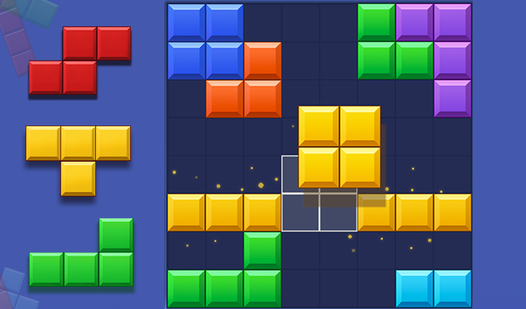
Blocks and that's it
Feeling that midday slump or need a quick mental refresh? Blocks and that's it is your perfect escape, offering a delightful challenge that sharpens y...
▶ Play Free
Jigsaw Puzzle Birds
Connecting scattered fragments into a cohesive image is a timeless pastime that keeps the mind sharp and focused. Jigsaw Puzzle Birds transforms this ...
▶ Play Free
Sudoku
Logic puzzles have a unique way of sharpening the mind while providing a satisfying sense of accomplishment when every box finally clicks into place. ...
▶ Play Free
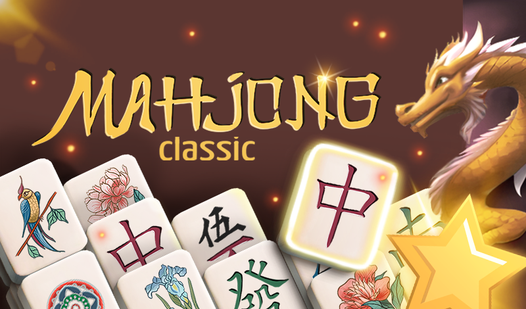
Mahjong Classic
Ancient board games have survived for centuries because they perfectly balance relaxation with intense mental stimulation. Mahjong Classic honors this...
▶ Play Free
Words Crosswords
Language is a vast landscape of hidden patterns that reveals itself the moment you start connecting random characters into meaningful sequences. Words...
▶ Play Free
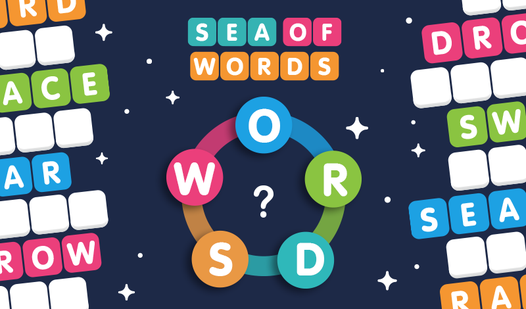
Sea of Words
Fans of stimulating brain teasers will find Sea of Words to be the ultimate companion for daily mental sharpening. This engaging word game puts your l...
▶ Play Free
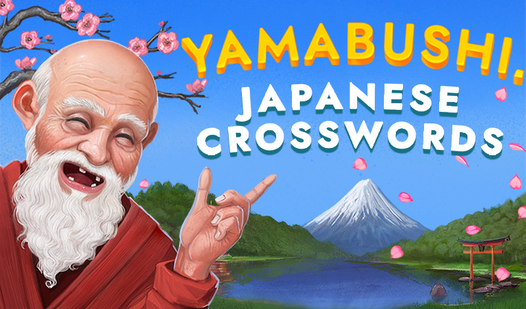
Yamabusi. Japanese Crosswords
Logic puzzle enthusiasts will find endless satisfaction in Yamabusi. Japanese Crosswords as they unravel hidden images through careful deduction. This...
▶ Play Free
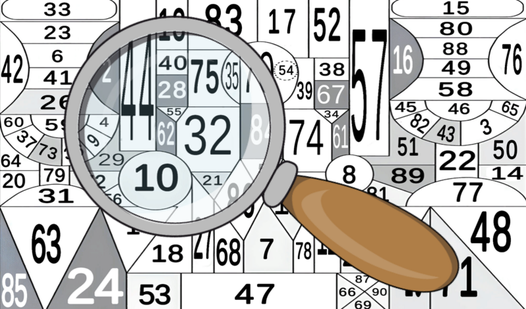
The Digital Puzzle: Find all the numbers!
Fans of logic challenges will find The Digital Puzzle: Find all the numbers! the ultimate test for their keen eyesight and mental focus. This engaging...
▶ Play Free
Merge Animals: Evolution!
Stuck in a boring meeting or just waiting for your coffee to brew and craving a mental distraction? Merge Animals: Evolution! is the perfect remedy to...
▶ Play Free
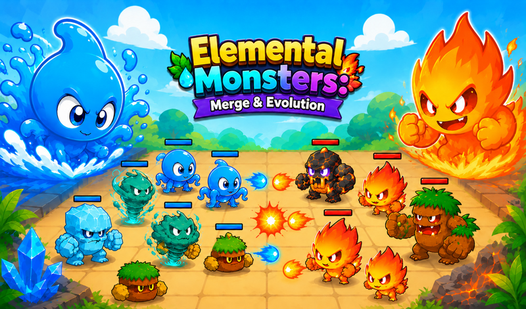
Elemental Monsters: Merge & Evolution
Mastering the power of nature requires more than just raw strength when you are commanding a legion of mythical beasts. Elemental Monsters: Merge & Ev...
▶ Play FreeAge-Appropriate Educational Games
One of the most common mistakes parents and teachers make when selecting educational games is matching them by topic instead of by developmental stage. A counting game that's perfect for a four-year-old can be boring and condescending for an eight-year-old — and a logic puzzle that's satisfying for an adult will frustrate a child who hasn't developed the necessary abstract reasoning yet.
Ages 3–6: Foundations
At this stage, games should focus on basic concepts — numbers, colors, letters, shapes — delivered in short sessions with immediate positive feedback. Attention spans are short, and the primary goal is positive association with learning rather than mastery of content.
Best picks for this age group:
- Learning Numbers 0 to 10 — gentle, colorful, perfect for first encounters with numeracy
- Learning for Kids — Learn Numbers & Colors — dual-concept learning that mirrors preschool curriculum
- Daddy and Panda Learning Languages with Songs — music-based language exposure with zero reading required
The Racing for Kids game also works well here — the character and vehicle theme tends to resonate with children who are drawn to movement and action rather than quiet tabletop activities.
Ages 6–10: Building Skills
Children in this range are ready for more structured challenge. Games should have clear progression, increasing difficulty, and genuine complexity. Mistakes should be recoverable and informative rather than penalizing.
Best picks:
- Learning to Count! — the 16-level structure is perfect for tracking progress
- Smeshariki: Learning to Read — curriculum-aligned for early elementary literacy
- Mathematical Crossword — introduces arithmetic in a puzzle format that rewards persistence
- Words from Words — vocabulary building through word exploration
Ages 10 and Up: Cognitive Fitness
Older children and adults benefit most from games that target cognitive skills broadly — not just subject knowledge but thinking quality. Pattern recognition, working memory, logical deduction, and processing speed all benefit from regular, varied practice.
Best picks:
- Sudoku Master — structured logic training with long-term depth
- Brain Training — multi-domain cognitive exercise
- Words from Words — vocabulary and lateral thinking
- Mathematical Crossword — arithmetic fluency through problem-solving
The puzzle games in the grid — mahjong, nonograms, jigsaw puzzles — also serve this age group well as daily brain maintenance rather than structured learning.
How Games Improve Learning and Retention
The research on game-based learning has become genuinely robust over the past two decades. Here's what the evidence actually shows:
The Engagement Problem
Traditional instruction often fails not because the content is wrong but because engagement is low. When learners aren't paying attention, information doesn't encode effectively. Games solve this at the source — the game loop creates intrinsic motivation to pay attention, because attention is directly rewarded through progress.
This is why a child who "can't sit still for math homework" can spend 45 minutes on a math-based puzzle game without complaint. The content is similar; the engagement mechanism is completely different.
Immediate Feedback Loops
Good educational games provide feedback within seconds of each action. This is pedagogically significant — the science of learning shows that the closer in time a correction follows an error, the more effectively it updates the learner's mental model. Waiting until the end of a test to discover which concepts were misunderstood is far less effective than getting immediate, specific correction in the moment.
Games are structurally built around feedback loops. Every click, move, or answer produces an immediate result. This compression of the feedback cycle is one of the primary reasons game-based practice produces faster skill acquisition than many traditional methods.
Reduced Anxiety Around Failure
Test anxiety and performance pressure are genuine barriers to learning for many students. Games reframe failure as a normal part of the experience — you try, you fail, you try again. There's no permanent record, no grade, no social embarrassment. This psychological safety allows learners to take risks, explore, and make errors without the emotional cost that accompanies classroom failure.
Over time, players who regularly experience this cycle in games often develop healthier relationships with failure in academic and professional contexts as well.
Spaced Repetition Through Replay
Many educational games naturally produce spaced repetition — the practice of revisiting material at increasing intervals — through their replay mechanics. Players who return to a game day after day encounter the same underlying concepts repeatedly, in varied contexts, which is exactly the review pattern that produces the most durable long-term retention.
This happens without anyone designing a formal study schedule. The player comes back because the game is enjoyable. The educational benefit accrues as a side effect.
Flow State and Deep Focus
The psychologist Mihaly Csikszentmihalyi described "flow" as a state of complete absorption in a task — time seems to pass unnoticed, effort feels effortless, and performance reaches its peak. Games are specifically engineered to produce this state by calibrating challenge to match the player's current skill level.
When a player is in flow while playing a learning game, they're not just engaged — they're operating at maximum cognitive efficiency. The material they encounter during these sessions encodes more deeply and is retrieved more reliably than material encountered in distracted, low-engagement states.
Transfer of Skills
Perhaps the most important question about educational games is whether what's learned in the game transfers to real-world contexts. The evidence here is more nuanced than the enthusiasts suggest, but the pattern is clear: games that teach transferable thinking skills — logic, pattern recognition, vocabulary — produce real-world benefits, while games that teach only game-specific procedures don't.
This is why games like Sudoku Master, Brain Training, and Words from Words are worth your time. They don't just teach you to play sudoku or build word chains — they build underlying cognitive capacities that apply everywhere.