How to Play Gravity Games Online — Physics-Based Gaming Guide
Gravity pulls everything down — and in browser games, that simple force becomes the engine of some of the most creative, chaotic, and satisfying gameplay you can find online. Whether you're launching projectiles in precise arcs, watching ragdoll bodies tumble down slopes, or merging falling fruit into massive explosions, knowing how to play gravity games well makes every session more fun. This guide breaks down the core mechanics, shares tips that actually work, and points you toward the best free gravity games you can play right now without downloading a thing.
What Are Gravity Games?
Gravity games are any browser-based games where physics — specifically the simulation of gravitational force — is a central gameplay mechanic rather than a background detail. In a standard platformer, gravity just means you fall when you walk off a ledge. In a proper gravity game, gravity is the puzzle, the weapon, or the toy.
The category is broader than most people realize. It covers:
- Physics shooters — where you aim projectiles accounting for gravitational drop over distance
- Merge and drop games — where objects fall into a play area and combine based on gravity-driven collisions
- Ragdoll sandboxes — where character bodies respond realistically to forces, weight, and impacts
- Destruction simulators — where you control or modify gravity itself to watch structures crumble in satisfying ways
- Downhill racers — where terrain shape and gravitational momentum determine your speed and trajectory
What unites all of these is the requirement to read and predict how objects will behave when force is applied. You're not just pressing buttons — you're thinking like a physicist (a casual one, but still).
The appeal is simple: real physics feels real. When a tower collapses exactly the way you expected, or when your perfectly calculated shot arcs into a target, there's a satisfaction that scripted animations never quite match.
Gravity Shooter
Master the art of telekinesis as you fling heavy crates and chaotic enemies across dynamic battlefields in Gravity Shooter. This intense 3d experience...
▶ Play FreeUnderstanding Physics Mechanics in Browser Games
Before you start mastering specific games, it helps to understand the core physics concepts that show up again and again across the genre. You don't need a textbook — just a working intuition for how these forces interact.
Gravitational Acceleration
In most gravity games, objects accelerate as they fall rather than moving at a constant speed. This means a ball dropped from high up hits harder than one dropped from close range. In destruction games, this matters a lot — the height of a drop directly affects the damage or chain reaction at the bottom.
Trajectory and Arc
Any object launched at an angle follows a curved path, not a straight one. The launch angle and initial speed determine exactly how far it travels and where it lands. In shooting games, you're constantly solving this equation in real time: aim a bit higher than your target if the distance is large, because gravity will pull the projectile down during flight.
Mass and Momentum
Heavier objects are harder to move but carry more force when they do move. In ragdoll games, a large object falling on a character will send them flying further than a small one. In merge games, larger merged objects create bigger impacts when they collide.
Friction and Bounce
Not everything stops immediately on impact. Depending on the surface material in the simulation, objects may slide, bounce, or tumble. Learning which surfaces cause which reactions is key to controlling outcomes in sandbox games.
Adjustable Gravity
Some games let you modify gravity directly — reducing it for floaty, weightless effects or cranking it up for ultra-heavy, fast-falling action. When you can change the rules, you're essentially designing your own physics experiments.
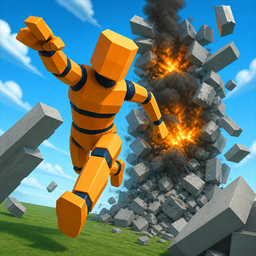
Destroyer Mobile - Destruction Simulator
Fans of chaotic physics simulations will find endless satisfaction in Destroyer Mobile - Destruction Simulator. This sandbox experience puts the power...
▶ Play FreeUnderstanding these five concepts gives you a mental toolkit for approaching any new gravity game. Instead of just clicking randomly and hoping for the best, you'll start making predictions and testing them — which is exactly the mindset that leads to high scores and creative solutions.
Collision Detection and Stacking
One more mechanic worth understanding: most physics games use collision detection to determine when objects touch and what happens next. In merge games, objects that touch with matching values combine. In ragdoll games, collision detection determines which body part hits which surface and at what velocity. Sloppy stacking in a merge game can block future merges; precise targeting in a shooter can trigger multi-hit combos.
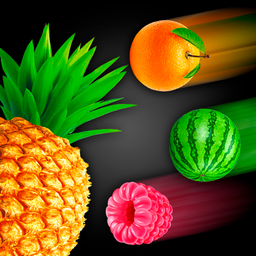
Merge Gravity Fruits
Fans of colorful puzzle challenges will have a blast mastering the physics-based chaos of Merge Gravity Fruits. This title turns your standard matchin...
▶ Play FreeTips for Mastering Gravity-Based Puzzles
Now for the practical stuff. These tips apply across the genre — from puzzle games to sandboxes to shooters.
1. Watch Before You Act
In any new gravity game, spend the first few attempts just observing. How fast do objects fall? How much do they bounce? What happens when two things collide at full speed? This observation phase saves you from making the same mistake ten times and helps you build an accurate mental model of the specific game's physics engine.
2. Work Backward from the Goal
If you need an object to land in a specific spot, start from that endpoint and work backward. Where does it need to be launched from? At what angle? How fast? This reverse-engineering approach is especially useful in trajectory-based shooters and puzzle games where placement matters.
3. Use High Ground
In games where you control where things fall from, height is your biggest asset. More height means more speed on impact, more chain reactions in merge games, and more dramatic physics interactions in sandboxes. When you have the option to launch or drop from higher up, take it.
4. Create Chain Reactions
The best gravity game players don't think about individual objects — they think about sequences. A single well-placed shot in a physics shooter can knock one enemy into another, which knocks into a wall, which triggers a structure collapse. In merge games, a single well-timed drop can cascade into three or four merges in a row. Always look for the chain reaction play.
5. Don't Fight the Physics
The most common beginner mistake is trying to force outcomes that the physics simulation won't allow. If an object is going to bounce left, use that bounce rather than fighting it. If a ragdoll body is going to tumble down a slope, lean into the momentum rather than trying to stop it. Gravity games reward players who work with the physics, not against it.
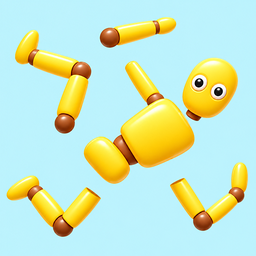
People Playground! Ragdoll Arena!
Stuck in a boring meeting or just need to blow off some steam after a long day? People Playground! Ragdoll Arena! is the ultimate digital stress relie...
▶ Play Free6. Experiment Freely in Sandbox Modes
Sandbox gravity games are uniquely forgiving because there's no lose state. Use them to run experiments you'd be afraid to attempt in a scored game. What happens if you remove a support beam from the bottom of a structure? What does low gravity do to a group of ragdolls? The sandbox is your physics lab — use it.
7. Learn the "Sweet Spot" Angle
In most physics shooters and trajectory games, there's a launch angle that maximizes range (usually around 45 degrees in standard gravity). But higher angles give you more hang time and steeper impact angles, which can be better for hitting targets behind obstacles. Knowing when to use a flat trajectory versus a steep lob is often the difference between hitting and missing.
8. Pay Attention to Stacking Order
In merge and stacking games, where you place things matters as much as what you place. A poorly stacked tower will topple and block future merges or placements. Always think one or two moves ahead about how the current placement will affect the next one.
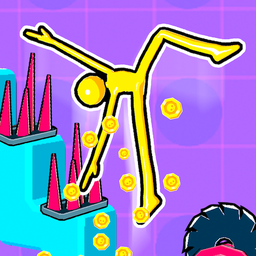
No Pain No Gain - Ragdoll Sandbox
Create chaotic obstacle courses where every tumble earns you a massive payout in No Pain No Gain - Ragdoll Sandbox. You act as the architect of destru...
▶ Play FreeBest Free Gravity Games to Play Online
Time to get to the actual games. All of these are free, browser-based, and playable right now on FreeJoy.games — no installation or account required.
Gravity Shooter
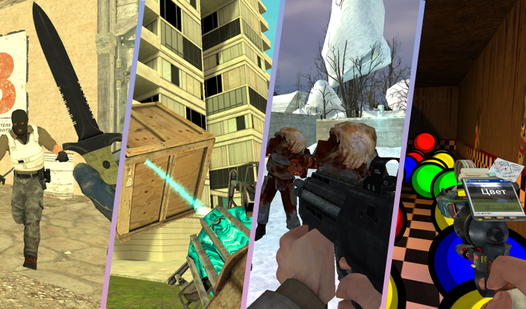
This is the most direct demonstration of gravity mechanics in gaming. You're firing projectiles at physics-enabled enemies and objects, and every shot requires you to account for distance, trajectory drop, and the weight of whatever you're trying to hit. The satisfaction of a perfectly calculated long-range shot that clears multiple targets is hard to beat.
Gravity Shooter
Master the art of telekinesis as you fling heavy crates and chaotic enemies across dynamic battlefields in Gravity Shooter. This intense 3d experience...
▶ Play FreeGravity Mod
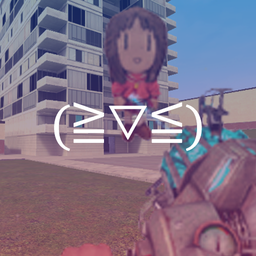
A more experimental take on the concept — Gravity Mod lets you play with the rules of gravity itself rather than just working within them. It's a great game for understanding what "normal" gravity actually does by seeing what happens when you change it.
Gravity Mod
Staring at a blank screen while your brain turns to mush is the ultimate afternoon frustration. Gravity Mod is the perfect digital playground to break...
▶ Play FreeMerge Gravity Fruits
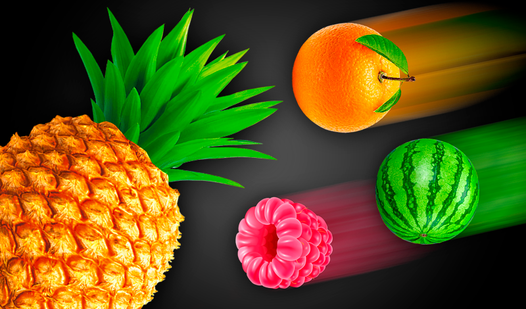
Fruits fall into a container and merge when matching pieces collide — the gameplay loop is simple, but the physics make every drop unpredictable. A perfectly placed watermelon can trigger a cascade of merges that clears half the board; a badly placed cherry can block everything. It's meditative and chaotic at the same time.
Merge Gravity Fruits
Fans of colorful puzzle challenges will have a blast mastering the physics-based chaos of Merge Gravity Fruits. This title turns your standard matchin...
▶ Play FreeMerge Watermelon
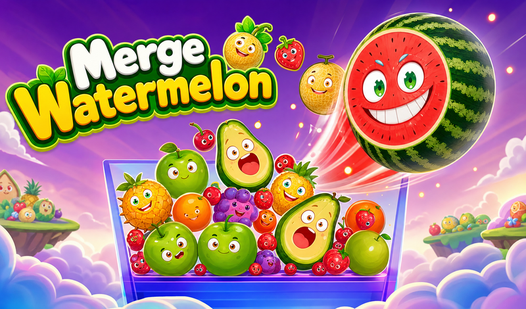
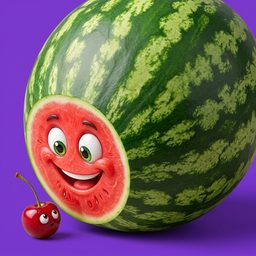
The classic Suika-style merge game — drop fruit, watch physics happen, create a watermelon. The gravitational behavior of each fruit as it bounces off existing pieces is what makes this genuinely skill-based rather than just luck-based. Reading the bounce before you drop is the core skill.
Merge Watermelon
Drop vibrant fruits into the container and watch them merge into larger varieties as you test your spatial reasoning. Every time two identical pieces ...
▶ Play FreeMerge: Magic Glass Orbs 2048
A merge game with a different shape language — glass orbs rather than fruit — but the same satisfying physics at the core. The 2048 scoring mechanic adds a layer of strategy on top of the physics gameplay.

Merge: Magic Glass Orbs 2048
Fans of 2048 will find a refreshing twist in Merge: Magic Glass Orbs 2048 as they drop glowing artifacts into a physics-based board. You control the t...
▶ Play Free10 Blocks
A physics stacking game where you're placing blocks and relying on gravity to keep them balanced. Every placement affects the stability of the whole structure. Simple to understand, surprisingly hard to master at high block counts.

10 Blocks
Strategic placement is the only way to master the grid when every move feels like a high-stakes chess match. 10 Blocks reinvents the classic 10x10 puz...
▶ Play FreePeople Playground! Ragdoll Arena!
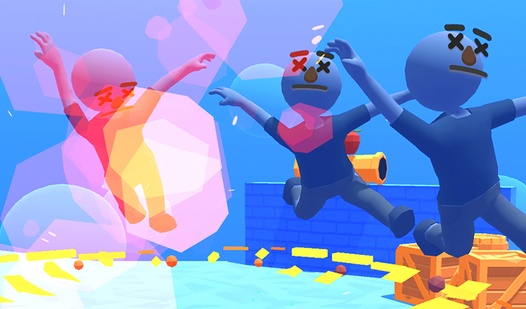
Pure ragdoll physics chaos. Characters interact with gravity, each other, and the environment in fully simulated ways. This is the kind of game you open "just for five minutes" and emerge from an hour later having built an elaborate physics machine out of bodies and props.
People Playground! Ragdoll Arena!
Stuck in a boring meeting or just need to blow off some steam after a long day? People Playground! Ragdoll Arena! is the ultimate digital stress relie...
▶ Play FreePixel Playground: Ragdoll Noob
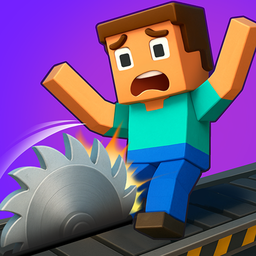
A pixel-art ragdoll sandbox with a more accessible visual style. The physics are still fully simulated — your blocky character tumbles, bounces, and reacts to gravity exactly as you'd expect. Great for beginners to the sandbox genre.
Pixel Playground: Ragdoll Noob
Toss the stickman through complex obstacle courses to rack up massive damage scores in Pixel Playground: Ragdoll Noob. This physics-based challenge ta...
▶ Play FreeRagdoll Crash-Test: Throw and Break!
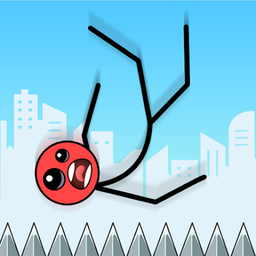
Exactly what it sounds like — you're throwing ragdoll characters at things and watching what happens. The crash physics are the entertainment. Different surfaces, angles, and throw speeds produce wildly different results, making it an endlessly replayable experiment in applied gravity.
Ragdoll Crash-Test: Throw and Break!
Physics-based destruction games turn every accidental collision into a hilarious masterpiece of momentum and chaos. Ragdoll Crash-Test: Throw and Brea...
▶ Play FreePlayground Man! Ragdoll Show!
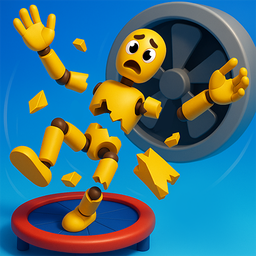
A more theatrical take on ragdoll physics — you're setting up scenarios and watching them play out. The "show" framing gives you a creative goal beyond just destruction: can you arrange a sequence of events that looks spectacular?
Playground Man! Ragdoll Show!
Physics-based mayhem turns every interaction into a hilarious experiment in Playground Man! Ragdoll Show! where gravity is your biggest enemy and best...
▶ Play FreeNo Pain No Gain — Ragdoll Sandbox
This one puts you in the designer seat. Build obstacle courses, set up traps, and then watch gravity do its work on your ragdoll subject. The creative satisfaction of building something and then seeing it function exactly as you planned (or spectacularly fail) is the core loop.
No Pain No Gain - Ragdoll Sandbox
Create chaotic obstacle courses where every tumble earns you a massive payout in No Pain No Gain - Ragdoll Sandbox. You act as the architect of destru...
▶ Play FreeRagdoll Racing: Extreme Downhill!
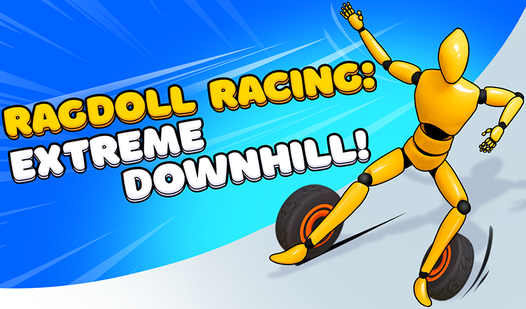
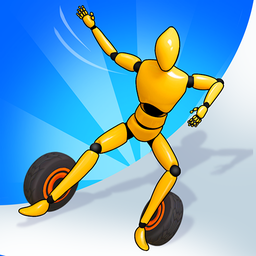
Gravity games don't always have to be about destruction or merging. This downhill racer puts gravity to work as your engine — the slope does the accelerating, and your job is to steer through chaos without being stopped by obstacles. The ragdoll physics add unpredictability to every collision.
Ragdoll Racing: Extreme Downhill!
Navigate steep mountain slopes while managing the hilarious, unpredictable physics of your character in Ragdoll Racing: Extreme Downhill! Controlling ...
▶ Play FreeDestroyer Mobile — Destruction Simulator
The adjustable gravity settings in Destroyer make it unique among destruction games. Cranking gravity to maximum makes everything fall and collapse faster and harder; reducing it creates a strange slow-motion demolition mode. It's worth playing through multiple times just to see how different gravity settings change the experience.
Destroyer Mobile - Destruction Simulator
Fans of chaotic physics simulations will find endless satisfaction in Destroyer Mobile - Destruction Simulator. This sandbox experience puts the power...
▶ Play Free