What Are Puzzle Games: A Complete Guide for Beginners
Puzzle games are one of the oldest and most beloved categories in gaming history — and if you've ever spent twenty minutes staring at a Sudoku grid or compulsively stacking blocks until 2 AM, you already know exactly why. But what are puzzle games, really? What makes them different from other genres, why are millions of people hooked on them every single day, and how do you pick the right one when there are literally thousands of options out there? This guide covers everything — from the basic definition to the most popular subgenres to the best puzzle games for complete beginners.
What Are Puzzle Games, and Why Do They Matter?
At their core, puzzle games are about problem-solving. You're given a situation — a grid, a board, a set of pieces, a logical challenge — and your job is to find the solution. That's it. No health bar to manage, no enemies to outrun, no story beats to follow (usually). Just you, the puzzle, and your brain.
What separates puzzle games from other genres is the emphasis on thinking over reflexes. In a shooter, fast fingers win. In a racing game, timing and muscle memory matter most. But in a puzzle game, the path to victory runs straight through your logic, pattern recognition, and spatial reasoning. That's what makes the genre uniquely satisfying — every win feels genuinely earned.
Puzzle games also have an incredible accessibility advantage. You don't need a gaming PC or a controller with seventeen buttons. Most puzzle games work perfectly on a phone, a browser, or a basic laptop. The barrier to entry is almost zero, which is a big reason why puzzle games reach audiences that other genres never touch — from kids learning to count to retirees keeping their minds sharp.
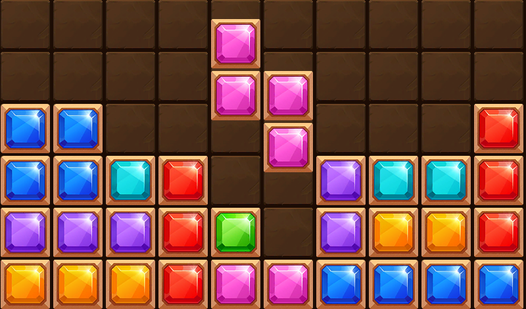
Block Puzzle Gem is a perfect example of this accessibility in action. You drop gems onto a grid and clear lines — the mechanics take about ten seconds to learn, but the satisfying crunch of a perfect clear keeps you coming back for dozens of sessions.
Block Puzzle Gem
Ever wondered what makes classic puzzle games so endlessly engaging? Block Puzzle Gem takes that timeless appeal and polishes it to a brilliant shine,...
▶ Play FreeA Brief History of Puzzle Games
Puzzle games didn't start with video games. They started with physical objects — wooden tangrams from ancient China, mathematical riddles passed between scholars, jigsaw puzzles invented in 18th-century England as educational tools for geography students. The human obsession with arranging things into satisfying order runs deep.
When video games arrived, puzzle mechanics followed almost immediately. The earliest examples were text-based logic puzzles on mainframe computers in the 1970s. But the genre truly exploded in 1984 when a Soviet mathematician named Alexey Pajitnov built Tetris. The game spread from Russian research institutes to arcades to every gaming platform on earth, and it remains one of the highest-selling games in history. Tetris proved something important: you didn't need fancy graphics, violence, or a narrative. A clean mechanic executed perfectly was enough to become a global phenomenon.
The 1990s brought adventure-puzzle hybrids — games like Myst that combined exploration with brain-teasing challenges. The 2000s saw a boom in casual puzzle games online and on mobile. By the 2010s, puzzle games like Candy Crush, 2048, and Threes were racking up hundreds of millions of downloads. Today, the genre is bigger than ever, spanning everything from five-minute mobile distractions to marathon logic challenges that take weeks to solve.
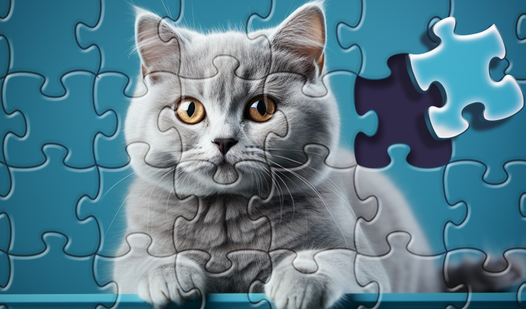
Jigsaw puzzles made the digital leap too. Relax Jigsaw Puzzles brings the classic experience directly to your browser — hundreds of images, adjustable piece counts, zero setup. It's the digital version of a rainy Sunday afternoon.
Relax Jigsaw Puzzles
Feeling a little stressed out or just need a satisfying break from your daily grind? Relax Jigsaw Puzzles is here to whisk you away into a world of ca...
▶ Play FreePopular Puzzle Game Subgenres
"Puzzle games" is actually an umbrella term covering a huge range of mechanics and experiences. Here's a breakdown of the main subgenres you'll encounter.
Block and Tile Puzzles
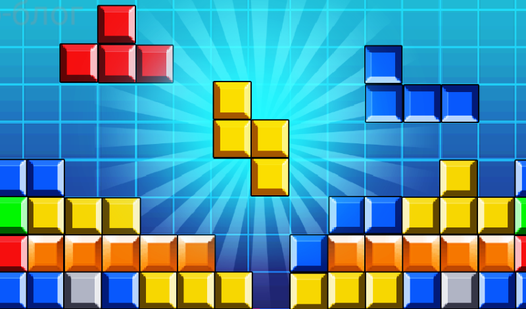
These are the descendants of Tetris. You're placing shapes, filling grids, and clearing lines or regions. The mechanics are simple to grasp but surprisingly deep once you start optimizing. Block Puzzle: Block Builder takes this formula and adds a construction angle — you're not just clearing rows, you're building structures from blocks in satisfying arrangements.
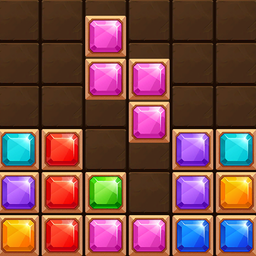
Block Puzzle: Block Builder
Puzzle lovers and fans of classic brain teasers will find Block Puzzle: Block Builder an incredibly addictive experience. This isn't just another bloc...
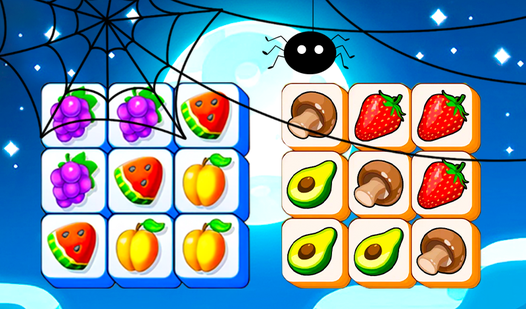
▶ Play FreeCute Tiles: Puzzle is another great entry in this space — matching and placing colorful tiles with a friendly visual style that makes it easy to pick up.
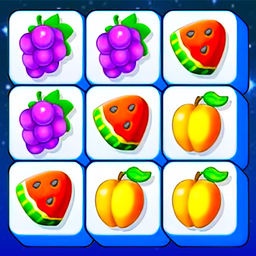
Cute Tiles: Puzzle
Feeling a bit bored and need a quick mental break? Cute Tiles: Puzzle is your cozy escape into a world of satisfying tile-matching and aesthetic charm...
▶ Play FreeBubble Shooter and Marble Popper
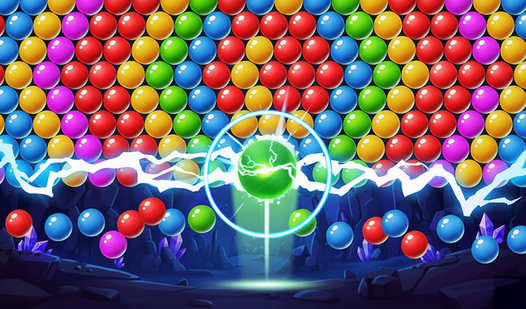
Aim, shoot, match three or more. The bubble shooter formula has been replicated thousands of times, and it works because the core loop is instantly understandable. Bubble Shooter: Bubble Puzzle Game elevates the genre with sharp visuals and genuinely strategic level design — getting a cascade of pops from one carefully aimed shot never gets old.
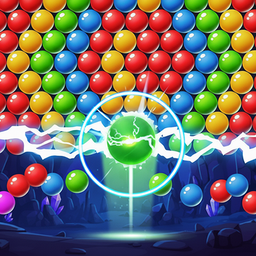
Bubble Shooter: Bubble Puzzle Game
Need a quick mental escape from the daily grind? Bubble Shooter: Bubble Puzzle Game is your go-to for instant fun and satisfying puzzle-solving. This ...
▶ Play FreeNumber and Logic Puzzles
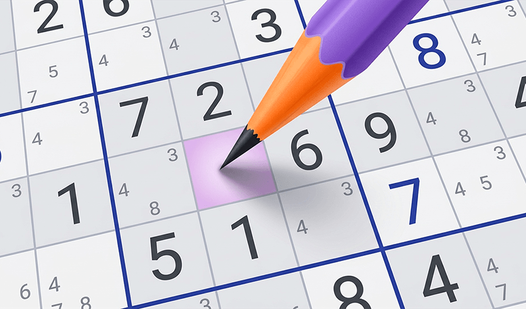
Sudoku is the undisputed king here. Nine rows, nine columns, nine boxes, numbers 1 through 9 — the rules fit in one sentence, but the depth is enormous. Sudoku: Classic Puzzles delivers the full experience with multiple difficulty levels, perfect for players who want a genuine mental workout.
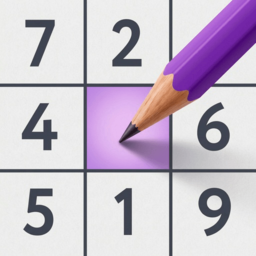
Sudoku: Classic Puzzles
Place numbers from one to nine into the grid making sure every row and column holds each digit only once. Mastering Sudoku: Classic Puzzles requires s...
▶ Play FreeColor Puzzle: Create a Palette takes a different angle on logic — you're mixing and matching colors to build palettes, which adds an artistic element to the problem-solving process.

Color Puzzle: Create a Palette
Arrange vibrant squares into perfect gradients to complete your masterpiece in Color Puzzle: Create a Palette. This relaxing color puzzle experience c...
▶ Play FreeMerge Puzzles
Merge games ask you to combine identical items to create upgraded versions, and you have to manage your space carefully so the board doesn't fill up. It sounds simple, but the strategic depth builds quickly. Merge Planets: Suika puzzle puts a space spin on the formula — you're connecting identical planets while keeping the orbit from overflowing. The physics-based chaos makes every round feel different.
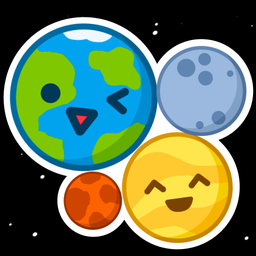
Merge Planets: Suika puzzle
Space enthusiasts and fans of addictive brain teasers will find themselves hooked on Merge Planets: Suika puzzle from the very first drop. This celest...
▶ Play FreeJigsaw Puzzles
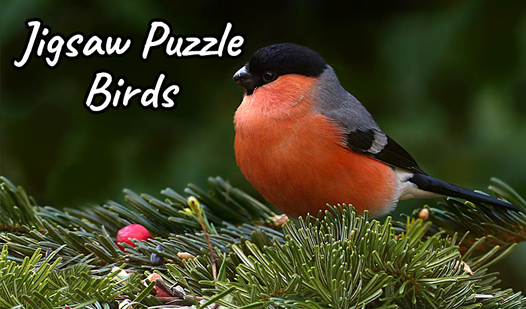
Digital jigsaws have exploded in popularity. The appeal is obvious — all the satisfaction of assembling a real jigsaw puzzle, none of the missing pieces or cats knocking them off the table. Jigsaw Puzzle Birds delivers a beautiful collection of bird-themed images at various difficulty levels.
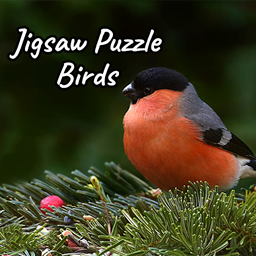
Jigsaw Puzzle Birds
Connecting scattered fragments into a cohesive image is a timeless pastime that keeps the mind sharp and focused. Jigsaw Puzzle Birds transforms this ...
▶ Play FreePhysics and Movement Puzzles
These games use real-world physics — gravity, momentum, friction — as part of the puzzle mechanics. Super Arrow Go! is a great example: you're directing arrows through increasingly complex environments, using the laws of motion to solve each level.
Hybrid and Creative Puzzles
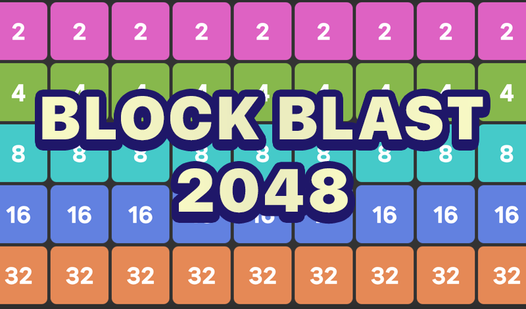
Some puzzle games don't fit neatly into any single category. Block Blast 2048 combines the number-merging mechanics of 2048 with a blast-and-clear grid system, creating a hybrid that fans of both styles will enjoy.
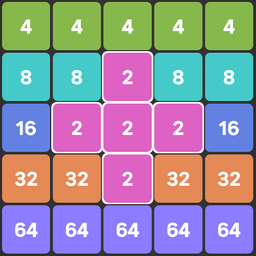
Block Blast 2048
Number merge games have a unique way of keeping your brain sharp while providing that oddly satisfying flow state. Block Blast 2048 takes this classic...
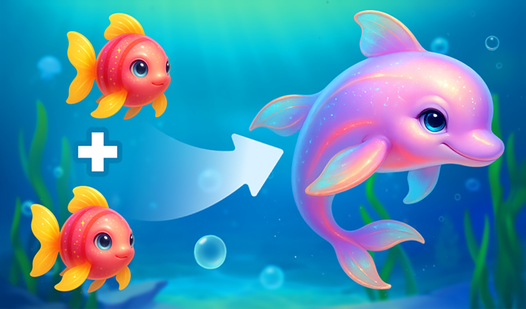
▶ Play FreeCat Voyage is a narrative-puzzle hybrid — you're guiding a cat through a series of environments, solving spatial puzzles to progress the story. The cute art style makes it particularly approachable for newcomers.
Cat Voyage
Who knew the sea held so many secrets and a treasure trove of merging fun? Cat Voyage invites you on a whimsical underwater expedition unlike any othe...
▶ Play FreeBest Puzzle Games for Beginners: How to Pick Your Starting Point
If you're new to puzzle games — or new to online gaming in general — the sheer variety can feel overwhelming. Here's a practical framework for choosing your first game.
Start with what appeals visually
This sounds obvious, but it matters. If a game looks fun and welcoming in screenshots, you're more likely to stick with it through the learning curve. Block Puzzle Gem has bright gem visuals. Relax Jigsaw Puzzles has calming natural photography. Cute Tiles has a cartoon-friendly aesthetic. Pick the one that catches your eye.
Match the game to your mood
Puzzle games serve different emotional needs. If you want to zone out and decompress, jigsaw puzzles or bubble shooters are great choices — low stakes, steady progress, soothing repetition. If you want a genuine mental challenge, Sudoku or logic puzzles are better fits. If you want something in between, merge games and tile puzzles hit a nice middle ground of engagement without stress.
Don't skip tutorials
Every good puzzle game has an intro that teaches the mechanics in context. Play through it, even if the first few levels seem trivially easy. Puzzle games often have hidden depth that only reveals itself once the basics are fully internalized. Skipping ahead can leave you confused when the difficulty ramps up.
Embrace failure as data
In puzzle games, getting stuck isn't failure — it's the actual point. Every dead end tells you something about the puzzle's structure. The best puzzle players are the ones who treat wrong answers as useful information rather than frustrating setbacks. If a Sudoku column isn't working out, that mess of eliminations is actually narrowing down the solution. If your merge board fills up, that's feedback about which placements to avoid next time.
Play a few different subgenres
Don't assume one puzzle game represents the whole genre. A player who bounces off Sudoku might fall in love with jigsaw puzzles or bubble shooters. Give yourself permission to try three or four different styles before deciding what clicks.
Why Puzzle Games Are Good for Your Brain
This isn't just marketing copy — there's real research behind it. Regular puzzle-solving has been linked to improvements in memory, attention span, and processing speed. The mental gymnastics required to hold multiple constraints in mind simultaneously (classic in Sudoku), to visualize spatial relationships (crucial in block puzzles), or to plan several moves ahead (essential in merge games) are exactly the kinds of cognitive exercises that keep your brain sharp.
More practically: puzzle games teach you to break big problems into smaller parts, to recognize patterns, and to stay patient when a solution isn't immediately obvious. These are genuinely useful skills that transfer into work and everyday life.
There's also the focus benefit. Good puzzle games create a state of flow — complete absorption in a task where time disappears. In an era of constant interruptions and fragmented attention, having a reliable way to get into deep focus for even twenty minutes is genuinely valuable.
Tips for Getting Better at Puzzle Games
Look at the whole board before you move. Impulse plays are the enemy of good puzzle performance. Take a moment to survey the full situation before committing to anything.
Work backwards from the goal. Instead of asking "what move can I make right now?", ask "what does the finished state look like, and what needs to be true one step before that?" This reverse-engineering mindset unlocks harder puzzles much faster.
Manage your space. In merge games, block puzzles, and bubble shooters, spatial pressure is the main way games punish bad play. Always be thinking about where you're creating problems for your future self.
Use process of elimination in number puzzles. Sudoku players who try to guess get stuck. Players who systematically eliminate possibilities find the solution. The same logic applies to most number and logic puzzle variants.
Take breaks. Fresh eyes genuinely help with stuck puzzles. If you've been staring at the same level for ten minutes, walk away for a few minutes and come back. The solution you couldn't see often becomes obvious after the break.
Play on a difficulty you find slightly challenging. Not so hard that you're constantly frustrated, not so easy that you're bored. The sweet spot — where you're solving puzzles but working for it — is where the most enjoyment and improvement happens.
Puzzle Games Online: Why Browser-Based Play Is Perfect
One of the best things about puzzle games today is that you don't need to install anything. The entire catalog on FreeJoy runs directly in your browser — no app store, no downloads, no storage hogging. You can be mid-session in Sudoku: Classic Puzzles and just close the tab when life interrupts, then come back to it an hour later from a completely different device.
This frictionless access changes how people engage with puzzle games. Instead of blocking out dedicated gaming time, you can fit puzzle sessions into natural pauses in your day — a few minutes of Block Puzzle Gem between meetings, a jigsaw puzzle while waiting for something to load, a quick Sudoku during a commute. The genre is perfectly designed for this kind of modular, flexible play.
Playing online also means you're always on the latest version of the game, with no update process required. Bug fixes, new levels, seasonal content — it all just appears.