Best Sorting Games Online: TOP 15 Free Puzzles
If you love puzzles that feel satisfying to solve, the best sorting games are exactly what you need. There's something deeply rewarding about bringing order to chaos — whether you're untangling colored ropes, pouring liquids between flasks, or organizing a cluttered shelf. These games are simple to pick up, impossible to put down, and completely free to play right in your browser.
This guide rounds up the 10 best sorting games available online today, plus a look at what makes them so addictive and why they're genuinely good for your brain.
What Are Sorting Games?
Sorting games are puzzle games where your goal is to organize things — colors, objects, shapes, or items — into the correct categories, sequences, or groups. The rules are usually straightforward: put like with like, match colors, or arrange items in a specific order. But the challenge ramps up fast.
Most sorting puzzles share a few common mechanics:
- Color matching — Sort liquids, balls, tiles, or nuts by color until every container holds one pure color
- Object categorization — Place items on shelves, in boxes, or through portals based on type or theme
- Chain matching — Connect three or more identical items in a row to clear them
What makes sorting games so compelling is the balance between logic and intuition. You can often see the solution before you know how to reach it — and figuring out the right sequence of moves is where the real puzzle lives.
These games work perfectly on any device, need no installation, and can be paused at any moment. Whether you have five minutes or an hour, there's always a satisfying level waiting for you.
TOP 10 Best Free Sorting Games Online
Here are the best sorting games online free — tested, ranked, and ready to play right now.
1. Nuts and Bolts: Color Sorting
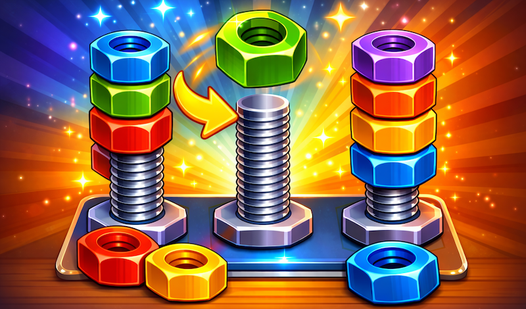
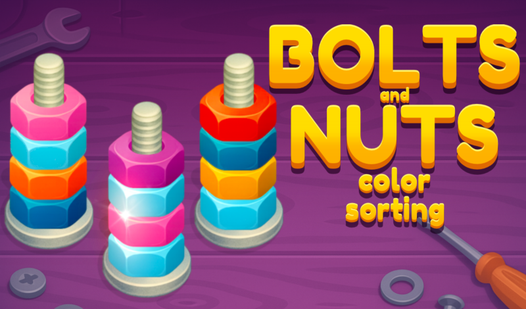
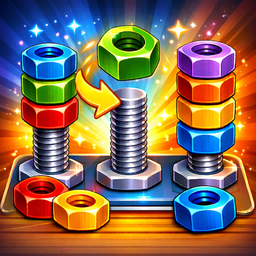
This one is a fantastic entry point into sorting games. You get a board full of bolts, each topped with colorful nuts in different orders. Your job: twist and move the nuts until every bolt holds only one color from top to bottom.
The early levels feel almost meditative — a few moves and you're done. But as more bolts and colors get added, the puzzle becomes genuinely tricky. You'll find yourself planning three or four moves ahead, which is where the real satisfaction kicks in. It's also great for sharpening attentiveness — you can't afford to move without thinking here.
Nuts and bolts: color sorting
Staring at a blank screen during a midday slump is the worst, but finding a quick way to reset your focus is a total game changer. Nuts and bolts: col...
▶ Play Free2. Alive Food: Shelf Sorting
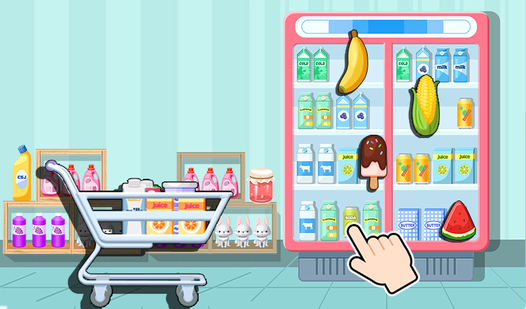
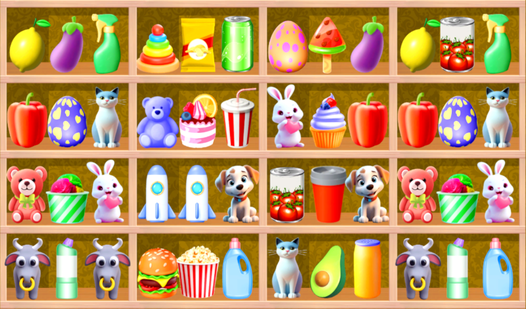
What if your groceries had feelings? In this charming game, animated food items hop around as you try to sort identical ones onto the same shelves. The visual design is delightful — little carrots and bread loaves with expressive faces — and the gameplay is more strategic than it first appears.
You need to think about shelf space and the order in which you move items. Sliding a strawberry to the wrong shelf might block three other moves. It's a relaxing sorting game with just enough challenge to keep you thinking.
3. Put in Place: Emoji Sorting
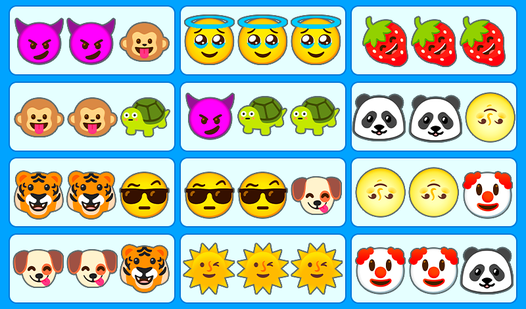
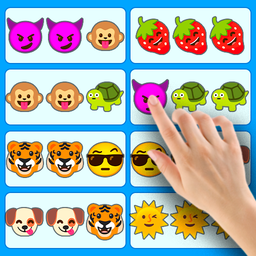
Emojis might seem like a casual theme, but this game uses them cleverly. You arrange emoji tiles into cells on a grid, trying to connect three identical ones in a row to clear them. It plays a bit like a hybrid between a sorting puzzle and a match-3 game.
The visual variety of emojis means every level looks different, and the "connect three" mechanic adds an extra layer of planning. You're not just sorting — you're sorting in a way that creates chains. Smart design.
Put in place: Emoji Sorting
Fans of brain-teasing challenges will find their new obsession in Put in place: Emoji Sorting. This addictive puzzle experience tasks you with organiz...
▶ Play Free4. Magic Sorting
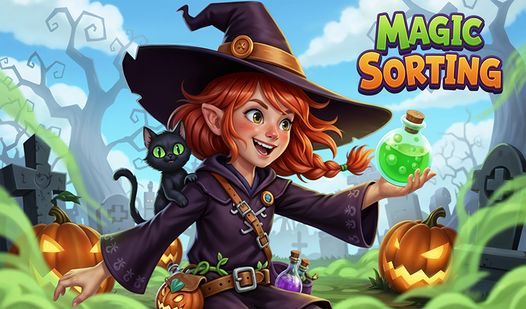
One of the most visually striking sorting games on this list. You play as a young witch's apprentice, sorting magical items — crystals, potions, enchanted objects — through color-coded portals. Each portal accepts only one type of item, and the conveyor belt keeps moving.
What sets Magic Sorting apart is how difficulty increases organically. Early levels introduce one or two item types. Later levels throw five or six at you simultaneously, with portals positioned to test your spatial awareness. The magical aesthetic makes it more immersive than a typical sorting puzzle.
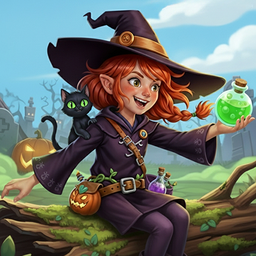
Magic Sorting
Sorting mystical clutter feels surprisingly satisfying when you realize everything in the wizarding world has its perfect place. Magic Sorting transfo...
▶ Play Free5. Sorting Nuts by Color
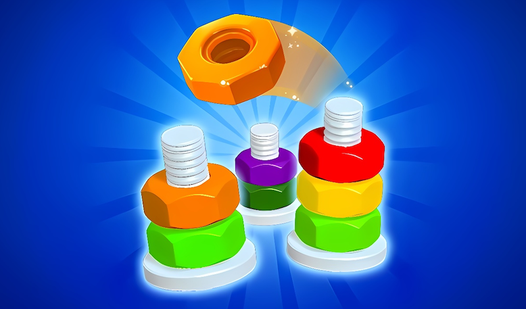
A clean, focused take on the color-sorting format. No fancy story, no distracting animations — just nuts and a satisfying need to sort them by color. The gameplay is fast, the controls are responsive, and the difficulty curve is well-tuned.
This is the game to play if you want pure sorting puzzle mechanics without any fuss. It's also one of the best sorting games for quick sessions — levels are short enough to complete in two or three minutes, making it perfect for breaks.

Sorting Nuts by Color
Arrange colorful hardware onto matching bolts to clear your board in this addictive logic challenge. You must carefully drag and drop each piece to en...
▶ Play Free6. Water Sorting Puzzle
Probably the most iconic format in the genre. You have a set of flasks, each filled with colored liquid layers. By pouring from one flask to another, you need to get each flask to hold only one color — from top to bottom.
The twist: you can only pour into a flask if the receiving top color matches what you're pouring, and there's enough empty space. This constraint transforms what looks simple into a genuine logic puzzle. Water Sorting Puzzle is one of those play sorting games experiences that anyone can enjoy, but few will master quickly.

Water Sorting Puzzle
Logic puzzles that challenge your spatial reasoning are the perfect way to sharpen your mind during a short break. Water Sorting Puzzle turns simple c...
▶ Play Free7. Clean the Room: Shelves and Objects Sorting
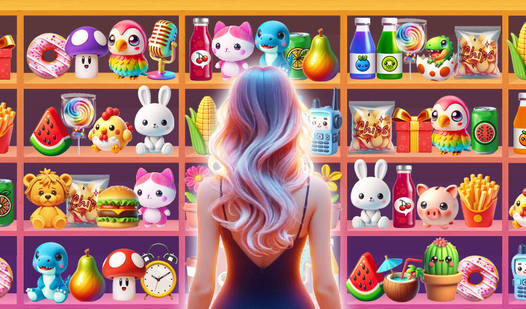
A more grounded take on the genre — you're not sorting potions or emojis, you're cleaning a room. Items are scattered around a space, and you need to place each one on the correct shelf or in the correct container. Books go with books, toys with toys, and so on.
The satisfaction here is tactile and real. There's something genuinely pleasant about watching a messy virtual room transform into a clean, organized space. It's one of the best sorting games for players who like a real-world context to their puzzles.
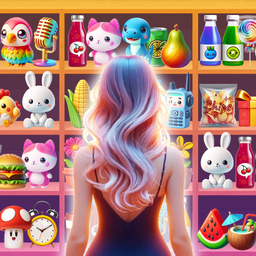
Clean the Room: Shelves and Objects Sorting
Staring at a cluttered desk while your mind drifts away is a common afternoon slump that needs a satisfying fix. Clean the Room: Shelves and Objects S...
▶ Play Free8. Sorting Sweets on Shelves
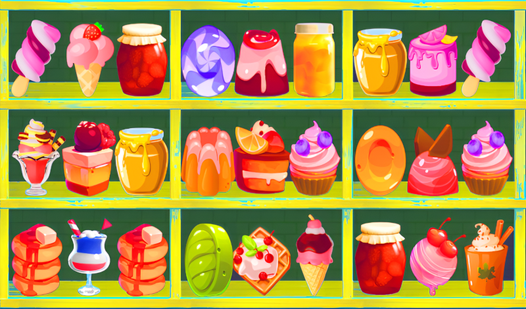
A candy-themed sorting game set in a chaotic sweet shop. Gummy bears, lollipops, chocolates — they're all jumbled together, and your job is to sort them onto shelves by connecting three matching sweets in a row.
The color palette is vivid and cheerful, and the match-3 mechanic keeps things dynamic. Unlike pure sorting games, here you're constantly looking for chain opportunities. Landing a big clear that sorts three different item types at once feels genuinely great.
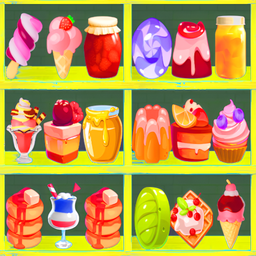
Sorting Sweets On Shelves
Fans of colorful puzzle challenges will find Sorting Sweets On Shelves to be the ultimate relaxing experience for their daily break. Organizing these ...
▶ Play Free9. Bolts and Nuts Color Sorting
A cousin to the first game on this list, but with a different mechanical twist. Instead of moving nuts between fixed bolts, here you twist the bolts themselves to collect and separate the nuts. It's a subtle difference, but it changes how you think about moves.
The casual pacing makes it approachable, and the puzzle design gets surprisingly creative in later levels. If you enjoyed the nuts-and-bolts format and want a fresh variation, this one delivers.
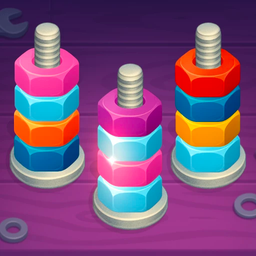
Bolts and Nuts Color Sorting
Logic enthusiasts and fans of satisfying brain training challenges will find Bolts and Nuts Color Sorting impossible to put down once they start. This...
▶ Play Free10. Hexa Tiles: Sorting
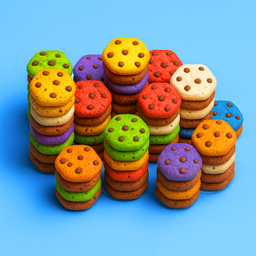
The most visually distinctive game on this list. Instead of linear rows or grid cells, you work with hexagonal tiles that need to be sorted into towers by color. The hexagonal format changes the spatial reasoning involved — you think differently about adjacency and stacking.
The color combinations are vibrant, and watching a multicolored cluster resolve into clean single-color towers is deeply satisfying. It's one of those sorting games unblocked experiences that feels genuinely fresh compared to the standard formats.
Hexa Tiles: Sorting
Sorting games have evolved into a masterclass of logic, and Hexa Tiles: Sorting takes this concept to a satisfying new level of complexity. You will f...
▶ Play FreeColor Sorting vs Object Sorting — Which Is Harder?
Both styles of sorting games challenge your brain, but in different ways. Understanding the difference can help you pick the right game for your mood.
Color sorting — games like Water Sorting Puzzle, Hexa Tiles, or Nuts and Bolts — is primarily about logical sequencing. The rules are strict: this color goes here, not there. The challenge is figuring out the correct order of moves, often requiring you to think several steps ahead. It's chess-like in its precision.
Object sorting — games like Clean the Room or Alive Food Shelf Sorting — involves categorization and spatial reasoning. You need to recognize which category an item belongs to and find space for it without blocking other moves. It's more flexible but requires broader awareness of the whole board at once.
Generally, color sorting games with many containers and limited empty space (like Water Sorting Puzzle at higher levels) tend to be harder in a pure logic sense. Object sorting games often scale difficulty by adding more object types and less space, which demands faster processing and better spatial memory.
The most challenging games combine both: sort by color AND by type, under time pressure or with limited moves. Magic Sorting starts moving in this direction at higher levels, which is part of why it's so engaging.
For brain training, both styles are valuable — just in different ways. Color sorting builds sequential logic and planning depth. Object sorting builds categorization speed and spatial awareness.
More Great Sorting Games to Try
Beyond the top 10, here are a few more worth adding to your playlist:
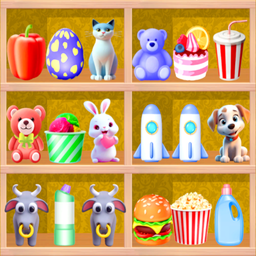
Sorting by Shelves: Match3 — combines shelf organization with match-3 mechanics for a hybrid challenge.
Sorting by Shelves: Match3
Organizing chaotic spaces is a strangely satisfying way to clear your mind after a long day. Sorting by Shelves: Match3 turns this simple chore into a...
▶ Play FreeSorting Colored Balls — a classic take on color sorting with balls and tubes.
Rope Sorting — untangle and sort colored ropes, a fresh spatial twist on the genre.
Slime Sorting — satisfying slime physics meet color-sorting logic.
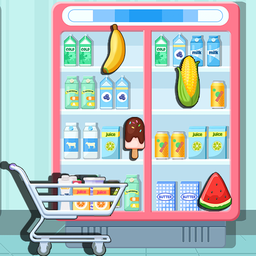
Goods Sorting: Puzzle Challenge — sort packages and goods in a warehouse-style puzzle.
Goods Sorting:Puzzle Challenge
Clear your crowded shelves by lining up three identical items in this addictive matching experience. You will drag and drop various objects to organiz...
▶ Play FreeWhy Sorting Games Are Great Brain Training
Sorting games aren't just fun — they're a genuinely effective form of cognitive exercise. Here's what actually happens in your brain when you play them.
Working memory gets a serious workout. In most sorting puzzles, you need to hold the current state of the board in mind, plan future moves, and remember what you moved from where. This is exactly the kind of short-term memory load that strengthens working memory over time.
Pattern recognition improves with every session. The more you play, the faster you spot which moves are productive and which will create dead ends. Your brain gets better at reading complex visual arrangements quickly — a skill that transfers to real-world tasks like reading a spreadsheet or organizing a workspace.
Frustration tolerance builds gradually. A sorting puzzle that seems impossible often yields to a fresh look or a different starting point. Learning to step back, reset, and try a new approach is a valuable cognitive habit that sorting games reinforce naturally.
Attention and focus sharpen because sorting games punish distraction. One careless move can lock you into an unsolvable state, forcing a restart. You learn to be deliberate, which means you practice sustained focus in short, manageable bursts.
Spatial reasoning — especially in games like Hexa Tiles or Rope Sorting — develops through practice with non-linear arrangements. This kind of thinking is linked to mathematical ability and is notoriously difficult to train through traditional means.
The best sorting games hit a sweet spot where the challenge is just above your current comfort level — enough to require real thinking, not enough to feel impossible. Psychologists call this the "flow state," and it's why a good sorting puzzle can make 20 minutes feel like 5.
Unlike passive entertainment, sorting games require constant active decisions. You're never just watching — you're always thinking, planning, and adapting. That active engagement is what makes them useful for the brain, not just enjoyable for the moment.
They're also accessible in a way that more complex games aren't. You don't need tutorials, gaming experience, or expensive hardware. You just need a browser and a few minutes. That low barrier to entry means more people can benefit from the cognitive exercise, regardless of age or background.