Best Sudoku Games Online Free — TOP 15 Browser Puzzles
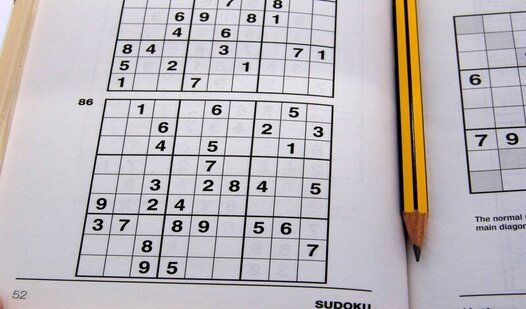
Few puzzles have stood the test of time the way Sudoku has. What started as a Japanese newspaper curiosity in the 1980s has become one of the world's most-played logic games — and for good reason. The rules fit on a napkin, but mastering the game takes genuine mental effort. These days you don't need a newspaper or even an app. The best Sudoku games are right in your browser, free, and ready to play in seconds.
This guide rounds up the best Sudoku games you can play online for free — classic grids, creative variants, and everything in between. Whether you're a total beginner or someone who solves expert-level puzzles before breakfast, there's something here for you.
What Makes a Great Online Sudoku Game
Not all browser Sudoku games are created equal. Some are cluttered with ads that obscure the grid. Others have tiny touch targets, ugly fonts, or puzzles so easy they're barely worth finishing. A genuinely good free Sudoku game gets a few things right:
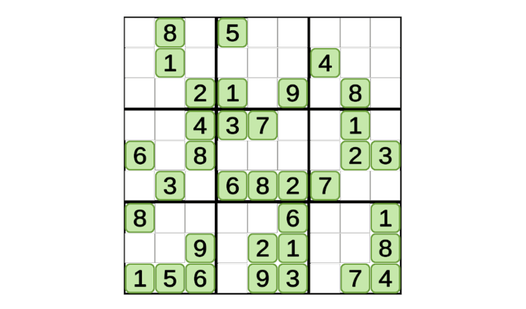
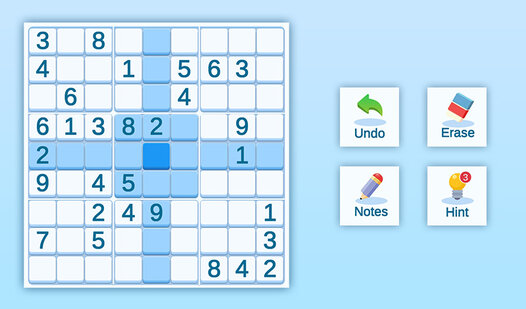
Clean, readable grid. The board should be easy on the eyes. Thick lines separating the 3×3 boxes, clear contrast between given numbers and your entries, and enough whitespace to think. Sounds basic — yet plenty of implementations get this wrong.
Proper difficulty tiers. A beginner needs a very different puzzle from an advanced player. Easy grids should be solvable through simple scanning. Expert grids should require multi-step logical deduction. The best games label these tiers accurately and don't call something "hard" when it barely qualifies as medium.
Pencil marks / notes. Any serious Sudoku solver needs the ability to jot candidate numbers in cells. If a game doesn't offer a note-taking mode, it's effectively telling expert players to go elsewhere.
No forced registration. You should be able to open the tab and start playing. The best free Sudoku games online respect your time and don't hide content behind account walls.
Performance. A puzzle game should load fast and run smoothly. No waiting, no jank — just clean logic puzzles in your browser.
Variants. The classic 9×9 grid is fantastic, but the Sudoku family is much larger. Killer, Jigsaw, Block, and multi-grid variants keep the experience fresh for players who've spent thousands of hours on classic grids.
Keep these criteria in mind as we go through the list.
TOP 10 Best Free Sudoku Games
Here are the best Sudoku games you can play right now in your browser — no download, no account required.
1. Sudoku: Classic Puzzles
If you want pure, distraction-free Sudoku, this is your starting point. Sudoku: Classic Puzzles delivers exactly what the name promises — a straightforward, enjoyable experience built on classic rules. The interface is clean, the grid is well-proportioned, and the puzzle quality is consistently good. It's the kind of game you open when you just want to think, not fiddle with menus.
Sudoku: Classic Puzzles
Place numbers from one to nine into the grid making sure every row and column holds each digit only once. Mastering Sudoku: Classic Puzzles requires s...
▶ Play Free2. Sudoku Master
Sudoku Master earns its name. The puzzles here are hand-crafted rather than algorithmically generated, and you can feel the difference — each grid has a distinct personality and a clean logical path to the solution. The presentation is polished, difficulty scaling is honest, and the note-taking tools are exactly where you'd expect them. Newcomers will find gentle entry points; veterans will find grids that genuinely challenge them.
Sudoku Master
Fill every row, column, and 3x3 square with numbers one through nine to conquer the grid in this brain-teasing classic. Mastering Sudoku Master requir...
▶ Play Free3. Block Sudoku Puzzle
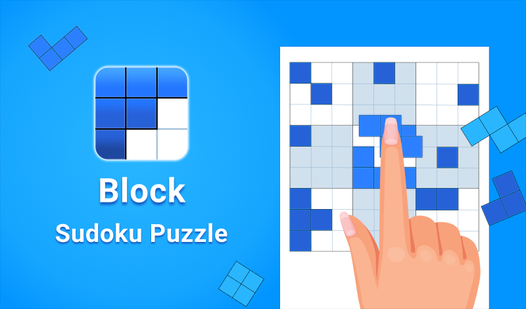
Here's where things get interesting. Block Sudoku Puzzle takes the core constraint logic of Sudoku and fuses it with block placement mechanics — think Tetris-style pieces fitting into a grid where each row, column, and region must satisfy Sudoku rules. It's a genuine hybrid that creates puzzles you simply can't solve with standard Sudoku techniques alone. If classic grids feel too routine, this is a great lateral move.

Block Sudoku Puzzle
Arrange various wooden shapes on a 9x9 board to complete lines and clear space for your next move. Block Sudoku Puzzle challenges your spatial awarene...
▶ Play Free4. Killer Sudoku
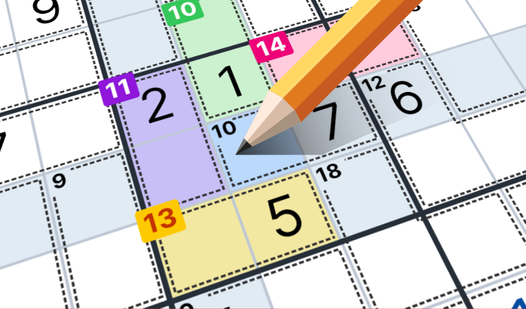
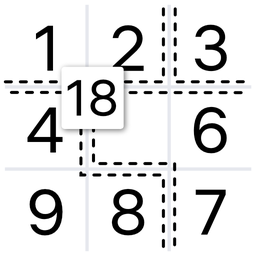
Killer Sudoku is the game serious Sudoku players reach for when the classic grid stops being a challenge. The concept: the grid is divided into "cages," and the numbers inside each cage must sum to a given total without repeating. This adds a layer of arithmetic constraint on top of the standard placement rules, dramatically expanding the space of logical deductions available. Beginners may find it overwhelming at first — stick with it.
Killer Sudoku
Killer Sudoku takes the standard grid logic you already know and adds an addictive mathematical twist that keeps your brain firing on all cylinders. T...
▶ Play Free5. Sudoku
Sometimes a game earns its name simply by doing the job well. This one simply called Sudoku offers a reliable standard experience with difficulty levels that actually mean something. It handles the classics without any fuss — no bloated menus, no confusing extras. Pick your difficulty, get a puzzle, solve it. The grid renders sharply and the input system works reliably with both mouse and keyboard. Solid choice for daily sessions.
Sudoku
Logic puzzles have a unique way of sharpening the mind while providing a satisfying sense of accomplishment when every box finally clicks into place. ...
▶ Play Free6. Jigsaw Sudoku
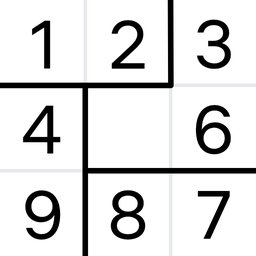
Standard Sudoku divides its grid into nine 3×3 boxes. Jigsaw Sudoku throws that geometry out the window and replaces the boxes with irregular, jigsaw-shaped regions. The placement rules remain the same — each row, column, and region must contain 1–9 exactly once — but the irregular shapes force you to reconsider which cells belong to the same group. It's a spatial reasoning challenge layered on top of the familiar logic framework.
Jigsaw Sudoku
Logic enthusiasts seeking a mental workout will find their new addiction with Jigsaw Sudoku. This challenging brain teaser transforms the traditional ...
▶ Play Free7. Dots Sudoku
Dots Sudoku offers a refreshing visual take on the classic format. Instead of printed numbers in cells, the representation shifts to a dot-based system that changes how you perceive the grid at a glance. It's still Sudoku under the hood — same rules, same logic — but the perceptual shift is surprisingly effective at keeping your brain engaged even after hundreds of standard puzzles. Worth a try if you're looking to approach familiar logic from a new angle.

Dots Sudoku
Place numbers into the grid ensuring no repeats while following the logic of white and black dots that define the relationship between adjacent cells....
▶ Play Free8. Sudoku Guru – Classic Sudoku
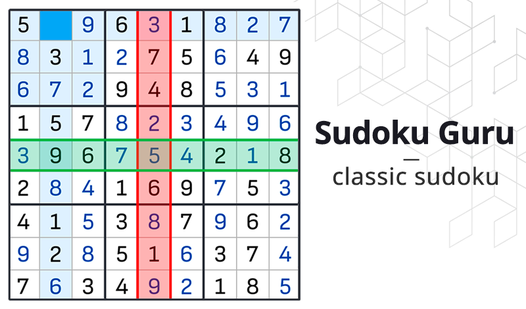
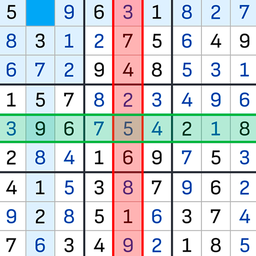
Daily challenges are the backbone of this one. Sudoku Guru offers a classic Sudoku experience with the added structure of rotating daily puzzles, giving you a reason to return every single day. The puzzle curation is careful and the progression within difficulty levels feels well-calibrated. If you want something to make part of a daily routine — morning coffee, lunch break — this is a particularly good fit.
Sudoku Guru - classic sudoku
Staring at a blank screen during your commute or waiting for your coffee to brew is the perfect time to sharpen your wits with a quick logic puzzle. S...
▶ Play Free9. Sudoku Classic (9)
Sudoku Classic (9) focuses squarely on the intellectual challenge. The game positions itself as a test of logical thinking and attention — and it delivers. Puzzles are structured to reward systematic deduction over guessing, which is exactly how a well-designed Sudoku should work. The 9×9 grid is presented cleanly, and the difficulty tiers are appropriately spaced. A dependable choice for players who want the real thing without embellishment.
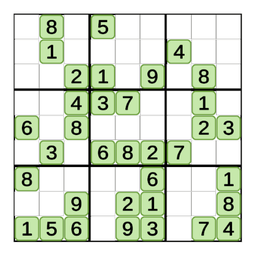
Sudoku classic (9)
Logic enthusiasts and fans of classic brain teasers will find Sudoku classic (9) to be the ultimate test of mental clarity. This timeless puzzle chall...
▶ Play Free10. Sudoku Club
Rounding out the top ten, Sudoku Club brings a feature-rich environment to the standard Sudoku format. Multiple difficulty levels, progress tracking, and various game modes give it more longevity than simpler implementations. It's the kind of game that rewards regular players — the more time you put in, the more it offers back. A good choice if you're looking for a go-to game that'll stay interesting over the long haul.

Sudoku Club
Staring at a blank screen during a long afternoon slump makes it hard to stay productive without a quick mental reset. Sudoku Club provides the perfec...
▶ Play FreeBest Sudoku Variants Worth Trying
The top ten covers the essentials, but the world of free Sudoku games online stretches further. These additional titles are worth bookmarking, especially if you enjoy variety.
Sudoku – Logic Game
A clean implementation that emphasizes the logical foundations of the puzzle. Sudoku Logic Game is well-suited for players who want to improve their solving technique. The presentation is minimal and focused — no distractions, just the grid and your thinking.

Sudoku - logic game
Staring at a blank screen while your brain feels like mush is the ultimate mid-day struggle. Solving Sudoku - logic game provides an instant mental re...
▶ Play FreeMulti Sudoku
Multi Sudoku takes the format in a genuinely different direction by presenting multiple interconnected grids that share constraints across their overlapping regions. Solving one area has cascading effects on the others, which creates a dramatically more complex and satisfying puzzle for experienced players. If you've hit a ceiling with single-grid formats, this is the logical next step.
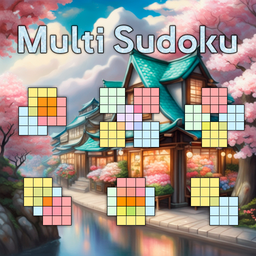
Multi Sudoku
Logic enthusiasts seeking a mental workout will find endless satisfaction in Multi Sudoku. This challenging brain teaser expands the classic grid conc...
▶ Play FreeSudoku Free
Sudoku Free keeps things exactly as accessible as the name suggests. No complications, no paywalls — just a straightforward Sudoku experience for players who want to drop in for a quick puzzle. The implementation is lightweight and responsive, making it particularly good on mobile browsers or slower connections.
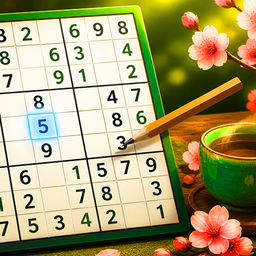
Sudoku free
Filing rows and columns with numbers is the core of Sudoku free, a game that sharpens your mind while you unwind. You carefully place digits from one ...
▶ Play FreeSudoku Com
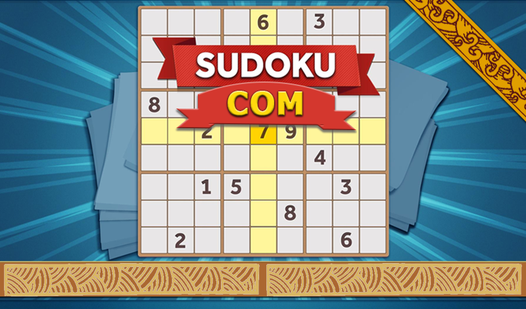
Sudoku Com is one of the more complete browser implementations available. It offers daily challenges, statistics tracking, hints for stuck players, and a clean modern interface that holds up well across screen sizes. The difficulty labeling is accurate and the note-taking system is properly implemented — two things that matter more than people realize until a game gets them wrong.

Sudoku Com
Staring at a cluttered desk and feeling your focus drift away is a sure sign you need a mental reset. Sudoku Com provides the perfect escape by turnin...
▶ Play FreeThe Master of Sudoku
The Master of Sudoku earns its title with a curated selection of challenging puzzles and a presentation style that takes the genre seriously. It's aimed at players who want to push their technique further — the harder difficulty levels require genuine multi-step deduction chains and won't reward guessing. Experienced solvers will find it genuinely rewarding.
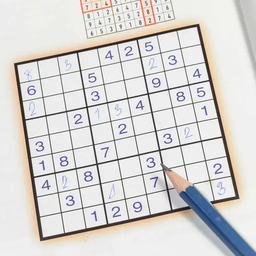
The Master of Sudoku
Fill a nine by nine grid with numbers from one to nine to master the art of logic and complete every challenging level. The Master of Sudoku forces yo...
▶ Play FreeSudoku vs Other Number Puzzles
People often group Sudoku with other number-based puzzles, but the comparison reveals some important distinctions worth understanding — especially if you're trying to figure out which genre actually suits your thinking style.
Sudoku vs Kakuro
Kakuro is sometimes called "cross-number puzzles" and superficially resembles a crossword where numbers replace letters. Unlike Sudoku, Kakuro requires arithmetic: you're filling groups of cells with digits that sum to specific targets. Sudoku requires no math at all — it's pure placement logic. If you're great at mental arithmetic but find pure logic chains frustrating, Kakuro might click with you. If you'd rather avoid sums entirely, Sudoku is probably your game.
Sudoku vs Nonograms (Picross)
Nonograms ask you to shade cells in a grid based on row and column clue numbers, eventually revealing a pixel-art image. The satisfaction is visual rather than numerical. Both genres test deductive logic, but nonograms are more about elimination and pattern recognition across a two-dimensional constraint system, while Sudoku's constraint space is more complex and multi-layered. Many puzzle fans play both.
Sudoku vs Kenken
Kenken grids combine Sudoku placement rules (no repeats in rows/columns) with arithmetic cages that specify the operation — addition, subtraction, multiplication, or division — along with the target result. It's a genuine hybrid that rewards both logical and arithmetic thinking. If Killer Sudoku feels like the right direction but you want even more calculation involved, Kenken is worth exploring.
Sudoku vs Numberlink
Numberlink gives you pairs of numbers on a grid and asks you to connect matching pairs with non-crossing paths that fill the entire grid. It's much more spatial and topological than Sudoku — there's no arithmetic, no placement uniqueness constraint. The feel is completely different: more like solving a maze than building a logical proof. Puzzle fans who find Sudoku too abstract sometimes gravitate toward Numberlink's more visual challenge.
Why Sudoku holds up
After decades, Sudoku remains the dominant number puzzle for a clear reason: the difficulty ceiling is extremely high while the rules stay completely fixed. Beginner grids and expert grids use identical rules — the only variable is how much information is revealed at the start and how many deduction steps are required to reach the solution. This scalability is rare. Most puzzle genres plateau at a certain difficulty level; Sudoku scales from five-minute warm-ups to hour-long challenges that require technique you'd find in a solving manual. The free browser versions cataloged here give you access to that entire range without spending a penny.
Mixing it up
The good news is you don't have to choose. The games in this list include classic 9×9 grids, Killer variants, Jigsaw versions, Block hybrids, and multi-grid formats. Rotating between them keeps your logical thinking sharp in different ways. Classic Sudoku trains naked singles and pointing pairs; Killer Sudoku adds arithmetic constraint scanning; Jigsaw forces you to reconsider region membership constantly. Together they form a fairly complete workout for deductive reasoning.