How to Play Mind Games: Strategies for Brain Training Puzzles
If you've ever wondered how to play Mind games the right way — not just clicking around hoping for the best, but actually getting better over time — you're in the right place. Brain training puzzles aren't magic. They work because they push your cognitive muscles in specific ways, and once you understand those ways, you can train smarter, not just harder. This guide covers the different types of mind games, practical strategies for each, and the best titles to try right now, no matter your skill level.
Types of Mind Games and How They Train Your Brain
Not all brain games are equal. A crossword puzzle builds a completely different skill set than a sliding tile puzzle, and a memory matching game taxes your brain in ways that sudoku doesn't. Knowing which type you're playing — and what it's actually training — is the first step in how to play Mind games effectively.
Logic and Deduction Puzzles These games give you a set of rules or constraints and ask you to figure out the only correct arrangement. Sudoku, nonograms, and logic grid puzzles fall here. They train analytical thinking — the ability to reason from incomplete information and rule out wrong answers systematically. The brain region involved is mostly the prefrontal cortex, which handles executive function and decision-making.
Spatial and Pattern Games Tetris-style block games, jigsaw puzzles, and tile-matching games ask you to mentally rotate objects, recognize shapes, and spot patterns. These strengthen spatial reasoning and visual processing. Research consistently links strong spatial skills to performance in mathematics and engineering, so this isn't just fun — it's genuinely useful.
Memory Challenges Match-the-pair games, sequence recall, and mahjong all rely on your working memory and long-term memory encoding. Memory games train your brain to form stronger associations between pieces of information and to hold more data active at once.
Attention and Processing Speed Games Hidden object games and timed sorting puzzles train you to spot relevant details quickly, filtering out noise. This translates directly to real-world concentration abilities.
Strategic Planning Games Games with layered decisions — where you must plan several moves ahead — exercise your ability to visualize future states and adapt when things don't go as planned.
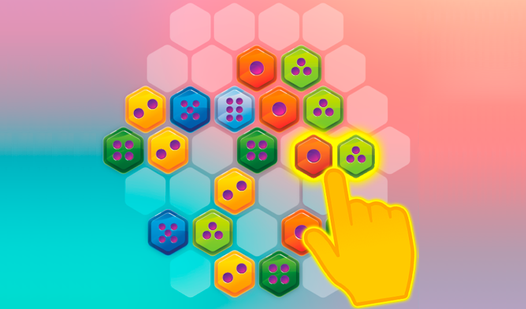
One great entry point that covers multiple categories at once is Mind Blocks 2 — a block puzzle that combines spatial reasoning with strategic planning. You need to figure out not just where pieces fit, but in what order to place them so you don't paint yourself into a corner.
Mind Blocks 2
Strategic thinkers and block puzzle enthusiasts will find their new obsession with Mind Blocks 2. This title tests your spatial awareness and logic as...
▶ Play FreeLogic Puzzle Solving Strategies
Logic puzzles reward disciplined thinking. Here are the strategies that actually work, used by puzzle enthusiasts and competitive solvers alike.
Start with what you know for certain Every logic puzzle has a set of given facts. Before doing anything clever, extract everything that's 100% certain. In sudoku, that means filling in cells where only one number can fit. In Minesweeper, that means flagging mines when a numbered cell's remaining neighbors equal its count. Never skip this step — it's the lowest-hanging fruit and often unlocks further deductions.
Use elimination relentlessly Logic is as much about ruling out wrong answers as finding right ones. Keep a mental (or actual) list of what can't be true in each position. When you eliminate all but one option, you've found your answer without ever "guessing."
Work from the most constrained areas In a block puzzle, look for slots that only one piece can fill. In sudoku, look for rows, columns, or boxes with the fewest missing numbers. Constrained positions give you the most information per move.
Build chains of inference One deduction unlocks another. If A must be true, and A implies B, then B is also true — mark it and keep going. Strong solvers chain 4-5 deductions in sequence before needing to look at the board again.
Know when to use trial-and-error carefully For very hard puzzles, sometimes the logical chain is too long to track mentally. Make one assumption, follow it to its conclusion, and if you hit a contradiction, you've proven the opposite. This is a legitimate technique — not cheating — but save it for when pure deduction stalls.
A Puzzle for the Mind is a perfect training ground for these strategies. The game asks you to build your own strategy for maximizing points, so there's no single correct path — just better and worse reasoning.
A puzzle for the mind
Staring at the clock waiting for your shift to end or just need a mental refresh during a dull afternoon? A puzzle for the mind is the perfect escape ...
▶ Play FreeFor players who like their logic wrapped in a story, DOP Seduction Riddles: Mind Bender delivers puzzles that escalate in complexity as the narrative unfolds. Each level introduces a new constraint or twist, which is a great way to practice adapting your logic toolkit on the fly.

DOP Seduction Riddles: Mind Bender
Erase parts of the image to reveal hidden truths and solve the charming mysteries in DOP Seduction Riddles: Mind Bender. Each level acts as a complex ...
▶ Play FreeMemory Game Techniques — Boost Your Recall
Memory games seem simple on the surface — flip cards, find pairs — but there's a whole science to getting better at them. These techniques apply whether you're playing a digital memory game, mahjong, or any game where you need to remember what you've seen.
Chunking: group information into clusters Your working memory has a limited capacity — roughly 4-7 items at a time, depending on the person. Chunking lets you pack more into that limit by grouping related items together. Instead of remembering "card at position 3, card at position 7, card at position 11," you remember "the three cards in the top-right corner." Groups are easier to hold than individual items.
Visualization: give memories a picture Abstract information is harder to remember than vivid images. If you flip a card and see a star, don't just think "star" — imagine a specific, detailed star with a color and texture. The more distinctive your mental image, the stronger the memory trace. This is the basis of the memory palace technique used by competitive memorizers.
Location anchoring Tie what you saw to where you saw it. "The sun was in the middle row, far left" is easier to recall than just "sun." Spatial memory is one of the oldest and most robust forms of human memory — our brains evolved tracking physical locations before we needed to remember abstract information.
Actively predict before you flip Instead of randomly flipping cards, develop a habit of saying to yourself "I think the match for this card is over there" before you flip. The act of prediction — even when wrong — strengthens memory encoding. Your brain pays more attention to information it predicted incorrectly.
Spaced review within the game Every few moves, mentally scan what you remember from earlier in the game. This mini-review reinforces older memories before they fade. It feels slow at first but dramatically improves retention as the game progresses.
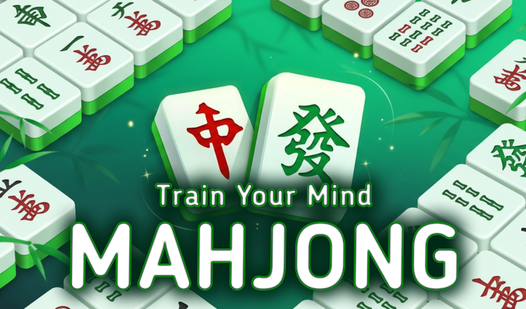
Mahjong: Train Your Mind is one of the best games for putting all these techniques into practice. The classic solitaire format requires you to track which tiles are accessible and remember what you've seen, rewarding exactly the kind of systematic memory approach described above.
Mahjong: Train Your Mind
Fans of relaxing mahjong solitaire will find their perfect digital sanctuary in this beautifully designed matching experience. Players who enjoy brain...
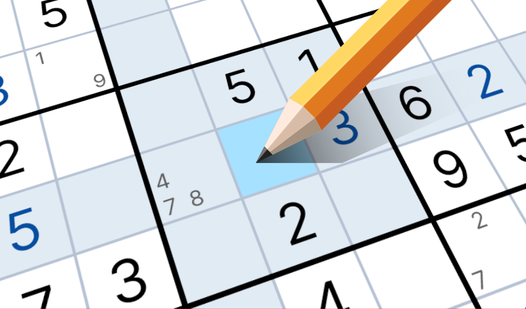
▶ Play FreeSudoku is another excellent memory-plus-logic hybrid. You're constantly holding candidate numbers in working memory for each cell while reasoning about constraints — a genuine cognitive workout.
Sudoku
Logic puzzles have a unique way of sharpening the mind while providing a satisfying sense of accomplishment when every box finally clicks into place. ...
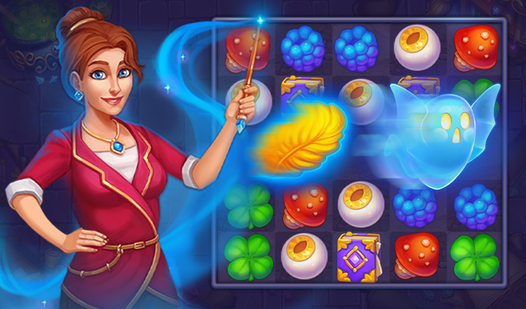
▶ Play FreeSpellmind adds a word-game dimension to brain training, requiring you to recognize letter patterns and recall word structures — great for players who want to train language memory alongside pure spatial recall.

Spellmind
Magic-themed puzzle games offer a unique escape by blending challenging logic with creative home renovation. Spellmind puts you in the shoes of a budd...
▶ Play FreeRecommended Brain Training Games for Beginners
Starting out with brain games can feel overwhelming. Some puzzles are brutally hard out of the gate, which discourages players before they've had a chance to build the mental muscles they need. Here's a curated set of games that scale well for new players.
Start broad, then specialize The best first move is to try a comprehensive brain training platform that mixes multiple game types. This lets you discover which cognitive challenges you naturally find engaging, and which ones feel like pulling teeth. You'll improve faster in areas you enjoy — that's just how motivation works.
Brain Training covers exactly this ground — it combines memory, logic, attention, and processing speed exercises into one package, and adapts to your level. If you're not sure where to start, this is it.

Brain Training
Keeping your mind sharp is just as important as hitting the gym for your physical health. Brain Training keeps you on your toes with a huge library of...
▶ Play FreeWork up to complexity gradually Don't start with the hardest version of a puzzle. Start with easy boards, focus on applying techniques correctly, and let difficulty increase naturally. Rushing to hard mode before the strategies are automatic just builds bad habits and frustration.
Ball Sort Puzzle: Color Tubes is a great example of a game that introduces complexity gently. Early levels are clearly solvable with simple planning. Later levels require thinking several moves ahead — a natural progression that teaches you without overwhelming you.
Ball Sort Puzzle: Color Tubes
Sorting colorful spheres into matching tubes requires sharp logic and a steady hand in Ball Sort Puzzle: Color Tubes. You tap to lift the top sphere a...
▶ Play FreeHidden Object: Clues and Mysteries is perfect for players who want to train attention and visual processing rather than abstract logic. Searching for objects in a detailed scene trains you to filter information quickly — a skill that transfers surprisingly well to pattern recognition in other puzzle types.

Hidden Object: Clues and Mysteries
The human brain is naturally wired to find patterns in chaos, making the classic hidden object genre the ultimate test of observation. Hidden Object: ...
▶ Play FreeMix game types across sessions Don't grind the same puzzle type every day. Your brain adapts fastest when it's being challenged in varied ways. A good weekly rotation might look like: three sessions of logic puzzles, two sessions of memory games, and one or two sessions of spatial or attention games. Variety keeps training fresh and covers more cognitive territory.
Jigsaw Solitaire is a great option for spatial training days — it builds visual pattern recognition and shape-fitting intuition that complements the more analytical skills trained by sudoku and logic grids.
Jigsaw Solitaire
Fans of logic challenges and beautiful visuals will find Jigsaw Solitaire the ultimate way to decompress after a long day. This refreshing take on the...
▶ Play FreeMinesweeper Online is a classic for good reason. It's pure logical deduction under time pressure, and it scales from trivially easy (small board, few mines) to genuinely difficult (large board, high density). Start on Beginner and work your way up — each step requires noticeably sharper reasoning.
Minesweeper Online
Staring at the clock waiting for a meeting to end or just need a mental refresh between tasks is the perfect moment to sharpen your wits. Minesweeper ...
▶ Play FreeTrack your progress deliberately Most brain training platforms track your scores automatically, but don't just watch the numbers go up — analyze your mistakes. Did you lose because you rushed? Because you forgot a constraint? Because you didn't apply elimination properly? Knowing why you failed is the most useful information you can get.
Lines 98 is a strategic thinking game where you must plan tile placement to form color lines — it punishes reactive play and rewards thinking a few steps ahead. Great for players who want to build planning depth.
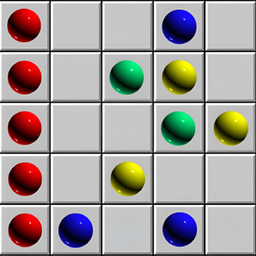
Lines 98
Strategic puzzle games often trick the brain into thinking they are simple until the grid starts filling up with chaotic patterns. Lines 98 turns this...
▶ Play FreeMahjong Classic offers a pure, distraction-free version of the traditional tile-matching game. Without special effects or story modes, it's ideal for players who want to focus entirely on the cognitive mechanics — tracking available pairs, planning removal sequences, and managing memory load.

Mahjong Classic
Ancient board games have survived for centuries because they perfectly balance relaxation with intense mental stimulation. Mahjong Classic honors this...
▶ Play FreeMind games unblocked on browser platforms like FreeJoy.games are particularly convenient for regular training because there's no installation friction — you can start a 10-minute session instantly, which makes it much easier to build the daily habit that drives real improvement.
Blocks and that's it strips the block puzzle format down to its essentials, making it an excellent tool for practicing spatial reasoning without extra distractions. Sometimes the simpler the wrapper, the more clearly you can feel yourself improving.
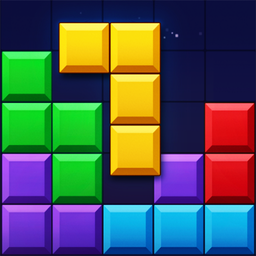
Blocks and that's it
Feeling that midday slump or need a quick mental refresh? Blocks and that's it is your perfect escape, offering a delightful challenge that sharpens y...
▶ Play FreeThe Evolution of the Mind: The Clicker takes a different approach — using incremental mechanics to reward consistent engagement and pattern-building over time. It's a lower-intensity option for days when you want cognitive stimulation without demanding full concentration.

The Evolution of the Mind: The Clicker
Staring at the clock waiting for your shift to end or just need a quick mental escape from a boring afternoon? The Evolution of the Mind: The Clicker ...
▶ Play FreeBuilding a Consistent Practice
Strategies and game recommendations only get you so far. Real improvement in how to play Mind games comes from consistent practice, done intelligently.
Short sessions beat marathon sessions Twenty minutes of focused play is more valuable than two hours of zoned-out clicking. Your brain forms stronger memories and makes faster progress when it's engaged, not fatigued. When you notice you're making careless mistakes, stop and take a break.
Play in a distraction-free environment This sounds obvious, but most people undermine their own practice by playing with background noise, notifications, or split attention. Mind games require genuine focus — give them that.
Embrace difficulty Comfort is the enemy of cognitive growth. If a game feels too easy, increase the difficulty. If you're consistently winning without making any mistakes, you're not being challenged enough to improve. Look for the difficulty level where you succeed about 60-70% of the time — that's the sweet spot where growth happens fastest.
Connect game skills to real life The goal of brain training isn't to get good at games — it's to build cognitive skills that transfer. Notice when you use working memory to track multiple tasks. Notice when you apply systematic elimination to a real problem. This kind of awareness accelerates transfer and keeps you motivated.