Что такое IO Games игры: A Beginner's Guide
Picture this: you open a browser tab, type in a URL, and within five seconds you're competing against real players from around the world — no downloads, no sign-ups, no loading screens that make you question your life choices. That's the magic of IO games, and if you've been wondering "что такое IO Games игры," you're in exactly the right place.
IO games are lightweight, browser-based multiplayer games built for instant play. The ".io" part comes from the country code top-level domain for the British Indian Ocean Territory — but it became synonymous with an entire genre after Agar.io went viral in 2015 and showed the world that simple mechanics plus real-time competition equals pure addiction. Since then, hundreds of IO games have emerged, covering everything from snake simulators to full-on first-person shooters, from territory control to roguelike caves.
What makes them special? Three things: accessibility, competition, and speed. You don't need a gaming PC, a console, or even a great internet connection to have a good time. Open a tab, pick a username, and you're in. Lose a round? You respawn in seconds and go again. It's this low-friction loop that hooks people and keeps them coming back day after day.
In this guide, we'll break down everything you need to know — the history of IO games, the different subgenres, what makes each type compelling, and which games to try if you're just getting started.
What Are IO Games? The Что такое IO Games игры Breakdown
At their core, IO games are browser-based multiplayer experiences that anyone can play for free, right now, without any setup. They share a handful of defining characteristics that set them apart from traditional online games.
Minimal barrier to entry. Most IO games don't require registration. You click a link, type a name, and press play. Some don't even need the name — they'll assign you "Unnamed" or something equally dignified. The friction between "wanting to play" and "actually playing" is measured in seconds.
Real-time multiplayer. You're always playing against or alongside real humans. The thrill comes from that human unpredictability — the way someone will sacrifice their own position just to eliminate you, or the unexpected alliance that forms when two strangers both target the same opponent. Bots just don't replicate that.
Simple core mechanics. The best IO games can be explained in a sentence. "Eat dots to grow bigger than other players." "Shoot enemies and don't get shot." "Claim territory and defend it." This simplicity isn't laziness — it's intentional design that lets the competitive element shine without burying newcomers under tutorial bloat.
Fast sessions. Most rounds last between 30 seconds and 10 minutes. You can squeeze in a game during a coffee break, a bus ride, or literally any spare moment you have a browser open.
Free to play. This is non-negotiable for the genre. IO games live and die by player count — a multiplayer game with no players isn't really a game at all. Keeping the price at zero ensures a constant influx of fresh competition and keeps servers alive.
A great example of the genre in action is Little Big Snake — a modern take on the classic snake formula with real multiplayer stakes. You grow your snake by consuming glowing orbs and smaller snakes, while trying to outmaneuver larger opponents and avoid their heads. The progression system, with upgradeable abilities and cosmetics, gives it staying power well beyond a typical quick session.

Little Big Snake
Fans of classic arcade challenges and modern .io games will get hooked on Little Big Snake! This isn't your grandma's snake game; it's a vibrant arena...
▶ Play FreeA Brief History: How IO Games Took Over the Internet
The story of IO games begins in April 2015, when a Brazilian developer named Matheus Valadares launched Agar.io. The concept was almost laughably simple: you're a circle. Eat smaller circles to grow. Avoid bigger circles that can eat you. He posted it on Reddit's /r/gamedev, watched it explode, and within weeks millions of people worldwide were neglecting their work to chase little dots around a browser screen.
Agar.io ended up on Steam, got covered by mainstream news outlets, and — most importantly — proved that the ".io" domain paired with a simple multiplayer game was a genuinely powerful formula. Developers around the world took notice and started building.
Slither.io followed in 2016, bringing the snake concept into the IO world with smoother controls and more dramatic eliminations (nothing feels quite as satisfying as watching a 10,000-length snake curve straight into your tiny body and disintegrate into a shower of orbs). Diep.io added tower defense elements and RPG-lite progression. Surviv.io brought battle royale mechanics to the browser before battle royale was everywhere on PC and console.
Each new wave pushed the boundaries of what was achievable in a browser tab. Early games were pure simplicity — circles, movement, collision. Later entries added physics engines, destructible environments, class systems, and eventually full 3D rendering. The genre grew from a quirky internet experiment into a permanent fixture of online gaming.
Today, IO games span dozens of subgenres and attract tens of millions of players monthly across platforms. They've also become a popular format for indie developers — low server requirements and browser accessibility make them an ideal testing ground for experimental multiplayer ideas that would be too risky to build as full standalone games.
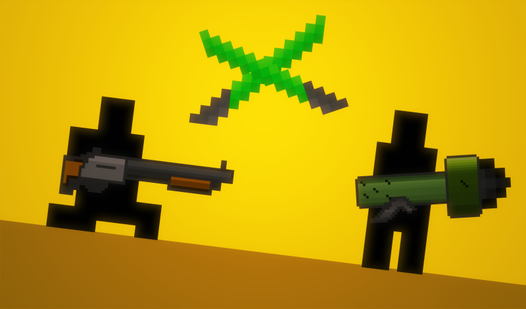
Battle of Pixels is a sharp example of how IO-style thinking translates to different mechanical frameworks. It's an action game built around two-player battles on destructible levels — the kind of chaotic, breakable battleground that rewards both aggression and environmental awareness. The pixelated aesthetic gives it retro charm while the destructible terrain keeps every fight from feeling scripted.
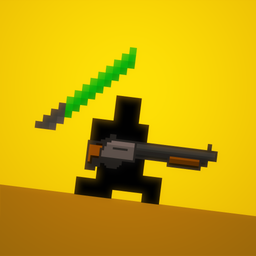
Battle of Pixels
Retro combat feels incredibly satisfying when every single piece of the environment explodes into tiny fragments upon impact. Battle of Pixels deliver...
▶ Play FreePopular IO Game Subgenres
The IO genre has expanded far beyond its "circle eats circle" origins. Here's a breakdown of the main categories you'll encounter and what makes each one tick.
Survival & Growth Games
These are the classics — the direct descendants of Agar.io and Slither.io. The goal is almost always to survive, accumulate resources or size, and outlast everyone else on the server. You start small and vulnerable, build up over time, and the final stretch becomes a tense standoff between the server's top survivors.
What makes this subgenre compelling is the constant risk-reward tension. Growing faster usually means taking bigger risks — moving into contested zones, targeting stronger opponents, leaving flanks exposed. Play conservatively and you grind slowly to safety; play aggressively and you either rocket to the top or flame out spectacularly. Both outcomes are entertaining.
Shooter IO Games
This is where IO games start to feel like actual shooters. Top-down, side-scrolling, or first-person — IO shooters bring real-time gunfights into the browser with varying degrees of complexity. Some stay close to the genre's simple roots with limited movement options; others approach the complexity of dedicated shooter games with weapon loadouts, movement abilities, and tactical map designs.
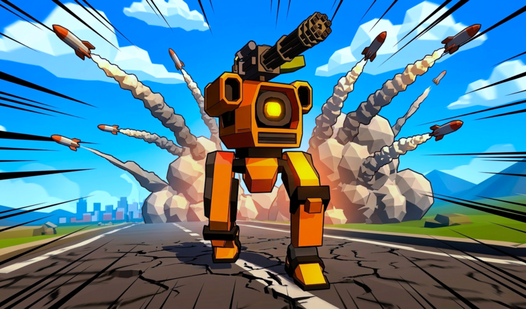
Battle Machines is a standout here — a third-person shooter where you pilot heavy combat mechs against real opponents. The mechanical weight of mech-on-mech combat gives it a different feel from infantry shooters: deliberate movement, powerful weaponry, and the satisfying crunch of heavy armor colliding at speed. It proves that IO games don't have to be top-down or 2D to capture the genre's spirit.
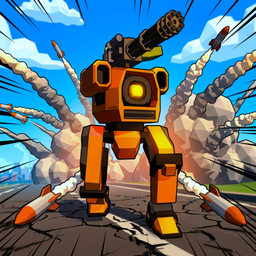
Battle Machines
Pilot heavy war machines across chaotic battlefields in this high-octane third-person shooter. You will customize your metallic juggernaut and engage ...
▶ Play FreeCS: Shooter brings the feel of classic tactical shooters into a browser-ready format. With a large weapon arsenal and mechanics familiar to anyone who's spent time with CS-style games, it's accessible to newcomers while rewarding players who invest in mastering the gunplay. The weapon variety lets you experiment with different combat styles without any grinding — just pick up something different and start shooting.
Strategy & Territory Control
Some IO games slow everything down and ask you to think. Territory games have you claiming land, defending borders, and outmaneuvering opponents through positioning rather than pure reaction speed. Base-builder IO games layer resource management and construction on top.
These are slower burns than survival or shooter variants, but they offer a different flavor of satisfaction — the chess-match feeling when a positional strategy you set up three minutes ago suddenly pays off.
Roguelike & Action Hybrids
This is a newer wave that blends IO accessibility with roguelike progression mechanics. You get procedurally generated challenges, character builds that evolve through a single run, and permadeath stakes that make every decision feel meaningful. Lose everything, start fresh with what you learned, and go further next time.
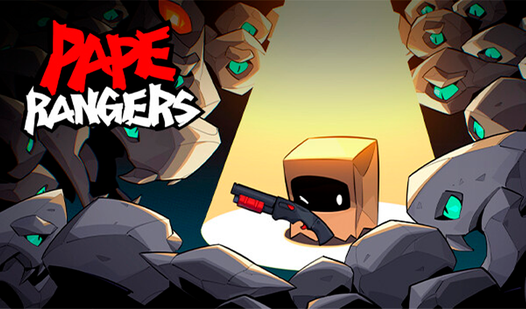
Pape Rangers sits squarely in this space — an indie roguelike where you choose from multiple classes and battle through caves full of monster hordes. The class variety ensures that repeat runs feel genuinely different, not just reskinned. The "get stronger, die, start fresh, get further" rhythm creates exactly the kind of "one more run" pull that's kept players hooked on roguelikes for years.
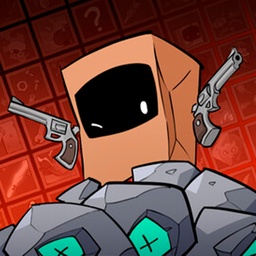
Pape Rangers
Staring at the clock and waiting for your shift to end can be a real drag, but a quick gaming session is the perfect antidote. Pape Rangers brings hig...
▶ Play FreeBest IO Games for Beginners: Что такое IO Games игры in Practice
If you're new to the genre, the variety can feel like too much at once. Here's a practical approach:
Start with familiar mechanics. If you've played any shooting game before, start with a shooter IO game — the core mechanics will feel intuitive even if the controls differ slightly. If you're more of a casual player, territory control or growth games might click faster.
Accept early deaths as curriculum. Every IO game has a skill curve, and players who've been at it for months are genuinely better than newcomers. Your first sessions are about learning the map, the mechanics, and the situational logic of when to fight versus when to run. Getting eliminated repeatedly is normal — every death is information.
Use respawn time actively. Most IO games respawn you instantly or after a short timer. Use that beat: what just killed you, and specifically how? Active analysis accelerates learning far faster than mindless re-entering.
Beyond the featured games above, here are more worth adding to your rotation:
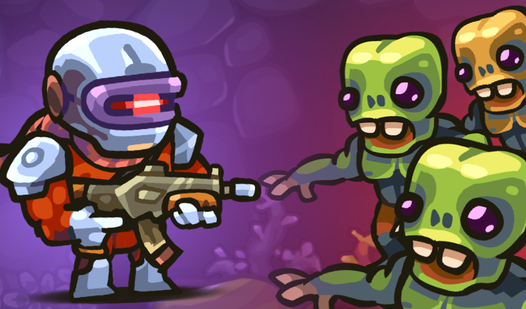
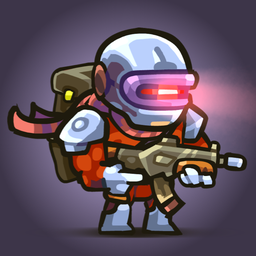
Zombotron Re-Boot is a side-scrolling action game set in a post-apocalyptic world overrun with undead. Heavier on atmosphere than most IO-adjacent titles, its arcade-style combat and weapon variety make it immediately accessible regardless of prior experience.
Zombotron Re-Boot
Blast through hordes of hostile creatures while navigating the treacherous terrain of a long-forgotten colony planet. Zombotron Re-Boot demands quick ...
▶ Play FreeSimulator Case: Stanok 2 offers a completely different energy — a crafting and production simulator with the casual accessibility of IO games. It's the browser gaming world's answer to those "factory builder" games that have you staring at conveyor belts for three hours without noticing.
Training Stand does exactly what it says: it's a practice environment for players who want to sharpen their shooting mechanics before entering competitive matches. If you're consistently losing gunfights in shooter IO games, a few sessions here will tell you exactly what you're doing wrong.
Obby: Car Containers drops you into obstacle-course chaos with a vehicle twist. Obby-style games reward patience and spatial awareness — you'll attempt the same obstacle repeatedly until the path becomes instinct. Frustrating in the best possible way.

Obby: Car Containers
Fans of high-speed car games and satisfying idle progression will find their new obsession in Obby: Car Containers. You start with nothing but a dream...
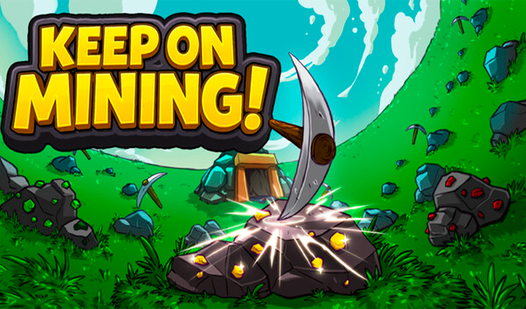
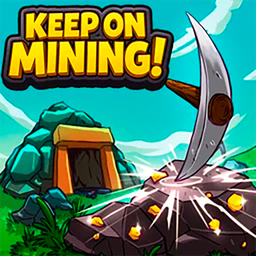
▶ Play FreeKeep on Mining! brings incremental progression to the browser. Mine resources, upgrade your equipment, mine deeper and faster. The loop sounds minimal but becomes genuinely satisfying when the numbers compound and you're clearing rock that was impenetrable ten upgrades ago.
Keep on Mining!
Fans of addictive idle games and resource management will find hours of satisfaction in the loop of Keep on Mining! This catchy clicker hooks you inst...
▶ Play FreeUniversal Tips for New IO Players
A few strategies apply across almost every IO game subgenre:
Edges and corners early, center later. Most IO games concentrate their highest-traffic action in the center of the map. When you're small, weak, or learning, hugging the edges means slower growth but dramatically higher survival rates. Once you've built up resources or skill, move inward.
Study the leaderboard. Most IO games show who's currently winning. Find the top player, observe their positioning and decision-making, and identify patterns. Watching someone succeed is one of the fastest tutorials available — you're learning from actual results rather than theoretical guides.
Audio gives you a real advantage. Many IO games use audio cues — footsteps, shots, ability sounds, alerts — that reveal opponent positions before they appear on screen. Playing with headphones or volume up provides genuine tactical information that silent play misses entirely.
Don't carry tilt between rounds. The respawn loop means a bad round has exactly zero lasting consequences. Frustration from one round bleeds into the next as aggressive overcompensation — and aggressive plays before you've rebuilt any advantage get you killed immediately. Reset mentally, not just visually.
Play during peak hours. IO games thrive on active servers. A full server with competitive players is an entirely different experience from a half-empty one where you're essentially the biggest fish with nothing interesting to fight. Most games have peak hours in the evening of their primary player region — that's when competition is sharpest and matches feel best.
Why IO Games Still Thrive
With massive AAA releases, polished battle royales, and mobile games fighting for every spare minute of attention, you might expect IO games to have faded out. They haven't. The answer comes back to friction — or rather, the absence of it.
Booting a modern AAA title means loading screens, patches, launcher updates, menu navigation, and matchmaking queues before you're actually playing. IO games eliminate all of that. The gap between "I want to play" and "I am playing" is seconds. In an era of shrinking attention and packed schedules, that immediacy is worth more than better graphics or deeper systems.
There's also something democratically appealing about the format. Players from every continent compete under identical starting conditions — no premium currency advantages, no weeks-long account progression gaps, no hardware requirements. Just skill, adaptation, and whatever you've picked up from the last ten rounds. The playing field isn't perfectly level (experienced players are simply better), but the rules are the same for everyone.
The IO game genre has been declared finished multiple times since its 2015-2016 peak. It hasn't finished. It's evolved, branched into new subgenres, absorbed mechanics from other genres, and built a permanent presence in browser gaming that continues to attract new players who discover что такое IO Games игры for the first time every day.