Taxi Life: Taxi Simulator Review
Taxi Life: Taxi Simulator review — if you've ever fantasized about owning your own cab business and navigating a city full of demanding passengers, impatient traffic, and tight deadlines, this is your game. Taxi Life: Taxi Simulator puts you in the driver's seat of a growing urban taxi operation, blending arcade driving mechanics with light business management. It sounds simple, but there's more going on under the hood than you'd expect.
Available to play online for free with no download required, Taxi Life: Taxi Simulator has quietly built a dedicated following among fans of casual simulation games. Whether you play for five minutes or five hours, the core loop stays satisfying: pick up passengers, earn money, upgrade your ride, and level up your reputation across the city. Let's get into the full breakdown.
Taxi Life: Taxi Simulator Review
From the very first ride, Taxi Life: Taxi Simulator establishes its tone — this isn't a hyper-realistic driving simulation. Physics are forgiving, controls are accessible, and the city is designed to be navigated comfortably even on mobile or with keyboard-only inputs. That's a deliberate design choice, and it pays off. The game welcomes newcomers while still rewarding players who put in time to learn optimal routes and passenger management strategies.
Visually, the game delivers clean, readable graphics. The city environment is detailed enough to feel alive — pedestrians, traffic signals, other vehicles — but not so cluttered that navigation becomes frustrating. Each district has a distinct visual personality, from the busy commercial downtown to quieter residential zones where rides tend to be shorter but more frequent.
The passenger system is where Taxi Life starts to flex its depth. Passengers aren't just waypoints — they have personalities, patience meters, and tip potential. A business traveler might pay top dollar but get furious if you take a scenic route. A laid-back tourist might be happy to ride around a bit and hand over a generous tip anyway. Reading your passenger and choosing routes accordingly adds a real decision layer to what could have been a mindless drive-and-collect loop.

Stone Miner Simulator - Mine MOD!
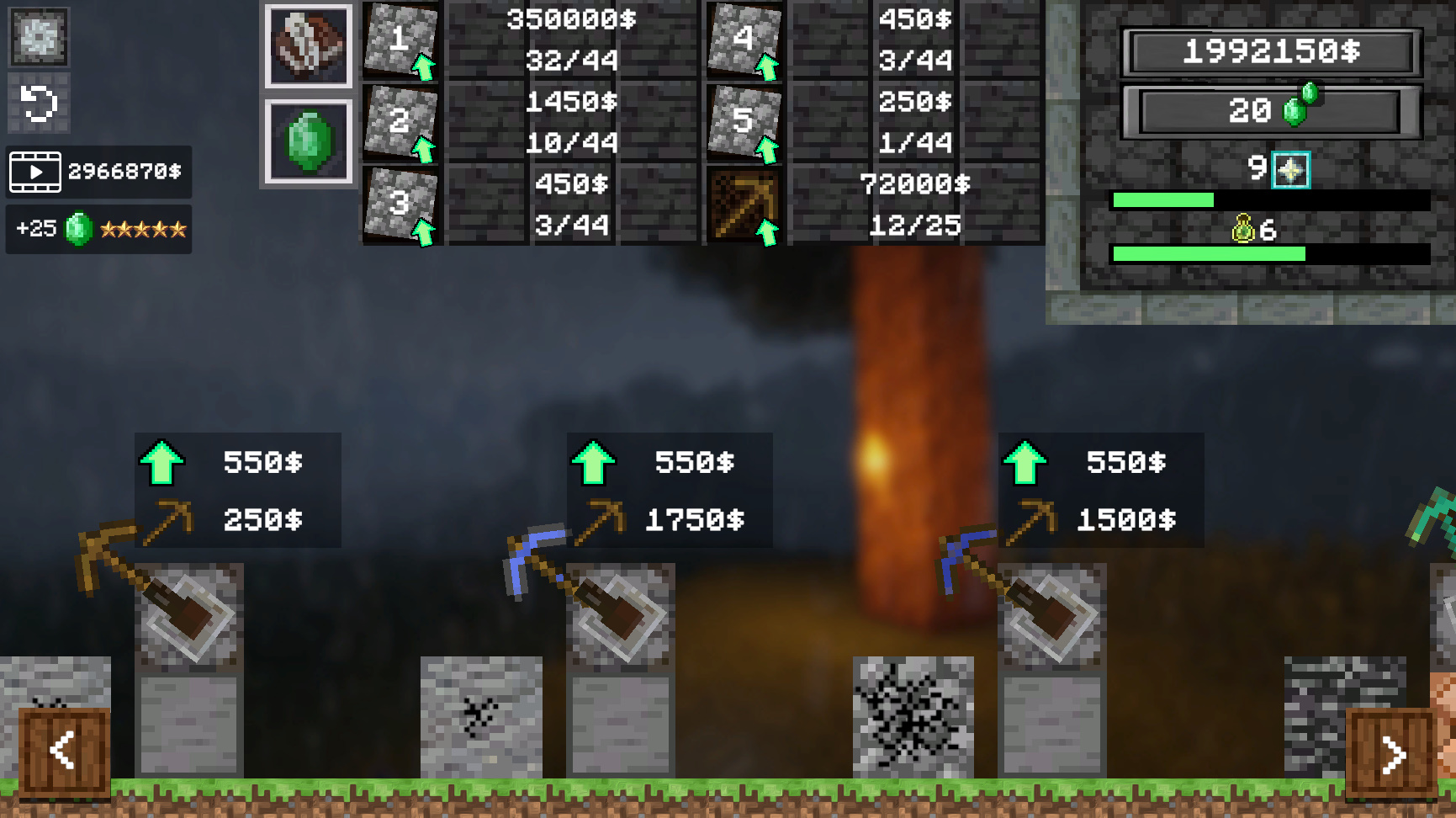
Smash through endless blocks and collect precious ores to build your underground empire in Stone Miner Simulator - Mine MOD!. Clicking rapidly to brea...
▶ Play FreeThe economic system rewards smart play over raw speed. Your taxi starts as a basic model with limited comfort and speed, and you gradually unlock upgrades — better engines, improved suspension, air conditioning, even a radio that keeps passengers happier on long trips. These aren't just cosmetic rewards; they directly affect your ratings and earning potential. A well-upgraded cab in a premium district earns dramatically more per hour than a stock vehicle grinding through budget zones.
Reputation is the real currency here. Every completed ride earns you stars based on speed, route efficiency, and passenger satisfaction. High ratings unlock access to airport runs, VIP clients, and high-value business districts. Drop below a certain threshold and those premium fares dry up fast. This reputation feedback loop is tight enough to keep you engaged without becoming punishing — a few bad rides won't tank your career, but consistently sloppy play will definitely hurt your income.

One Block Simulator - Mine MOD!
Fans of clicker games and block breaking will find One Block Simulator - Mine MOD! completely addictive as they strive for mining dominance. You start...
▶ Play FreeThe time-of-day system adds another dynamic dimension. Rush hour genuinely changes the game — traffic thickens, passengers multiply, and the demand for rides spikes. If your car is in good shape and your routes are planned, rush hour is pure money. If you're poorly upgraded or haven't learned the city layout, it becomes a chaos spiral of missed pickups and frustrated passengers. Late night shifts are quieter but feature higher-paying long-distance runs to hotels and entertainment districts.
One of the best design choices in Taxi Life: Taxi Simulator is the absence of hard failure states. You don't "lose" — you just earn less. This makes the game genuinely relaxing to play while still providing enough structure to feel like progress. It's the kind of simulator you can zone out to after a long day, which is arguably exactly what a taxi simulator should be.
Gameplay and Controls
The controls in Taxi Life: Taxi Simulator are deliberately streamlined. On mobile, you steer with a virtual joystick and control speed with a gas/brake button layout. On desktop via browser, keyboard arrows or WASD handle driving duties. Both input methods feel responsive, and the car handles with just enough weight to feel like a real vehicle rather than a hovercraft.
Navigation is handled through a minimap and directional indicators rather than a detailed GPS overlay. This means you actually need to learn the city — which sounds annoying but ends up being one of the more satisfying aspects of the game. Once you know where the airport entrance is, or which side streets let you skip the downtown gridlock, that knowledge translates directly into faster rides and better tips.
Picking up passengers works on a proximity and timing system. Fare requests appear on your minimap and have a countdown before they disappear or get picked up by an AI taxi. Learning to prioritize — which fares are worth a cross-city sprint versus which ones you should skip — is a skill that develops naturally over time. Early on you'll chase everything; experienced players learn to be selective.
The upgrade shop is clean and intuitive. You spend earned coins on specific improvements, and the game clearly shows you what each upgrade does before you commit. No mystery mechanics, no hidden upgrade trees. What you see is what you get, which makes planning your progression feel satisfying rather than opaque.
One underrated feature: the garage system lets you park between sessions and your vehicle slowly restores condition. This prevents the tedious "buy repairs every few minutes" loop that hampers similar games. It means even a medium-length play session leaves your cab in decent shape for next time.
Multiplayer elements are light but present — you can see other players' cabs moving around the city, and weekly leaderboards track total earnings. There's no direct competition or player collision, which keeps the vibe collaborative rather than combative. Some players find this too passive, preferring games with more direct rivalry. If you want head-to-head competition, this isn't designed for that. But if you like the idea of a shared city where everyone's just trying to run their taxi business, it works well.
Tips and Tricks
Getting good at Taxi Life: Taxi Simulator comes down to a handful of principles that take time to discover on your own. Here's the condensed version so you can skip the trial and error.
Learn the city before you chase fares. Spend your first few sessions just driving around with no destination. Know where the hospital, airport, train station, and hotel district are before you need to navigate to them under time pressure. This upfront investment pays back immediately once rush hour hits.
Prioritize airport runs early. Airport fares are long, high-value, and relatively straightforward to navigate once you know the route. New players often avoid them because they seem intimidating, but they're actually more forgiving than downtown short hops — the distance means small navigation mistakes matter less proportionally.
Upgrade comfort before speed. New players typically rush to engine upgrades for faster rides. The smarter play is to upgrade passenger comfort first — AC, suspension, interior quality. Comfortable passengers tip more, and those tips compound fast. Speed upgrades matter most once you're already earning well from tips.
Watch the patience meter, not the clock. Your personal sense of urgency often makes you take riskier routes and cut corners unnecessarily. Watch your passenger's patience meter instead — if it's barely moving, you have more time than you think. Save aggressive driving for runs where the meter is actually dropping fast.
Rush hour positioning matters enormously. Where you park at the start of rush hour determines your entire session's profitability. Position yourself near the business district before rush hour starts. The flood of office workers heading home will keep you continuously booked without needing to hunt for fares.
Don't neglect maintenance. Vehicle condition affects passenger satisfaction scores even if you don't notice obvious performance degradation. A slightly worn car still handles fine but silently hurts your star ratings. Check condition after every 8-10 rides and repair before it drops below 60%.
Bank earnings between sessions. If the game has a save/deposit mechanic in your version, use it. Carrying too much unbanked cash means a bad ending to a session (car breakdown, rage quit) can leave you underprepared for next time.

Cat Simulator: My Pets
Navigate a vibrant world through the eyes of a nimble feline in Cat Simulator: My Pets. You spend your days patrolling your cozy home, tossing toys, a...
▶ Play FreeLearn which passengers to decline. Sounds counterintuitive, but some fares cost more than they're worth. A short ride in a congested area during peak hours can trap you in traffic while better fares spawn elsewhere. Decline extreme-distance fares when you're in a good earning zone and stay where the density of requests is highest.
Use the garage cooldown strategically. If your car condition drops significantly mid-session, parking in the garage for a few minutes while you take a break actually matters — the passive restoration saves you repair costs. It's a small optimization but adds up over long play sessions.
Similar Games
If you enjoy Taxi Life: Taxi Simulator, you likely have a thing for simulation games that let you build up a business or master a skill over time. The online gaming space has plenty of options that scratch similar itches, and some of them are genuinely excellent.
For another flavor of simulator gameplay, Simulator: The Streamer's Path takes the "build a career" structure and applies it to the world of content creation. You start as an unknown streamer and work your way up through decisions, equipment upgrades, and audience building. It's a different theme but shares that satisfying career-progression loop.

Simulator: The Streamer's Path
Managing a virtual broadcast career allows you to climb the ranks from a bedroom enthusiast to a global internet celebrity. You start by selecting tre...
▶ Play FreeIf you want something with a bit more chaos and destruction, Bimka: Car Destruction and Accident Simulator flips the script entirely — instead of carefully protecting your vehicle, you're deliberately wrecking it in spectacular ways. The physics sandbox approach is the opposite of Taxi Life's careful driving ethos, but players who like cars in games often enjoy bouncing between both.

Bimka: Car Destruction and Accident Simulator
High-speed impacts offer a strange sense of catharsis that few other genres can replicate on screen. Bimka: Car Destruction and Accident Simulator pro...
▶ Play FreeFor players who enjoy the resource-building aspect of simulators, Obby: Lumberjack Life Simulator offers a totally different context — felling trees, managing resources, upgrading equipment — but the same fundamental satisfaction of watching numbers go up through smart play.
Case-opening simulators offer a lighter, quicker gratification loop that's popular with the same audience that enjoys business simulators. Standoff 2: Cases and Boxes Simulator is one of the most polished entries in this category — you open virtual cases, manage inventory, and chase rare drops without any real-money stakes.
Similarly, Case Simulator Block Strike brings the same unboxing mechanic to a different game universe, with plenty of cosmetic items to discover and collect.
For players who want something more action-adjacent, Brawl Simulator 3D brings competitive energy in a quick, accessible package. It's less about resource management and more about reflexes, but it serves as a great palate cleanser between longer simulation sessions.

Brawl Simulator 3D
Staring at the clock during a long afternoon usually means it is time for a serious digital distraction. Brawl Simulator 3D acts as the ultimate antid...
▶ Play FreeObby: Ninja Simulator is worth a look if you enjoy the skill-progression angle of simulators — you're building up abilities through repetitive practice, which mirrors the "get better at your job" satisfaction of taxi simulation in a completely different genre context.

Obby: Ninja Simulator
Hardcore parkour fans and action enthusiasts will find their new obsession in Obby: Ninja Simulator. This high-energy experience challenges you to sha...
▶ Play FreeSimulator Case: Stanok 2 is another case-opening title that has developed a loyal following for its clean interface and satisfying drop animations. If the Standoff cases scratched an itch, this one offers more of the same with a different item pool.
For strength and progression fans, Obby: Become Cool 99 Strength Simulator takes the stat-building concept and gamifies it through obstacle course challenges — each run makes your character stronger, which directly gates new content. Simple premise, genuinely addictive execution.

Obby: Become Cool 99 Strength Simulator
Stuck in a boring meeting or just need a quick distraction to recharge your brain? Obby: Become Cool 99 Strength Simulator is the ultimate digital esc...
▶ Play Free