How to Play Water Sort Puzzle: Rules, Tips & Best Games
Water sort puzzle games have taken casual gaming by storm, and once you understand how to play water sort puzzle properly, you'll see exactly why millions of people can't put them down. The premise looks deceptively simple — pour colored water between tubes until each tube holds one solid color. But as anyone who's gotten stuck on level 47 knows, there's a lot more going on beneath the surface.
This guide covers everything: the core rules, the logic behind the game, proven strategies to get past the levels that feel impossible, and where to find the best free sorting puzzle games online right now.
What Is Water Sort Puzzle and How It Works
Water sort puzzle is a logic-based mobile and browser game where you manage a set of test tubes filled with layers of colored liquid. The goal is to sort the colors so that each tube contains only one color — or is completely empty.
The tubes start scrambled, usually with 3–4 different colors stacked in each one. You can only pour from one tube into another if the top color of the tube you're pouring from matches the top color in the receiving tube, and the receiving tube has enough empty space.
That's the whole mechanical system. No timers (usually), no points for speed, no luck. Pure logical deduction.
What makes water sort puzzle compelling isn't complexity for its own sake — it's the satisfaction arc. Early levels teach you the mechanics, mid-game levels introduce tight constraints, and later levels feel like elaborate puzzles where each move has to be exactly right. The feeling when a chaotic tangle of colors suddenly resolves into clean, single-color tubes is genuinely rewarding.
The genre sits in a broader family of sorting and arrangement puzzles, and if you enjoy it, you'll likely enjoy a wide range of similar games. Block puzzles, for instance, share the same "fit pieces into a constrained space" logic — and games like this one scratch a very similar itch:
Block Puzzle Gem
Ever wondered what makes classic puzzle games so endlessly engaging? Block Puzzle Gem takes that timeless appeal and polishes it to a brilliant shine,...
▶ Play FreeWater Sort Puzzle Rules — Step by Step
Understanding how to play water sort puzzle means internalizing a small set of rules that govern every single move. Here they are:
Rule 1: You can only pour from the top. Water moves as a stack. You can't access the middle or bottom layers. Whatever color is sitting at the top of a tube is the only color you can interact with.
Rule 2: You can only pour onto a matching color or into an empty tube. If the top of Tube A is red and you want to pour into Tube B, the top of Tube B must also be red — or Tube B must be completely empty. No mixing allowed.
Rule 3: You can only pour as much as fits. If Tube A has 3 red layers on top but Tube B only has 1 empty space, only 1 red layer transfers. The rest stays in Tube A.
Rule 4: A completed tube is locked. Once a tube holds 4 layers of the same color (assuming 4-layer tubes), it's done. Visually, it usually lights up or animates. You can't pour into it anymore, which matters for planning.
Rule 5: You always have at least one empty tube. This is the "breathing room" mechanic. The empty tube is your temporary holding space — your most valuable resource, especially in harder levels.
Optional rule (some versions): undo is limited. Some implementations give you unlimited undos, others cap them at 3 per level or require watching an ad to undo. Know your version's rules before planning a strategy around "I'll just undo if this goes wrong."
Once these rules click, you stop seeing water sort as a random pour-and-hope game and start seeing it as a constraint satisfaction puzzle. Every move either creates or destroys options.
Block Puzzle: Block Builder
Puzzle lovers and fans of classic brain teasers will find Block Puzzle: Block Builder an incredibly addictive experience. This isn't just another bloc...
▶ Play FreePro Tips to Beat Tricky Levels
Most people get stuck in water sort puzzle not because they lack logic skills, but because they're applying the wrong mental model. These tips will change how you approach the game.
Think in "blocks," not individual layers
When you have 3 consecutive red layers at the top of a tube, treat them as a single unit. Your goal is to find a destination with 3 open spaces and a red top (or an empty tube). Planning at the unit level rather than the layer level reduces decision complexity dramatically.
Protect your empty tubes like gold
The empty tube is the most powerful resource on the board. Beginners burn empty tubes early by using them as overflow dumps. Experienced players only use an empty tube when doing so opens up a guaranteed sequence of beneficial moves. Before using an empty tube, ask: does this move start a chain that clears at least 2 colors, or am I just kicking the problem forward?
Work backward from the completed state
Instead of asking "what can I pour now?", try asking "which tube is closest to completion, and what needs to happen before it can be completed?" Identify the bottlenecks — the colors that are trapped under other colors in multiple tubes at once — and prioritize freeing those.
Recognize deadlocks early
A deadlock happens when Color A is blocking Color B, which is blocking Color A (directly or in a chain). If you see this forming, use your undos immediately rather than playing into it. Better to rewind 3 moves than to reach a state where the board is provably unsolvable.
Use the "one more move" test
Before committing to a pour, ask: does this move give me at least one more useful move that I couldn't make before? If a pour doesn't open new options, it's probably neutral at best. On hard levels, neutral moves are often traps because they consume the empty space you were relying on.
Jigsaw and arrangement puzzles train the same spatial reasoning that helps with water sort. A game like this one — which rewards careful placement over speed — is great cross-training:

Relax Jigsaw Puzzles
Feeling a little stressed out or just need a satisfying break from your daily grind? Relax Jigsaw Puzzles is here to whisk you away into a world of ca...
▶ Play FreeThe "color consolidation" principle
When one color is spread across multiple tubes, your first priority should be consolidating it into fewer tubes. A color spread across 3 different tubes is exponentially harder to solve than a color contained in 1–2 tubes. Even if consolidating means a move that doesn't feel "productive," it usually pays off within 3–4 subsequent moves.
Don't rush the end game
Ironically, the last 3–4 tubes before a win are often the trickiest. Players get excited, start pouring quickly, and end up in a deadlock with 2 colors left. Slow down when the board looks nearly solved — that's when the remaining constraints are tightest.
Best Free Water Sort and Sorting Puzzle Games Online
If you enjoy the mental workout of water sort puzzle, there's a whole universe of sorting, arrangement, and logic games that you can play for free in your browser. Here are some standouts across different sub-styles:
Block Puzzles — Spatial Arrangement Under Pressure
Block puzzle games share water sort's core loop: look at the current state, figure out what fits where, and place pieces to clear space. The pressure is spatial rather than color-based, but the mental process is nearly identical.
Block Puzzle: Falling Shapes takes the Tetris-adjacent block format and strips away the real-time pressure. Shapes fall in a queue, you place them where they fit, and complete rows to keep the board clean. It's slower and more deliberate than Tetris, which makes it feel much closer to water sort in terms of planning depth.
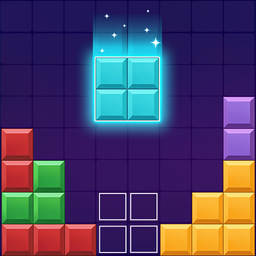
Block Puzzle: Falling shapes
Falling blocks carry a unique thrill that has defined classic gaming for generations. Block Puzzle: Falling shapes takes this timeless concept and ref...
▶ Play FreeCute Tiles: Puzzle goes in a cozier aesthetic direction — wooden tiles, warm colors, satisfying combo mechanics. You match tiles to clear the board, and the combo system rewards planning chains of matches rather than one-at-a-time picks. The pacing is gentle but the strategy is real.
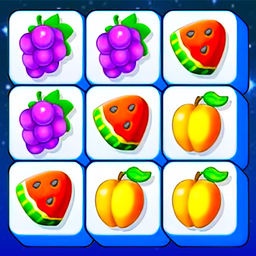
Cute Tiles: Puzzle
Feeling a bit bored and need a quick mental break? Cute Tiles: Puzzle is your cozy escape into a world of satisfying tile-matching and aesthetic charm...
▶ Play FreeColor-Based Sorting Games
If what you specifically love about water sort is the color sorting mechanic, these games hit the same note:
Color Puzzle: Create a Palette flips the usual format — instead of sorting colors into containers, you're creating specific color palettes by mixing and arranging hues. It's more creative but still rewards systematic thinking. Aesthetically it's gorgeous, with a graphic-design tool feel.

Color Puzzle: Create a Palette
Arrange vibrant squares into perfect gradients to complete your masterpiece in Color Puzzle: Create a Palette. This relaxing color puzzle experience c...
▶ Play FreeNuts and Bolts: Color Sorting applies the sorting logic to a physical-toy aesthetic: colored nuts on bolts that need to be sorted by color. The mechanic is nearly identical to water sort (you're moving colored elements from mixed stacks to sorted ones) but the visual design makes it feel fresh. This is probably the closest analog to water sort in this list.
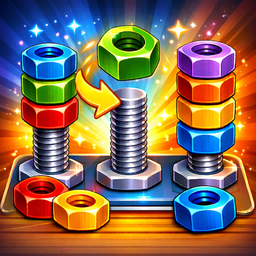
Nuts and bolts: color sorting
Staring at a blank screen during a midday slump is the worst, but finding a quick way to reset your focus is a total game changer. Nuts and bolts: col...
▶ Play FreeBubble-Based Puzzle Games
Bubble Shooter: Bubble Puzzle Game bridges the gap between sorting games and arcade-style puzzle games. You shoot colored bubbles at a hanging cluster, matching colors to clear them. There's a sorting logic component (which color should I aim at to create a cascade?) but it adds the aiming mechanic for a different kind of challenge.
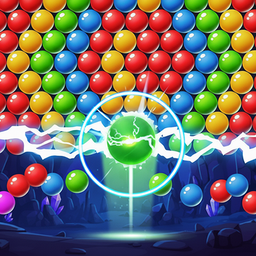
Bubble Shooter: Bubble Puzzle Game
Need a quick mental escape from the daily grind? Bubble Shooter: Bubble Puzzle Game is your go-to for instant fun and satisfying puzzle-solving. This ...
▶ Play FreePure Logic Puzzles
Sudoku: Classic Puzzles is the obvious choice for players who want the pure logical deduction experience of water sort without any spatial or color element. You're solving constraint problems with numbers instead of colors. If you find yourself solving water sort levels by writing out possibilities, Sudoku is your game.
Sudoku: Classic Puzzles
Place numbers from one to nine into the grid making sure every row and column holds each digit only once. Mastering Sudoku: Classic Puzzles requires s...
▶ Play FreeHexagon Puzzle applies spatial arrangement logic on a hexagonal grid, which introduces a layer of complexity that rectangular grids don't have — each cell touches 6 neighbors instead of 4, which changes how shapes fit together in unintuitive ways. Harder to learn, very satisfying to master.
All these games are free to play in your browser with no installation required. They're organized by the same genre logic as water sort: state → constraints → optimal move → satisfaction. Once you're wired for that loop, switching between them feels natural.