How to Play Block Puzzle Games: Tips, Strategies & Best Games
Block puzzle games are one of those genres that look deceptively simple but can keep you hooked for hours. You drop shapes, fill rows, clear lines — and somehow an hour disappears. If you're figuring out how to play block puzzle games for the first time, or you've been playing casually and want to actually get good, this guide covers everything from basic mechanics to advanced techniques and the best free games you can jump into right now.
What Are Block Puzzle Games
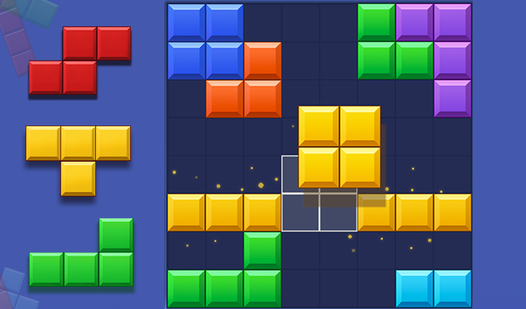
Block puzzle games are logic-based games where you place geometric pieces onto a grid to form complete lines or fill specific areas. The core loop is satisfying in a way that's hard to explain but easy to feel: scan the board, find where a piece fits, place it, watch a row or column vanish, repeat.
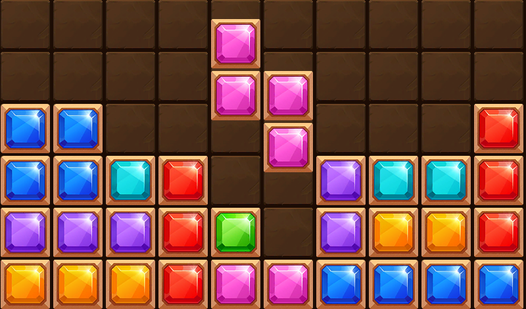
The genre traces its roots back to Tetris — arguably the most famous block puzzle game ever made — but modern variations have exploded in variety. You'll find games where blocks don't fall (you drag them freely), games with hexagonal grids, gem-themed boards, mosaic puzzles, and color-matching variants. The unifying thread is spatial reasoning: you're always asking yourself where does this piece go so I don't run out of space?
What makes block puzzles so broadly appealing:
- Low barrier to entry — the rules can be explained in under a minute
- High skill ceiling — truly mastering board management takes serious pattern recognition
- No time pressure in many variants — you can think at your own pace
- Satisfying feedback loops — clearing multiple lines at once feels genuinely rewarding
Block puzzles are also genuinely good for your brain. Regular play strengthens spatial reasoning, short-term working memory, and pattern recognition. That's not marketing fluff — these are real cognitive skills that transfer into everyday life.
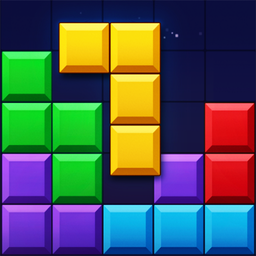
Blocks and that's it
Feeling that midday slump or need a quick mental refresh? Blocks and that's it is your perfect escape, offering a delightful challenge that sharpens y...
▶ Play FreeHow Block Puzzles Work — Core Mechanics
Even though block puzzle games vary widely in theme and style, they share a common mechanical foundation. Understanding these mechanics is the first step to playing block puzzles well.
The Grid
Almost every block puzzle game uses a grid — typically 8×8 or 10×10 squares, though hexagonal and irregular grids exist. The grid is your playing field. Your job is to manage the space on it: place pieces efficiently, avoid fragmentation, and clear filled rows or columns before the board fills up.
The Pieces
Pieces are polyominoes — shapes made of connected squares (or hexagons, in some games). Common shapes include:
- Single squares
- Straight lines (2, 3, 4, or 5 squares long)
- L-shapes and J-shapes
- T-shapes
- S and Z shapes
- 2×2 blocks
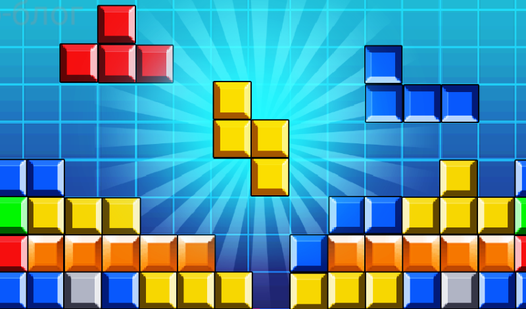
In Tetris-style games, pieces fall from above and you rotate them. In drag-and-drop block puzzles, you're given 2–3 pieces at a time and place them anywhere on the board. The distinction matters: falling-piece games test your reflexes; drag-and-drop games test your planning.
Clearing Lines
The primary scoring mechanic: when you fill an entire row or column (or sometimes both), it clears. Cleared lines free up space and earn points. Clearing multiple lines simultaneously — called a combo — scores significantly more.
Game Over Conditions
You lose when a new piece can't fit anywhere on the board. This happens gradually: as the board fills up with oddly shaped gaps, eventually nothing fits. Avoiding this is the entire game.
Rotation
Some block puzzle games let you rotate pieces; others don't. In rotation-enabled games (like classic Tetris-style titles), this dramatically changes strategy because you can flip an L-shape into a J-shape or stand a horizontal piece vertically. In no-rotation games, what you see is what you get — and that forces even tighter spatial planning.
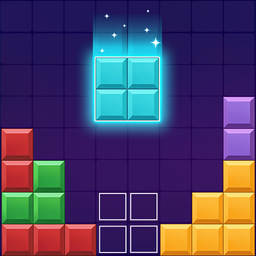
Block Puzzle: Falling shapes
Falling blocks carry a unique thrill that has defined classic gaming for generations. Block Puzzle: Falling shapes takes this timeless concept and ref...
▶ Play FreeStrategies for Clearing Blocks Efficiently
Knowing the rules is one thing. Playing well is another. Here are the strategies that separate casual players from people who actually rack up high scores.
Keep the Board Flat
The single most important principle in block puzzle games: maintain a flat, even board surface. Jagged peaks and valleys are your enemy. When you have uneven columns, incoming pieces are more likely to leave awkward gaps, which cascade into more gaps, which eventually locks you out.
Every time you place a piece, ask: am I evening out the board or creating a spike? Avoid stacking on top of existing high columns unless you're intentionally setting up a clear.
Think 2–3 Pieces Ahead
In drag-and-drop block puzzles, you're shown your next 2–3 pieces at once. Don't just place the current piece — look at all three and think about how they work together. Sometimes the right move for the current piece is counterintuitive until you see how it sets up the next two.
In falling-piece games, use the "next piece" preview aggressively. Always know what's coming and position accordingly.
Prioritize Combos Over Single Clears
Clearing one line at a time is fine. Clearing two or three simultaneously is where the score really accelerates. Position pieces so that a single placement completes multiple rows or columns at once. This requires leaving deliberate gaps that will be filled by a specific upcoming piece — risky, but high-reward.
Never Leave One-Square Holes
A 1×1 gap surrounded by filled squares is almost impossible to fill. Only a single-square piece can go there, and many block puzzle games don't give you single squares often enough. When you see yourself about to create a 1×1 hole, find a different placement — even if it's less efficient for the current piece.
Work the Corners
Corners are the hardest spots to clear because pieces can only approach them from two directions instead of four. Fill corners early when you have flexible pieces that fit there. Leaving corners open late in the game creates problems that cascade to the center of the board.
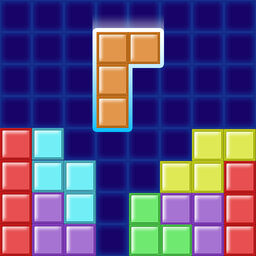
Block Puzzle Gem
Ever wondered what makes classic puzzle games so endlessly engaging? Block Puzzle Gem takes that timeless appeal and polishes it to a brilliant shine,...
▶ Play FreeManage Piece Variety
Block puzzle games typically cycle through a range of piece types. If you've been getting lots of straight lines, expect irregular shapes soon. Keep some open columns ready for straight pieces and open corners/edges for L-shapes. Players who plan only for the pieces they have — not the pieces they'll likely get — hit walls faster.
Advanced Techniques and High Score Tips
Once you've internalized the basics, there's a second tier of strategy that unlocks genuinely high scores and extended run times.
The T-Spin Concept (and Its Variants)
In Tetris-style games, a T-spin is when you rotate a T-shaped piece into a slot that couldn't be filled by sliding in directly. This is an advanced technique that earns bonus points and lets you fill gaps that would otherwise be unclearable. In modern block puzzle games, rotation-based tricks vary by game, but the underlying idea is the same: use rotation as a placement tool, not just an orientation tool.
Hold Strategy
Many block puzzle games let you "hold" a piece — set one aside to use later. If you're not using your hold slot, you're leaving a major strategic tool on the table. Hold pieces that don't fit cleanly right now but will clearly be useful in the near future. Don't hold the same piece forever — cycle it in when the moment arrives.
Stack Intentionally, Not by Default
Some high-level players deliberately stack one side of the board high while keeping the other side low — a technique sometimes called "skyscraper stacking." This creates a predictable, stable structure where lines clear more consistently. It's counter-intuitive but effective because it forces the board into a pattern you can manage, rather than letting it devolve into random mess.
Recognize When to Sacrifice Points for Safety
Sometimes the highest-scoring placement isn't the safest. If going for a triple-line clear means leaving a treacherous gap, it might be smarter to take the single clear and keep the board manageable. High scores come from surviving long enough to rack up many clearings, not from one spectacular combo that ends your run.
Speed and Pattern Recognition
At higher levels, block puzzle games reward players who can instantly recognize where a piece fits without deliberating. This comes from repetition — the more you play, the more placements become instinctive. Speed players scan the board in a Z-pattern (top-left to top-right, then bottom-left to bottom-right) to quickly identify the best spot.
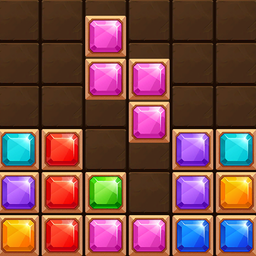
Block Puzzle: Block Builder
Puzzle lovers and fans of classic brain teasers will find Block Puzzle: Block Builder an incredibly addictive experience. This isn't just another bloc...
▶ Play FreeUse Empty Space as a Resource
Empty space isn't just "room to fill" — it's a strategic asset. Experienced players preserve specific open zones specifically for the awkward pieces they know are coming. Think of empty space as a buffer: you're not trying to fill the whole board; you're trying to maintain enough flexibility to always have a valid move.
Best Block Puzzle Games to Play Free
Enough theory. Here are the best block puzzle games you can play right now, directly in your browser — no install, no account required.
Cute Tiles: Puzzle
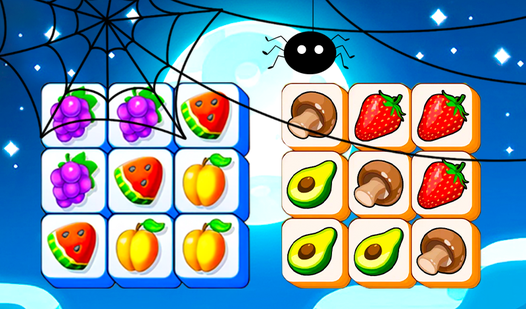
If your preferred aesthetic leans cozy and colorful rather than stark and minimalist, Cute Tiles delivers. The tile-collecting mechanic adds a layer of combo-building that goes beyond basic line clearing. You're not just placing pieces — you're chaining matches that build towards satisfying visual explosions of cleared tiles. The game's pacing is gentle enough for newcomers but has enough depth to reward dedicated players.
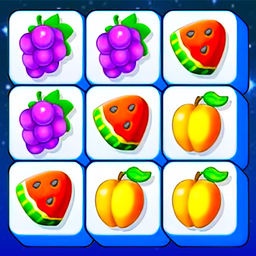
Cute Tiles: Puzzle
Feeling a bit bored and need a quick mental break? Cute Tiles: Puzzle is your cozy escape into a world of satisfying tile-matching and aesthetic charm...
▶ Play FreeBlock Blast Online
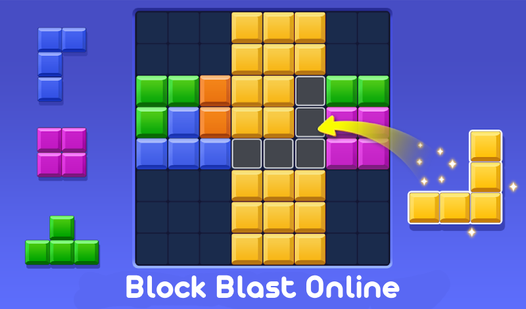
Block Blast Online is a high-energy take on the block puzzle format. It's faster-paced and competitive, making it great if you want something that tests both your spatial thinking and your speed. The online angle means you can see how your scores stack up, which adds genuine replay motivation.
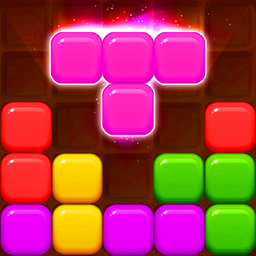
Block Blast Online
Drag and drop colorful shapes onto the 8x8 grid to clear lines and rack up high scores. Strategy is the key to success as you carefully plan your plac...
▶ Play FreeBlock Puzzle: Lines of Blocks
Lines of Blocks strips the formula down to its essentials. No distractions, no elaborate themes — just blocks, a grid, and the challenge of keeping the board clear. The minimalist design makes it a great choice if you want to practice pure strategy without anything pulling your attention away from the puzzle itself.
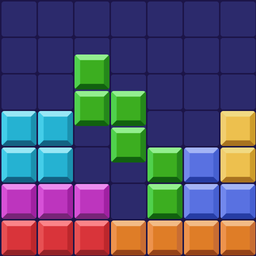
Block Puzzle: Lines of Blocks
Fans of retro arcade challenges will find their new obsession with Block Puzzle: Lines of Blocks today. This addictive game tests your ability to stac...
▶ Play FreeBlock Puzzle Smart Placement
The name says it all. Smart Placement challenges you to think carefully about every drop, rewarding deliberate over reactive play. If you find yourself rushing through block puzzles and hitting walls, this is the game that will slow you down in the best way possible.
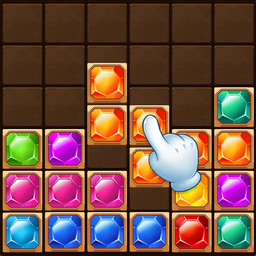
Block Puzzle Smart Placement
Staring at the clock and waiting for your next meeting or class to start can be incredibly draining when the minutes just refuse to tick by. Block Puz...
▶ Play FreeHexagon Puzzle
Most block puzzle games use square grids, which means Hexagon Puzzle is a genuine curveball. Hexagonal grids change everything: pieces have six sides to consider instead of four, adjacency rules shift, and your spatial reasoning instincts need to recalibrate. It's harder than it looks, and solving it gives a specific kind of satisfaction that square-grid games can't replicate.
Build the Picture — Mosaic Puzzle
This one bends the genre in a creative direction. Rather than clearing lines, you're building an image tile by tile, assembling a mosaic from puzzle pieces. The goal-oriented structure (you're always moving toward a visible picture) makes it especially satisfying for players who like seeing tangible progress. It's puzzle-solving with a creative payoff.
Color Puzzle: Create a Palette
Color Puzzle combines block placement with color theory — you're not just fitting shapes, you're managing hues and building palettes. This cross-genre approach makes it stand out visually and adds a layer of complexity for players who want something beyond purely geometric challenges.

Color Puzzle: Create a Palette
Arrange vibrant squares into perfect gradients to complete your masterpiece in Color Puzzle: Create a Palette. This relaxing color puzzle experience c...
▶ Play Free