How to Play Sorting Games: Rules, Tips & Strategies
Sorting games are some of the most satisfying puzzles you can find online — and learning how to play sorting games is genuinely easy once you understand the core logic behind them. Whether you're matching colored water in flasks, stacking nuts by shade, or organizing shelves full of chaotic objects, every sorting game shares a common DNA: take something messy, figure out the right order, and make it clean. This guide walks you through the rules, explains the thought process behind smart play, and points you toward the best titles to sharpen your skills.
Basic Rules of Sorting Games
At their core, sorting games operate on one simple principle: group identical items together. The complexity comes from constraints — limited space, items stacked on top of each other, or a board that fills up faster than expected. Here are the universal rules you'll encounter across nearly every sorting game.
Groups must be pure. A stack, shelf, or container is only considered "complete" when it holds items of the same type or color — and nothing else. A mixed stack is always unfinished.
Order matters in stack-based games. In games where items pile on top of each other (like water sorting or color tube puzzles), you can only interact with the item on top. You can't reach the blue water at the bottom of a tube until everything above it is moved elsewhere.
Moves are limited in space, not always in count. Most sorting games give you unlimited moves but limited room. You'll often find yourself stuck not because you ran out of turns, but because every container is partially full and nothing fits anywhere. This is the central tension you're solving.
Completion triggers automatically. When a group is fully assembled in its designated space, the game usually locks or removes it, freeing room. This is your reward — and your next opportunity.
Empty spaces are your best friends. An empty container, shelf, or slot is pure potential. Protect empty spaces like they're precious resources, because they often are.
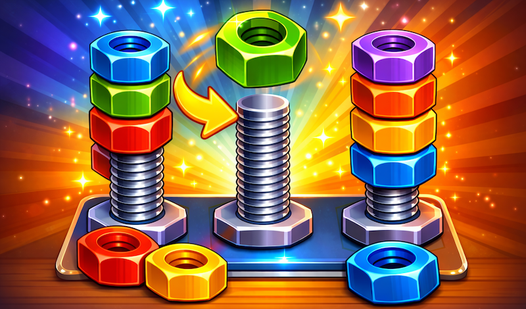
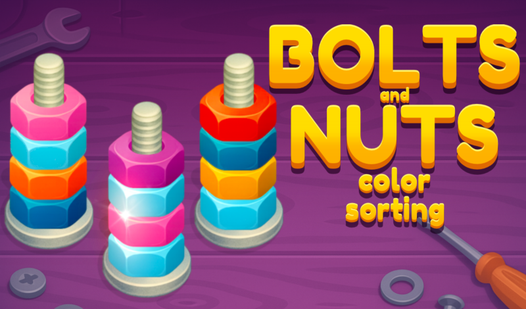
Let's look at this in practice. In Nuts and Bolts: Color Sorting, you're given bolts of various colors and nuts that need to match them. The rule is simple: each bolt only accepts a nut of its own color. But the board gets crowded quickly, and figuring out which nut to move first — without blocking yourself — is where the real puzzle begins.
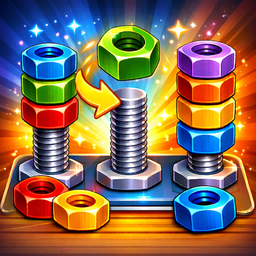
Nuts and bolts: color sorting
Staring at a blank screen during a midday slump is the worst, but finding a quick way to reset your focus is a total game changer. Nuts and bolts: col...
▶ Play FreeOnce you understand the "pure group" rule and the importance of sequencing your moves, about 80% of sorting games become approachable. The remaining 20% is about thinking ahead — which brings us to strategy.
How to Solve Color Sorting Puzzles
Color-based sorting puzzles are the most popular subgenre, and they reward a specific type of thinking: working backwards from the end state. Here's a proven method to solve them.
Step 1: Count your groups and your spaces
Before making a single move, scan the board. Count how many distinct colors (or types) you're working with, and count how many slots or containers you have. If you have 6 colors and 7 containers, you have one empty space to work with. That's tight. If you have 6 colors and 10 containers, you have room to maneuver. This ratio tells you how aggressive or careful you need to be.
Step 2: Find the most "buried" color
Look for the color that appears deepest in the most stacks. That's your priority target — you need to unbury it before anything else, or it'll block you forever. Plan a chain of moves that gradually surfaces it.
Step 3: Create a free container on purpose
Resist the urge to immediately start sorting. Instead, make your first few moves with the goal of creating one completely empty container. This buffer space gives you somewhere to temporarily park items while rearranging. Without it, you'll get trapped.
Step 4: Sort from the bottom up
Once you've identified your buried colors and have a free container, start completing groups from the bottom of stacks upward. Move top-layer items to free space, surface the buried color, then consolidate it into its proper container.
Step 5: Never fill your empty container unless you're completing a group
This is the most important discipline in color sorting. An empty container filled with a random item is an emergency measure, not a strategy. Only fill it permanently when you're placing a complete, final group there.
Water Sorting Puzzle is the classic training ground for all of these skills. Colored water in glass tubes can only be poured onto matching-colored water (or into empty tubes), and the visual of liquid flowing and layering makes the logic satisfyingly concrete.

Water Sorting Puzzle
Logic puzzles that challenge your spatial reasoning are the perfect way to sharpen your mind during a short break. Water Sorting Puzzle turns simple c...
▶ Play FreeDealing with hexagonal or non-standard grids
Some games break out of the standard container format. Hexa Tiles: Sorting arranges items on a hexagonal grid, which means each piece has up to six neighbors instead of the usual four. The same logic applies, but your path planning needs to account for the expanded adjacency — an item might be blocked from multiple directions at once.
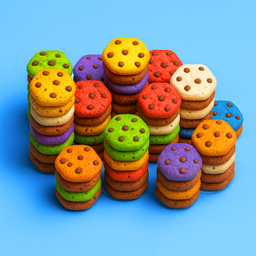
Hexa Tiles: Sorting
Sorting games have evolved into a masterclass of logic, and Hexa Tiles: Sorting takes this concept to a satisfying new level of complexity. You will f...
▶ Play FreeThe "look three moves ahead" habit
Experienced sorting players always think at least three moves forward. Before making any move, ask: "After I do this, where will that item end up? And after that, what's my next move?" If you can't answer those questions, slow down. Sorting games rarely punish you with time limits — they reward patience.
Common Mistakes Beginners Make
Even with the rules understood, beginners fall into predictable traps. Recognizing these patterns early will save you a lot of frustration.
Mistake #1: Moving things just because you can
The most common beginner error is treating a sorting puzzle like a memory game — moving items quickly and hoping the board organizes itself. It doesn't. Every move should be intentional. If you can't explain why you're making a move, don't make it.
Mistake #2: Filling every empty space immediately
Empty containers feel wasteful. New players instinctively fill them. This is almost always wrong. An empty container is a tool. Using it up on the first available item leaves you with no flexibility when you hit a dead end two moves later.
Mistake #3: Focusing on the easiest color, not the most blocked one
Beginners naturally sort the color that's most visible or most concentrated at the top of stacks. But easy colors usually take care of themselves. Invest your early effort in unblocking the colors that are trapped deep — those are the ones that will cause a cascade failure if ignored.
Mistake #4: Ignoring shelf-based game logic
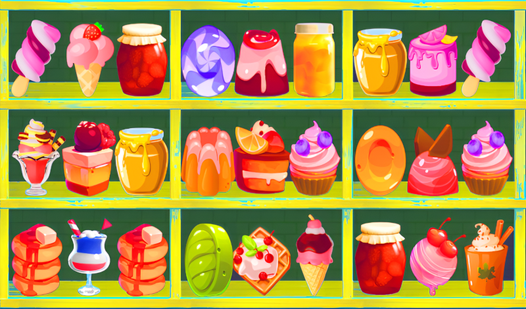
Object and shelf sorting games add a spatial dimension: items have sizes and shelf heights. In Alive Food: Shelf Sorting, food items need to land on shelves where they actually fit, and identical items stack together. Beginners try to match items visually before checking if there's physical room. Always check space first, match second.
Mistake #5: Not using the undo button
Most sorting games have an undo button. Use it freely. Sorting puzzles are designed to be solved — there's always a valid solution — so if you've moved yourself into a corner, undo is not cheating. It's part of the intended toolset. Get comfortable undoing three, four, or five moves when you realize a sequence was wrong.
Mistake #6: Assuming each puzzle has only one solution
Many beginners get attached to one approach and keep retrying the same sequence when it doesn't work. Sorting puzzles often have multiple valid solutions. If your current plan isn't working after several attempts, try a completely different opening sequence. A different first move can unlock a completely different path.
Mistake #7: Treating emoji or symbol sorting like color sorting
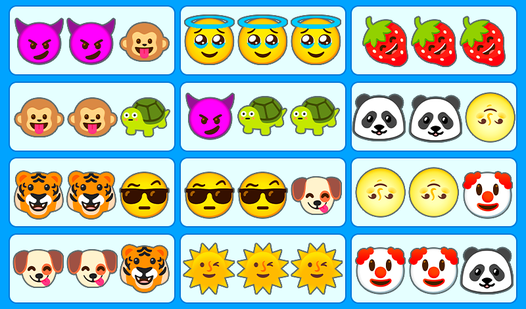
Some sorting games use symbols, emojis, or shapes instead of colors. The matching logic is the same, but the visual distinction is harder to track at a glance. In Put in Place: Emoji Sorting, you're connecting and placing identical emojis into cells, and the variety of shapes makes it easy to confuse similar-looking icons. Slow down and verify matches carefully before committing.
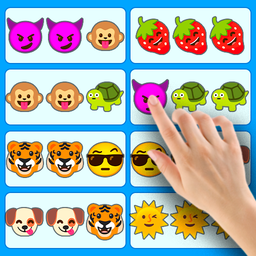
Put in place: Emoji Sorting
Fans of brain-teasing challenges will find their new obsession in Put in place: Emoji Sorting. This addictive puzzle experience tasks you with organiz...
▶ Play FreeBest Sorting Games to Practice With
Theory is useful, but practice is where skills actually develop. Here are the best games for building your sorting instincts, organized by what skill they develop best.
For learning the fundamentals: Sorting Nuts by Color
If you want to understand sorting game logic from the ground up, Sorting Nuts by Color is the cleanest introduction. The task is exactly what it sounds like — sort nuts by their color into the right containers. There's no fluff, no complex mechanics, just pure sorting logic. It's an ideal first game because your mistakes are immediately visible and easy to understand.

Sorting Nuts by Color
Arrange colorful hardware onto matching bolts to clear your board in this addictive logic challenge. You must carefully drag and drop each piece to en...
▶ Play FreeFor building spatial awareness: Clean the Room
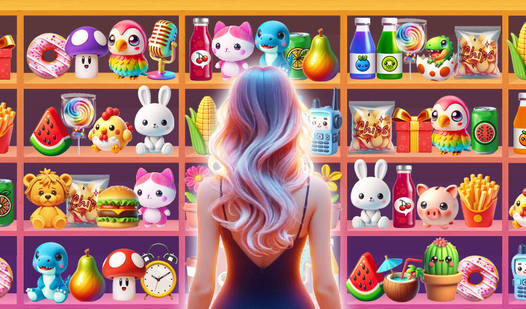
Clean the Room: Shelves and Objects Sorting takes sorting into a more realistic context. You're organizing a messy room, placing objects onto shelves where they belong. The puzzle introduces size constraints, shelf limits, and the need to think about which item to place first to leave room for larger ones. It builds the spatial reasoning skills that carry over to all other sorting types.
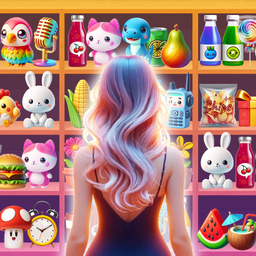
Clean the Room: Shelves and Objects Sorting
Staring at a cluttered desk while your mind drifts away is a common afternoon slump that needs a satisfying fix. Clean the Room: Shelves and Objects S...
▶ Play FreeFor learning to plan sequences: Bolts and Nuts Color Sorting
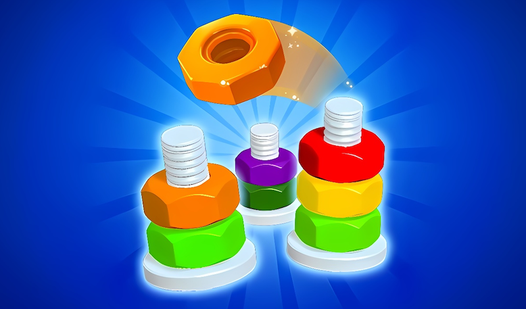
Bolts and Nuts Color Sorting ramps up the complexity of the nut-bolt matching concept. With more colors, more pieces, and tighter board space, this game forces you to plan three to five moves ahead consistently. It's the ideal progression after you've mastered simpler bolt games.
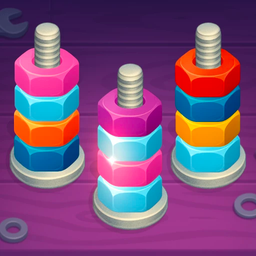
Bolts and Nuts Color Sorting
Logic enthusiasts and fans of satisfying brain training challenges will find Bolts and Nuts Color Sorting impossible to put down once they start. This...
▶ Play FreeFor developing creative thinking: Magic Sorting
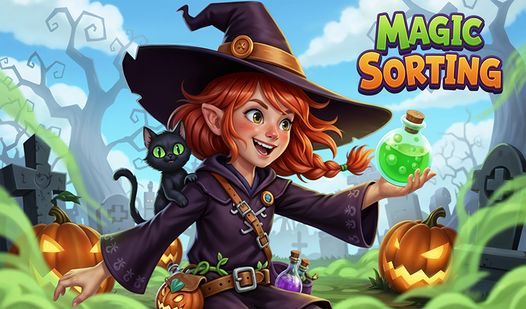
Magic Sorting wraps sorting mechanics in a fantasy setting where you're directing magical items into portals. What makes this one valuable as a practice game is the variety — different item shapes, portal constraints, and board layouts keep you from falling into a single solve pattern. The game rewards flexible thinking over rigid formula application.

Magic Sorting
Sorting mystical clutter feels surprisingly satisfying when you realize everything in the wizarding world has its perfect place. Magic Sorting transfo...
▶ Play FreeFor a real challenge: Sorting Sweets on Shelves
Once you feel confident in the basics, Sorting Sweets on Shelves is a satisfying difficulty spike. You're placing candy and sweets onto shelves, but the item variety is high and the shelf configurations get increasingly specific. This game tests everything at once: spatial reasoning, sequence planning, color/type matching, and efficient use of empty space.

Sorting Sweets On Shelves
Fans of colorful puzzle challenges will find Sorting Sweets On Shelves to be the ultimate relaxing experience for their daily break. Organizing these ...
▶ Play FreeGeneral tips for practice sessions
Play without the hint button for the first attempt. Hints are a crutch that short-circuits the learning process. Even if you fail the puzzle, the failed attempt teaches you something. Only use hints after you've genuinely exhausted your own ideas.
Replay puzzles you failed. This is counterintuitive but effective. A puzzle you failed once is a puzzle you now understand better — you know one wrong path. Your second attempt will almost always go further. Your third will often succeed.
Notice what didn't work. When you get stuck, pause before hitting undo or restart. Ask yourself: "What's blocking me right now? What would I need to have done differently to avoid this?" This habit builds pattern recognition that transfers to new puzzles.
Play sorting games unblocked. One advantage of browser-based sorting games unblocked on FreeJoy is that there's no download, no account needed, and you can jump between different sorting types quickly. Switching between a color tube game and a shelf-organization game in the same session actually improves your flexibility, because each type reinforces different aspects of sorting logic.
Advanced Strategies
Once you've got the basics down and you've played through a few different game types, these advanced approaches will help you clear harder levels.
The "sacrifice move" technique
Sometimes the best move is deliberately putting an item in a suboptimal position to open up a critical path. This looks wrong at first glance — you're making a mess to clean it up later — but it's often the key to unlocking a stuck board. Accept that some moves are temporary setups, not final placements.
Working in "waves"
On complex boards, don't try to complete every group at once. Instead, pick two or three colors and fully commit to clearing those, ignoring everything else. Once those groups are complete and their containers locked, the board has more space and the remaining groups become easier. Trying to make small progress on everything simultaneously usually leads to gridlock.
The "reverse engineering" approach for hard levels
For especially challenging puzzles, try this: look at the board and ask, "What does this board need to look like just before it's solved?" Work backwards from that nearly-complete state. What sequence of moves would produce that layout? Then work backwards one step further. This reverse-engineering approach is slower but handles levels that seem to have no valid starting sequence.
Recognizing "forced" moves
In well-designed sorting puzzles, some moves are forced — there's only one legal or sensible move available. Spotting these forced moves early lets you skip deliberation and save mental energy for the genuinely choice-based moments. A forced move is one where not making it would immediately block you with no recovery.