How to Play Fruit Merge Games: Tips & Strategy Guide
Fruit merge games have taken the browser gaming world by storm — and once you understand how to play fruit merge, it's almost impossible to stop. The concept is deceptively simple: drop pieces into a container, combine matching ones, watch them evolve into something bigger and more satisfying. But underneath that simple loop lies a surprising amount of depth. Whether you're just picking up your first merge title or you're chasing leaderboard records, this guide covers everything — the mechanics, the strategy, the mistakes that quietly kill your score, and the best games to start with right now.
What Are Fruit Merge Games
Fruit merge games are a subgenre of casual puzzle games where you drop items into a confined space and merge identical pieces to form progressively larger versions. The most famous example is the "Watermelon Game" (Suika Game), but the genre has since exploded into dozens of themed variants — planets, flowers, cocktails, stones, and more.
The core loop goes like this: you have a queue of pieces, you drop them one at a time into a play area, and when two identical pieces touch, they fuse into the next tier. The chain continues: two tier-1 items become one tier-2, two tier-2 become one tier-3, and so on. The goal is to keep scoring without overflowing the container.
What makes the genre so compelling is the physical simulation. Most fruit merge games use real-time physics, so pieces bounce, roll, and stack unpredictably. That unpredictability is both the source of frustration and the source of the best moments — when a cascade of merges triggers from a single well-placed drop.
The "watermelon game free online fruit merge" searches you see everywhere trace back to this original formula. But the genre has grown far beyond watermelons. Space-themed merge games, musical merge games, and puzzle-hybrid variants have all carved out their own audiences, each adding a twist that makes the mechanics feel fresh.
Basic Merging Mechanics Explained
Before thinking about strategy, you need a solid grip on how to play fruit merge at a fundamental level. Here's what's actually happening under the hood.
The piece queue. Most games show you the current piece and the next one in your queue. Some show two or three upcoming pieces. This preview is critical — it lets you plan where to drop rather than reacting blindly.
Drop positioning. You control where along the horizontal axis a piece falls. The piece then falls under gravity and interacts with whatever it lands on. Most games let you adjust the drop position while the piece is still in the air, so take your time.
Merge triggers. A merge happens the instant two identical pieces make contact. The resulting merged piece appears in the position where the collision occurred, which means your stack reshapes every time a merge happens. This can cause chain reactions — a new merged piece might immediately touch another matching piece and trigger another merge.
Chain reactions. Chains are where the big points come from. When a single drop causes two or three merges in sequence, you earn significantly more points than the base value of each piece. Learning to set up chains rather than just placing pieces efficiently is the core skill gap between beginner and intermediate players.
The overflow condition. If pieces stack above the container's boundary (or fill an orbit, in space-themed variants), the game ends. Managing vertical space is the constant pressure that makes every decision matter.
Gravity and physics. Different games implement physics differently. Some are heavier and more realistic — pieces roll and settle slowly. Others are bouncier, which means a badly angled drop can cause chaos. Paying attention to how a specific game's physics behave in the first few rounds is worth more than any general tip.
Piece tiers. The typical fruit merge game has 10-12 tiers. The lower tiers (cherries, grapes) appear frequently in your queue. Higher tiers (watermelons, giant fruits) are rare and only appear via merging. The highest-tier piece is usually worth a disproportionately large number of points, so chasing it drives the late-game strategy.
How to Play Fruit Merge: Scoring Strategies and Combo Tips
Understanding the mechanics is the entry point. Building a high score requires deliberate strategy. Here's what separates average runs from great ones.
Build from the bottom up. New players tend to spread pieces across the container width. This creates a messy surface with no clear merge opportunities. Instead, try to build toward one side or corner first. Pack pieces tightly in a column, so that when a merge happens, the resulting piece naturally rolls into contact with other pieces and triggers a chain.
Keep your highest-tier pieces low. The bigger the piece, the more space it takes. If your largest pieces are near the top of the stack, you lose headroom fast. When you can, guide higher-tier pieces toward the bottom or sides by using smaller pieces as ramps.
Plan two or three moves ahead. You have a piece queue for a reason. If your next piece is the same as something sitting at the top of your current stack, plan the current drop to clear space for that incoming match.
Use "waiting positions." Sometimes the right move is to hold a piece on one side of the container while you work on the other side. Not every piece needs to go toward the active stack immediately.
Trigger merges intentionally, not reactively. Reactively dropping pieces into whatever gap is available works for a few rounds but creates chaos fast. Before each drop, ask: does this create a merge immediately, or does it set up a merge on the next move? Both are fine — but drops that do neither are usually wasted moves.
Chase the mid-tier combos. The lowest-tier pieces are so common that merging them gives small rewards. The highest-tier pieces are rare enough that obsessing over them leads to bad drops. Mid-tier combos — pairs in the tier-4 to tier-7 range — give the most practical score-per-drop ratio and happen frequently enough to plan around.
Don't let the container fill evenly. A flat, evenly distributed stack is actually one of the worst configurations in play games fruit merge scenarios, because flat stacks give you no room for drops without stacking high. A slightly uneven surface, with a clear low point, gives you a "drop zone" where new pieces can settle without threatening the ceiling.
Score multipliers and bonuses. Many variants add score multipliers for consecutive merges within a short time window, or bonus points for placing pieces in specific zones. Read the game's scoring breakdown if it's displayed — sometimes optimizing for a bonus mechanic is worth more than raw piece merging.
Common Mistakes to Avoid
These are the patterns that kill runs, and they're almost universal among players learning how to play fruit merge for the first time.
Dropping too fast. The timer pressure is usually low in merge games, but players create artificial urgency. Dropping quickly feels productive but skips the planning that makes the difference. Take a breath. Look at the queue. Place with intention.
Ignoring physics. In games with real physics simulation, pieces don't always land where you aim. A piece dropped near a rounded surface will roll. A lightweight piece dropped from height will bounce. Spend the first two or three minutes of any new game just watching how pieces behave before committing to a strategy.
Hoarding space for big merges. It feels smart to leave a dedicated slot for tier-8 pieces, but holding that slot empty while your stack climbs to the ceiling is a losing trade. Use space dynamically, and trust that big merges will happen naturally when you maintain good stack hygiene.

Merge Planets: Suika puzzle
Space enthusiasts and fans of addictive brain teasers will find themselves hooked on Merge Planets: Suika puzzle from the very first drop. This celest...
▶ Play FreeChasing the highest tier piece too early. Yes, a watermelon or equivalent end-tier piece is worth a lot of points. But engineering your stack entirely around summoning one, while neglecting mid-tier matches, usually leads to overflow before you get there.
Playing every game the same way. This is subtle but important. Fruit merge is a genre, not a single game. A space-themed variant where pieces orbit instead of stack has completely different optimal play compared to a traditional drop-and-merge. Resist applying the same muscle memory across different titles without adjusting.
Not reading the end-game signals. Most experienced players develop an instinct for when a run is "saved" versus "doomed." If your stack is within two or three rows of the limit and you don't have an obvious chain setup, you're probably in trouble. Recognizing that state early lets you make defensive plays — like dropping small pieces in gaps — rather than going for aggressive merges that risk knocking pieces higher.
Best Fruit Merge Games to Play Now
The genre is packed with options. Here are the standouts currently available, each doing something genuinely different with the core formula.
Stellar Merge takes the Suika-style formula and gives it a cosmic skin with real physics. What stands out is how the weight differences between celestial bodies affect the stack dynamics — larger pieces don't just take space, they shift everything around them. It rewards the same positional strategy as classic fruit merge but makes every session feel like you're managing a miniature solar system.
Fruit Frenzy is the closest to the traditional watermelon game format but brings genuinely excellent visual design to the table. The fruit designs are expressive, the merge animations feel satisfying, and the pace hits a nice rhythm that encourages longer sessions. If you want to practice the foundational skills of play fruit merge games in the most accessible environment, Fruit Frenzy is the best place to start.
Merge Planets: Suika Puzzle is the most mechanically distinct entry on this list. Instead of a container, pieces orbit a central point, and the overflow condition isn't a ceiling — it's the orbit boundary. This flips the usual spatial logic on its head and demands a completely different strategy. Worth playing simply to expand your understanding of what the genre can do.
Merge Planets: Suika puzzle
Space enthusiasts and fans of addictive brain teasers will find themselves hooked on Merge Planets: Suika puzzle from the very first drop. This celest...
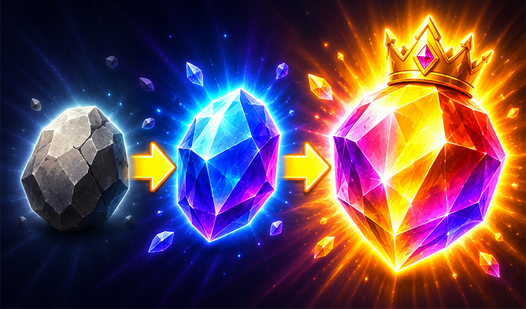
▶ Play FreeStone Merge: 2048 hybridizes the merge genre with 2048's number-matching system. You're not just matching visual tiers — you're tracking numerical values and planning chains that hit specific merge thresholds. It adds a strategic layer that rewards players who can track numbers while managing physical space simultaneously.

Stone Merge: 2048
Drop colorful stones from the top of your screen to create massive chain reactions and climb the leaderboard. Stone Merge: 2048 challenges you to find...
▶ Play FreeMerge the Flowers: Create a Summer Meadow! shifts the competitive element to multiplayer. Rather than just managing your own field, you're racing to connect as many flowers as possible before your opponent does. The same positional strategy applies, but the pace is faster and the pressure is social rather than solo. It's one of the best options if you want to test your skills against another player in real time.

Merge the Flowers: Create a Summer Meadow!
Staring at the clock and waiting for your shift to end feels like an eternity when the workday hits a slump. Merge the Flowers: Create a Summer Meadow...
▶ Play FreeBeyond those featured picks, the genre has expanded into some genuinely creative directions. There are themed variants covering everything from holiday ornaments to musical characters — each one applies the core merge mechanic to a new visual world.

Merge Cocktails: A Hot Party!
Combine colorful drinks in Merge Cocktails: A Hot Party! to climb the global leaderboard and show off your matching skills. You control falling glasse...
▶ Play Free
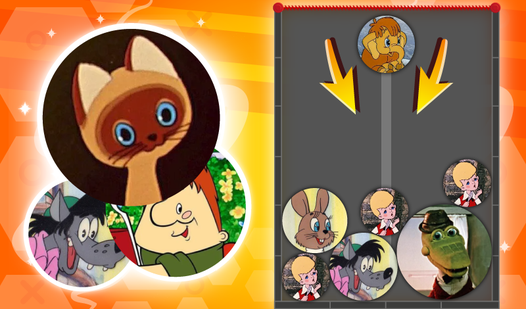
Merge characters from the USSR
Nostalgia meets addictive puzzle mechanics in a refreshing twist on the classic gravity-based matching genre. Merge characters from the USSR forces yo...
▶ Play Free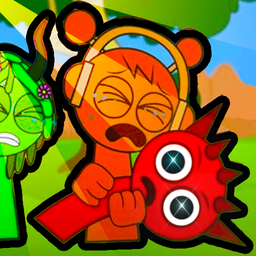
Sprunki Cry Help Them Merge
Fans of cute creature evolution games will find their new obsession with Sprunki Cry Help Them Merge. These adorable Sprunki characters are feeling lo...
▶ Play Free
Merge the planets of the solar system 2048!
Staring at a blank screen during a midday slump is a recipe for boredom that only a quick cosmic escape can fix. Merge the planets of the solar system...
▶ Play FreeIntermediate Techniques Worth Knowing
Once you've got the basics and the strategy foundation, there are a few higher-level plays worth adding to your toolkit.
The "corner stack" technique. Pick a corner and deliberately stack toward it. The corner limits rolling and bouncing, gives you more predictable placement, and creates a clear column structure where chains travel vertically rather than spreading sideways. This is the most consistent way to maintain high-tier pieces at the bottom.
Controlled sacrifice. Sometimes you have a piece in your queue that has no good placement. Rather than taking a bad drop in a critical zone, place it somewhere low-risk — a corner gap, an edge pocket — essentially "parking" it where it does minimal damage. This keeps your main stack cleaner for the pieces you can actually use.
Reading the queue rhythm. In most games, the piece queue isn't purely random — tier distributions follow loose probability weights. Lower tiers appear more frequently early, and the game adjusts based on your current score or stack density. After a few hours of play, you'll start to feel these rhythms and anticipate what's coming more reliably.
The "soft reset" play. If your stack is dangerously high on one side, you can sometimes use a cluster of low-tier pieces to fill the opposite side, creating a more balanced surface. This gives you room to work on the high side without the immediate overflow risk.