How to Play Upgrade Games: Rules, Strategies & Tips
If you've ever wondered how to play Upgrade — one of the most addictive game genres online — you're in the right place. Upgrade games follow a simple but deeply satisfying loop: start weak, grind resources, get stronger, repeat. Whether you're improving a sword, evolving a monster, or expanding a business empire, the core formula stays the same and stays fun. This guide breaks down the rules, the strategies, and points you to the best free Upgrade games you can play right now on FreeJoy.
What Is an Upgrade Game?
Upgrade games are a genre built around one central idea: progression. You start with something limited — a weak weapon, a small creature, a basic shop — and through gameplay actions you make it better. Better gear leads to tougher enemies, tougher enemies drop better rewards, and the loop keeps spinning.
The genre pulls from RPGs, idle games, and incremental mechanics. What sets Upgrade games apart from standard RPGs is the focus. You're not exploring a world map or following a storyline (usually). You're laser-focused on the numbers going up.
The typical Upgrade game structure:
- Starting point — you receive a weak base unit (sword, vehicle, creature, business)
- Resource loop — defeat enemies, collect coins, gather materials
- Upgrade tree — spend resources to improve stats, unlock abilities, or evolve forms
- Challenge scaling — each upgrade unlocks harder content that demands more upgrades
- Prestige or endgame — many Upgrade games include a reset mechanic that multiplies your progress speed
This structure makes Upgrade games extremely replayable. The satisfaction of hitting a new upgrade milestone keeps players coming back for "just one more run."
How to Play Upgrade Games: Core Rules and Mechanics
Learning how to play Upgrade correctly means understanding what each upgrade actually does — not just clicking the highest number available.
The Resource Triangle
Most Upgrade games operate on three connected resources:
- Primary currency (coins, gold, gems) — earned by playing actively
- Upgrade materials (ore, fragments, XP) — earned from specific activities
- Prestige tokens — earned by completing full runs and resetting
Mismanaging these leads to hitting a wall. Smart players spread upgrades evenly rather than maxing one stat while neglecting others.
Combat-Based Upgrade Games
In combat-focused titles, the rules are usually:
- Attack enemies to earn coins and experience
- Spend coins between waves on weapon, armor, or skill upgrades
- Bosses appear every few waves and test your current power level
- Dying often resets you to the last checkpoint or to the start
The key rule here: never skip defensive upgrades. New players obsess over attack power and then get wiped by a boss because their health stat is still at level 1.
Here's a perfect example of this formula done right:
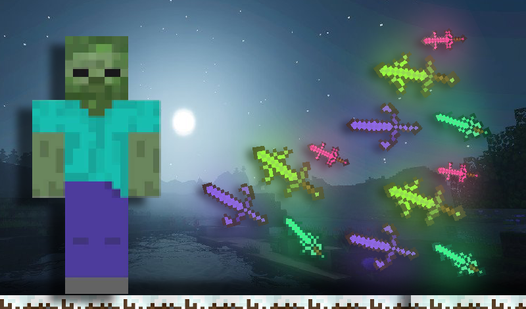
Upgrade your sword - Mine Mod! puts you in a mine where increasingly dangerous enemies block your path. You swing your sword, collect ore, and return to the upgrade screen to improve your blade. The deeper you go, the harder the mobs — but the better the loot drops.
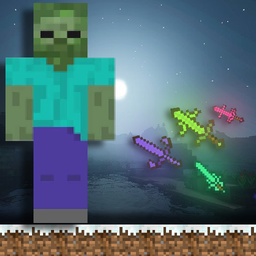
Upgrade your sword - Mine Mod!
Swing your blade to slice through waves of relentless enemies in Upgrade your sword - Mine Mod! You start as a lone warrior with a basic weapon and mu...
▶ Play FreeBusiness and Building Upgrade Games
Some Upgrade games skip combat entirely and focus on economic growth. The rules here shift:
- Earn passive income from your operation
- Invest in upgrades that increase income rate
- Hire workers or automate production to run while you're idle
- Reach profit milestones to unlock new buildings or products
The challenge isn't surviving — it's optimizing your spending order to grow the fastest.
Robbie the Businessman: Build and Upgrade captures this style cleanly. You start with a tiny building and basic equipment. Every upgrade you purchase increases your hourly profit, which funds the next upgrade. The game rewards patience and smart prioritization over fast clicking.

Robbie the Businessman: Build and Upgrade
Staring at the clock and waiting for your shift to end can be a real drag when you need a quick mental escape. Robbie the Businessman: Build and Upgra...
▶ Play FreeHow to Play Upgrade Games: Winning Strategies
Most players hit a wall around the mid-game. Here are the strategies that get you past it.
1. Prioritize Multipliers Over Flat Bonuses
When choosing between "+50 damage" and "+15% damage," do the math at your current level. Early game, flat bonuses win. But once your base damage is high, percentage multipliers outscale flat values by a wide margin. Always check whether an upgrade is flat or percentage-based.
2. Unlock the Prestige System Early
Players who ignore prestige mechanics stay stuck. Most Upgrade games give you multipliers on your next run after prestige — often 2x to 10x base stats. The first prestige feels like a setback. Every run after it feels faster and smoother.
3. Keep Your Upgrades Balanced
Max-upgrading one category while ignoring others is a trap. In combat games: if your sword does 1000 damage but you have 20 HP, a single hit ends your run. In business games: upgrading production without upgrading storage means your profits overflow and waste.
General balance guide:
- Combat games: match your defense roughly 60-70% of your offense level
- Economic games: keep production and storage upgrades within 2-3 tiers of each other
4. Learn the Enemy Scaling
Upgrade games scale enemy difficulty to your progress. In some games, enemies scale harder than your upgrades — these games want you to grind specific upgrades before advancing. In others, you can rush ahead and still survive. Knowing which type you're playing changes everything.
Upgrade Monster is a great game to practice reading enemy scaling. You start as a tiny creature and eat weaker enemies to grow. Rush too far into the map before upgrading and a stronger predator ends your run instantly. The game teaches you to respect the scaling.

Upgrade Monster
True survival of the fittest means starting as a tiny creature and dominating the food chain through sheer force. Upgrade Monster turns this primal in...
▶ Play Free5. Use Idle Time Smartly
Many Upgrade games have passive income that runs while you're not playing. Log back in after a break to collect accumulated resources and push a burst of upgrades. Some of the best progress in idle-adjacent Upgrade games comes from this offline cycle.
Upgrade Games Online: Best Free Options
Here are the top Upgrade games you can play free on FreeJoy — no downloads, no registration needed.
Upgrade Italian Animals
This one is genuinely weird and completely charming. You're upgrading bizarre "brainrot" animals — the kind of absurd internet characters that have taken over social media. Each animal has its own upgrade path and evolution chain. The humor is part of the gameplay: discovering what each animal becomes after reaching max level is half the fun.
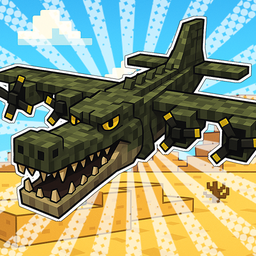
Upgrade Italian Animals
Fans of chaotic arcade adventures will absolutely love the bizarre world of Upgrade Italian Animals. This quirky experience combines fast-paced monste...
▶ Play FreeObby: Upgrade Your Gun
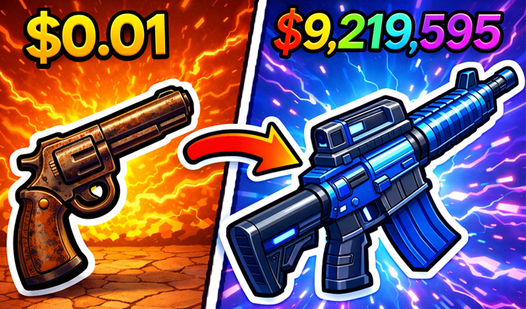
This title mixes two beloved Roblox-style formats: obby (obstacle course) and weapon progression. You run through obstacle courses while collecting upgrade points, then spend them to improve your gun. Better guns let you blast through obstacles and enemies that previously blocked you. The rare pet collection system adds a secondary progression track that keeps sessions feeling fresh.

Obby: Upgrade Your Gun
Casual gamers who crave endless progression will find Obby: Upgrade Your Gun to be an absolute blast. The loop is simple yet addictive as you constant...
▶ Play FreeUpgrade Your Ride: Evolution!
Vehicles replace weapons here. You start with a beat-up ride and upgrade every component: engine, tires, body, turbo. Each upgrade visually transforms your vehicle and unlocks faster tracks. The evolution system means your car eventually looks nothing like what you started with — a satisfying transformation.
Plants Fusion: Upgrade!
A plant-based merge-and-upgrade game. You combine plants of the same type to create stronger variants, which combine into even stronger variants. The challenge is managing your grid space while keeping the merge chain going. It's a slower, more strategic type of Upgrade game that suits players who prefer thinking over clicking.

Plants Fusion: Upgrade!
Merging mechanics turn simple gardening into a high-stakes strategy session where every placement matters. Plants Fusion: Upgrade! challenges you to s...
▶ Play FreeJelly Merge: Upgrade & Sell
Merge jellies, upgrade their value, sell for coins, buy more jellies — and repeat. The sell mechanic adds an economic twist to the usual merge loop. Knowing when to sell versus when to keep merging for a higher-tier jelly is the core strategic tension. Great for players who like economic optimization in their Upgrade games.

Jelly Merge: Upgrade & Sell
Fans of satisfying merge games and casual clicker titles will find their new obsession in Jelly Merge: Upgrade & Sell. This addictive experience tasks...
▶ Play FreeUpgrade the Fish
An underwater take on the genre. Your fish eats smaller creatures to grow, then you use collected points to upgrade swimming speed, bite strength, and special abilities. The ocean environment adds visual variety and the upgrade tree branches into multiple playstyle paths — you can go for raw power or build a fast, evasive fish instead.

Upgrade the Fish
Navigate the vast ocean as a tiny swimmer aiming to become the undisputed apex predator of the deep. You start as a small fry dodging larger threats, ...
▶ Play FreeGun's Master: Upgrade Weapon!
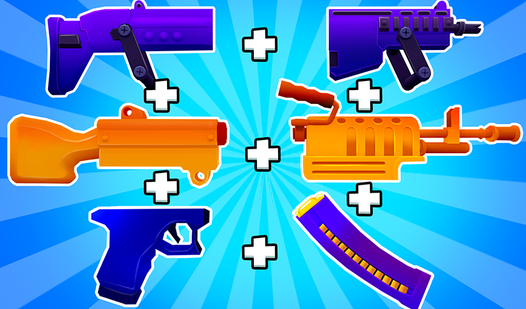
A weapon mastery game focused entirely on firearm progression. You grind combat encounters to earn weapon parts, then craft and upgrade guns to higher tiers. The crafting system adds a layer of complexity beyond simple spending — you need specific components to unlock certain upgrade paths.
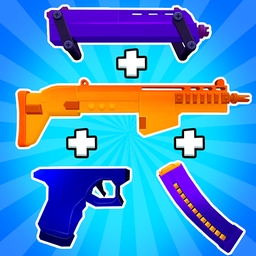
Gun's Master: Upgrade Weapon!
Casual 3D shooter fans will instantly gravitate toward the intense action found in Guns Master: Upgrade Weapon!. This addictive experience tasks you w...
▶ Play FreeTypes of Upgrade Games: Which Style Suits You?
Not all Upgrade games are built the same. Understanding the sub-genres helps you find what you'll actually enjoy.
Active vs. Idle
Active Upgrade games require constant input. You're clicking, dodging, aiming, or tapping to earn resources. The fun is in the hands-on feel of the progression.
Idle Upgrade games run while you're not watching. You check in, spend accumulated resources, set the next upgrade target, and log off. The fun is in the optimization between sessions.
Many games blend both styles — active early game that transitions into idle mechanics as you progress.
Linear vs. Branching Upgrades
Linear upgrade paths give you one route. You upgrade A, then B, then C. Simpler to understand, better for quick sessions.
Branching upgrade trees let you choose a build direction. Invest in speed or power? Defense or burst damage? These games have higher replay value because each playthrough can take a different route.
Combat vs. Economic
Combat-focused games measure success by how tough your enemies get. The feeling of defeating a boss that crushed you ten runs ago is the reward.
Economic-focused games measure success by profit growth. Watching your hourly income double after a smart upgrade chain is the reward.
Both are valid. Some players strongly prefer one over the other.
Common Mistakes New Players Make
Learning how to play Upgrade games means learning what not to do first.
Mistake 1: Buying every upgrade as soon as it's available. Some upgrades have poor value early but excellent value later. Save for the right moment instead of spending reflexively.
Mistake 2: Ignoring prestige out of fear of losing progress. Prestige resets feel bad. The multipliers you earn make every future run exponentially faster. Do your first prestige earlier than feels comfortable.
Mistake 3: Skipping tutorial hints. Upgrade games often front-load critical information in the first few minutes. Players who skip tutorials frequently miss the mechanic that explains why they keep losing.
Mistake 4: Treating all currencies the same. In games with multiple resource types, spending premium currency (often earned slowly or purchased) on things that basic currency can buy is inefficient. Premium currency is usually best saved for permanent upgrades or prestige bonuses.
Mistake 5: Not reading upgrade descriptions. This sounds basic. But plenty of players upgrade by instinct without reading what each option actually does. Two upgrades at the same price can have wildly different actual value based on your current build.
Why Upgrade Games Are So Addictive
There's real psychology behind why Upgrade games are so hard to put down.
The core mechanic taps into the variable reward system — the same mechanism behind social media feeds and slot machines. You never know exactly when the next big power spike will hit, so you keep playing to find out.
Upgrade games also give you constant visible progress. Numbers go up. Stats change. Your character visually transforms. This continuous feedback loop keeps the brain engaged in a way that games with more subtle progress often can't match.
Finally, Upgrade games have low floors and high ceilings. You can start playing in 30 seconds with no prior knowledge. But mastering the optimal upgrade order, prestige timing, and resource balance can take dozens of hours. This range makes the genre work for casual and committed players equally.
Playing Upgrade Games on FreeJoy
FreeJoy hosts a large catalog of Upgrade games that run directly in your browser — no downloads, no accounts required. The platform includes games across all the sub-genres covered above: combat-based, economic, idle, merge, and evolutionary upgrade loops.
The search and tag system on FreeJoy makes it easy to filter for specific types. If you know you prefer weapon-upgrade combat games, you can filter to that specifically. If you want idle mechanics, those are tagged separately.
All games on FreeJoy are free to play. No paywalls blocking upgrade content, no energy timers forcing you to stop mid-session.