How to Play Sudoku — Rules, Strategies & Solving Techniques
Sudoku is one of the most satisfying logic puzzles ever invented — and learning how to play Sudoku takes about five minutes. Mastering it? That's where the real fun begins. Whether you're picking up a puzzle for the very first time or you've been solving them for years and want sharper techniques, this guide walks you through everything: the core rules, beginner-friendly strategies, advanced methods that pros rely on, and the best free Sudoku games online to put it all into practice.
No math required, no guessing needed — just pure logical thinking.
Sudoku Rules — How the Grid Works
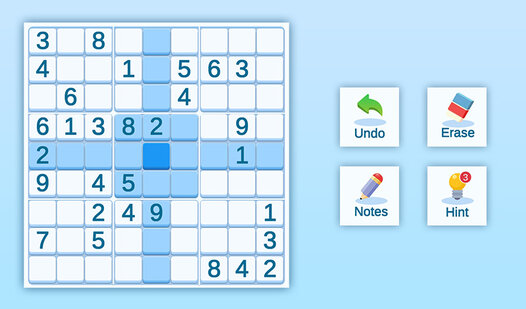
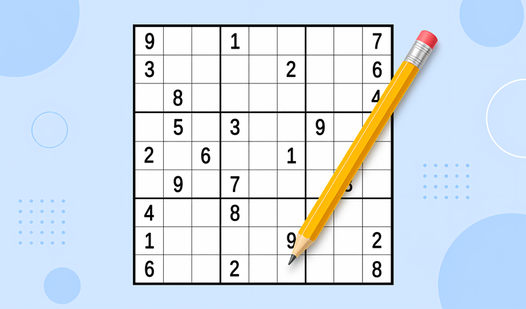
Every Sudoku puzzle starts with the same structure: a 9×9 grid divided into nine 3×3 boxes. At the start, some cells already have numbers filled in — these are your "givens." Your job is to fill in the rest so that every row, every column, and every 3×3 box contains each digit from 1 to 9 exactly once.
That's the entire ruleset. Seriously.
The three constraints:
- Each row must contain 1–9 with no repeats.
- Each column must contain 1–9 with no repeats.
- Each 3×3 box must contain 1–9 with no repeats.
A properly constructed Sudoku puzzle has exactly one solution. If you're solving and end up with two possible endings, something went wrong earlier — which is why careful pencil-marking matters (more on that shortly).
Understanding difficulty levels:
Sudoku puzzles are rated by how many givens they start with and which solving techniques you'll need:
- Easy: 35–45 givens, solvable with simple scanning.
- Medium: 27–35 givens, requires some elimination.
- Hard: 22–27 givens, demands structured techniques.
- Expert/Evil: Fewer than 22 givens, needs advanced methods.
The number alone doesn't tell the whole story — placement matters just as much as quantity.
Want to jump straight into a classic grid and test these rules right now?
Sudoku: Classic Puzzles
Place numbers from one to nine into the grid making sure every row and column holds each digit only once. Mastering Sudoku: Classic Puzzles requires s...
▶ Play FreeBasic Sudoku Strategies for Beginners — How to Play Sudoku Step by Step
Beginners often feel stuck staring at a half-empty grid. The trick is to stop looking at the whole board and focus on smaller, solvable units. Here are the techniques that will unlock your first puzzles.
Scanning
Scanning is the entry point for every Sudoku solve. Pick a number — say, 7 — and scan across the rows and columns where 7 already appears. Any row or column that already contains a 7 eliminates that digit from every cell in that line. Where those eliminations overlap in a 3×3 box, you often isolate a single open cell where 7 must go.
Work through numbers 1–9 systematically. You'll be surprised how many cells you can fill just by scanning.
The Single Candidate (Naked Single)
Look at an individual cell. List out every number that's already present in its row, column, and box. If only one number is missing from all three units combined, that's the only digit that can go in that cell. This is called a "naked single" — the answer is right there once you eliminate everything else.
Box/Line Reduction (Pointing Pairs)
Sometimes, within a 3×3 box, a particular number can only go in one row or one column. That means no other cell in that same row (or column) outside the box can hold that number — and you can eliminate it from those cells. This cross-reference between box and line constraints is one of the most powerful beginner moves.
Pencil Marks (Candidates)
Don't try to hold all possibilities in your head. In every empty cell, write small the numbers that are still possible (candidates). As you fill cells, erase candidates from related rows, columns, and boxes. This turns Sudoku from a memory game into a visual elimination puzzle.
Most online Sudoku platforms have a "notes" or "pencil" mode built in — use it.
Sudoku Master
Fill every row, column, and 3x3 square with numbers one through nine to conquer the grid in this brain-teasing classic. Mastering Sudoku Master requir...
▶ Play FreeCross-Hatching
For each number 1–9, look at the three horizontal bands of 3×3 boxes. If two out of three boxes in a band already contain that number, the third box must have it somewhere — and the row already containing it narrows down exactly which row in that box it can't be in. Combine with column scanning and you'll frequently pinpoint the exact cell.
Last Remaining Cell in a Unit
If a row, column, or box has eight cells filled, the ninth is automatic. Always check for near-complete units — they're free points.
Advanced Solving Techniques — How to Play Sudoku at the Next Level
Once easy and medium puzzles feel routine, harder grids will stop yielding to simple scanning. These techniques handle the tougher situations.
Hidden Singles
A "hidden single" is when a number can only go in one cell within a unit — but that cell has other candidates too, so it's not obvious. Scan each unit for numbers that appear as candidates in only one cell. That cell must hold that number, even if it has three other candidates written in it.
Naked Pairs and Triples
When two cells in the same unit share exactly the same two candidates (say, {4, 7}), those two numbers must go in those two cells — meaning you can eliminate 4 and 7 from every other cell in that unit. The same logic extends to three cells sharing three candidates (naked triple).
This technique cuts through crowded candidate lists fast.
Hidden Pairs and Triples
The mirror image of naked pairs: two numbers appear as candidates in only two cells within a unit. Even if those cells have other candidates, you know those two numbers belong there — so you can remove all other candidates from those two cells.
X-Wing
Scan for a number that appears as a candidate in exactly two cells in two different rows — and both rows' candidates sit in the same two columns. That creates an "X" pattern. Whichever column position the number ultimately lands in, it eliminates that number from every other cell in those two columns. X-Wing is the gateway to a family of more complex "fish" patterns.
Swordfish and Jellyfish
Swordfish extends X-Wing across three rows and three columns; Jellyfish does the same across four. These are rare in standard puzzles but essential for the hardest grids. If you're comfortable with X-Wing, the logic extends naturally.
Pointing Pairs / Box-Line Reduction (Advanced Version)
If a number's candidates within a box are all confined to one row or column, that number must be in that row/column within the box — eliminating it from the rest of that row/column outside the box. Mastering both the forward and reverse versions of this gives you reliable progress on hard puzzles.
When to Use Trial and Error (Bifurcation)
Purists argue you should never guess. Practically, on "evil" difficulty or fiendish handcrafted puzzles, some human solvers do branch on two possibilities and see which leads to a contradiction. Use it sparingly and always be ready to backtrack. Most puzzles, even hard ones, don't require it if you apply the above techniques thoroughly.
Killer Sudoku
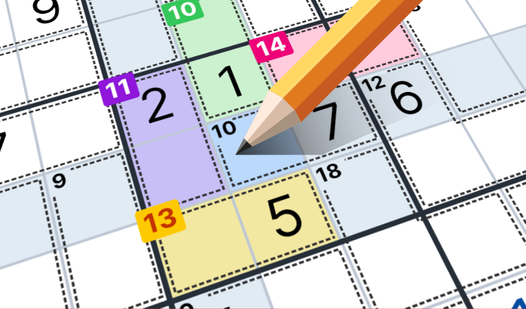
Killer Sudoku takes the standard grid logic you already know and adds an addictive mathematical twist that keeps your brain firing on all cylinders. T...
▶ Play FreeBest Free Online Sudoku Games to Practice
Knowing the theory is half the battle — the other half is repetition. Here are the best places to practice, all free and playable in your browser without any setup.
Sudoku: Classic Puzzles
A clean, distraction-free implementation of standard Sudoku across all difficulty levels. If you want a straightforward grid with a smooth interface and no frills, this is your starting point for drilling the basics.
Sudoku: Classic Puzzles
Place numbers from one to nine into the grid making sure every row and column holds each digit only once. Mastering Sudoku: Classic Puzzles requires s...
▶ Play FreeSudoku Master
Polished and addictive, Sudoku Master is designed for players across the skill spectrum. It includes a built-in hints system, pencil marks, and a satisfying progression through difficulty tiers. Good for both casual daily sessions and longer focused practice.
Sudoku Master
Fill every row, column, and 3x3 square with numbers one through nine to conquer the grid in this brain-teasing classic. Mastering Sudoku Master requir...
▶ Play FreeSudoku
A clean, focused version built around the logical placement of numbers. No distractions, just the puzzle — great for methodical solvers who want to practice their technique without any extra noise.
Sudoku
Logic puzzles have a unique way of sharpening the mind while providing a satisfying sense of accomplishment when every box finally clicks into place. ...
▶ Play FreeBlock Sudoku Puzzle
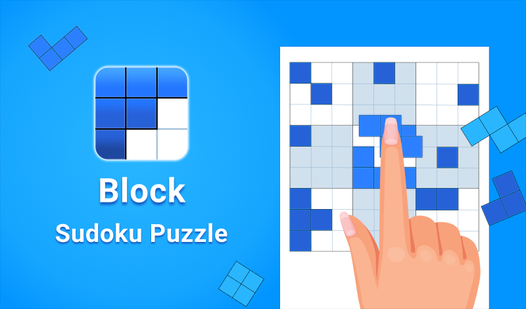
A creative spin on the formula: instead of filling numbers into a grid, you place polyomino blocks into a 9×9 board to complete rows, columns, and 3×3 sections. It keeps the same spatial reasoning that Sudoku builds, but with a tactile, Tetris-like feel that makes sessions surprisingly hard to stop.

Block Sudoku Puzzle
Arrange various wooden shapes on a 9x9 board to complete lines and clear space for your next move. Block Sudoku Puzzle challenges your spatial awarene...
▶ Play FreeJigsaw Sudoku
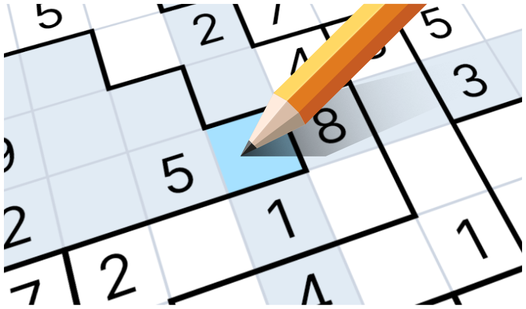
In Jigsaw Sudoku, the standard 3×3 boxes are replaced by irregular, interlocking shapes. The core digit-placement rules stay the same, but the non-rectangular regions force you to think differently about constraints — excellent for expanding your pattern recognition.
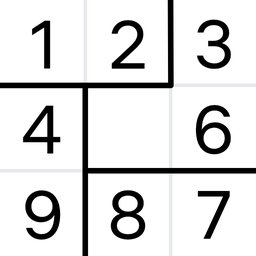
Jigsaw Sudoku
Logic enthusiasts seeking a mental workout will find their new addiction with Jigsaw Sudoku. This challenging brain teaser transforms the traditional ...
▶ Play FreeDots Sudoku
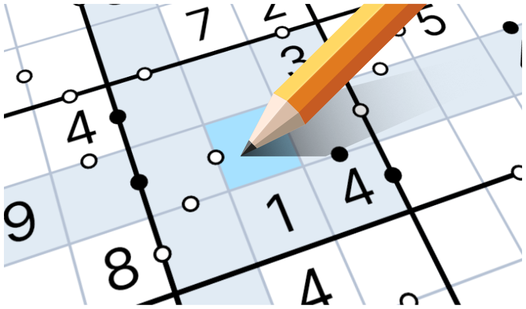
Dots Sudoku reframes the number placement concept in a visually distinct way — cells are represented by dot patterns rather than numerals, which is a genuinely fresh way to stress-test your logical thinking without relying on number recognition.
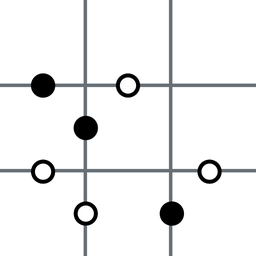
Dots Sudoku
Place numbers into the grid ensuring no repeats while following the logic of white and black dots that define the relationship between adjacent cells....
▶ Play FreeSudoku Guru — Classic Sudoku
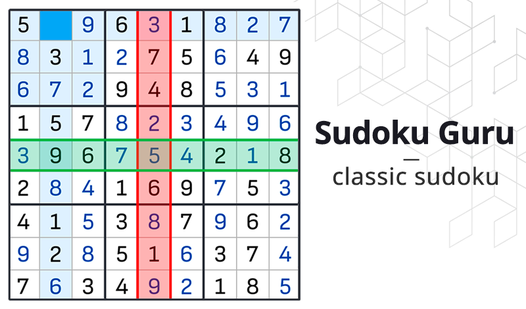
Sudoku Guru offers a range of classic puzzles with a clean tutorial flow — a solid choice if you want guided progression from beginner puzzles up through harder challenges.
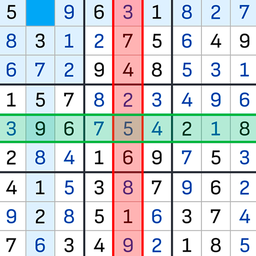
Sudoku Guru - classic sudoku
Staring at a blank screen during your commute or waiting for your coffee to brew is the perfect time to sharpen your wits with a quick logic puzzle. S...
▶ Play FreeSudoku Club
Sudoku Club keeps the experience social and competitive, with leaderboards and time challenges. If you want motivation beyond just solving, competing against other players sharpens your speed considerably.
Sudoku Club
Staring at a blank screen during a long afternoon slump makes it hard to stay productive without a quick mental reset. Sudoku Club provides the perfec...
▶ Play FreeMulti Sudoku
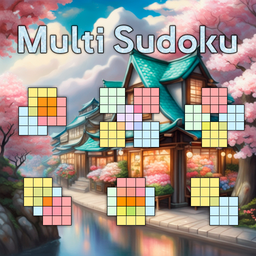
Multi Sudoku layers multiple overlapping grids that share cells, meaning a number you place in one grid affects the constraints in adjacent ones. It's a demanding variant that builds exceptional cross-grid awareness.
Multi Sudoku
Logic enthusiasts seeking a mental workout will find endless satisfaction in Multi Sudoku. This challenging brain teaser expands the classic grid conc...
▶ Play FreeUltimate Sudoku
Ultimate Sudoku aggregates a huge variety of puzzles and difficulty settings, making it a great long-term destination once you've exhausted the beginner-to-hard pipeline on other platforms.
Ultimate Sudoku
Logic puzzles have a unique way of keeping the mind sharp, and few titles manage to capture that satisfaction as well as Ultimate Sudoku. This classic...
▶ Play FreeCommon Mistakes and How to Avoid Them
Even players who know the rules and strategies make consistent errors. These are the ones that will cost you the most time — and how to cut them out.
Guessing Instead of Eliminating
The single biggest mistake beginners make is putting a number in a cell because it "feels right" rather than because logic confirms it's the only option. Every fill should be provable. If you can't explain why a number belongs somewhere, use pencil marks and keep working. Guessing introduces errors that cascade through the rest of the grid.
Forgetting to Update Candidates
Every time you place a number, candidates in the same row, column, and box become invalid. Players who fill a cell and move on without erasing the eliminated candidates from related cells create a messy grid that leads to missed deductions later. Make candidate maintenance a habit, not an afterthought.
Working One Unit at a Time
It's tempting to focus exclusively on one row or one box and solve it completely before moving on. Sudoku rewards switching between units frequently — a partial insight from one column might unlock a cell in a box you've been stuck on for ten minutes.
Copying Mistakes When Transferring Pencil Marks
When you write candidates by hand or retype them in a digital notepad, transcription errors creep in. Double-check your candidate lists periodically, especially when you apply a technique based on "this cell only has two candidates" — verify the actual list before proceeding.
Overlooking Naked Singles Late in the Solve
As the grid fills up, naked singles appear more frequently — cells with only one candidate remaining. Players deep in an advanced technique sometimes miss these obvious free fills because they're scanning for complex patterns. After any major deduction, do a quick sweep for naked singles before continuing.
Treating Every Hard Puzzle as Requiring Advanced Techniques
Many "hard" puzzles still yield to scanning and naked singles once enough cells are filled. Work the basics first, every time. Advanced techniques are for when the basics stop producing results — not as a substitute for them.