How to Play Monster: Rules, Strategies & Free Games
Monster games are one of the most diverse and consistently entertaining categories in online gaming — and if you want to know how to play Monster games well, you've come to the right place. Whether you're fighting waves of creatures with upgraded weapons, merging beasts into legendary forms, or smashing rivals in a chaotic arena, the Monster genre rewards players who understand the rules and come prepared with a plan. This guide covers everything: core mechanics, winning strategies, and a curated list of the best free Monster games you can play right now without spending a single dollar.
What Are Monster Games?
How to play Monster games starts with knowing what you're actually dealing with. The term "Monster" gets applied to a wildly broad range of game types, which can be confusing if you're browsing a catalog for the first time. Here's how to think about the major categories:
Combat and Survival Games — You're armed and outnumbered. Monsters come in waves, each one harder than the last. Your job is to upgrade your weapons, manage your resources, and outlast the assault. These games are fast, intense, and rewarding for players who enjoy constant action with a meaningful progression curve.
Evolution and Merge Games — Strategy takes center stage here. You start with basic creatures and combine matching pairs to unlock stronger, rarer forms. The board fills up fast, and making smart merge decisions separates players who clear every level from those who get stuck with a fragmented grid.
Arena and PvP Games — The competitive angle. You either control a monster in head-to-head combat or fight through arena brackets against increasingly tough opponents. The emphasis is on reading your opponent, timing your attacks, and leveraging upgrades more efficiently than the other side.
Creative and Casual Games — Monster coloring books, dress-up games, sandbox builders — these prioritize creativity and relaxation over challenge. They're excellent palette cleansers between intense combat sessions and genuinely enjoyable on their own terms.
What links all of these together? The monster itself. Creatures that feel bigger, stranger, and more powerful than ordinary game characters. That sense of scale — whether you're fighting them, becoming them, or building them — is exactly what makes this genre so consistently fun.
Core Rules and Basics
Before getting into advanced strategy, there are fundamentals that apply across virtually every Monster game you'll encounter.
Know What You're Trying to Do
This sounds obvious, but a lot of first-time players start clicking before they understand the win condition. Monster games vary enormously in their objectives:
- Survive as long as possible against endless enemy waves
- Clear a set number of levels at increasing difficulty
- Build the most powerful creature through merging
- Score the highest points in a timed match
- Complete a creative challenge (coloring, dress-up, building)
Each of these demands a different mindset from the start. In survival games, every decision should prioritize staying alive over maximizing score. In merge games, board management trumps raw power. In timed games, speed matters more than perfection. Spend thirty seconds on the intro screen — it changes how you play.
Resource Management Is Non-Negotiable
Almost every Monster game tracks some form of resource: ammo, energy, merge slots, health, currency, or time. Players who treat resources like they're infinite hit a wall the moment the difficulty spikes.
Practical resource habits to build early:
- Don't waste premium items on easy sections. Save your screen-clearing bombs, shield activations, and mega-powers for moments when you'd otherwise lose.
- Keep merge slots open. A full board in an evolution game is a losing board. Always leave at least one empty slot to maneuver.
- Watch your cooldowns. In action Monster games, special abilities have timers. Using them the moment they're available — rather than holding them for the right moment — is one of the most common beginner mistakes.
The Upgrade Screen Is Your Best Friend
Skipping upgrades to stay in the action is a trap. Upgrades compound. A 20% damage boost sounds modest on paper, but across 40 enemy waves it makes the difference between coasting and struggling. In every Monster game with an upgrade system, your second stop after any significant victory should be the upgrade screen. Your first stop should be back to the action — but only briefly.
One of the fastest ways to practice these basics is in a game that throws them at you immediately. Destroy Monsters - Mine MOD! does exactly that. You face a relentless parade of enemies, collect resources, and feed them straight into an upgrade loop that keeps every run feeling fresh. It's the ideal sandbox for learning how combat Monster games actually work.
Strategies That Actually Work
Knowing the rules is the floor. Strategy is what gets you to the ceiling.
Threat Prioritization in Combat Games
Not every enemy on screen deserves equal attention. High-level Monster combat games place different enemy types on the field simultaneously: some hit hard, some are fast, some buff other monsters, and some are just distractions. Learning to read the threat level of each enemy type — and target the dangerous ones first — is the defining skill of experienced Monster game players.
General threat priority order:
- Summoners and spawners — Kill these immediately. They multiply your problem with every second you ignore them.
- High-damage single targets — Your biggest immediate threat. Take them out before they chunk your health.
- Fast-moving swarms — These apply consistent pressure and disrupt your aim. Clear them before they overwhelm you.
- Tanky slow enemies — High health, low immediate threat. Kite these around the edges while dealing with higher priorities.
Board Management in Merge and Evolution Games
The best merge game players think three moves ahead. Before making any merge, scan the board:
- Where will the new piece land?
- Does it create a matching pair I can chain immediately?
- Am I blocking a spot I'll need in two turns?
Rushing merges without this mental check leads to a fragmented board — pieces scattered everywhere with no viable pairs. When that happens, you're playing catch-up instead of building toward your next evolution.
A simple rule: never fill your last open slot unless the merge you're about to make clears space elsewhere on the board.
Not all Monster games are about combat or strategy. Colouring Book Monster Truck sits at the opposite end of the spectrum — pure creative enjoyment with zero pressure. Pick up the virtual brush, choose your palette, and give those massive trucks a paint job that expresses exactly how you're feeling. It's a genuine reset button between intense sessions.
When to Restart (And Why It's Smart)
Restarting feels like giving up. It isn't. Especially in merge and strategy Monster games, a bad early game creates a deficit that compounds negatively with every move. Continuing to play through a losing position doesn't build experience — it just wastes time.
The rule of thumb: if you're three or four moves into a merge game and your board is already fragmented with no clear recovery path, restart. You lose almost nothing, and you get to apply exactly what you learned to a fresh attempt.
In action games, this logic applies to upgrade choices. If you realize early that you built in the wrong direction for the current enemy type, restarting before wave five is faster than slugging through twenty more waves of diminishing returns.
Specialize, Don't Generalize
Upgrade trees in Monster games almost always offer more branching paths than you can max in a single run. Players who try to spread points evenly across all branches end up with a character that's decent at everything and excellent at nothing.
Pick a direction and commit. A fully upgraded offensive build clears enemies faster. A maxed defensive build outlasts situations that would destroy an offensive build. A mixed build usually does both poorly.
The exception: passive abilities. Passive upgrades that boost base stats are almost always worth taking before situational active upgrades, regardless of your build direction.
99 Nights in the Forest: Monster Evolution puts merge strategy front and center. Combine identical creatures, unlock progressively stronger species, and manage your board carefully enough to reach the legendary evolutionary tiers. The loop is deeply satisfying — each successful chain feels genuinely earned.
Reading the Difficulty Curve
Every Monster game has a difficulty curve — a point where the game stops feeling easy and starts punishing mistakes. Good players learn to recognize that shift and adjust their strategy before it hits.
Signs the difficulty curve is approaching:
- Enemy health bars are noticeably chunkier than two levels ago
- Your current weapon/upgrade build starts struggling against new enemy types
- New mechanics are introduced (enemy shields, spawning mechanics, boss phases)
When you notice these signals, stop treating the current level like a warm-up. Slow down, reassess your upgrade choices, and identify exactly what's killing you before repeating the same approach.
Best Free Monster Games You Can Play Right Now
The FreeJoy catalog has a strong selection of Monster games across every style. Here's the breakdown of what's worth your time:
For Action and Combat Players
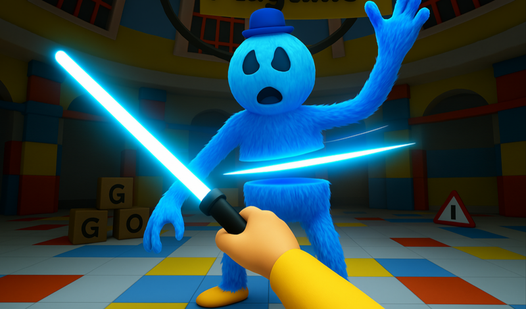
Poppy 4! Cut Monsters with Sword in Arena! is one of the most viscerally satisfying action titles in the Monster category. You're armed with a blade and facing down an army of relentless creatures. Timing your swings, managing your stamina, and reading enemy patterns carries you through progressively brutal arena rounds. It rewards aggressive play but punishes recklessness.
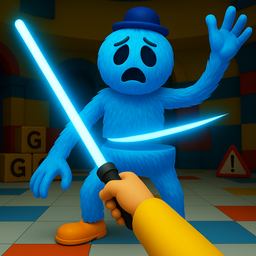
Poppy 4! Cut Monsters with Sword in Arena!
Swing your blade with precision to slice through waves of incoming creatures in Poppy 4! Cut Monsters with Sword in Arena!. This intense action experi...
▶ Play FreeMonsters: PvP Arena flips the script entirely — here, you're the monster. Choose your creature, smash rival players and environmental objects, and upgrade your beast as you go. The competitive structure adds genuine stakes to every match, and the variety of monster types gives the meta enough depth to reward experimenting with different builds.
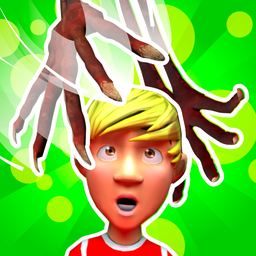
Monsters: PvP Arena
Staring at the screen during a dull afternoon usually calls for some instant action that gets the adrenaline pumping. Monsters: PvP Arena serves as th...
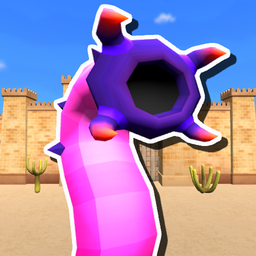
▶ Play FreeKill All The Monsters delivers exactly what the title promises. Classic action mechanics, escalating enemy intensity, and a clean feedback loop of clearing waves and upgrading for the next one. No ambiguity, no complex systems — just efficient monster combat distilled to its core.
Kill All The Monsters
Stuck in a dull meeting or just need an escape from the daily grind, Kill All The Monsters is the ultimate adrenaline shot you need right now. This hi...
▶ Play FreeDestroy Monsters: Minecreate! brings a familiar blocky aesthetic to the monster combat formula. Build, explore, and fight in a voxel world that adds a light construction element to what would otherwise be a pure action experience. The Minecraft-style visuals make it immediately approachable.
For Strategy and Evolution Players
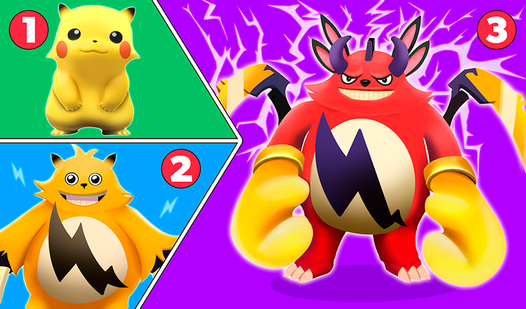
Feed Pocket Monsters in Palworld! leans into the nurturing side of monster gaming. Care for your creature collection, manage their needs, and grow your team in this Palworld-inspired experience. The pacing is slower and more deliberate than combat titles, which makes it ideal for players who prefer thinking over reflexes.

Feed Pocket Monsters in Palworld!
Fans of monster collecting and fast-paced arcade challenges will find their new obsession in Feed Pocket Monsters in Palworld. This vibrant browser ti...
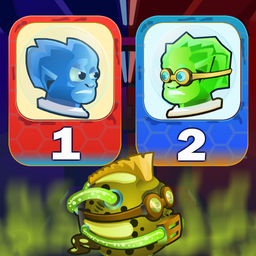
▶ Play FreeTwo Heroes & Monsters puts two playable characters in a world overrun by creatures, letting you switch between them to solve combat puzzles that one hero couldn't handle alone. It works as a solo experience and gets genuinely interesting as a co-op game if you have a second player nearby.
Two Heroes & Monsters
Surviving a relentless wave of enemies is always more thrilling when you have a partner fighting by your side. Two Heroes & Monsters brings intense co...
▶ Play FreeFor Creative and Casual Players
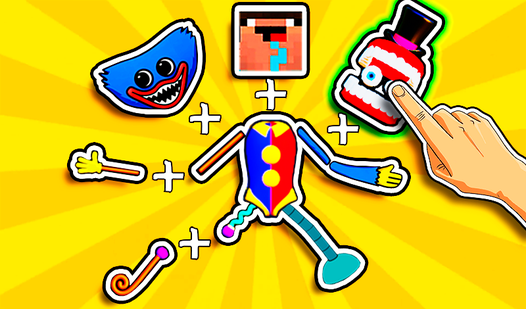
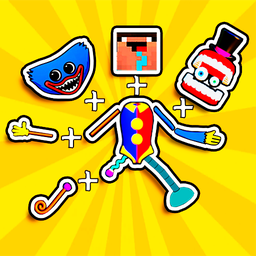
Playground Ragdoll: Create a Monster goes full sandbox. Assemble custom monsters from available parts, throw them into a physics simulation, and watch what happens. There's no objective beyond experimentation, which turns out to be exactly the kind of open-ended fun that keeps players coming back for one more build.
Playground Ragdoll: Create a Monster
Fans of chaotic physics simulations will find endless amusement in the unpredictable physics of Playground Ragdoll: Create a Monster. This playground ...
▶ Play FreeDolls Monsters Dress Up is the monster game for players who care about aesthetics. Give your monster dolls complete makeovers, mix outfit styles, and build looks that range from terrifying to adorable. A strong pick for younger players and anyone who enjoys the creative side of the genre.

Dolls Monsters Dress Up
Transform ordinary characters into magical icons by mixing and matching endless fashion combinations in Dolls Monsters Dress Up. You have total creati...
▶ Play FreeTentacle Monster: Catch All the Girls is a high-energy arcade chase game with a distinctly goofy premise. Fast reflexes, repeatable gameplay, and enough variety in each run to keep the loop fresh. It's the kind of game that's easy to pick up for five minutes and hard to put down for twenty.

Tentacle Monster : Catch All the Girls
The genre of creature-themed puzzles has evolved into a unique test of timing and precision for players who enjoy quirky challenges. Tentacle Monster ...
▶ Play FreeHow to Play Monster Games Better: Quick Reference Tips
Pulling everything together — here's the condensed strategy list for anyone jumping into how to play Monster games without a lot of prior experience:
Before you start:
- Read the objective screen. Know your win condition.
- Check if there's a tutorial section and let it run. It exists for good reason.
- Note which resources the game tracks (health, ammo, merge slots, currency).
During early levels:
- Experiment freely. The difficulty is forgiving at the start by design.
- Find the upgrade screen. Locate it, understand it, use it after every significant reward.
- Identify which enemy types pose the most immediate threat.
During mid-game:
- Commit to a build direction. Pick offense or defense — don't split the difference.
- Watch for difficulty curve signals. Enemy health spiking, new mechanics appearing, your build starting to struggle.
- Protect your premium resources for genuinely hard moments.
During late-game / high difficulty:
- Threat priority becomes everything. Stop reacting and start predicting.
- Resource conservation is survival. You can't win a resource race by spending freely.
- If a run is genuinely unrecoverable, restart early rather than late.
Why Monster Games Keep Drawing Players Back
There's a reason the Monster genre continues growing across every platform and demographic. The core fantasy — either battling creatures of overwhelming power, or becoming one — taps into something that doesn't get old the way more grounded game settings can.
The genre is also remarkably flexible. You can pick up a Monster game for two minutes during a work break or spend three hours optimizing an evolution run. The difficulty range stretches from games that a five-year-old can enjoy to arena PvP titles that take serious practice to master. That breadth means there's genuinely a Monster game that fits every player's current mood and available time.
And the free-to-play model on FreeJoy removes every barrier. No accounts, no downloads, no payment screens. You click a game, it loads, and you play. That immediacy keeps the focus where it belongs: on the actual game.