Как играть в Management: Rules, Strategies & Free Games
If you've ever searched for как играть в Management or wondered what makes this genre so addictive, you're in the right place. Management games are all about control — your decisions shape the destiny of a business, farm, factory, or empire. You're the boss, the planner, and the problem-solver all at once. These games reward patience, smart thinking, and an eye for optimization. And the best part? You can play dozens of them right in your browser, completely free.
This guide covers everything you need: the basics of the genre, how the core rules work, proven strategies that actually help, and a handpicked selection of free management games you can start playing today.
What Is a Management Game?
Management games belong to a broad genre that puts you in charge of running something — and "something" can be almost anything. A hotel. A farm. A cheese factory. A game studio. A shopping mall. The variety is enormous, but the core loop is always similar: make decisions, allocate resources, watch your operation grow, solve problems, and grow some more.
Unlike action games that test your reflexes, management games test your planning skills. They're more like puzzles that evolve over time. Some management games are real-time (things keep moving whether you interact or not), while others are turn-based or idle (your setup does the work while you're away).
What makes this genre endlessly replayable is the feedback loop. You invest resources, see results, adjust your strategy, and invest again. When it clicks, there's nothing quite like watching your little operation scale up into a well-oiled machine.
Types of Management Games
- Business simulators — run shops, restaurants, factories, or corporations
- Farm managers — grow crops, raise animals, sell produce
- Tycoon games — build empires from scratch, competing for market dominance
- Idle managers — automate your operation and check in periodically
- City and empire builders — manage populations, resources, and infrastructure
One of the most satisfying examples of the business simulator type is Cheese Tycoon Robby — a game that drops you straight into the delicious chaos of running your own cheese factory. You manage the production line, juggle supplies, and work to turn your small dairy workshop into a full-on industrial operation.

Cheese Tycoon Robby
Staring at the clock waiting for the workday to end is exhausting when you just need a quick mental escape. Cheese Tycoon Robby serves as the perfect ...
▶ Play FreeКак играть в Management: Core Rules and Basics
Whether you're new to the genre or jumping into a specific title for the first time, understanding the foundational rules of management games will save you a lot of frustration. Here's how these games generally work.
Resources Are Everything
Almost every management game revolves around a few core resources — money, raw materials, time, workers, or energy. Your job is to acquire, spend, and balance these resources to keep your operation running and growing.
Early on, resources are scarce. That's intentional. The scarcity creates tension and forces you to prioritize. Do you expand your production line or upgrade your existing equipment first? Do you hire another worker or save up for a bigger facility? These decisions define your trajectory.
Understand the Production Chain
Many management games feature a production chain: raw material → processed good → finished product → sale. In a cheese factory you might go from milk → curd → aged cheese → packaged product → customer. Each step takes time and costs resources, so understanding where your bottlenecks are is critical.
Find the slowest step in your chain and fix it first. That single principle applies across virtually every management game.
Keep an Eye on Demand
Production means nothing if nobody wants what you're making. Management games typically simulate customer demand — your job is to match supply with demand without overproducing (which wastes resources) or underproducing (which loses sales).
Watch for patterns: peak hours in a restaurant game, seasonal demand in a farm sim, trend shifts in a retail manager. Adapting to demand cycles separates average players from great ones.
Don't Neglect Upgrades
Upgrades are how you break through plateaus. When progress slows down, it's usually because your base infrastructure can't support higher throughput. Upgrading equipment, hiring specialists, or expanding your facility unlocks the next phase of growth. That said — don't upgrade randomly. Focus on upgrades that directly address your current bottleneck.
Hotel Life is a brilliant example of a game where these rules become visceral. You manage a five-star hotel, handling guests, staff, renovations, and room upgrades. Miss a bottleneck — say, not enough housekeeping staff — and your entire guest satisfaction score tanks. Nail it, and your hotel climbs the ratings.

Hotel Life
Staring at the clock during a slow afternoon when you need a quick mental escape is a challenge we all face. Hotel Life turns those idle minutes into ...
▶ Play FreeКак играть в Management: Strategies That Actually Work
Now that you know the rules, let's talk about playing smarter. These strategies apply broadly across management games but are especially powerful in the types of games you'll find on FreeJoy.
1. Prioritize High-Return Investments First
Early in any management game, you have limited capital. The answer is almost always to put it toward whatever gives you the fastest return. If hiring one worker doubles your output, do that before buying decorative upgrades that only slightly boost customer satisfaction.
Roughly calculate the payback period on any investment. If an upgrade costs 500 coins and generates 50 extra coins per minute, it pays for itself in 10 minutes. Compare that against other options and choose the fastest payback time.
2. Automate as Soon as Possible
Manual operations work fine at the start, but as your business grows, managing every task by hand becomes unworkable. Most management games offer automation mechanics — conveyor belts, hired staff, auto-purchase systems, idle earnings. Invest in these early.
Automation frees your attention for higher-level decisions: expansion, new markets, crisis management. Let the machines handle the grunt work.
3. Balance, Don't Bottleneck
The biggest mistake new players make is investing heavily in one area while ignoring others. You might have a blazing-fast production line but a tiny storage room that forces everything to stop every few minutes. Or you hire great chefs but have no one to handle front-of-house.
Balance is everything. Every component of your operation should be roughly matched in capacity. A chain is only as strong as its weakest link.
4. Complete Quests and Objectives
Most management games have quest systems or daily objectives. These aren't just decoration — they're designed to guide you toward the most efficient progression path AND reward you with extra resources. Always keep active quests in mind and factor them into your planning.
5. Manage Cash Flow, Not Just Total Cash
New players often stare at their total money and feel rich — then suddenly go bankrupt because they didn't account for recurring costs. Wages, rent, maintenance: these drain cash continuously.
Always make sure your income per minute exceeds your expenses per minute. If it doesn't, you're burning savings and will eventually stall. Fix cash flow problems before they become crises.
Idle Game Dev Simulator puts all of these strategies to the test in a wonderfully meta setting — you're running an actual game development studio. Hire programmers, assign projects, upgrade your office, and ship games that (hopefully) become hits. The cash flow lesson is especially sharp here: mismanage your studio budget and your studio shuts down.

Idle Game Dev Simulator
Stuck in a boring meeting or just need a quick distraction between tasks to keep your brain sharp? Idle Game Dev Simulator is the perfect solution for...
▶ Play FreeBest Free Management Games to Play Right Now
Theory is great, but the real fun is in playing. Here are some of the best management games available free on FreeJoy — no downloads, no accounts needed, just open and play.
Jolly Days Farm
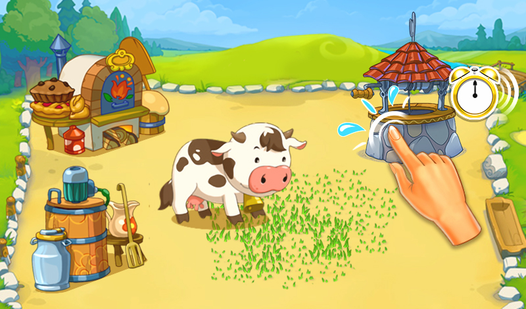
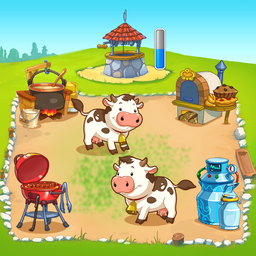
Farming management at its best. Jolly Days Farm puts you in charge of a growing agricultural operation where every decision counts. Plant crops at the right time, harvest before they spoil, sell your produce at peak prices, upgrade your tools, and expand your fields one plot at a time.
What makes it stand out is how multiple resource streams connect — crops, animals, and crafted goods all feed into one another. Master one area and it starts powering the next. It's exactly the kind of satisfying interdependency that defines great management games.
Jolly Days Farm
Managing a virtual agricultural empire requires more than just luck, as every decision dictates your success in the competitive countryside. Jolly Day...
▶ Play FreeShopping Business
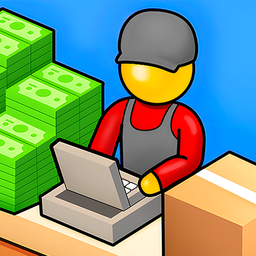
Ever dreamed of owning a shopping mall? Shopping Business lets you do exactly that. Start small, lease space to shops and restaurants, collect rent, reinvest, and watch your commercial empire grow floor by floor. The game layers tenant management, customer satisfaction, and financial planning into a genuinely deep experience.
The core strategic layer here is tenant mix — different shops attract different types of customers, and some combinations create synergies that boost your overall revenue. Experiment with placement and don't hesitate to renegotiate leases once you understand the system.
Shopping Business
Staring at the clock and waiting for your shift to end can be a real drag when you need a quick mental escape. Shopping Business turns that downtime i...
▶ Play FreeCafe Story Cooking Game
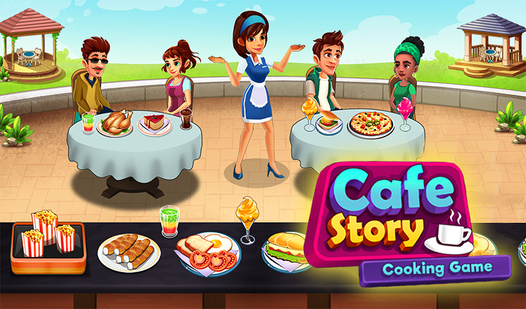
Running a cafe is about timing and quality control in equal measure. Cafe Story Cooking Game tasks you with managing a growing eatery — taking orders, preparing dishes, serving customers before they lose patience, and upgrading your kitchen with the profits.
The challenge ramps up thoughtfully: early levels teach you the basics, but later stages demand tight workflow optimization. Learn the menu, upgrade strategically, and keep your serving times short. When the lunch rush hits and you're handling six orders simultaneously without a single missed plate, it's immensely satisfying.

Cafe Story Cooking Game
Managing a bustling kitchen is a high-stakes thrill that turns every player into a culinary superstar in seconds. Cafe Story Cooking Game captures the...
▶ Play FreeCooking Restaurant
Similar to cafe management but with a broader culinary scope, Cooking Restaurant puts you behind the counter of a full-service kitchen. Juggle multiple orders simultaneously, manage your cooking stations, keep customer wait times down, and earn enough to expand your menu and upgrade your decor.
The game teaches a core management truth: service quality and speed both matter, and you have to optimize for both at the same time. Let either one slip and your ratings nosedive.
Factory Builder
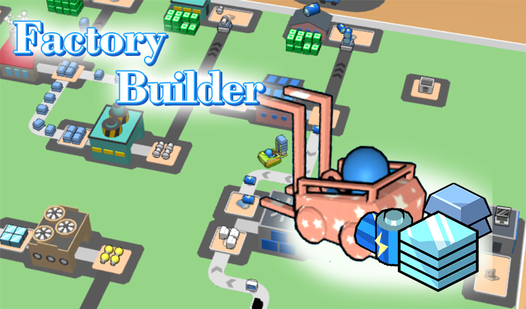
If industrial management appeals to you more than hospitality, Factory Builder is essential. Design your production floor, connect assembly lines, route materials efficiently, and scale up your output. The puzzle-like nature of optimizing a factory layout makes this especially compelling for players who enjoy spatial reasoning.
The moment when your factory first runs at full efficiency — no idle machines, no resource jams, everything flowing smoothly — is one of the genuinely great feelings this genre has to offer.

Factory Builder
Construct elaborate assembly lines to manufacture everyday items like light bulbs and flashlights in this challenging factory builder. You start by ma...
▶ Play FreeSupermarket Simulator
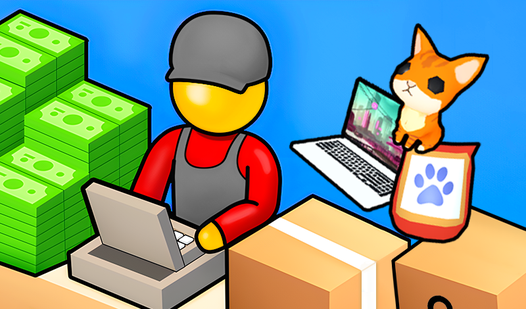
Retail management with real stakes. Supermarket Simulator drops you into the world of grocery retail: stock shelves, set prices, manage staff, handle customer flow, and keep your store profitable. The game captures the unglamorous but fascinating details of running an actual business.
One of its most interesting mechanics is price optimization — set prices too high and customers walk out; too low and your margins evaporate. Finding the sweet spot is a satisfying exercise in applied economics that surprises a lot of players.
Idle Railway Tycoon: Train Empire
Scale from a single route to a continental rail network. Idle Railway Tycoon gives you a web of train lines to manage, expand, and optimize. Assign trains, collect revenue, upgrade stations, and build out new connections to unlock fresh income streams.
The idle mechanics here are particularly well-implemented. You can check in a few times a day to collect earnings and make strategic decisions, or go deep and micromanage your entire network. Both approaches work — which means it fits any schedule.

Idle Railway Tycoon. Train Empire
Simulation enthusiasts who dream of managing a massive transport hub will lose track of time while building their own transport empire. Idle Railway T...
▶ Play FreeAdvanced Tips for Management Game Veterans
Once you're comfortable with the standard flow, these ideas will sharpen your play further.
Think in Systems, Not Individual Actions
Beginner players think about individual moves: "I'll buy this upgrade now." Advanced players think about systems: "How do I set up my operation so it generates what I need, when I need it, automatically?"
Map out your entire production and income flow if you have to. Identify feedback loops — points where output feeds back into input and creates compounding growth. Those loops are where management games really open up.
Don't Fear Restarting
Many management games include prestige or restart mechanics. Players often resist restarting because it feels like losing — but a clean run with better knowledge is almost always faster and more satisfying than grinding through a poorly structured early game. Don't be afraid to restart if your foundation is shaky. The knowledge carries over even when the save doesn't.
Set Up Idle Earnings Before Stepping Away
If your game has offline earnings, spend a few minutes setting up the right production cycles before you close the tab. Position your resources, activate the best income streams, and make sure everything is running. A small amount of smart setup before walking away can translate into hours of passive progress.
Watch Your Economy Evolve
In more complex management simulations, market prices shift over time. Materials get cheaper or more expensive, demand changes, new opportunities appear. Stay adaptive — what worked in the early game can become a losing strategy later. Regularly review your income vs. expense breakdown and cut anything that's eating margins without delivering proportional value.
Why Management Games Are So Popular
There's a real psychological reason management games grip so many players: they satisfy several desires at once.
Control — in real life, most of us don't run factories or own hotel chains. Management games let you experience that sense of ownership without real-world risk.
Progress — the constant growth loop delivers regular rewards. Watching numbers climb when you know you engineered that growth is genuinely satisfying.
Problem-solving — bottlenecks, crises, optimization challenges. Management games offer a steady stream of interesting problems without being overwhelming.
Creativity — layout choices, strategic decisions, aesthetic customization. Your farm or factory becomes a reflection of your personal style.
This combination has kept the genre thriving for decades, from the original tycoon games of the 1990s to the polished browser-based titles available today.
Play Management Games Free on FreeJoy
All the games in this guide are available free on FreeJoy.games — no downloads, no accounts, no fees. Open and play directly in your browser.
Try a few different styles to find your corner of the genre. Some players love the steady rhythm of a well-running farm; others prefer the high-pressure chaos of a restaurant kitchen or the precision puzzle of a factory floor. The genre is wide, and the best way to find your favorite is to start.