How to Play Jewel: Rules, Strategies & Free Games
Jewel games are some of the most addictive puzzles on the internet — and once you learn how to play Jewel properly, the satisfaction of a perfectly executed combo chain is hard to match. The premise looks simple enough: a grid full of colorful gems, a goal to clear them, and a system that rewards smart thinking over random clicking. But underneath that shiny surface is a surprisingly deep set of mechanics, variants, and skill layers that keep players coming back for years.
This guide covers all of it. You'll find clear explanations of how each major Jewel format works, what the key rules are across different game types, and which strategies actually move the needle on your scores. Searches for "как играть в Jewel" spike every time a new entry in the genre arrives — and with good reason. Whether you're picking up a match-3 for the first time or trying to push past a plateau in your current favorite, the principles here apply across the board.
By the end, you'll also have a curated list of the best free Jewel games you can play right now — directly in your browser, no registration required.
What Is a Jewel Game?
The Jewel genre is a family of casual puzzle games built around colored gems, crystals, or precious stones arranged on a grid. The format has been around since the early 2000s, when swap-based match-3 games took the casual gaming world by storm. Since then, it's evolved into a rich ecosystem of sub-genres, each with its own rules and rhythm.
At their core, all Jewel games share a few things: vibrant gemstone visuals, satisfying clear animations, and a challenge that asks you to think spatially and plan ahead. The difficulty of "how to play Jewel" changes significantly depending on which format you're playing.
Here's a quick map of the main types:
- Match-3 / Swap: Swap adjacent gems to form rows of 3 or more matching colors. The classic format.
- Merge: Drop or place gems and combine identical ones to produce higher-tier gems in a chain reaction.
- Block Puzzle: Place jewel-shaped pieces onto a grid; clear full rows or columns.
- Blitz / Timed: Race the clock, clearing as many gems as possible before time runs out.
- Adventure Campaign: Work through numbered levels, each with unique objectives and obstacles.
Each format attracts a different kind of player. Match-3 adventure games suit those who like progression and variety; block puzzle games appeal to the methodical thinker; blitz modes attract competitive players who want a quick, intense session. Most Jewel game collections include several of these types, so understanding all of them is worth your time.
How to Play Jewel: Match-3 Rules Explained
The match-3 format is where most people start with Jewel games, and for good reason — it's intuitive, fast to learn, and rewarding to master.
The Playing Field
The board is typically a 7×7 to 9×9 grid packed with gems in 5 to 7 different colors. Every position is filled at the start of each round.
Making a Move
Click a gem and drag it to an adjacent square (up, down, left, or right). If the swap creates a horizontal or vertical line of 3 or more gems of the same color, those gems disappear. The pieces above fall down to fill the gap, and new gems drop in from the top.
Scoring
Matching exactly 3 gems scores the base amount. Matching 4 gems in a row creates a special gem — usually a striped piece that clears an entire row or column when activated. Matching 5 gems in an L or T shape creates a bomb gem that detonates in a radius. Matching 5 in a straight line often creates a color-blast gem that removes every gem of a chosen color from the board. These special pieces are the core of high-level play.
Cascades
When gems fall after a match and accidentally form new matches, you trigger a cascade — a chain reaction that scores bonus multipliers automatically. Learning to set up cascades deliberately separates good players from average ones.
Objectives
In free-play or timed modes, the goal is simply to score as many points as possible. In level-based adventure modes, each stage sets a specific task: collect 60 blue gems, clear all ice-blocked squares, drop key items to the bottom row, etc. These objectives force you to prioritize certain matches over others, which is where the deeper strategy kicks in.
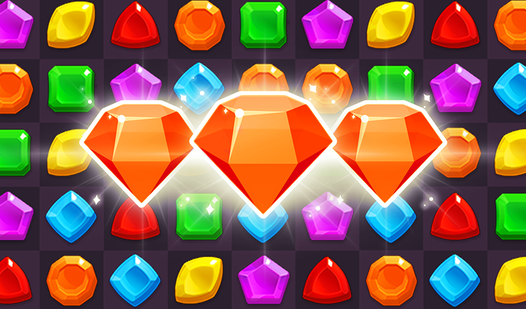
The Mystery of Jewels: Adventure - Match 3 is a polished example of the adventure format. It layers story beats and varied level designs onto the classic swap mechanic, keeping things fresh across dozens of stages.
The Mystery of Jewels: Adventure - Match 3
Matching shimmering crystals is the ultimate way to sharpen your brain and satisfy the urge for rapid-fire puzzle action. The Mystery of Jewels: Adven...
▶ Play FreeHow to Play Jewel: Merge Game Rules
Merge Jewel games flip the match-3 formula on its head. Instead of swapping pieces that are already on the board, you drop or place new gems and combine identical ones to create higher-tier stones.
The Merge Chain
Two basic gems of the same type merge into a single gem one tier higher. Two of those create a gem two tiers higher. The chain continues up the tier ladder — sometimes reaching 8 to 12 distinct gem levels. Producing a top-tier gem is the main achievement in most merge formats.
Key Rules
Once a gem is placed, it stays there unless it merges. You can't rearrange the board freely, so every placement decision matters from the start. Merges only happen when two identical-tier gems are adjacent. As your board fills with unmatched high-tier gems, space runs out fast — managing the board's density is the central challenge.
Drop-Style Merge Games
Some merge Jewel games add a real-time element: gems fall from above and you position them before they land. This adds a timing dimension on top of the spatial logic.
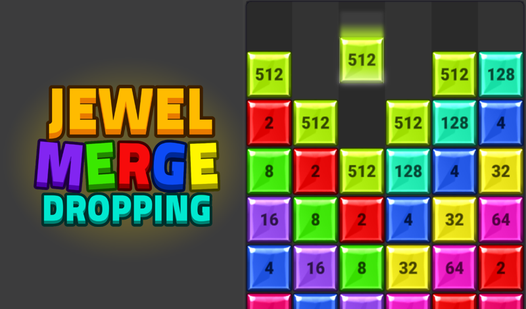
Jewel Merge Dropping works exactly this way. Gems drop from the top and you steer them into position. A well-placed piece can trigger a multi-step merge chain in one move; a bad placement can block your board for rounds.
Jewel Merge Dropping
Staring at the clock during a long afternoon or just craving a quick mental escape is a challenge we all face. Jewel Merge Dropping provides the perfe...
▶ Play FreeNumber-Based Merge: The 2048 Variant
A popular variation merges the jewel aesthetic with the famous 2048 tile-combining mechanic. Identical numbered gems combine when they touch, doubling in value each time. The goal is to reach the 2048 tile (or beyond) without filling the board.
Jewels Merge 2048 executes this beautifully — the gemstone visuals give each number tier a distinct personality, making it easy to track your board state at a glance.
Jewels Merge 2048
Stuck in a dull meeting or waiting for your coffee to brew and need a quick mental escape. Jewels Merge 2048 turns those spare moments into a glitteri...
▶ Play FreeBlock Puzzle Jewel Games: Placement and Patience
Block puzzle Jewel games borrow from Tetris and Sudoku but strip away the time pressure. You receive a small set of shaped pieces — L-shapes, straight lines, squares, asymmetric clusters, all rendered as glittering gems — and place them anywhere on a grid that fits. When an entire row or column is filled, it clears and you score points.
Core Rules
Pieces can be placed anywhere on the board that has room. Most block puzzle games don't let you rotate pieces — you get what you're given and have to work with it. You typically see 2 to 3 pieces at a time; new ones appear once you've placed all current pieces. The game ends when no available piece fits on the remaining board space.
What Makes It Hard
The challenge isn't the individual placement — it's the cumulative effect of your choices. Leave a single isolated empty square in the wrong spot and you may not be able to fill it with any future piece. The board gradually fills up, and fragmented empty space is much harder to use than consolidated open areas.
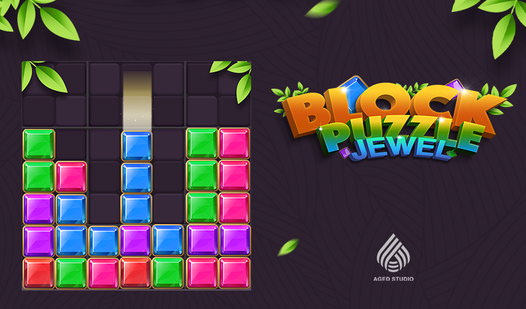
Block Puzzle Jewel is one of the cleanest implementations of this format. It blends Sudoku and Tetris elements with a gem visual theme, and the pacing is slow enough to let you think without penalizing deliberation.
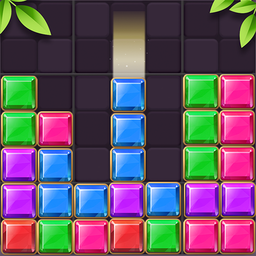
Block Puzzle Jewel
Staring at a stagnant screen while your brain feels like it is running on low battery creates the perfect moment for a quick mental recharge. Block Pu...
▶ Play FreeJewel Strategies That Actually Work
Knowing the rules is table stakes. Here are the techniques that actually push scores higher.
Build Cascades Intentionally in Match-3
The biggest skill gap in match-3 Jewel games is cascade awareness. Before clicking, visualize what the board will look like after your match — not just immediately after, but two or three falls later. When falling gems complete new matches automatically, you earn significant bonus multipliers. A 4-step cascade can score more than 10 individual matches combined.
To set up cascades, look for near-complete rows of same-colored gems that will align after pieces above them fall. Train yourself to read the board from top to bottom before committing to any move.
Save Special Gems for Power Plays
Detonating a bomb gem the moment you create it is almost always a waste. Special gems are most valuable when used in combination or when the board is densely packed. Combining two bomb gems triggers a chain explosion that can clear a quarter of the board. A color-blast gem used when there are 12 gems of the target color on the board scores far more than one used when there are 4.
Patience with special pieces is a skill in itself. It takes discipline to hold off, but the payoff is significant.
Jewels Jungle: Match 3 is an excellent arena for practicing this discipline. With 700 progressive levels and a wide variety of objectives, it forces you to think carefully about when and how to use power-ups rather than burning them reactively.
Corner-Out Strategy for Block Puzzles
Fragmentation kills block puzzle runs. Scattered 1×1 or 1×2 gaps that no available piece can fill are permanent dead zones. The best players work from one corner outward, keeping empty space consolidated in a continuous open area rather than spread across the board.
A secondary rule: don't place a piece just because it fits. Ask whether the placement helps complete a row or column. If the answer is no, consider using another available piece first and coming back to the awkward one when a better setup exists.
Keep Center Open in Merge Games
Drop-based merge games have a natural tendency to pile pieces toward the edges. This is a trap. High-tier gems take up significant space and need room to find merge partners. If your edges are packed with unmatched top-tier pieces, the board clogs and you lose.
Keep the center clear as long as possible. When you're choosing between two equally valid placements, favor the one that leaves more contiguous open space, even if it scores less in the short term.
Speed and Scanning in Blitz Modes
Timed Jewel modes require a different mindset. You can't deliberate — hesitation is points lost. Train your eyes to scan in a consistent pattern: top-left to bottom-right, then scan for near-match columns. Look for clusters of same-colored gems first, since those are most likely to have a valid swap within reach.
Hints are a tool, not a crutch, in timed modes. If you can't spot a move within 2 seconds, use the hint system rather than burning more clock time. Blitz games reward fast, consistent decision-making over optimal play.
Jewels Blitz 4 is the benchmark for this: a relentless timer, a fast-filling board, and a scoring system that heavily rewards streaks and combos over isolated matches.
Best Free Jewel Games to Play Right Now
All of the following are available directly in your browser on FreeJoy — no downloads, no accounts, just gems.
Shiny Jewels
Shiny Jewels delivers the classic match-3 experience with polished visuals and a slightly faster pace than standard adventure modes. It's ideal for players who want the familiar swap-and-match loop without being locked into level-based progression. Clean, direct, and deeply satisfying when the cascades start firing.

Shiny Jewels
Staring at a blank screen while your coffee cools is the universal sign that you need a quick mental escape. Shiny Jewels arrives exactly when you nee...
▶ Play FreeBlock Puzzle 1010: Jewel Lines
A Jewel-themed take on the beloved 1010 format: place blocks on a 10×10 grid, clear complete rows and columns, keep the board alive as long as possible. The larger grid size means more pieces in play simultaneously, which ramps up the strategic depth considerably compared to smaller block puzzle boards.
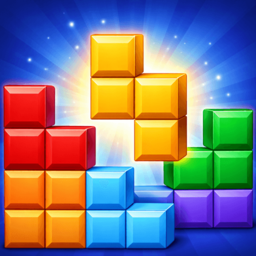
Block Puzzle 1010: Jewel Lines
Staring at a stagnant screen during your afternoon break usually leads to mindless scrolling, but Block Puzzle 1010: Jewel Lines offers a much sharper...
▶ Play FreeBlock Puzzle: Jewel Block
Block Puzzle: Jewel Block leans into the contemplative side of the genre. The piece shapes are distinct, the visual style is warm and gem-rich, and the pace is deliberately unhurried. If you want a block puzzle you can sit with for twenty minutes without feeling rushed, this is the one to start with.
Royal Jewels Match
Royal Jewels Match brings an ornate, regal aesthetic to the match-3 format — golden frames, rich backgrounds, and a satisfying combo system that rewards careful play. The level design introduces new mechanics gradually, making it accessible from the start while providing enough complexity to stay interesting through dozens of stages.
Common Mistakes to Cut From Your Game
A few patterns consistently cost players points across all Jewel formats:
Reactive matching without board awareness: Taking the first valid swap you see, without checking whether it improves your overall board state, is the most common error. Every move should make the next move better.
Ignoring the upper half of the board: Players naturally focus on the bottom rows where matches are most visible. The top of the board is where cascades originate. Scan the full grid before committing to any move.
Over-placing in merge games: Placing every piece as soon as it arrives leaves no room to maneuver when high-tier merges need space. Sometimes the correct play is to wait for a better opportunity.
Creating isolated gaps in block puzzles: One careless placement that leaves a 1×1 gap can permanently reduce your usable board area. Always confirm a placement won't strand an empty square before dropping a piece.
Burning special gems too early in match-3: A bomb used on an open board is largely wasted. A bomb used when the board is tight and combo opportunities are stacked is worth ten times as much.
Why Jewel Games Hold Their Appeal
The Jewel genre has been going strong for over two decades, and the reasons aren't complicated. The visual reward is immediate and reliable — bright colors, sparkle effects, the clean pop of a successful match — and it never grows stale because the systems underneath it keep evolving.
The accessibility floor is genuinely low. You can pick up any Jewel game cold and be having fun within two minutes. But the skill ceiling is real: top-level play in timed modes, deep adventure campaigns, and high-stakes merge chains require genuine spatial intelligence and pattern recognition. That combination — easy to start, hard to master — is what gives the genre its lasting pull.
Add the fact that every variant feels slightly different, and there's always something new to explore. Match-3, merge, block puzzle, blitz — each one scratches a different itch. The best collections give you all of them in one place, and you can switch between formats depending on your mood and the time you have.