How to Play Challenging Games: Rules & Strategies
If you've ever wondered how to play Challenging games properly — not just fumble through levels until you lose — you're in the right place. This guide covers everything: what makes a game "challenging" in the genre sense, the core rules you'll encounter, and the strategies that separate players who get frustrated and quit from those who get hooked and keep coming back for more.
Challenging games are a broad family of browser and mobile titles defined not by a single mechanic, but by the demand they place on your brain. Puzzles, tower defense, logic grids, word ciphers — they all fall under the umbrella. The one thing they share: you can't autopilot your way through them. Every move counts.
What Is "Challenging" as a Game Category?
The word "challenging" in gaming contexts has evolved from a simple adjective into a recognizable label. When a game is tagged or marketed as Challenging, it signals that the difficulty is intentional and central to the design. These aren't games that make you struggle because of bad controls or unfair RNG — they're designed to make your brain work hard.
Three core flavors dominate the Challenging category:
Puzzle Challenging — spatial reasoning, sorting, maze navigation. The rules are simple; the execution demands patience and planning.
Logic Challenging — number grids, crosswords, ciphers. You're given constraints and have to find the one valid solution.
Strategy Challenging — tower defense, turn-based combat, resource management. Your decisions cascade. A bad choice in round two might not kill you until round ten.
Most free-to-play Challenging games online live somewhere between these three. The best ones blend at least two.
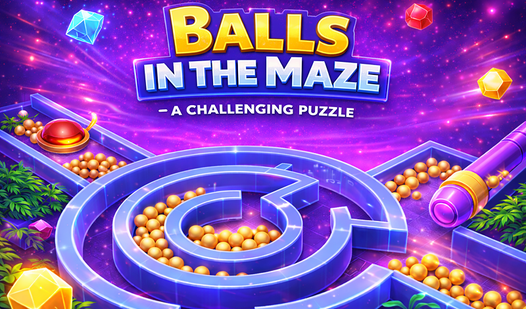
One of the cleanest examples of puzzle Challenging is Balls in the Maze. You guide balls through a maze to specific exit points — the rules fit in a sentence, but the later levels will have you restarting multiple times before the path clicks.
Balls in the Maze - A Challenging Puzzle
Fans of brain training games will find their new obsession with the relaxing mechanics found in Balls in the Maze - A Challenging Puzzle. Players navi...
▶ Play FreeHow to Play Challenging Games: The Core Rules
This is where things get interesting. There's no single rulebook for Challenging games — each title has its own mechanics. But certain rule patterns repeat across the genre.
Constraint-Based Rules
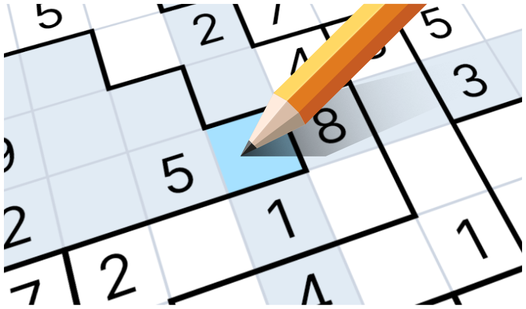
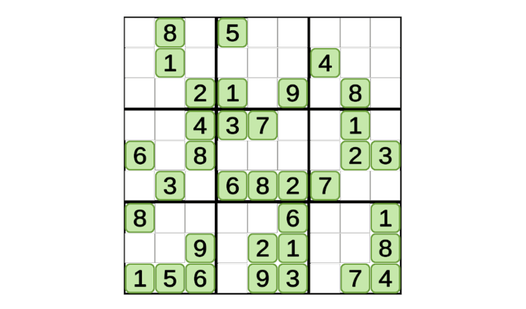
Most Challenging games give you a goal and a set of constraints. In Sudoku, you must place digits 1–9 exactly once per row, column, and box. In a sorting puzzle, you can only move the top item of each column. These constraints are the game — they're what creates the puzzle.
Understanding the constraints fully before you start moving is the most important foundational skill. Players who get stuck usually haven't internalized all the rules yet. Read the tutorial. Test edge cases. What happens when a column is empty? Can you undo? These answers shape your entire strategy.
State Management
Challenging games are almost always about managing state — the current configuration of pieces, colors, numbers, or units. Every action changes the state. The puzzle is finding the sequence of state changes that leads to the win condition.
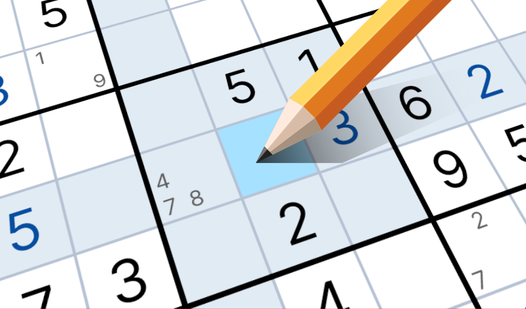
This is why Sudoku rewards players who think in possibilities rather than certainties. You're not looking for what a cell is — you're eliminating what it can't be.
Sudoku
Logic puzzles have a unique way of sharpening the mind while providing a satisfying sense of accomplishment when every box finally clicks into place. ...
▶ Play FreeResource Limits
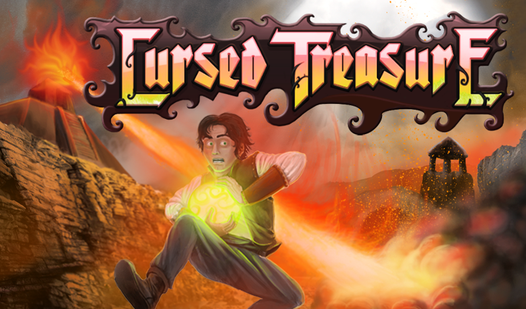
In strategy-type Challenging games, you usually have limited resources: mana, gold, placement slots, action points. Cursed Treasure is a great example — you have a fixed number of spell charges and must choose when to use them. Spending a powerful spell too early wastes it; spending it too late means you've already lost.
Resource games teach you to think in terms of efficiency per unit. What action gives you the most value right now? That mindset carries across the whole genre.

Cursed Treasure
Strategy enthusiasts who enjoy playing the villain will find Cursed Treasure incredibly addictive as they safeguard their hoard from meddlesome heroes...
▶ Play FreeStrategies and Tips for Challenging Games
Start From the End
Work backwards. If you know what the solved state looks like, ask yourself: what's the last move before that? Then the second-to-last? This reverse-engineering approach is especially powerful in sorting puzzles and maze games where forward planning is hard but the end state is clear.
Water Sort Go is perfect for practicing this. Before you pour any liquid, mentally trace where each color needs to end up, then work backwards to see which containers need to be cleared first.

Water Sort Go
Staring at the clock during a long afternoon usually means you need a quick mental escape to recharge your focus. Water Sort Go provides the perfect a...
▶ Play FreeDon't Rush the Opening
This sounds obvious, but most Challenging game losses are decided in the first few moves. Players who rush the opening lock themselves into positions that look fine initially but become impossible later. Take your time. In chess, the first ten moves set up everything that follows — and the same principle applies to puzzles.
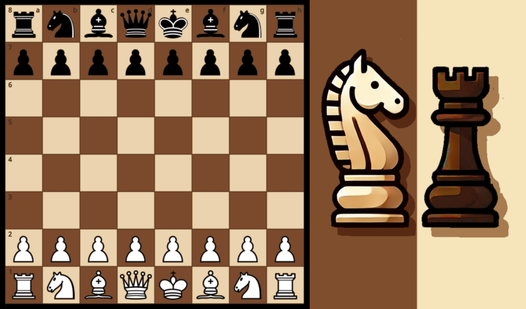
Speaking of chess — playing against a computer is one of the best ways to develop pure strategic thinking. The AI doesn't get tired, doesn't bluff, and responds consistently. You can test the same opening ten times and see exactly how it fails.
Chess with a computer
Mastering the ancient strategy of the royal game is a lifetime pursuit that begins with a single move. Chess with a computer offers the perfect digita...
▶ Play FreeUse Process of Elimination
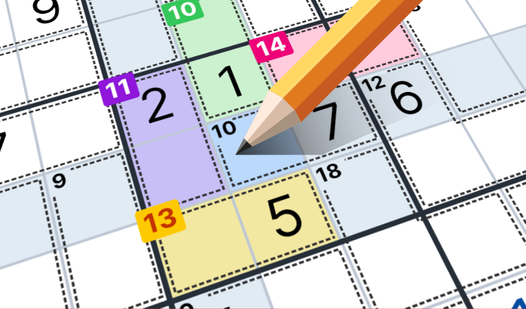
When you can't see the solution directly, eliminate the wrong answers. In logic puzzles, this is called constraint propagation. Every time you mark something as impossible, it shrinks the solution space. Killer Sudoku and Jigsaw Sudoku both reward this approach heavily — sometimes you can solve an entire region just by eliminating possibilities.
Killer Sudoku
Killer Sudoku takes the standard grid logic you already know and adds an addictive mathematical twist that keeps your brain firing on all cylinders. T...
▶ Play FreeLearn the Meta-Pattern
After you've played a few levels of any Challenging game, you'll start seeing recurring patterns. In tower defense, the meta-pattern is usually: stall early, scale mid, burst late. In sorting puzzles, it's: create a buffer before you start a long chain.
These meta-patterns don't solve levels for you, but they give you a framework to start from. Once you recognize the pattern, you're not solving a brand new puzzle — you're applying a known template to new data.
Jigsaw Sudoku
Logic enthusiasts seeking a mental workout will find their new addiction with Jigsaw Sudoku. This challenging brain teaser transforms the traditional ...
▶ Play FreeAccept the Restart
Challenging games often require restarts. That's not failure — it's the learning loop. Each run gives you more information about the puzzle structure. The best players restart quickly and deliberately, not because they're giving up, but because they've extracted all the information they can from the current run and want to try a different branch.
Resistance to restarting is probably the single biggest thing that keeps casual players stuck.
How to Play Challenging Games: Genre-Specific Guides
How to Play Sorting Puzzles
- Survey all containers before moving anything
- Identify which colors have the fewest mixed containers — clear those first
- Always maintain at least one empty buffer container
- Plan chains: moving A to free up B to free up C
- If stuck, restart and apply what you learned
How to Play Logic Number Grids (Sudoku Variants)
- Fill in "naked singles" first — cells with only one valid digit
- Scan rows, columns, and boxes for "hidden singles" — digits that can only go in one place
- Use pencil marks (candidate lists) for ambiguous cells
- In Killer Sudoku, use cage sum constraints to narrow candidates
- Never guess until you've exhausted logic
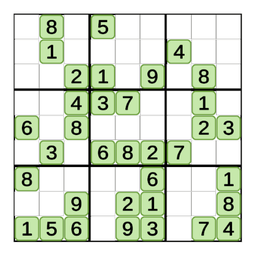
Sudoku classic (9)
Logic enthusiasts and fans of classic brain teasers will find Sudoku classic (9) to be the ultimate test of mental clarity. This timeless puzzle chall...
▶ Play FreeHow to Play Tower Defense
- Study the enemy path before placing anything
- Place your first towers where enemies are slowest (corners, choke points)
- Mix tower types — pure damage is less efficient than damage + slow
- Save resources for mid-game power spikes
- Know when to let a unit through rather than blowing your budget
How to Play Word and Cipher Puzzles
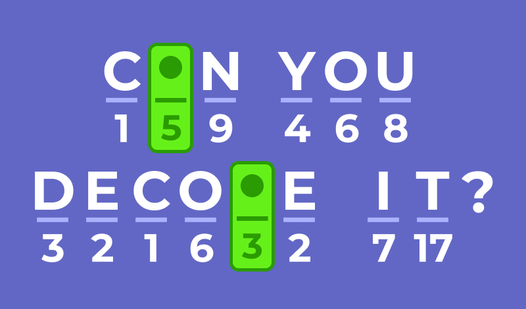
Cryptogram: Cipher is a good benchmark here. You see encrypted text and must decode the substitution cipher. Start with single-letter words (almost always A or I), then look for common two-letter patterns (of, to, in, it). Letter frequency analysis — E is the most common letter in English — helps when you're stuck.
Cryptogram: Cipher
Decode hidden messages by swapping mysterious numbers for their corresponding letters in Cryptogram: Cipher. Each puzzle presents a unique quote or pr...
▶ Play FreeBest Free Challenging Games Online
Here's the full lineup of Challenging games worth your time, playable free in your browser without any registration.
Wave Challenges — reaction-based puzzle waves that layer new mechanics every few stages. Good for players who want Challenging with a fast pace.
Wave challanges
Navigate a pulsating energy beam through treacherous obstacles by holding and releasing your input to maneuver through tight corridors. Wave challenge...
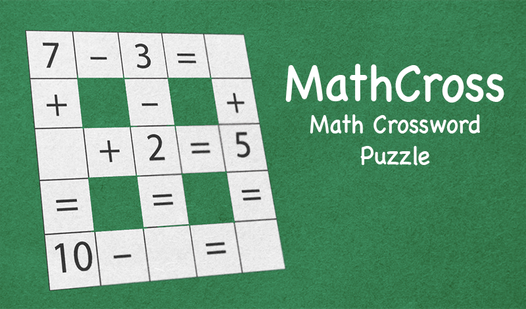
▶ Play FreeMathCross: Math Crossword Puzzle — crossword structure, but every answer is an arithmetic expression. Harder than it sounds because you solve across and down simultaneously.
MathCross: Math Crossword Puzzle
Numbers are the universal language of logic, but rarely do they get to play the lead role in a grid-based brain teaser like they do here. MathCross: M...
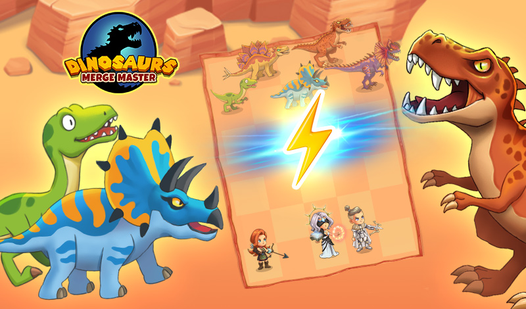
▶ Play FreeDinosaurs Merge Master — merge mechanics with strategic placement. You're deciding both what to merge and where to put the result. Two decisions per turn adds up.
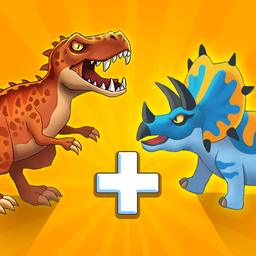
Dinosaurs Merge Master
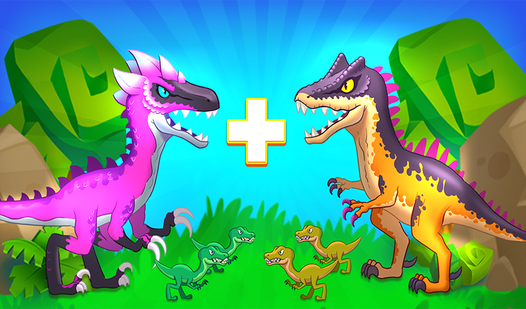
Stuck in a boring meeting or just need a quick mental escape from your daily grind? Dinosaurs Merge Master is the perfect browser solution to turn you...
▶ Play FreeMerge Master: Dinosaurs War — the combat-focused variant. Same merge core, but you're racing against enemy advances. Tempo matters more than in the pure puzzle version.
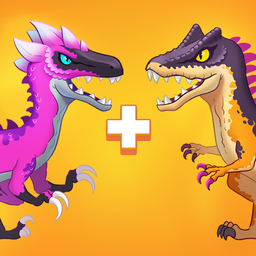
Merge Master: Dinosaurs War
Command a prehistoric army and climb the ranks to become the ultimate dinosaur conqueror in this intense combat simulator. You will strategically comb...
▶ Play FreeAll of these are free on FreeJoy.games — no download, no account, playable immediately.
Why Challenging Games Are Worth the Difficulty
There's a specific satisfaction that only hard games can give you. Easy games entertain. Challenging games reward. When you finally crack a puzzle that had you restarting for twenty minutes, there's a cognitive release that's genuinely different from clearing an easy level.
Researchers who study flow states — that focused, effortless feeling you get when a task is perfectly matched to your skill — consistently find that the games most likely to produce flow are the ones operating at the edge of your ability. Too easy, and you drift. Too hard, and you shut down. The sweet spot is right in Challenging territory.
The genre also builds transferable skills. Spatial reasoning from maze puzzles, logical deduction from number grids, forward planning from strategy games — these aren't just game skills. They're patterns of thought that sharpen with practice.
If you've been avoiding Challenging games because you don't want to feel stuck — reconsider. The stuck feeling is the point. It's where the learning happens.