Sudoku Puzzles Online Free — Classic and Challenge Modes
There's something deeply satisfying about filling in that last cell and watching the grid complete itself. Sudoku puzzles online free platforms have made this classic brain workout available anytime, anywhere — no pencil, no eraser, no download required. Whether you're sneaking in a quick puzzle on your lunch break or grinding through expert-level grids on a Saturday morning, free online sudoku has you covered.
This guide covers everything: the rules, the best games to play right now, difficulty tiers, and the solving strategies that separate casual players from true puzzle masters.
How to Play Sudoku Puzzles — Rules for Beginners
The rules of sudoku are deceptively simple. You have a 9×9 grid divided into nine 3×3 boxes. Your job is to fill every cell with a digit from 1 to 9, following three constraints:
- Each row must contain the digits 1–9, with no repeats.
- Each column must contain the digits 1–9, with no repeats.
- Each 3×3 box must contain the digits 1–9, with no repeats.
The puzzle starts with some cells already filled in (called "givens"). These clues determine the unique solution — every valid sudoku puzzle has exactly one correct answer. Your task is pure logic: figure out what goes where using the process of elimination.
Starting out feels intimidating until you realize that every placement creates new information. When you put a 7 in a cell, that 7 eliminates itself from the rest of that row, column, and box. Suddenly other cells have fewer options. One placement cascades into another.
When you're ready to play sudoku puzzles online, the classic 9×9 format is the obvious starting point. Sudoku: Classic Puzzles is exactly what it sounds like — clean layout, proper difficulty progression, and a grid that stays true to the original format that made sudoku famous. Hints are available if you get stuck, and the timer lets you track your improvement over sessions.
Sudoku: Classic Puzzles
Place numbers from one to nine into the grid making sure every row and column holds each digit only once. Mastering Sudoku: Classic Puzzles requires s...
▶ Play FreeThe best part about playing sudoku puzzles online versus on paper? Automatic error detection. Most digital versions immediately flag contradictions, so you don't spend 20 minutes on a puzzle only to discover you made a mistake in row 3. That instant feedback loop is genuinely useful when you're still learning the patterns.
A few terms you'll hear:
- Given / Clue — the pre-filled numbers in the starting grid
- Candidate — a number that could go in a cell based on current logic
- Naked single — a cell with only one possible candidate (the easiest move to spot)
- Hidden single — a digit that can only go in one cell within a row, column, or box
Once you've internalized the basic rules, the puzzle becomes less about memorizing and more about pattern recognition. That's when sudoku stops feeling like homework and starts feeling like flow.
Best Free Online Sudoku Puzzles to Play Now
The variety of sudoku puzzles unblocked and freely available online is genuinely impressive. Classic 9×9 grids are just the beginning. Here's a tour of the best options currently available.
Sudoku Master
For players who want a polished, feature-rich experience, Sudoku Master stands out. It handles every skill level with grace — beginners get generous hint systems and auto-fill assistance, while experienced players can strip away the safety nets and go pure. The interface is clean, the animations are smooth, and the difficulty scaling feels genuinely well-tuned rather than arbitrary.
Sudoku Master
Fill every row, column, and 3x3 square with numbers one through nine to conquer the grid in this brain-teasing classic. Mastering Sudoku Master requir...
▶ Play FreeBlock Sudoku Puzzle
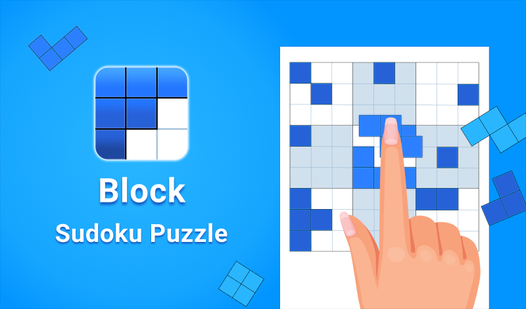
Not every great sudoku game looks like a traditional grid. Block Sudoku Puzzle fuses the placement logic of Tetris-style block games with sudoku's numerical constraints. You're fitting shaped blocks onto a board while ensuring no row, column, or section gets duplicates. It's a genuinely different challenge that activates different spatial reasoning skills — but the core sudoku DNA is unmistakably there. If you've ever found standard 9×9 puzzles a bit samey, this is the variation that might reignite your enthusiasm.

Block Sudoku Puzzle
Arrange various wooden shapes on a 9x9 board to complete lines and clear space for your next move. Block Sudoku Puzzle challenges your spatial awarene...
▶ Play FreeSudoku (Classic)
Sometimes you just want the thing, no frills, fully functional. Sudoku delivers exactly that. Fast-loading, mobile-friendly, no tutorial forced on you before you can play — just the grid and your brain. It's the kind of implementation you bookmark and return to daily.
Sudoku
Logic puzzles have a unique way of sharpening the mind while providing a satisfying sense of accomplishment when every box finally clicks into place. ...
▶ Play FreeSudoku Guru
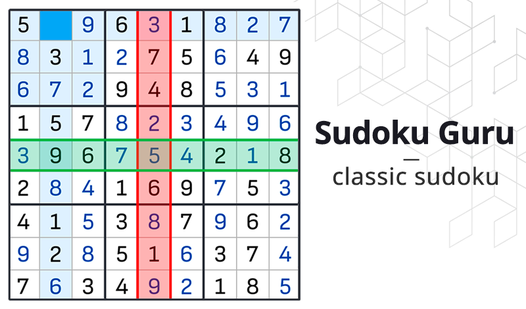
If you're specifically interested in progressing from beginner to advanced, Sudoku Guru builds a structured experience around that journey. The "guru" framing isn't just branding — it offers instructional elements alongside the puzzles themselves, making it a solid pick for anyone who wants to understand why certain moves work rather than just finding the solution by trial and error.
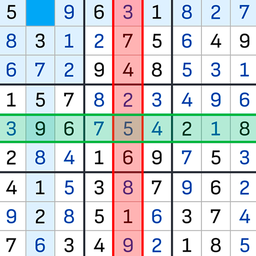
Sudoku Guru - classic sudoku
Staring at a blank screen during your commute or waiting for your coffee to brew is the perfect time to sharpen your wits with a quick logic puzzle. S...
▶ Play FreeKiller Sudoku
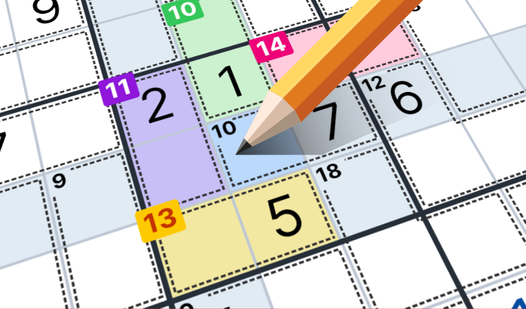
Ready to add another layer? Killer Sudoku keeps the standard placement rules but removes most of the starting givens. Instead, cells are grouped into "cages" with a target sum displayed on each group. You have to figure out which numbers go where using both positional logic and arithmetic constraints simultaneously. It's genuinely harder than classic sudoku — and genuinely more rewarding when it clicks.
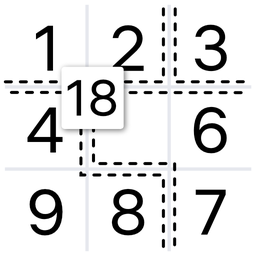
Killer Sudoku
Killer Sudoku takes the standard grid logic you already know and adds an addictive mathematical twist that keeps your brain firing on all cylinders. T...
▶ Play FreeDots Sudoku
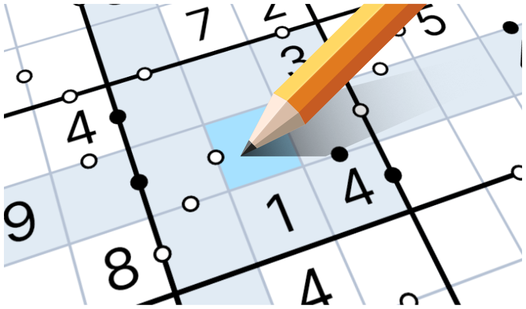
Dots Sudoku offers a refreshing visual twist on the classic format. Instead of a standard numbered grid, the puzzle uses dot patterns to represent values — a different cognitive experience that forces you to read the board in a new way. Players who find number-heavy grids visually fatiguing often find Dots Sudoku easier on the eyes while still delivering the same logical challenge.
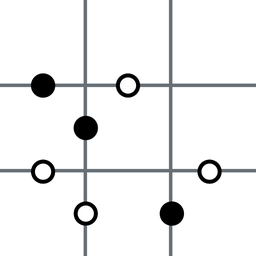
Dots Sudoku
Place numbers into the grid ensuring no repeats while following the logic of white and black dots that define the relationship between adjacent cells....
▶ Play FreeJigsaw Sudoku
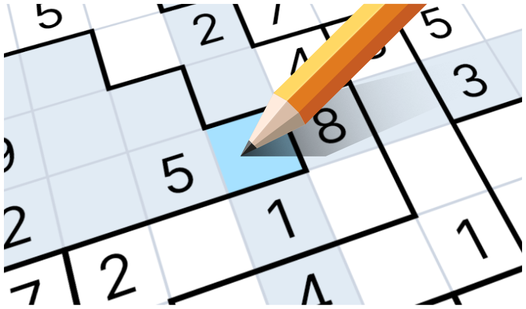
In standard sudoku, the nine inner boxes are always perfect 3×3 squares. In Jigsaw Sudoku, those regions are replaced with irregular, interlocking shapes — like puzzle pieces. The same rules apply (each region, row, and column must contain 1–9 with no repeats), but the irregular boundaries create a completely different solving experience. Patterns that work in classic sudoku don't always transfer here, which is exactly the point.
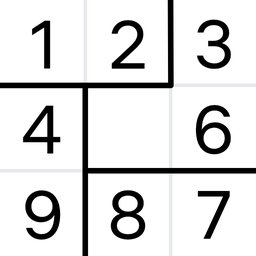
Jigsaw Sudoku
Logic enthusiasts seeking a mental workout will find their new addiction with Jigsaw Sudoku. This challenging brain teaser transforms the traditional ...
▶ Play FreeMore Free Classics
If you want a steady supply of fresh daily puzzles without any complexity overhead, both Sudoku Free and Sudoku Classic (9) hit the mark. They're no-nonsense implementations with timer tracking and multiple difficulty settings — reliable choices for daily practice.
Sudoku free
Filing rows and columns with numbers is the core of Sudoku free, a game that sharpens your mind while you unwind. You carefully place digits from one ...
▶ Play Free
Sudoku classic (9)
Logic enthusiasts and fans of classic brain teasers will find Sudoku classic (9) to be the ultimate test of mental clarity. This timeless puzzle chall...
▶ Play FreeFor a community-focused experience, Sudoku Club adds leaderboards and competitive elements to the core game. Competing against other players' times on the same daily puzzle is a motivating addition that solo play can't replicate.
Sudoku Club
Staring at a blank screen during a long afternoon slump makes it hard to stay productive without a quick mental reset. Sudoku Club provides the perfec...
▶ Play FreeAnd for anyone who wants their puzzle wrapped in a more atmospheric, game-like presentation, Sudoku — Logic Game frames the experience with progression systems and unlockable content alongside the puzzles.

Sudoku - logic game
Staring at a blank screen while your brain feels like mush is the ultimate mid-day struggle. Solving Sudoku - logic game provides an instant mental re...
▶ Play FreeSudoku Difficulty Levels — Easy to Expert
One of the biggest advantages of sudoku puzzles online free platforms over newspaper sudoku is on-demand difficulty selection. Here's what each tier actually means in practice.
Easy
Easy puzzles load the grid with 36–45 given cells — enough that almost every move is immediately obvious using only basic elimination. You're rarely stuck for more than a few seconds. These are perfect for learning the rhythm of the game, building your visual scanning habits, and finishing quickly when you only have a few minutes.
Medium
Medium puzzles (28–35 givens) start requiring actual logical deduction. Naked singles alone won't carry you through the whole grid. You'll need to start working with naked pairs (two cells in the same unit that share the same two candidates) and look for hidden singles more carefully.
Hard
Hard sudoku (22–27 givens) demands systematic candidate tracking. Many players find it useful to pencil in candidate numbers in each cell, then eliminate systematically. The difference between medium and hard isn't just fewer starting numbers — the puzzle is constructed so that simple techniques genuinely don't work, forcing you to apply more advanced logic.
Expert / Extreme
Expert puzzles (17–22 givens) may require techniques like X-Wing, Swordfish, or XY-Chain. These aren't guessing strategies — they're legitimate logical deductions — but they require tracking candidates across multiple rows and columns simultaneously. The solving process becomes closer to a mathematical proof than a casual puzzle.
Daily Challenges
Most quality sudoku platforms publish a fresh "Puzzle of the Day" at each difficulty level. These are great benchmark tools: solve the same puzzle as thousands of other players and compare times. Over weeks and months, your improvement becomes clearly visible.
Sudoku Strategies and Solving Techniques
The gap between "I can solve easy puzzles" and "I can solve expert puzzles" comes down to knowing specific techniques. Here are the most important ones.
Scanning (The Starting Point)
Before writing anything, scan each row, column, and box for digits already placed. For each number 1–9, ask: where can this digit still go? Often you'll immediately identify cells where only one position is possible within a region. This is the baseline technique every player uses from the first move.
Naked Singles
A naked single is a cell that has only one possible digit left after elimination. These are the easiest fills in the game. Regularly scanning your grid for naked singles is the foundation of forward momentum.
Hidden Singles
A hidden single is a digit that appears as a candidate in only one cell within a row, column, or box — even if that cell has multiple candidates. The digit must go there, regardless of what other candidates the cell has. Many beginners miss hidden singles because they're looking at the cell's candidates rather than scanning across entire units.
Naked Pairs and Triples
If two cells in the same unit each contain exactly the same two candidates (say, {3,7}), those two digits must occupy those two cells. You can safely remove 3 and 7 from every other cell in that unit. Naked triples work the same way with three cells and three candidates.
Box-Line Reduction
If a digit's only valid positions within a box all fall in the same row or column, that digit can't appear elsewhere in that row or column — even outside the box. This eliminates candidates across the broader grid and often opens up new moves.
X-Wing
X-Wing is the first "advanced" technique most players learn. If a digit's candidates in exactly two rows appear in the same two columns, those four cells form a rectangle. The digit must appear at two diagonally opposite corners. This means you can eliminate that digit from the rest of those two columns. Mirror the pattern and you can also work column-to-row. It sounds complex but becomes intuitive with practice.
Trial and Error — When to Use It
Most purists avoid trial and error, but occasionally a puzzle is genuinely unsolvable with logical techniques alone (this is rare in well-designed puzzles). If you're completely stuck, bifurcation — picking the most constrained cell with two candidates and trying one — is a last resort. The key is tracking your assumption carefully so you can backtrack cleanly if it fails.
Using Pencil Marks
Every quality online sudoku game offers a "note" or "pencil mark" mode. This lets you write candidate numbers in small type inside each cell. Using pencil marks transforms your ability to apply pair and advanced techniques — without them, tracking candidates across a hard or expert grid mentally is genuinely very difficult.
The progression from casual to expert is mostly about building pattern recognition. You stop consciously applying techniques and start seeing them. A naked pair in column 4 registers immediately rather than requiring deliberate scanning. That's when sudoku becomes truly fast and fluent.