Hard Puzzle Games Unblocked: 12 Brain-Busting Challenges
Hard puzzle games unblocked are the perfect antidote to boredom — no installs, no paywalls, no barriers between you and a proper mental workout. Whether you're stuck at school, killing time at the office, or just craving something that actually makes you think, these free browser puzzle games will push your logic, spatial reasoning, and pattern recognition to their limits.
This list covers 12 games across three challenge categories: pure logic puzzles, number and pattern games, and spatial reasoning monsters. Each one plays right in your browser, completely free. Fair warning — some of these will have you staring at the screen for longer than you'd like to admit.
Hardest Logic Puzzles You Can Play in Browser
Logic puzzles have one brutal defining feature: there is always exactly one right answer, and it's your job to find it using deduction alone. No guessing, no luck — just clean, cold reasoning. The hard puzzle games unblocked in this section reward patience and systematic thinking above all else.
Block Puzzle Gem
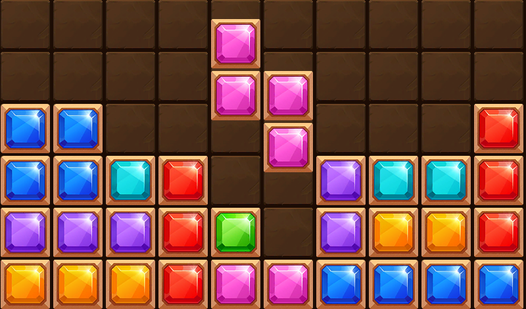
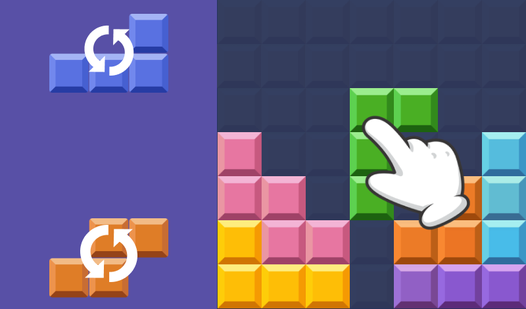
Block Puzzle Gem takes the familiar block-fitting formula and cranks up the difficulty with a rotation mechanic that completely changes how you plan your moves. Instead of passively waiting for the right shape to drop, you actively rotate pieces before placing them — which sounds like a helpful feature until you realize it also means there are far more ways to make a catastrophic mistake.
The gemstone theme isn't just cosmetic. Different gem shapes have different rotation behaviors, and learning which piece does what under rotation pressure is half the battle. Veteran block puzzle players will find their muscle memory completely undermined at first. The grid fills up fast when you're second-guessing every rotation, and clearing lines becomes a precise surgical task rather than a casual pastime.
What makes it genuinely hard is the combinatorial pressure: each placement you make now closes off future options you haven't even considered yet. That's the hallmark of a real logic puzzle — decisions compound.
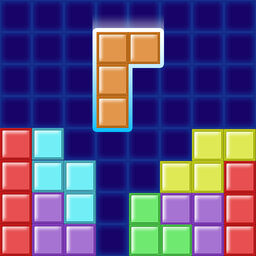
Block Puzzle Gem
Ever wondered what makes classic puzzle games so endlessly engaging? Block Puzzle Gem takes that timeless appeal and polishes it to a brilliant shine,...
▶ Play FreeBlock Puzzle: Block Builder
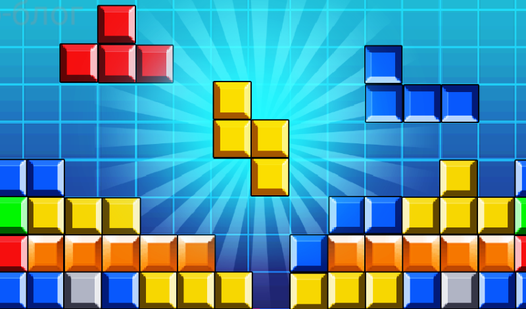
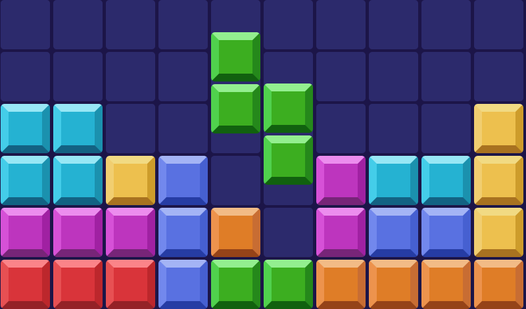
If Block Puzzle Gem tests your reflexes under rotation pressure, Block Puzzle: Block Builder tests pure strategic placement. Falling block figures must be fitted together to form complete horizontal lines — straightforward in concept, punishing in practice.
The challenge here comes from the falling speed and piece variety. Early stages feel manageable, but as the pace increases and the shapes get less accommodating, you start realizing that every careless placement is a debt you'll pay with interest three moves later. Players who try to play reactively — dealing with each piece as it appears without thinking ahead — will hit a wall quickly.
Block Builder rewards players who mentally simulate two or three moves forward before committing. It's the kind of game that feels unfair until suddenly it clicks and you start seeing the board as a system of future possibilities rather than a collection of gaps to fill.
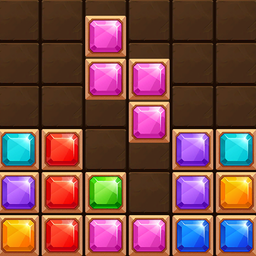
Block Puzzle: Block Builder
Puzzle lovers and fans of classic brain teasers will find Block Puzzle: Block Builder an incredibly addictive experience. This isn't just another bloc...
▶ Play FreeBlock Puzzle: Falling Shapes
A close relative of the above, Falling Shapes adds extra piece variety that keeps your planning constantly disrupted. No two sessions feel identical, which keeps the difficulty fresh rather than just pattern-memorizable.
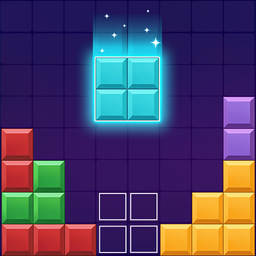
Block Puzzle: Falling shapes
Falling blocks carry a unique thrill that has defined classic gaming for generations. Block Puzzle: Falling shapes takes this timeless concept and ref...
▶ Play FreeCute Tiles: Puzzle
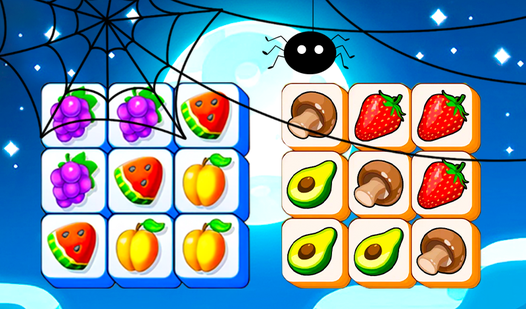
Don't let the name fool you. Cute Tiles: Puzzle is a matching and arrangement game that hides serious depth behind its cheerful visuals. Matching tiles under space constraints forces you to think multiple moves ahead — cute presentation, ruthless execution.
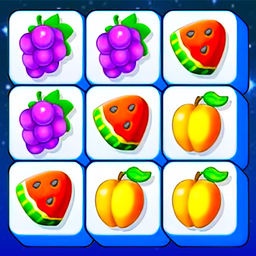
Cute Tiles: Puzzle
Feeling a bit bored and need a quick mental break? Cute Tiles: Puzzle is your cozy escape into a world of satisfying tile-matching and aesthetic charm...
▶ Play FreePattern & Number Puzzles for Advanced Players
Number and pattern puzzles operate on a different type of intelligence than spatial games. They require you to hold multiple constraints in your head simultaneously and systematically eliminate possibilities. The hard puzzle games unblocked in this category are the ones that fill notebooks with notes and still leave you stuck.
Sudoku: Classic Puzzles
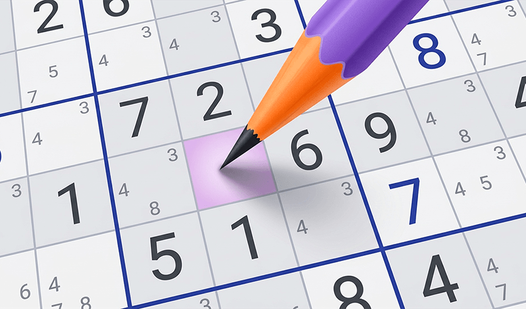
There's a reason Sudoku has been a global obsession for decades — it's one of the purest logic puzzles ever designed. The rules are famously simple: fill a 9×9 grid so every row, column, and 3×3 box contains the digits 1 through 9 exactly once. No math required. No guessing allowed (in any properly designed puzzle). Just logic.
Sudoku: Classic Puzzles delivers this experience cleanly in the browser with a well-designed interface and a range of difficulty levels that actually scale properly. The easy puzzles are genuinely approachable; the hard and expert levels are genuinely hard. On the toughest settings, you'll need advanced techniques beyond basic elimination — X-wings, swordfish patterns, naked pairs — to make progress without guessing.
What separates great Sudoku from mediocre implementations is the puzzle quality, and this version holds up. Each puzzle has exactly one solution reachable through pure deduction. That guarantee is what makes every "aha" moment satisfying rather than lucky. If you've never tried Sudoku beyond casual phone games, this is the version that shows you what the puzzle can really demand of you.
Sudoku: Classic Puzzles
Place numbers from one to nine into the grid making sure every row and column holds each digit only once. Mastering Sudoku: Classic Puzzles requires s...
▶ Play FreeBlock Puzzle: Lines of Blocks
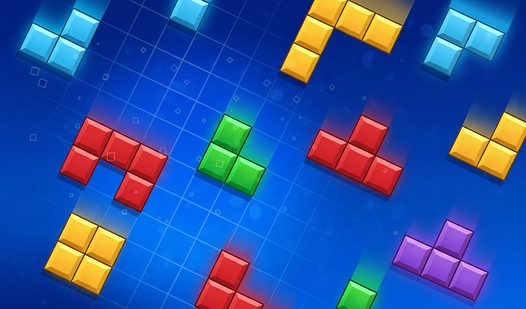
Block Puzzle: Lines of Blocks strips the concept down to its essentials: blocks fall from above, you need to form solid horizontal lines, and the game gets harder as you go. It sounds almost identical to classic Tetris, but the piece set and grid behavior create a meaningfully different planning challenge.
Where classic falling-block games reward fast reactions, Lines of Blocks rewards deliberate placement strategy. The harder difficulty settings give you pieces that are genuinely awkward to integrate without leaving gaps, and gaps compound fast. You'll develop an eye for which placements are "safe" versus which ones are small disasters waiting to reveal themselves.
The satisfying part — when you clear multiple lines in a single well-planned sequence — makes all the careful thinking feel worth it. This is one of those games that has a visible skill ceiling, meaning you can always get meaningfully better at it with practice.
Block Puzzle: Lines of Blocks
Fans of retro arcade challenges will find their new obsession with Block Puzzle: Lines of Blocks today. This addictive game tests your ability to stac...
▶ Play FreeBlock Puzzle Color Puzzles
Color Puzzles adds a chromatic dimension to the classic block puzzle formula — pieces must be placed not just to fill space efficiently but to satisfy color-matching conditions. Managing two simultaneous constraint systems (spatial fit + color logic) is a genuine step up in difficulty.
Block Puzzle Color Puzzles
Drag and drop colorful shapes onto the board to clear lines and rack up high scores in Block Puzzle Color Puzzles. You will constantly manage space wh...
▶ Play FreeMerge Planets: Suika Puzzle
Merge Planets takes the viral "watermelon game" concept — merging matching objects to create larger ones — and wraps it in a space theme. The physics-based drop mechanic means identical strategy produces different results each time, keeping the puzzle fresh and occasionally infuriating.

Merge Planets: Suika puzzle
Space enthusiasts and fans of addictive brain teasers will find themselves hooked on Merge Planets: Suika puzzle from the very first drop. This celest...
▶ Play FreeSpatial Reasoning Games That Stump Everyone
Spatial reasoning puzzles are uniquely cruel because they're hard to brute-force. You can't just write down possibilities and eliminate them systematically the way you can with Sudoku. You have to visualize, rotate, and transform shapes mentally — and some people's brains resist this more stubbornly than others. Hard puzzle games unblocked in this space are the ones that feel impossible until they suddenly feel obvious.
Color Puzzle: Create a Palette
Color Puzzle: Create a Palette is one of the most unexpected difficulty spikes on this list. The concept sounds gentle: drag and drop color squares to create specific palettes. But the challenge comes from color theory constraints operating beneath the surface. Getting two squares to "match" isn't just about visual similarity — it's about understanding how colors interact in combination.
The calm, aesthetic presentation masks a puzzle system that demands real color intuition. Players who struggle with this game often describe it as feeling arbitrary — which usually means the underlying color logic hasn't clicked yet. Once it does, the solutions feel elegant and inevitable. Until then, it's genuinely baffling.
The drag-and-drop mechanic also introduces a spatial element: the position of colors relative to each other matters for the palette evaluation, not just which colors are present. This means you're solving two problems simultaneously — color selection and arrangement — which multiplies the difficulty considerably.
This is one of those rare games that feels completely unlike anything else on this list, which is exactly why it belongs here. It challenges a type of visual-spatial reasoning that most puzzle games ignore entirely.

Color Puzzle: Create a Palette
Arrange vibrant squares into perfect gradients to complete your masterpiece in Color Puzzle: Create a Palette. This relaxing color puzzle experience c...
▶ Play FreePirates and Puzzles 2
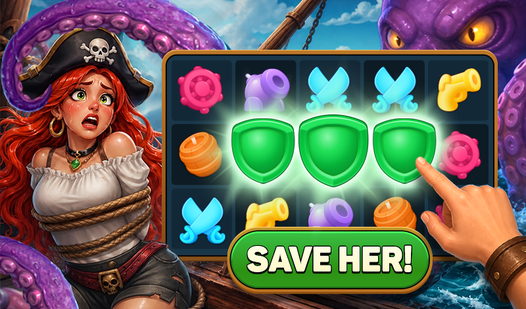
Pirates and Puzzles 2 combines match-3 mechanics with strategic combat elements, creating a puzzle game where your choices have downstream consequences beyond the immediate board state. You're not just solving the puzzle in front of you — you're managing resources and planning for encounters that haven't appeared yet.
The naval theme provides context for why your puzzle-solving matters: matches power attacks, abilities, and defenses in a combat system layered on top. This dual-layer structure means casual puzzle players who don't engage with the strategic dimension will find themselves losing matches they should have won. The hard mode content genuinely requires understanding both layers simultaneously.
For players who find pure abstract puzzles occasionally soul-crushing, the narrative wrapper here provides motivation to push through the frustrating parts. And there are frustrating parts — some encounters are specifically designed to punish thoughtless matching, forcing you to plan your board state several moves in advance.

Pirates and Puzzles 2
Match identical tiles to launch devastating cannons and swords against your opponents in this addictive online sea battle. Pirates and Puzzles 2 turns...
▶ Play FreeTips for Solving Hard Puzzle Games
Playing hard puzzle games unblocked is a skill in itself, separate from raw intelligence. People who are great at these games aren't necessarily smarter — they've usually developed specific habits that let them use their cognitive resources more efficiently.
Start from constraints, not possibilities. In logic puzzles like Sudoku, the first question isn't "what could go here?" It's "what are the hardest constraints on this cell?" Cells or positions with the fewest valid options are your entry points. Work from the most restricted positions outward.
Accept that confusion is progress. The moment a hard puzzle feels genuinely confusing, you're usually close to an insight. Confusion means you've loaded the problem into working memory and are starting to see contradictions. Step away briefly if needed, but don't interpret confusion as evidence that you're doing it wrong.
Learn to recognize dead-end patterns early. In spatial puzzles like block games, certain placement configurations are known dead ends — odd-shaped gaps that no piece can fill, isolated corners that will always cause problems. Training yourself to recognize these patterns before committing to a placement saves massive amounts of backtracking.
Play the same game repeatedly on the same difficulty. This sounds obvious, but most people move between games too quickly to actually improve. Real skill development in puzzle games comes from pattern recognition, and pattern recognition comes from repetition. Spend a week on one game at one difficulty level and you'll be shocked at how much your performance improves.
Don't confuse "hard to learn" with "hard to master." Some games on this list look complicated at first but have relatively shallow depth — they become routine once the mechanics click. Others look simple but have enormous mastery ceilings. Sudoku is the clearest example of the second type: the rules take two minutes to learn, and the hardest puzzles can take hours to solve correctly.
For color and pattern games, take screenshots or sketches. Analog notes aren't cheating — they're a legitimate cognitive tool. When a color puzzle has too many variables to hold in working memory simultaneously, sketching the current state on paper gives you a stable reference and frees up mental bandwidth for actual reasoning.
Accept more failure. The single biggest obstacle for most players on hard puzzle games is an unwillingness to fail repeatedly. Hard puzzles require repeated failure as a learning mechanism. Each failed attempt gives you information about what doesn't work, which systematically narrows down what might. Treat failure as data collection, not defeat.