How to Play 15 Puzzle Game — Rules, Tips & Strategy
If you've ever stared at a scrambled grid of numbered tiles wondering where to even start, you're not alone. Learning how to play 15 puzzle game ff1 is one of those satisfying challenges — simple enough to pick up in five minutes, deep enough to keep puzzle lovers busy for years. This guide covers everything: the rules, a clear solving strategy, advanced tricks, and where to find great free puzzle games online.
What Is the 15 Puzzle Game
The 15 puzzle (also called the sliding tile puzzle or Gem Puzzle) is a classic brainteaser that dates back to the 1870s. It consists of a 4×4 grid holding 15 numbered tiles and one blank space. The tiles start in a scrambled order, and your job is to slide them — one at a time — into the correct sequence, usually 1 through 15 from left to right, top to bottom, with the blank in the bottom-right corner.
The catch? You can only move a tile if it's directly adjacent to the empty space. No lifting, no swapping — just sliding. That single constraint turns a seemingly simple task into a rich logic puzzle that has fascinated mathematicians, competitive solvers, and casual gamers alike.
The puzzle became a cultural phenomenon shortly after its invention by Noyes Palmer Chapman, and it's never really gone away. Modern online versions let you play instantly without any physical tiles, with customizable difficulty, timer modes, and even image-based variants where you reassemble a photo.
One important mathematical fact: exactly half of all possible scrambled positions are actually solvable. The other half are "impossible" configurations — no matter how many moves you make, you'll never reach the solved state. Understanding this saves you from endlessly struggling with an unsolvable board.
Block Puzzle Gem
Ever wondered what makes classic puzzle games so endlessly engaging? Block Puzzle Gem takes that timeless appeal and polishes it to a brilliant shine,...
▶ Play FreeHow to Play 15 Puzzle Game: Basic Rules
The rules are minimal, which is part of the appeal:
The board: A 4×4 grid with 15 tiles numbered 1–15 and a single empty square.
Movement: Click (or tap) any tile adjacent to the blank space to slide it into that space. You can slide tiles up, down, left, or right — but only if the empty space is directly next to them. Diagonal moves are not allowed.
The goal: Arrange all tiles in order:
 1  2  3  4
 5  6  7  8
 9 10 11 12
13 14 15  _
Winning: The puzzle is solved when every tile sits in its numbered position and the blank occupies the bottom-right corner.
Scoring: In timed or competitive play, you're typically scored on move count and time. Fewer moves + faster time = better score.
That's really it. The rules take thirty seconds to learn. The strategy is what makes people come back for hours.
Starting tips for beginners:
- Don't rush. Random sliding rarely gets you anywhere useful.
- Focus on one row at a time, starting from the top.
- The blank space is your "tool" — think of it as a cursor you're navigating around the board.
- Every tile you want to move must have a path — you're not just moving one tile, you're choreographing a sequence of slides.
Block Puzzle: Block Builder
Puzzle lovers and fans of classic brain teasers will find Block Puzzle: Block Builder an incredibly addictive experience. This isn't just another bloc...
▶ Play FreeStep-by-Step Solving Strategy for How to Play 15 Puzzle Game ff1
The most reliable method for solving the 15 puzzle is the row-by-row approach. Here's how it works:
Phase 1: Solve the Top Row (Tiles 1–4)
Start by placing tile 1 in position, then tile 2, then 3, then 4. Sounds simple — but tiles 3 and 4 require a special technique called the "parallel insert" to avoid disturbing each other.
Moving a single tile: To move any tile to its target position, you navigate the blank space to the tile's current location, then use the blank to "pull" the tile toward its target. The blank always moves one step at a time, and the tile only moves when the blank is directly adjacent.
The parallel insert for tiles 3 and 4: When you have tiles 3 and 4 both need to go into the top-right corner positions simultaneously, place them in a temporary configuration (usually with 3 directly below 4 in the right column), then rotate them into position together. This 4-move rotation is a fundamental technique you'll use repeatedly.
Phase 2: Solve the Second Row (Tiles 5–8)
With the top row locked in, never touch it again. Repeat the same logic for the second row. Now you're working with a 4×3 grid essentially.
The same parallel insert trick applies for tiles 7 and 8.
Phase 3: Solve the Left Column (Tiles 9 and 13)
Here the strategy shifts slightly. Instead of working left-to-right, you solve the leftmost column of the remaining 2×4 section. Tiles 9 and 13 go in together using a rotation similar to the one you used for tiles 3 and 4, but oriented vertically.

Relax Jigsaw Puzzles
Feeling a little stressed out or just need a satisfying break from your daily grind? Relax Jigsaw Puzzles is here to whisk you away into a world of ca...
▶ Play FreePhase 4: Solve the Final 2×3 Block
You're now left with a 3×3 area containing 6 tiles. Apply the same row method: solve the third row (tiles 10 and 11), then place tiles 14 and 15 along with the blank in the last row.
The last six tiles can sometimes feel tricky because the board is getting crowded. The key is mastering 3-tile cycles — rotating three tiles around each other without disturbing the rest. There are really only a handful of unique situations that arise at this stage, and once you've seen them a few times, you'll recognize them instantly.
Common Beginner Mistakes
- Solving tiles one by one without a plan: Tile 1 lands in place, then you accidentally knock it out placing tile 2. Always think two moves ahead.
- Ignoring the blank's position: The blank needs to travel to specific locations. Plan its route before you start a sequence.
- Giving up too early: If you've been at it for a while and seem stuck, you probably don't need to restart — just back up a few moves and find the moment where the plan diverged.
Cute Tiles: Puzzle
Feeling a bit bored and need a quick mental break? Cute Tiles: Puzzle is your cozy escape into a world of satisfying tile-matching and aesthetic charm...
▶ Play FreeAdvanced Speed-Solving Tips
Once you can reliably solve the 15 puzzle, the next challenge is doing it fast. Competitive solvers (yes, this is a thing — there are world records and online leaderboards) can solve scrambled boards in under 60 moves or under 60 seconds. Here's how to close the gap.
Learn to think in algorithms, not individual moves. Speed-solvers memorize short sequences of moves that accomplish specific results — rotating three tiles, cycling a corner, inserting a row — without having to reason through each step from scratch. These mini-algorithms are called "commutators" in the puzzle community.
Count your moves. The average random solve takes 50–80 moves. A good solve is under 50. An excellent solve is under 40. Tracking your move count forces you to think more efficiently.
Use the "fifteen" counting method. Before each phase, count how many tiles are out of place and estimate the minimum moves required to fix each one. This gives you a rough lower bound on your remaining move count and helps prioritize what to work on first.
Practice partial scrambles. Fully scrambled boards are great, but practicing boards that are only 1–3 moves from solved builds your pattern recognition for endgame situations incredibly fast.
Play with a metronome or timer. Artificial time pressure exposes your weak spots quickly. If you consistently slow down at the same phase, that's where to focus your practice.
Understand parity. If you've correctly placed 13 tiles but the last two are swapped with no way to fix them — that's a parity error. It means either the board was in an unsolvable state (rare in good online games, but possible), or you made an error in an earlier phase that got "absorbed" into the end. Knowing parity exists means you won't waste ten minutes trying to swap two tiles that can't be swapped without undoing earlier work.
Watch speedrun videos. The 15 puzzle has an active community on YouTube and Speedrun.com. Watching expert solvers in real time is genuinely one of the fastest ways to pick up new techniques — you'll notice moves and patterns you'd never find on your own.
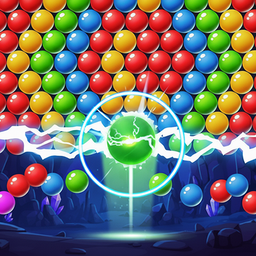
Bubble Shooter: Bubble Puzzle Game
Need a quick mental escape from the daily grind? Bubble Shooter: Bubble Puzzle Game is your go-to for instant fun and satisfying puzzle-solving. This ...
▶ Play FreeBest Free Puzzle Games Online
The 15 puzzle is a gateway drug for puzzle lovers. Once you've got the sliding tile logic in your brain, you'll naturally crave other puzzles that reward the same kind of spatial reasoning and planning. Here are some great options available free online.
Block puzzles scratch a very similar itch. You're placing or arranging shapes on a grid, always thinking about where the empty space will end up and how to create room for future pieces.
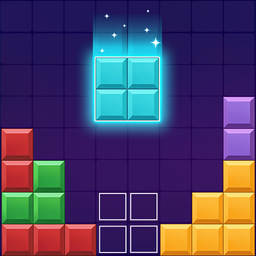
Block Puzzle: Falling shapes
Falling blocks carry a unique thrill that has defined classic gaming for generations. Block Puzzle: Falling shapes takes this timeless concept and ref...
▶ Play FreeSudoku exercises the same "constraint satisfaction" thinking as the 15 puzzle — you know what the final state looks like, and you work backward from the rules to fill in the gaps.
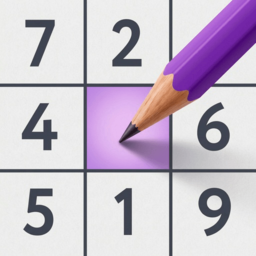
Sudoku: Classic Puzzles
Place numbers from one to nine into the grid making sure every row and column holds each digit only once. Mastering Sudoku: Classic Puzzles requires s...
▶ Play FreeJigsaw puzzles are the visual counterpart — instead of numbered tiles, you're matching shapes and images. Kids' jigsaws are a fantastic entry point for younger players.
Bird-themed jigsaws provide a calm, focused puzzle experience — perfect after an intense 15-puzzle session.
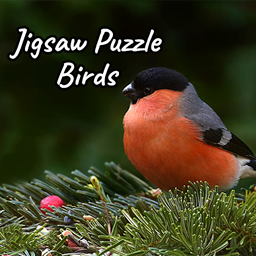
Jigsaw Puzzle Birds
Connecting scattered fragments into a cohesive image is a timeless pastime that keeps the mind sharp and focused. Jigsaw Puzzle Birds transforms this ...
▶ Play FreeSmart placement block puzzles add an extra layer of challenge by requiring you to think several pieces ahead, just like solving a 15 puzzle row.
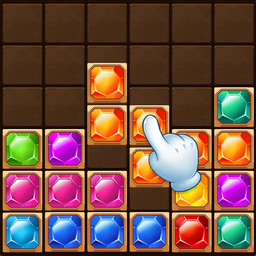
Block Puzzle Smart Placement
Staring at the clock and waiting for your next meeting or class to start can be incredibly draining when the minutes just refuse to tick by. Block Puz...
▶ Play FreeLines of Blocks is a variation where clearing full lines becomes the objective — strong spatial intuition pays off here too.
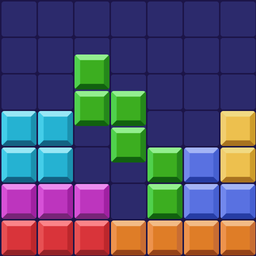
Block Puzzle: Lines of Blocks
Fans of retro arcade challenges will find their new obsession with Block Puzzle: Lines of Blocks today. This addictive game tests your ability to stac...
▶ Play Free2048 is another tile-sliding game with a fundamentally different goal — instead of sorting, you're merging tiles to reach higher numbers. If you enjoy the 15 puzzle's blank-space mechanic, 2048 will feel like a natural cousin.
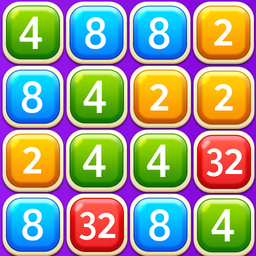
2048 Numerical Puzzle: The Square of Numbers
Staring at a blank screen during a lunch break often feels like a missed opportunity for some serious mental stimulation. 2048 Numerical Puzzle: The S...
▶ Play FreeAll of the games above are free to play in your browser — no accounts, no installs, just open and play. That's what makes online puzzle platforms so convenient: you can squeeze in a quick session anywhere, on any device.