Games Like Spider Solitaire — 10 Best Free Alternatives Online
Spider Solitaire holds a special place in the hearts of card game fans — it's the kind of game you open for "just five minutes" and suddenly an hour has passed. If you're hunting for games like Spider Solitaire that scratch the same itch, you've landed in the right place. This guide covers 10 free alternatives you can play online right now, plus tips for getting better at card puzzle games in general.
Why Fans Love Spider Solitaire
Spider Solitaire isn't just another patience game. It has a rhythm to it — the satisfying thud of clearing a complete suit, the slow burn of working through a difficult deal, and the way the difficulty scales from beginner (1 suit) all the way up to expert (4 suits). That flexibility is a big part of its appeal.
The game rewards patience and forward-thinking. You're not just moving cards around randomly; you're building sequences, managing your tableau columns, and deciding when to draw new cards from the stock. It's a puzzle with a deck of cards, and that combination keeps players coming back.
There's also the nostalgia factor. Millions of people first encountered Spider Solitaire on Windows, and it became the go-to distraction for office workers and students for decades. Today, you can play free games online spider solitaire full screen style, right in your browser — no download needed.
Before we get into the alternatives, here's the main game itself. Whether you want the relaxed 1-suit version or the brain-bending 4-suit challenge, this is where to start:
Spider Solitaire (1, 2, and 4 suits)
Arrange descending sequences of the same suit from king to ace to clear the board. Spider Solitaire offers a classic card game experience with multipl...
▶ Play Free10 Best Games Like Spider Solitaire
If you love Spider Solitaire but want fresh challenges, these games offer the same core satisfaction — building sequences, clearing cards, thinking several moves ahead — with their own twists.
1. Klondike Solitaire
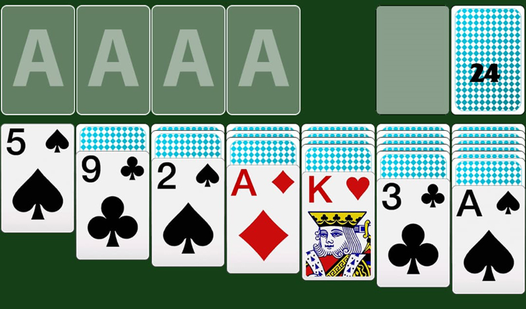
Klondike is probably the most famous solitaire variant in the world — when someone says "solitaire," this is usually what they mean. The goal is to build four foundation piles from Ace to King, one per suit. Like Spider, you're working with a tableau and a stock pile, moving cards between columns following alternating-color rules.
The key difference is that Klondike is a bit more linear and slightly less forgiving than Spider. You don't have the luxury of multiple suits stacking in the same column — everything has to alternate colors. That said, it's a perfect stepping stone if you want a familiar structure with a different set of constraints.
Klondike Solitaire
Card enthusiasts seeking a classic mental challenge will find their perfect match in Klondike Solitaire. This timeless puzzle tests your patience and ...
▶ Play Free2. FreeCell — Classic Solitaire
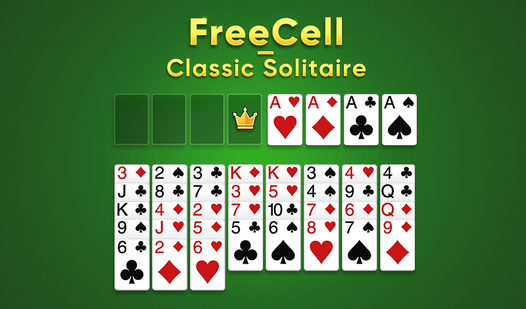
FreeCell might look simpler than Spider at first glance, but it's arguably more strategic. The entire deck is dealt face-up at the start, so there are no hidden cards — you can see everything from move one. The challenge comes from four "free cells," temporary holding spots you can use to move cards around.
Almost every FreeCell deal is winnable with perfect play, which makes it a satisfying puzzle rather than a luck-dependent game. Fans of Spider Solitaire who enjoy the strategic planning side of the game tend to love FreeCell for exactly this reason.
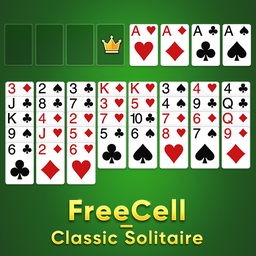
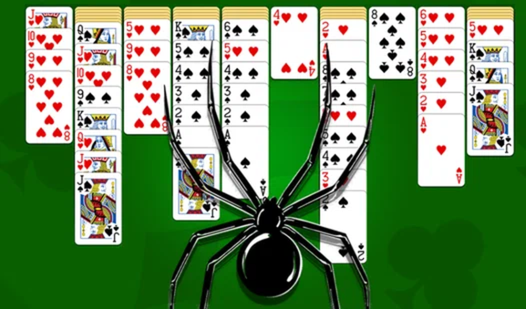
FreeCell - Classic Solitaire
Solitaire remains the ultimate mental workout for millions because it transforms a simple deck of cards into a complex test of patience and logic. Fre...
▶ Play Free3. Scorpion Solitaire
Scorpion Solitaire is probably the closest relative to Spider Solitaire on this list. Both use a full deck of 104 cards, both require you to build complete suits within the tableau before removing them, and both have that same sense of controlled chaos as you juggle multiple columns.
The key difference is in how you move cards. Scorpion allows you to move any face-up card (not just sequences) to a column where you can build a sequence, which opens up some interesting tactical possibilities. If you enjoy Spider but want a fresh challenge with familiar bones, Scorpion is an excellent pick.
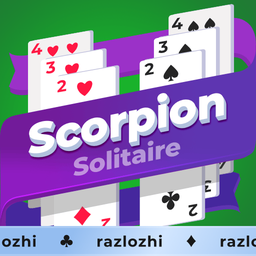
Scorpion Solitaire
Arranging cards in descending order by suit serves as the ultimate test of your strategic patience in Scorpion Solitaire. You shift entire stacks of f...
▶ Play Free4. Spider (1 Suit)
If you're new to spider-style games, or if you want a version where you can truly focus on technique without getting overwhelmed, Spider with 1 suit is exactly what you need. All cards are the same suit, which means you only need to worry about building sequences by rank, not by suit.
This is how to play spider solitaire on computer without the frustration of blocked suits and impossible positions. It's the training ground that lets you internalize the rhythm and tactics of Spider before bumping up the difficulty.
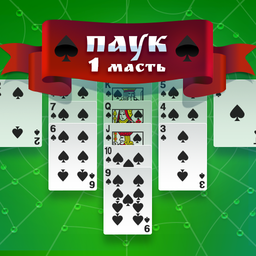
Spider (1 suit)
Staring at a blank screen while your brain feels like mush is the ultimate mid-day struggle. Spider (1 suit) is the perfect digital escape to reset yo...
▶ Play Free5. Maps — Solitaire Spider
Maps - Solitaire Spider takes the core Spider mechanic and wraps it in a geographic theme. The visual style is fresh, and the gameplay stays true to what makes Spider compelling: building sequences, managing columns, and clearing complete suits.
It's a great choice if you want the Spider experience with a visual refresh. The map-themed aesthetic makes it feel distinct from the standard card table look while keeping all the mechanics you already know.
Maps - Solitaire Spider
Card game enthusiasts who enjoy a good mental workout will find Maps - Solitaire Spider the perfect companion for a quick break. This addictive challe...
▶ Play Free6. Spider (4 Suits)
For those who have conquered the standard Spider Solitaire and want the hardest challenge available, Spider with 4 suits is the ultimate test. You're dealing with all four suits simultaneously, which means building sequences is dramatically harder — you can't just stack cards of mixed suits and call it a sequence.
Every move needs to be deliberate. You'll find yourself planning 10, 15, even 20 moves ahead. The win rate for 4-suit Spider among casual players is very low, which means every completed game feels like a genuine achievement.
Spider (4 suits)
Solitaire remains the undisputed king of patience games because it turns a simple deck of cards into a mental marathon that is impossible to put down....
▶ Play Free7. Solitaire Swift
Solitaire Swift offers a snappy, fast-paced take on classic solitaire mechanics. If you find traditional Spider a bit slow-moving, this game picks up the tempo with quicker card movements and a streamlined interface.
It's particularly good for mobile-style play sessions where you want satisfying card game action without committing to a long, complex game. Think of it as Spider's energetic cousin.
Solitaire Swift
Clear the board by matching cards one rank higher or lower regardless of their suit or color. Solitaire Swift keeps your brain sharp as you strategica...
▶ Play Free8. Dreamland Solitaire
Dreamland Solitaire adds a whimsical visual theme to classic solitaire gameplay, making it a standout option for players who want the card mechanics they love with an atmosphere that's a bit more enchanting than a plain green felt background.
The card rules follow familiar solitaire patterns, so the learning curve is gentle for Spider Solitaire veterans. What makes it memorable is the visual presentation — it transforms the standard patience game into something that feels like a mini adventure.

Dreamland Solitaire
Fans of card games will find a new obsession in Dreamland Solitaire as it blends relaxing strategy with a charming magical aesthetic. Your main missio...
▶ Play Free9. Jigsaw Solitaire
Jigsaw Solitaire is an interesting hybrid — it takes solitaire card mechanics and pairs them with a jigsaw puzzle theme. As you complete card sequences, you assemble a picture, which adds a visual reward layer on top of the standard card game satisfaction.
This one is particularly good if you're looking for games like Spider Solitaire that feel a bit more goal-oriented. Instead of just clearing the tableau, you're building toward a visible, tangible result.

Jigsaw Solitaire
Fans of logic challenges and beautiful visuals will find Jigsaw Solitaire the ultimate way to decompress after a long day. This refreshing take on the...
▶ Play Free10. Scorpio — World Best Solitaires
Scorpio is a collection-style game that packs multiple solitaire variants into one package. Instead of committing to a single game mode, you get variety — different rule sets, different challenges, and different difficulty levels all in one place.
For Spider Solitaire fans who are exploring alternatives and aren't sure which variant to commit to, Scorpio is a smart starting point. Sample several styles, find what clicks, and then go deeper with the games you enjoy most.
Scorpio - world best solitaires!
Staring at a stagnant screen while your coffee gets cold is a classic sign that you need a mental refresh right now. Scorpio - world best solitaires! ...
▶ Play FreeClassic Card Games for Solitaire Fans
Beyond the Spider-adjacent games, a few other solitaire classics deserve attention. These are the titles that have stood the test of time for good reason.
Klondike remains the baseline. If you haven't played it in a while, go back and give it fresh attention. The draw-one versus draw-three variants offer very different experiences, and the draw-three mode especially can feel surprisingly deep once you understand how to manipulate the stock pile.
FreeCell rewards serious study. Unlike most solitaire games where luck plays a role, FreeCell is almost entirely skill. That means your win rate should genuinely improve the more you play. Many FreeCell players track their streaks obsessively, treating each deal as a puzzle to solve.
Solitaire for 1 and 3 cards gives you another format to explore, with card draw options that change the pace and strategy of the game significantly.
Solitaire for 1 and 3 cards
Staring at a blank screen during a midday slump is the worst, but a quick round of Solitaire for 1 and 3 cards is the perfect mental reset. This class...
▶ Play FreeThe through-line across all these classics is patience — both the genre name and the literal quality required. These games don't reward rushing. They reward stopping, looking at the full board, and thinking through consequences before you touch a card.
Puzzle Games With Similar Mechanics
What makes Spider Solitaire satisfying as a puzzle game? At its core, it's about:
- Ordered sequences — building structures according to clear rules
- Limited moves — working within constraints rather than having total freedom
- Reversible thinking — understanding that good moves open options, bad moves close them
- Incremental progress — small wins (clearing a column, completing a suit) building toward a larger goal
These same qualities appear in many other puzzle formats. Matching games, tile-clearing puzzles, and stack-based puzzles all share this DNA. If you enjoy Spider for the puzzle-solving aspect rather than specifically the card theme, you'll find satisfaction in a wide range of games.
The key is finding games where individual moves have meaningful consequences. Games where every action matters tend to feel most rewarding — and most of the titles listed in this article share that quality.
The Spider (4 suits) variant is perhaps the purest expression of this puzzle philosophy. When you pick up that game mode, every single card placement needs to be considered carefully.
Tips for Mastering Card Puzzle Games
Whether you're playing Spider Solitaire, Scorpion, FreeCell, or any of the alternatives above, a few principles apply across the board.
Always look before you move. The single biggest mistake casual players make is moving cards immediately when a legal move presents itself. Just because a move is legal doesn't mean it's good. Before touching anything, scan the full tableau. Ask: does this move open up new possibilities, or does it block something important?
Prioritize empty columns. In Spider Solitaire and its relatives, empty tableau columns are incredibly valuable. They give you temporary storage, let you maneuver tricky sequences, and create flexibility for future moves. Don't fill empty columns with random cards just because you can.
Work on one suit at a time. In multi-suit Spider, it's tempting to work on every column simultaneously. Resist this. Focus on clearing one suit completely before spreading your attention. This gives you early wins (suit removals) and gradually simplifies the board.
Know when to draw. In Spider, drawing from the stock pile is often seen as giving up — you're admitting you can't make progress with what you have. Sometimes that's true. But experienced players also know that drawing at the right moment can unlock positions that seemed blocked. The timing matters.
Use undo strategically. Most online Spider Solitaire implementations include an undo button. Don't be shy about using it — but use it to learn, not just to cheat your way through. When you undo and try a different path, pay attention to why the second path was better. That's where the improvement happens.
Learn the statistics. Spider Solitaire with 4 suits has a win rate of roughly 30-40% even for skilled players. Some deals are genuinely unwinnable. If you're stuck on a 4-suit game and have explored all reasonable options, it might simply be a tough deal — not a failure of skill.