How to Play Spider Solitaire: Rules & Winning Tips
Spider Solitaire is one of those games that looks simple until you actually sit down to play it. If you've ever wondered how to play Spider Solitaire properly — beyond just clicking cards and hoping for the best — you're in the right place. This guide covers everything: the basic rules, how difficulty levels change the game, and the strategies that actually win rounds instead of just dragging them out.
Whether you're picking up cards for the first time or you've been stuck on 4-suit mode for months, there's something here for you.
Spider Solitaire Rules — How the Game Works
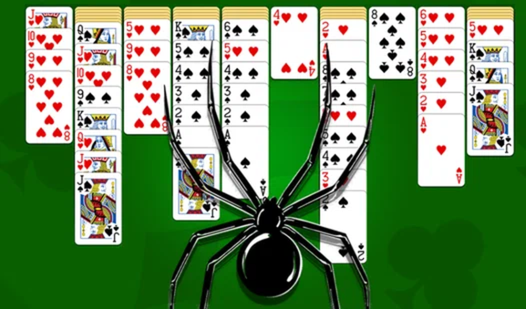
Spider Solitaire uses two standard 52-card decks — 104 cards in total. The goal is to build complete sequences of 13 cards (King down to Ace) in the same suit, then remove those sequences from the board. Do that eight times and you win.
Here's the basic setup:
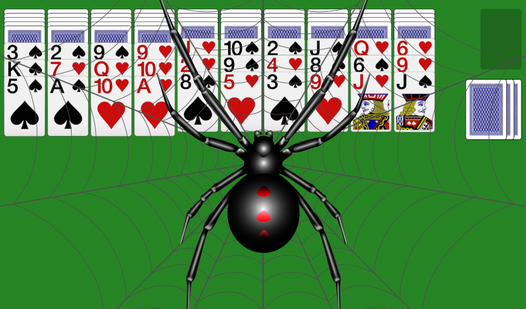
- 10 columns (called the tableau) are dealt at the start
- The first 4 columns get 6 cards each; the remaining 6 columns get 5 cards each
- Only the top card of each column is face-up at the start
- A stock pile on the side holds the remaining cards — you deal from it when you run out of moves
Moving cards: You can move a card (or a sequence of cards in the same suit) onto any card that's one rank higher. So a 7 of hearts can go on an 8 of anything. But here's the key catch: you can only move a group of cards together if they're all the same suit. Mixed-suit sequences can be moved one card at a time only.
Dealing from stock: When you hit a wall and have no useful moves, click the stock pile to deal one card to each of the 10 tableau columns. You get 5 deals total (since there are 50 cards left after the initial deal). You can't deal from stock if any column is empty — you must fill empty columns first.
Winning: Complete all eight 13-card sequences and clear them off the board. The game is won when the tableau is empty.
That's the skeleton. The actual experience varies wildly depending on how many suits you're playing with.

Spider Solitaire 2024
Staring at the clock waiting for your next meeting or just need a mental reset during a long afternoon? Spider Solitaire 2024 is the ultimate browser-...
▶ Play FreeHow to Play Spider Solitaire With 1 Suit (Easy)
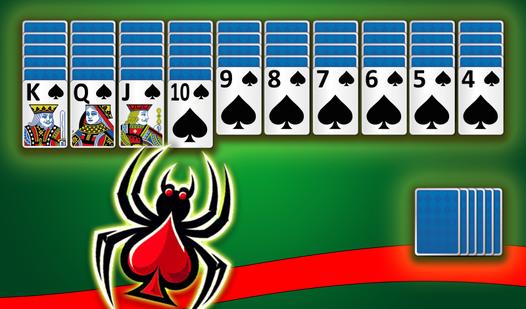
The 1-suit version uses only spades (or sometimes hearts, depending on the game). All 104 cards show the same suit symbol, which means any sequence of same-rank-adjacent cards can be moved as a group — there's no mixed-suit restriction to worry about.
This is the ideal starting point if you're new to the game. The rules are the same, but the reduced complexity lets you focus on learning the underlying logic:
- Build columns down in sequence (King to Ace)
- Keep empty columns open — they're incredibly useful for maneuvering cards
- Plan several moves ahead before dealing from stock
In 1-suit Spider, a decent player can win consistently once they understand column management. The main skill is learning not to deal from the stock too early. Every deal dumps 10 cards onto the board and can bury cards you need. Deal only when you're genuinely stuck.
Spider (1 suit) is a clean, fast version that's perfect for learning this rhythm. It doesn't pad the experience — you get a pure Spider layout and can practice until the moves feel natural.
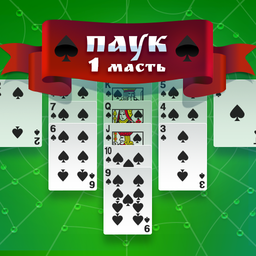
Spider (1 suit)
Staring at a blank screen while your brain feels like mush is the ultimate mid-day struggle. Spider (1 suit) is the perfect digital escape to reset yo...
▶ Play FreeBeginner tips for 1-suit:
- Always try to uncover face-down cards before anything else
- Build on the rightmost columns so you preserve flexibility on the left
- An empty column is gold — use it as a temporary holding spot, not a permanent pile
Once you're winning 1-suit games regularly (not just occasionally), you're ready to move up.
How to Play Spider Solitaire With 2 Suits (Medium)
Two-suit Spider introduces a second suit — usually spades and hearts. Now the same-suit movement rule starts mattering. You can still place a red 7 on a black 8, but you can't pick up that combo and move it as a unit — you'd have to move them one by one.
This changes the whole game. Suddenly you need to think not just about rank order but about suit matching. Building a clean spades-only sequence means resisting the temptation to grab the wrong-suit card that technically fits.
How to play Spider Solitaire with 2 suits effectively:
- Prioritize same-suit sequences from the start. When you have a choice between placing a card on a matching or non-matching base, always choose matching.
- Track which suits are burying which. If all your spades are buried under hearts, you have a problem. Plan excavations early.
- Use empty columns surgically. In 2-suit, an empty column is sometimes the only way to untangle a mixed-suit mess. Don't waste it.
- Deal from stock later than you think you should. This is true in every variant, but especially here — more cards means more chaos.
Spider Solitaire - The Perfect Deal is designed around this sweet spot of difficulty. The name isn't irony — the deals are balanced to be solvable, which makes it great for learning 2-suit strategy without hitting impossible layouts.
Spider Solitaire - The Perfect Deal
Arrange cards into descending sequences from King to Ace to clear the board in this engaging logic challenge. Spider Solitaire - The Perfect Deal test...
▶ Play FreeThe jump from 1-suit to 2-suit feels bigger than it sounds. Give yourself time to adjust. Most players need dozens of games before 2-suit starts feeling manageable rather than chaotic.
How to Play Spider Solitaire With 4 Suits (Hard)
Four-suit Spider is the full version of the game — all four suits (spades, hearts, diamonds, clubs) in play simultaneously. This is what most people picture when they think of "real" Spider Solitaire.
How to play Spider Solitaire with 4 suits is a fundamentally different question than the easier variants. The suit-matching restriction now applies constantly, and building clean sequences requires long chains of planning. A single misplaced card early in the game can make a layout unsolvable.
What changes in 4-suit:
- Mixed sequences clog the tableau fast — you're constantly maneuvering single cards
- Empty columns become critical, but harder to maintain
- The stock deals become real turning points — each one can either save you or end the game
- Win rates for experienced players are around 1 in 10 deals (some estimates say lower)
How to approach 4-suit Spider:
- Build complete suit columns above everything else. If you see a chance to build a full or near-full spades sequence, protect it.
- Sacrifice short-term flexibility for long-term suit purity. It's worth taking a slow, tangled position now if it leads to a clean sequence later.
- Count your stock deals. You have exactly 5. Each one should make things better, not just add more cards. If you're not ready, don't deal.
- Empty columns are life. Protect at least one at all times. Losing all empty columns in 4-suit usually means the game is over.
Spider (4 suits) is the definitive version for this challenge. It's unforgiving and genuinely hard — most sessions end in defeat, and that's normal. The point is finding the rare layouts where careful play actually works.
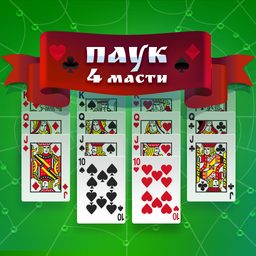
Spider (4 suits)
Solitaire remains the undisputed king of patience games because it turns a simple deck of cards into a mental marathon that is impossible to put down....
▶ Play FreeSolitaire Spider - Deluxe spans all three difficulty levels in a single package. If you're moving up from 2-suit and want to compare how the variants feel back-to-back, this is a good way to do it.
Solitaire Spider - Deluxe
Card game enthusiasts who enjoy a good mental workout will find Solitaire Spider - Deluxe to be their new favorite pastime. This classic solitaire spi...
▶ Play Free7 Strategies to Win More Spider Solitaire Games
These tips apply across all variants, though they're most critical in 2- and 4-suit games.
1. Uncover face-down cards first
Every face-down card is a mystery that limits your options. Prioritize moves that flip cards — even if the move isn't ideal, more information is almost always worth it in early game.
2. Create empty columns deliberately
An empty column isn't just an accident — it's a tool. Work toward emptying a column on purpose. Use it to temporarily hold a card or sequence while you rearrange another column. Then refill it strategically.
3. Build same-suit sequences from the start
Mixed sequences are a trap. They look like progress but they lock you out of the flexibility you need later. From move one, try to keep sequences same-suit, even if it means slower movement.
4. Don't rush to deal from the stock
This is the most common mistake. The stock feels like a lifeline, but each deal dumps 10 cards onto the board and can bury important cards. Exhaust your current moves completely before dealing, and make sure you have space to handle the new cards.
5. Plan in groups, not single moves
Don't think "where can I put this card?" Think "what sequence am I building toward, and what three moves get me closer?" Single-move thinking leads to cluttered tableaus. Group thinking leads to completions.
6. Keep Kings close to empty columns
Kings can't go anywhere — they can only sit in empty columns or at the base of a new sequence. If a King is stranded in the middle of the tableau, it blocks everything below it. Try to place Kings at the start of empty columns intentionally.
7. Recognize unwinnable positions early
Some layouts genuinely can't be won. Skilled players recognize the signs: all empty columns filled, stock exhausted, no same-suit sequences makeable. Resetting early saves time and keeps frustration low.
Spider Solitaire Cards offers clean gameplay across difficulty levels, which makes it a good place to practice these strategies without visual distractions getting in the way.

Spider Solitaire Cards
Staring at a blank screen during a midday slump is the worst, but a quick mental reset can change your entire outlook. Spider Solitaire Cards serves a...
▶ Play FreePlay Free Spider Solitaire Games Online
One of the best things about Spider Solitaire in 2024 and beyond is that you don't need to install anything or pay for a client. You can play free Spider Solitaire games online directly in your browser, across all difficulty levels, on any device.
FreeJoy has a solid collection of Spider variants — from accessible beginner-friendly versions to hardcore 4-suit games for players who want a real mental workout.
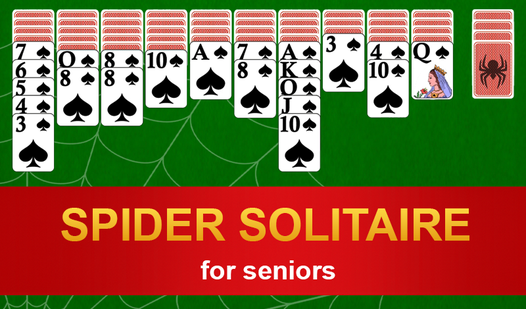
Spider Solitaire for Seniors is worth a mention here specifically. It's designed with larger cards and cleaner visuals, which makes it genuinely easier to track what's happening on the board. Don't let the name put you off — clearer visuals help any player think more clearly.

Spider Solitaire for Seniors
Card games remain the gold standard for mental agility because they force the brain to recognize patterns and plan several steps in advance. Spider So...
▶ Play FreeSpider Solitaire - Big Cards takes a similar approach — oversized card faces that reduce eye strain and make suit identification faster. Useful if you're playing on a small screen or just prefer a cleaner view.

Spider Solitaire - Big Cards
Fans of logic card challenges will find endless satisfaction in Spider Solitaire - Big Cards, a polished take on the classic solitaire experience. The...
▶ Play FreeMaps - Solitaire Spider puts a unique visual spin on the familiar format while keeping the core mechanics intact. Worth trying if you've played dozens of standard Spider games and want something that feels a bit different.
Maps - Solitaire Spider
Card game enthusiasts who enjoy a good mental workout will find Maps - Solitaire Spider the perfect companion for a quick break. This addictive challe...
▶ Play FreeAnd if you need a break from cards entirely, Spider-Man - Cool Puzzle is in the catalog too — same satisfying puzzle-solving instinct, different format.
Spider Solitaire With One Deck — Is It Possible?
One question that comes up a lot: how to play Spider Solitaire with one deck. The traditional version uses two decks (104 cards), but some simplified variants do use a single 52-card deck with fewer columns.
In one-deck versions, the tableau typically has 7 columns (similar to Klondike setup) and only one complete 13-card sequence needs to be built per suit. The core rules — building down in rank, same-suit movement for groups — remain the same. It's a faster game, usually easier, and good for when you want a quicker session.
Most browser implementations follow the traditional 2-deck, 10-column format, but check the settings menu if you want to experiment.