Best Spider Solitaire Games: TOP 20 Free Online (2026)
Spider Solitaire has been pulling people back to their screens for decades — and for good reason. The satisfaction of clearing all eight columns and watching the cards cascade off the table never gets old. Whether you prefer the gentle warmth-up of a one-suit game or the brain-melting challenge of four suits, the best spider solitaire games are all playable free in your browser, no downloads required.
This guide covers 15 genuinely great picks — from classic Spider variants to surprising solitaire twists — so you can find exactly the right game for your mood and skill level.
What Is Spider Solitaire?
Spider Solitaire is a patience card game played with two standard 52-card decks (104 cards total). The goal is simple on paper: build eight complete sequences from King down to Ace in the same suit, then remove them from the tableau. Once all eight sequences are cleared, you win.
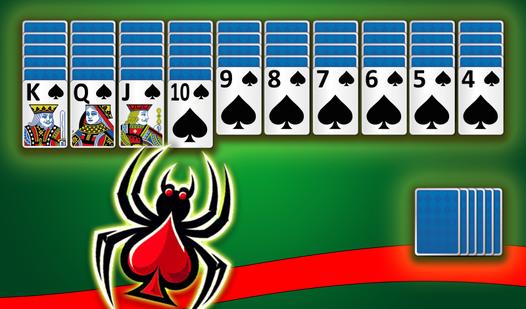
What makes it interesting is the middle part. You'll have 10 columns of cards in front of you, and you can move cards or partial sequences between columns — but only if they're in descending numerical order. Here's the catch: only sequences of the same suit can be moved as a group. Mixed-suit stacks stay stuck in place until you untangle them.
When you run out of moves, you can deal a new row of cards from the stock pile — but there must be at least one card in every column before you can deal. This single rule creates most of the strategic pressure in the game.
The three difficulty levels break down like this:
- 1 suit — all 104 cards are the same suit. Easiest version, great for beginners.
- 2 suits — two suits mixed together. Moderate difficulty, requires some planning.
- 4 suits — full standard deck complexity. Hardest version, demands serious strategy.
TOP 15 Best Spider Solitaire Games to Play Free
Here are the top picks — each one tested, each one free, each one works straight in your browser.
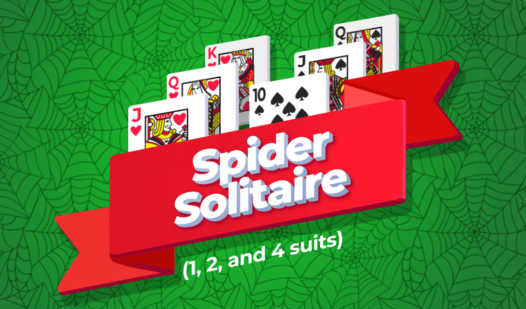
1. Spider Solitaire (1, 2, and 4 Suits)
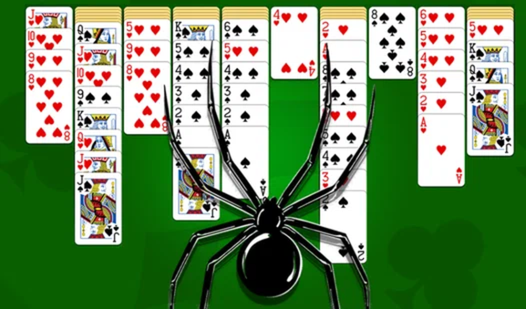
The definitive Spider Solitaire package. This game gives you all three difficulty variants in one place — start with one suit if you're new, jump to four suits when you're ready to suffer productively. The interface is clean, the card animations are smooth, and the difficulty curve feels genuinely well-designed. This is the version most people picture when they hear "Spider Solitaire," and it delivers exactly what you'd expect from that reputation.
Spider Solitaire (1, 2, and 4 suits)
Arrange descending sequences of the same suit from king to ace to clear the board. Spider Solitaire offers a classic card game experience with multipl...
▶ Play Free2. Maps — Solitaire Spider
A fresh twist on the formula: Maps wraps the Spider Solitaire mechanics in a geography-themed aesthetic, and it works surprisingly well. Multiple difficulty levels with varying suit counts make this approachable for all skill levels. The visual layer adds just enough novelty to keep things interesting without interfering with the core game. If you've played vanilla Spider Solitaire enough times to do it on autopilot, Maps gives you a reason to re-engage.
Maps - Solitaire Spider
Card game enthusiasts who enjoy a good mental workout will find Maps - Solitaire Spider the perfect companion for a quick break. This addictive challe...
▶ Play Free3. Spider (4 Suits)
No frills, maximum difficulty. This dedicated four-suit Spider game strips away everything except the challenge itself. You're working with all four suits, 104 cards, and no easy escape. Every move matters, and you'll often find yourself several turns into a mistake before you realize it. If you want to actually get good at Spider Solitaire rather than just enjoying it casually, this is the version that will teach you.
Spider (4 suits)
Solitaire remains the undisputed king of patience games because it turns a simple deck of cards into a mental marathon that is impossible to put down....
▶ Play Free4. Spider Solitaire 2024
A modernized classic that keeps what works and polishes what didn't. Spider Solitaire 2024 brings updated visuals and a responsive layout that plays well on both desktop and mobile. The card physics feel satisfying, and the undo function is genuinely useful for learning from near-misses rather than just restarting cold. Clean, functional, and exactly what the name promises.
Spider Solitaire 2024
Staring at the clock waiting for your next meeting or just need a mental reset during a long afternoon? Spider Solitaire 2024 is the ultimate browser-...
▶ Play Free5. Spider Solitaire — The Perfect Deal
This one leans into the intellectual side of solitaire. "The Perfect Deal" framing isn't marketing fluff — the game is designed around optimal play and rewards careful thinking over lucky clicking. The atmosphere is calm and focused, the card layout is logical, and the overall experience feels more like a chess puzzle than a casual time-killer. Recommended for players who prefer deliberate strategy over reactive decision-making.
Spider Solitaire - The Perfect Deal
Arrange cards into descending sequences from King to Ace to clear the board in this engaging logic challenge. Spider Solitaire - The Perfect Deal test...
▶ Play Free6. Solitaire Spider — Deluxe
The Deluxe version earns its name through customization. You can choose one, two, or four suits to match your current mood or skill level. The visual design is polished beyond what you'd expect from a browser game, with card textures and animations that feel premium. If presentation matters to you alongside gameplay, this is the Spider variant that won't make you wince at the aesthetics.
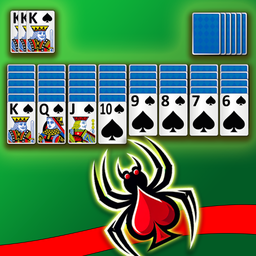
Solitaire Spider - Deluxe
Card game enthusiasts who enjoy a good mental workout will find Solitaire Spider - Deluxe to be their new favorite pastime. This classic solitaire spi...
▶ Play Free7. Scorpio — World Best Solitaires
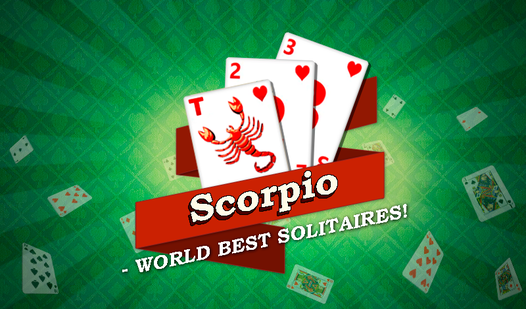
Scorpio lives up to its ambitious title by packing multiple solitaire variants into a single collection. The Spider mode follows standard rules — arrange cards in suit-matched sequences from King down to Ace — but the broader collection means you can switch between game types without leaving the tab. Simple, fun, and well-executed. The kind of game you open for five minutes and close forty-five minutes later.
Scorpio - world best solitaires!
Staring at a stagnant screen while your coffee gets cold is a classic sign that you need a mental refresh right now. Scorpio - world best solitaires! ...
▶ Play Free8. Jazz Cards: Solitaire with Soul
The wildcard on this list. Jazz Cards wraps classic solitaire mechanics in a stylish format with a smooth jazz soundtrack that makes the whole experience feel like playing cards in a cool basement bar. The gameplay is faithful to classic solitaire rules, but the atmosphere is entirely its own thing. If you find most solitaire games sterile and repetitive, Jazz Cards might be the version that finally clicks for you.
9. Klondike Solitaire
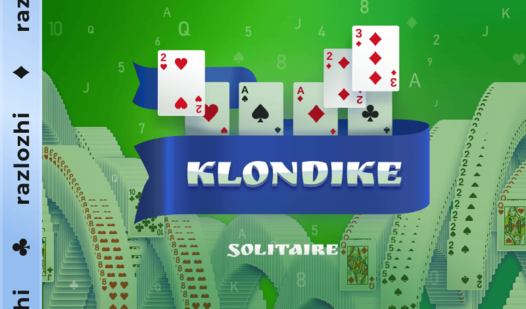
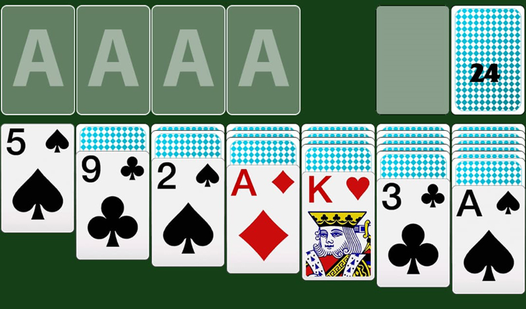
The most famous solitaire game in the world is worth including here for context and comparison. Klondike is structurally different from Spider — one deck, foundation piles, draw from stock — but if you enjoy Spider, you almost certainly enjoy Klondike too. This implementation is clean, responsive, and handles all the standard rules correctly. A reliable fallback when you want something slightly simpler than Spider.
Klondike Solitaire
Card enthusiasts seeking a classic mental challenge will find their perfect match in Klondike Solitaire. This timeless puzzle tests your patience and ...
▶ Play Free10. Solitaire Klondike — Deluxe
The premium version of Klondike adds flexibility with both 1-card and 3-card draw options. One-card draw is friendlier and more forgiving; three-card draw limits your options and forces harder choices. If you're serious about improving at solitaire generally, the 3-card mode builds the same strategic muscles that 4-suit Spider requires. Different game, transferable skills.
Solitaire Klondike - Deluxe
Card games remain the ultimate way to sharpen your mind while enjoying a relaxing break during a busy day. Solitaire Klondike - Deluxe brings the clas...
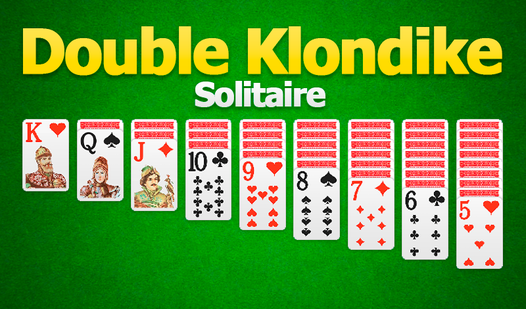
▶ Play Free11. Double Klondike Solitaire
Two decks, bigger tableau, more cards to manage. Double Klondike escalates the classic formula by giving you 104 cards across a wider spread of columns. The increased complexity makes it feel closer to Spider in terms of planning depth, even though the mechanics are still Klondike. A solid choice for players who've found single-deck Klondike too predictable.
Double Klondike Solitaire
Arrange cards by suit from Ace to King across eight foundation piles in this challenging variation of the classic card game. Double Klondike Solitaire...
▶ Play Free12. Solitaire for 1 and 3 Cards
This game adds a mechanical twist: you arrange cards into base piles with a choice between drawing 1 or 3 cards at a time. The single-card draw makes the game approachable; the three-card draw turns it into a genuine puzzle. Good for players who want Klondike-style mechanics with a bit more variety in the draw phase.
Solitaire for 1 and 3 cards
Staring at a blank screen during a midday slump is the worst, but a quick round of Solitaire for 1 and 3 cards is the perfect mental reset. This class...
▶ Play Free13. Solitaire Swift
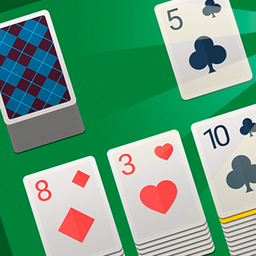
Two modes, one strong game. Solitaire Swift offers a quiet, untimed mode for when you want to think carefully, and a timed mode for when you want your heart rate up. The timed challenge is actually quite satisfying once you're comfortable with the mechanics — there's something about the clock that sharpens your focus and makes every good move feel earned.
Solitaire Swift
Clear the board by matching cards one rank higher or lower regardless of their suit or color. Solitaire Swift keeps your brain sharp as you strategica...
▶ Play Free14. Dreamland Solitaire
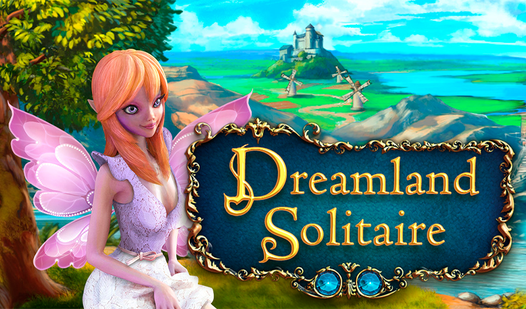
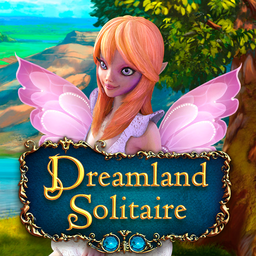
Dreamland takes the classic solitaire formula and drops it into a soft, magical visual world. The gameplay is standard but the aesthetic is genuinely lovely — gentle colors, relaxed pacing, a soundtrack that doesn't overstay its welcome. If you use solitaire to decompress rather than to challenge yourself, Dreamland is built for exactly that.
Dreamland Solitaire
Fans of card games will find a new obsession in Dreamland Solitaire as it blends relaxing strategy with a charming magical aesthetic. Your main missio...
▶ Play Free15. Jigsaw Solitaire
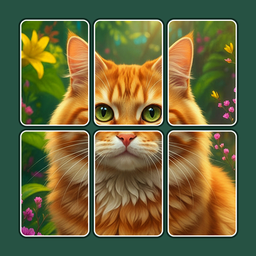
The most surprising entry: Jigsaw Solitaire fuses card game mechanics with jigsaw puzzle visuals, creating something that's hard to categorize but easy to enjoy. If you're burned out on pure card layouts, this hybrid format gives your brain something slightly different to chew on. Relaxing, visually appealing, and genuinely original.
Jigsaw Solitaire
Fans of logic challenges and beautiful visuals will find Jigsaw Solitaire the ultimate way to decompress after a long day. This refreshing take on the...
▶ Play FreeMore Solitaire Games Worth Trying
Beyond the top 15, there are a few more games that spider and solitaire fans consistently enjoy:
Incredible Solitaire
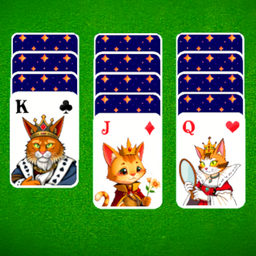
Solitaire challenges have been the ultimate way to sharpen your focus and pass the time for generations. Incredible Solitaire takes this classic exper...
▶ Play Free
Jigsolitaire
Staring at a blank screen during a midday slump is the worst, but finding a quick way to reset your brain is a total game changer. Jigsolitaire acts a...
▶ Play Free
Mahjong Solitaire For Free
Match pairs of identical tiles to clear the board in this relaxing brain teaser. Your main objective is to identify free pieces and remove them from t...
▶ Play Free
Spider Solitaire Cards
Staring at a blank screen during a midday slump is the worst, but a quick mental reset can change your entire outlook. Spider Solitaire Cards serves a...
▶ Play FreeSpider Solitaire by Difficulty — 1, 2, and 4 Suits
One of the things that makes best spider solitaire games stand out from other patience games is the clean difficulty ladder. You can scale the same game mechanics across a huge range of challenge simply by changing the number of suits in play.
One Suit — Start Here
Every card belongs to the same suit, which means every sequence you build is automatically suit-matched. You can move any descending sequence as a single unit, which dramatically reduces the number of positions you can get stuck in. Win rates for one-suit Spider hover around 99% with basic strategy. The learning goal here is understanding column management: keeping empty columns available and avoiding buried cards you can't reach.
Two Suits — The Real Learning Zone
Two suits introduce the core strategic problem of Spider Solitaire: you'll constantly be building sequences that mix suits, and those sequences become immovable anchors. You need to start thinking a few moves ahead, prioritizing suit matching when possible while keeping your tableau flexible. Win rates drop to roughly 50-60% for players with solid fundamentals. This is where most casual players spend the majority of their time.
Four Suits — Expert Territory
All four suits in play means mixed-suit sequences are everywhere and almost nothing moves cleanly. You need to think 8-10 moves ahead on every significant decision, manage multiple unfinished sequences simultaneously, and use empty columns as temporary storage with extreme discipline. Expert players win roughly 40-50% of four-suit games, and those wins feel genuinely earned. If you want the best spider solitaire experience in terms of pure strategic depth, four suits is the answer.
Practical tip: When switching from two suits to four, expect to lose a lot of games before patterns start clicking. That learning period is normal and actually part of what makes the game rewarding.
Spider Solitaire vs Other Solitaire Games
Spider Solitaire and Klondike are both called "solitaire" but they play very differently. Understanding those differences helps you pick the right game for what you're actually looking for.
Klondike uses one deck, deals cards to seven columns, and has you building foundation piles from Ace to King in each suit. You draw from a stock pile and work through the tableau methodically. Klondike is more linear — there are usually a limited number of good moves at any moment, and the game ends definitively when you either win or clearly can't continue. Win rates for standard Klondike are lower than most people expect: around 80% of deals are theoretically winnable, but in practice many players win maybe 30-40% of games.
Spider Solitaire uses two decks, has 10 columns, and builds suit sequences in place before removing them. The wider tableau means more options at every turn, which is both a feature and a trap — more options means more ways to make a move that looks fine now but causes problems later. Spider rewards holistic thinking about the whole board rather than local optimization of individual columns.
Which is harder? Four-suit Spider is significantly harder than Klondike. One-suit Spider is easier than Klondike. Two-suit Spider sits roughly in the same difficulty range as Klondike, though the nature of the challenge is different.
Which is more satisfying to win? Spider, by a margin. Clearing a full suit sequence and watching it lift off the tableau triggers a dopamine hit that Klondike's foundation-building just doesn't match.
Are All Spider Solitaire Games Winnable?
Short answer: no. Not every Spider deal can be won, even with perfect play.
The longer answer is more nuanced. In one-suit Spider, nearly every deal is winnable — the single-suit restriction makes the game highly forgiving, and with patience and reasonable strategy you'll win the vast majority of games. The main way to lose a one-suit game is to back yourself into an impossible position through consecutive poor decisions.
In four-suit Spider, the situation is very different. A significant portion of deals are unwinnable regardless of strategy. The card arrangement, combined with the constraints on moving mixed-suit sequences, can create positions where no sequence of moves leads to a completed board. Experienced players learn to recognize unwinnable positions relatively early and restart rather than grinding through them.
Two-suit Spider sits in the middle — most deals are winnable, but poor play early can make winnable deals unwinnable, and occasionally you'll hit a genuinely unwinnable arrangement.
What this means practically: If you're losing a lot of four-suit games, don't automatically assume you're making mistakes. Some of those losses are the deck's fault, not yours. The tell-tale sign of an unwinnable position is having several deeply buried high cards with no practical path to uncover them while the rest of the tableau is locking up around them.
That said, the most common reason for losses — especially for intermediate players — isn't an unwinnable deal. It's over-eager sequence building. Moving cards feels like progress, but in Spider, premature sequences can trap you just as badly as buried cards. The best spider solitaire free players are often the most patient ones.