Cards Games: The Complete Beginner's Guide
If you've ever spent an afternoon flipping through a deck of cards — or found yourself completely lost in a browser tab at 2 AM playing Solitaire — you already know how magnetic cards games can be. But what exactly are Cards games as an online genre, and why do millions of people keep coming back to them every single day? This guide breaks it all down: the basics, the history, the subgenres, and the best picks to get you started.
Whether you grew up with a physical deck or you're brand new to the whole concept, by the end of this article you'll know exactly what to play first and why Cards games have endured for centuries — and counting.
What Are Cards Games?
Cards games are exactly what they sound like: games built around a deck of cards (or a virtual equivalent). But that simple definition hides an enormous amount of variety. Under the Cards games umbrella you'll find pure strategy, memory challenges, luck-based draws, competitive multiplayer battles, and zen-mode puzzles — sometimes all in the same session.
Online Cards games typically simulate a standard 52-card deck, though many use custom card sets with unique rules. The core mechanic is almost always about managing information: which cards have been played, which are still in the deck, what your opponent might be holding, or how to arrange the cards you have in a way that satisfies the game's winning condition.
What makes Cards games special compared to other casual genres is the combination of low barrier to entry and high skill ceiling. You can pick up Solitaire in five minutes. Mastering optimal play across thousands of hands is a different story entirely.
The online Cards games world splits into a handful of major branches:
- Solitaire variants — single-player, patience-based games
- Memory and matching — test your recall under pressure
- Trick-taking games — Hearts, Spades, and their relatives
- Collectible / strategy card games — build decks, crush opponents
- Casual card puzzles — unique mechanics that borrow card visuals
Let's start with the most approachable entry point: classic Solitaire.
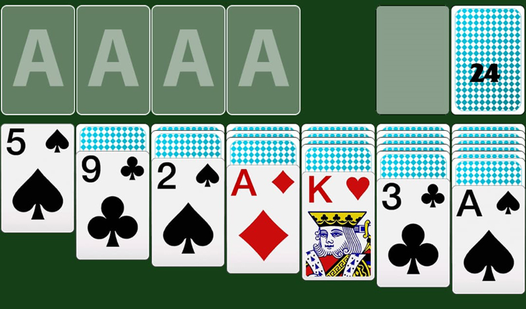
Solitaire for 1 and 3 cards
Staring at a blank screen during a midday slump is the worst, but a quick round of Solitaire for 1 and 3 cards is the perfect mental reset. This class...
▶ Play FreeA Brief History of Cards Games Online
Cards games didn't start online — they started in China. Paper cards first appeared around the 9th century Tang Dynasty, and the idea spread westward through trade routes over the following centuries. By the 15th century, the 52-card deck with four suits was standard across Europe, and card games had become a fixture in homes from peasant cottages to royal courts.
Solitaire — the most popular card game in history — is believed to have originated in Northern Europe in the late 18th century. The name itself comes from the French word for "alone," reflecting its nature as a one-person game. It spread across the continent and eventually became a way to practice card-handling skills.
Then came the PC revolution. When Microsoft Windows 3.0 shipped in 1990, it included Solitaire as a pre-installed game. The official reason was practical: it was designed to teach users how to use a mouse (dragging and dropping cards was a perfect training exercise). The real result? Solitaire became the most-played computer game in history — a title it arguably still holds today.
The internet era brought Cards games to browsers, then to mobile, and then to sophisticated online platforms with multiplayer features, rankings, and daily challenges. What started as a patience game for bored passengers on long ship voyages became a global industry.
Today, online Cards games are one of the most consistently popular casual game genres, second only to puzzle games in daily active users across platforms.
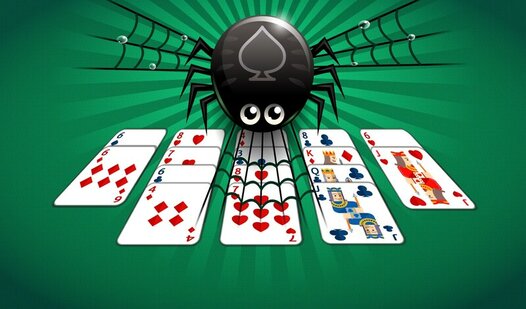
Spider Solitaire Cards
Staring at a blank screen during a midday slump is the worst, but a quick mental reset can change your entire outlook. Spider Solitaire Cards serves a...
▶ Play FreePopular Subgenres of Cards Games
Here's where things get interesting. "Cards games" is really a family of families. Understanding the main branches helps you find the corner of the genre that matches your style.
Solitaire Variants
This is the biggest and most diverse subgenre. Classic Klondike (what most people call simply "Solitaire") is the gateway drug, but dozens of variations offer completely different experiences:
- Klondike — The standard. Draw 1 or 3 cards, build four foundation piles by suit, ace to king.
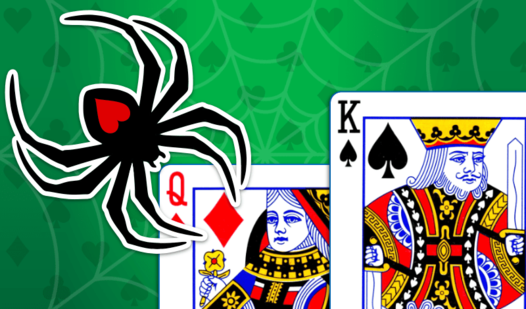
- Spider — Uses two decks. Build complete suit sequences from king to ace. Much harder than Klondike.
- FreeCell — Almost entirely skill-based. Four free cells let you temporarily store cards. Roughly 99.999% of deals are solvable.
- Pyramid — Remove pairs of cards that add up to 13. Visually distinctive, luck-heavy.
- Golf — Clear a tableau by building one continuous sequence. Fast-paced.
- Scorpion — A Spider variant where moves are more restricted. Brain-bending difficulty.
The beauty of solitaire variants is that each one has its own personality. Some reward careful planning. Some are almost meditative. Some will make you want to flip your desk.
Memory Card Games
A completely different feel. Memory games show you a grid of face-down cards, let you flip pairs, and challenge you to find matching pairs using nothing but recall. These are excellent for keeping your brain sharp, and research consistently shows memory games have real cognitive benefits.
The core mechanic sounds simple, but as the grid grows — from 4×4 to 6×6 and beyond — the challenge escalates quickly. Timed versions add pressure. Themed variants replace standard suits with characters, animals, or custom artwork to keep things visually fresh.
Trick-Taking Games
Games like Hearts, Spades, and Euchre belong here. You play a card, the highest card (or highest trump) wins the "trick," and the game tracks points over multiple rounds. These games have deep strategy because every card you play is public information — you can deduce what your opponents are holding by what they don't play.
Casual and Hybrid Card Games
This is where developers get creative. Games that use card mechanics but wrap them in sports themes, matching mechanics, or puzzle structures. Football Cards, for example, takes the familiar card format and combines it with football scoring logic. These hybrid games are perfect for players who want something fresh.
Best Cards Games for Beginners
Ready to actually play? Here are the top picks if you're just getting started, organized from most accessible to slightly more complex.
Klondike Classic (1 or 3 Cards)
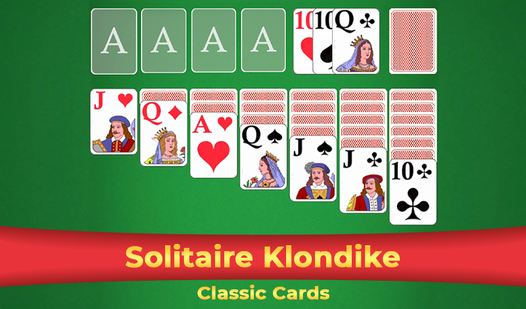
This is the one. If you only play one Cards game ever, it should be Klondike. The rules fit on a single index card: build four foundation piles from Ace to King, arranged by suit, by moving cards across a seven-column tableau. Draw 1 card for a relaxed game, or draw 3 for a harder challenge with more strategic depth.
Klondike is the gold standard for a reason — it's balanced perfectly between luck and skill, short enough to finish in one sitting, and satisfying in a way that's hard to explain until you finally clear that last card.
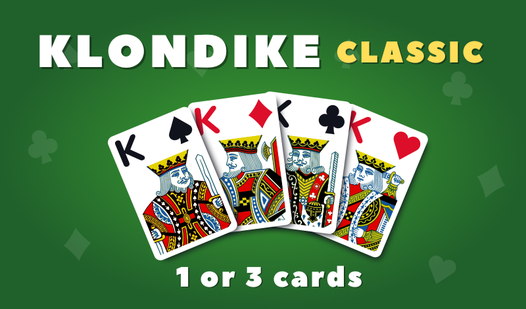
Klondike Classic (1 or 3 cards)
Stack cards in descending order by alternating colors to clear the board and master the art of Klondike Classic strategy. You organize the deck into f...
▶ Play FreeRemember the Cards
Looking to exercise your brain rather than just relax? Remember the Cards is a memory-based card game that shows you a set of cards for a brief window, then hides them and asks you to recall what you saw. It's simple to understand and increasingly challenging as levels progress. Great for short sessions when you want to stay sharp.

Remember the cards
Brain training enthusiasts who want to sharpen their focus will find Remember the cards the perfect challenge for their daily routine. Players begin e...
▶ Play FreeScorpion Solitaire
For players who've burned through standard Klondike and want a real challenge. Scorpion uses a full deck and requires you to build suit sequences directly in the tableau — you can't use a free cell or waste pile as a crutch. Every move matters. This one will keep you busy for hours.
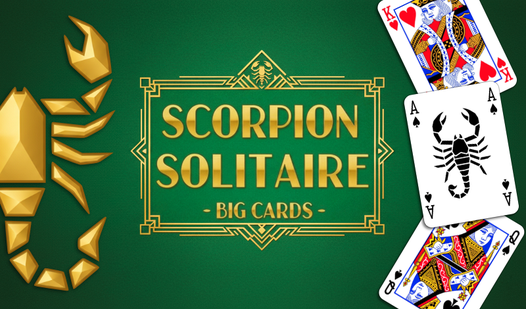
Scorpion Solitaire - Big Cards
Solitaire fans who crave a brain-teasing challenge will find Scorpion Solitaire - Big Cards the ultimate test of their tactical patience. This version...
▶ Play FreeSpider Solitaire (Big Cards Edition)
The Big Cards version is perfect if you find yourself squinting at tiny card values on a standard layout. Same great Spider rules — two decks, suit sequences, multiple difficulty tiers — but with a display that makes the game easier to read at a glance. One of the most popular Cards games globally for good reason.
Spider Solitaire - Big Cards
Fans of logic card challenges will find endless satisfaction in Spider Solitaire - Big Cards, a polished take on the classic solitaire experience. The...
▶ Play FreeCollect Three Cards
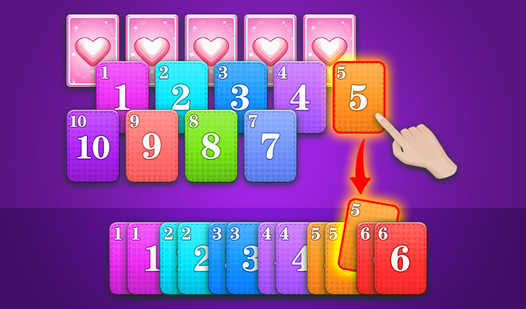
A matching game with a unique twist: cards appear in a mixed pile, and you need to collect matching groups of three to clear them. The challenge is managing your collection slots — you only have a limited buffer before you get stuck. Deceptively simple at first, genuinely tricky at later levels.
Collect Three Cards
Fans of brain-teasing puzzles will find their new obsession in Collect Three Cards, a title that transforms simple matching into a strategic challenge...
▶ Play FreeMore Great Cards Games to Explore
Once you've worked through the beginner picks, here are more options worth your time:
Football Cards
A clever hybrid that combines the visual language of card games with football team-building mechanics. If you're a football fan who's curious about card games — or a card game fan curious about football — this one hits both interests at once.

Football Cards
Football fans who dream of managing a squad featuring legends like Messi and Ronaldo will find their new obsession here. This engaging card collecting...
▶ Play FreeSolitaire Klondike Classic Cards
Another excellent take on the Klondike formula, with a clean interface optimized for smooth card movement and a classic visual style. If you appreciate a no-frills, well-executed Solitaire experience, this one delivers exactly that.
Solitaire Klondike - Classic Cards
Card game fans looking for a relaxing brain teaser will find their perfect match here. Solitaire Klondike - Classic Cards brings the timeless challeng...
▶ Play FreeTips for New Players
A few things that'll save you time and frustration when you first start:
1. Learn one game completely before jumping to the next. Cards games reward familiarity. Every variant has little tricks and patterns that only become obvious after a few dozen plays. Jumping between five different games before getting good at any of them is a common beginner mistake.
2. Undo is your friend — but use it strategically. Most online Cards games offer an undo button. Don't use it every time you make a suboptimal move, but do use it when you realize you've made a structural error that will close off future options. Learning from mistakes beats redo-grinding every hand.
3. Focus on uncovering face-down cards. In Solitaire variants, your primary goal isn't to move cards to foundations as fast as possible — it's to reveal face-down cards in the tableau. More visible cards means more options. This single principle improves most players' win rate dramatically.
4. Track what's been played in memory games. In games like Remember the Cards, don't flip cards randomly. Pay attention to what you've already seen, even when you didn't find a match. That information is still valuable on your next turn.
5. Play daily challenges when available. Many online Cards games offer daily challenge modes with the same deal for all players worldwide. These are great because you can compare strategies and see how others approached the same hand.
Why Cards Games Are Still So Popular
In an era of hyper-realistic open-world games and social media feeds competing for attention, it's worth pausing to ask: why are people still playing Solitaire?
The answer is that Cards games scratch a specific itch that most games don't. They're:
- Accessible — No tutorials needed. You can start playing in 30 seconds.
- Completable — A game has a clear end state. You win or you lose. That closure matters.
- Low-stakes — Bad at a hand? Start another one. No penalty, no progress lost.
- Mentally engaging — They're not passive entertainment. Your brain is actually working.
- Available everywhere — Phone, browser, tablet. No installation required on most platforms.
Cards games also have a social layer that's easy to underestimate. Seeing your grandmother play Solitaire, learning Poker at a kitchen table, watching a friend play Spider — these are shared cultural touchstones. Online Cards games carry that familiarity into digital spaces.
Choosing the Right Cards Game for You
Not sure where to start? Here's a quick decision tree:
| You want... | Try this |
|---|---|
| The classic experience | Klondike Classic |
| A real challenge | Spider Solitaire |
| Something relaxing and stylish | Jazz Cards: Solitaire with Soul |
| To train your memory | Remember the Cards |
| Something unusual | Football Cards or Collect Three |
| Big, easy-to-read cards | Spider Solitaire - Big Cards |
There's no wrong entry point. The best Cards game is the one you actually keep coming back to.