How to Play Tower Defense Games: Beginner Guide
Tower defense games are one of those genres that look simple from the outside and reveal surprising depth once you sit down to actually play. The premise is always the same: enemies move along a path, and you place towers to stop them before they reach the exit. But once you start asking where to place towers, which ones to upgrade first, and how to handle wave 30 when your economy is already stretched — that's where the real game begins. This guide walks you through how to play Tower Defense from the ground up, covering everything a new player needs to know before jumping into the best Tower Defense games online free.
Tower Defense Basics — How the Genre Works
Every tower defense game is built on the same loop: you earn currency (usually from killing enemies), spend it on towers or upgrades, and survive increasingly difficult waves. Sounds easy. Is not.
The core elements you'll find in almost every TD game:
- Waves — enemies come in numbered rounds. Early waves are slow and weak; later ones are fast, armored, or come in giant swarms.
- Lives/health — when enemies slip past your defenses and reach the exit, you lose lives. Run out and the game ends.
- Currency — kill enemies to earn gold or coins. Spend wisely; you can't buy everything at once.
- Towers — your weapons. Each type has different range, fire rate, damage, and special effects like slowing, area damage, or poison.
- Map/path — the route enemies walk. Some maps give you a lot of placement options; others are tight and force creative solutions.
The most important mental shift for new players: you are not playing reactively. Good TD is about anticipating what's coming three waves from now and setting up for it now. Spending all your gold immediately feels satisfying, but saving for a high-tier tower often wins you the late game.
Understanding tower stats:
- Damage per hit — how much a single shot deals
- Attack speed — how often the tower fires
- DPS (damage per second) — the real number that matters: damage × attack speed
- Range — how far the tower can reach
- Target priority — does it shoot the first enemy, last, strongest, or weakest?
Most beginners obsess over damage per hit and ignore attack speed. In practice, fast-firing low-damage towers often outperform slow big-hitters, especially against swarms.

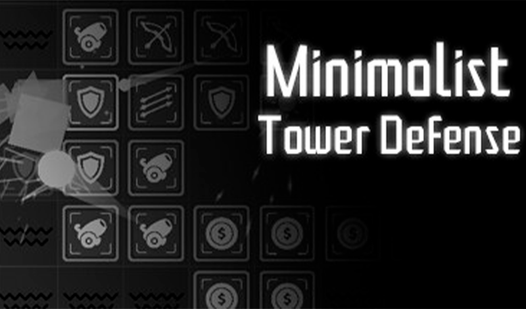
Minimalist Tower Defense
Staring at a blank screen during your lunch break is the perfect recipe for boredom, but a quick tactical challenge is exactly what you need to rechar...
▶ Play FreeTypes of enemies you'll encounter:
- Basic grunts — slow, low health, easy to kill
- Tanks/armored — high HP, require armor-piercing towers
- Speedsters — fast and fragile, but they zip through before your towers can react
- Flying units — ignore ground-based towers unless you have anti-air
- Bosses — massive HP, often spawn minions, require everything you have
When you see flying enemies for the first time and half your towers can't shoot them — that's the game teaching you to diversify your loadout.
Tower Placement and Map Control
This is where how to play Tower Defense gets interesting. Placement isn't just about putting towers near the path — it's about maximizing coverage, creating overlapping fire zones, and controlling the map so every inch of enemy movement is covered by at least one tower.
The chokepoint principle
Find spots where the path bends sharply or funnels through a narrow area. A tower placed at a 90-degree turn gets more shots at each enemy than one on a straight stretch. A tower covering two separate path segments because of the map geometry is worth twice as much as one in an open field.
Splash vs. single-target placement
Area-of-effect towers (bombs, mortars, frost towers) are best placed where enemies cluster — mid-path on long straight sections or right before a chokepoint. Single-target high-damage towers should cover the chokepoint exit, finishing off anything that survives the AoE.
Range rings matter
Most games show you a range circle when you hover over a tower or before placing it. Use this. Overlapping range circles mean multiple towers hit the same enemy simultaneously — that's your damage spike zone. Stack these at bottlenecks.

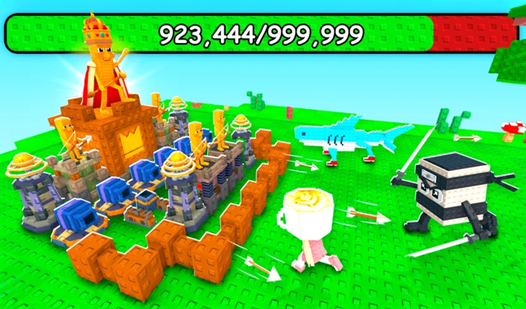
Obby: Brainrot Tower Defense
Fans of strategic challenges will find endless excitement in Obby: Brainrot Tower Defense as they defend their base against relentless waves. This int...
▶ Play FreeDon't block your own path
Some games let you place towers on the path itself or reroute enemy movement. When this is possible, you can deliberately extend the enemy's route by building walls or towers that force them to walk a longer distance — giving your existing defenses more time to fire. Just make sure you don't accidentally create a dead end that crashes the game or violates the rules.
Early-game placement habits to build:
- Cover the path entrance early — cheap towers here chip damage on everything
- Save your best spot (usually the sharpest bend) for your strongest tower
- Don't leave the exit zone undefended — fast enemies will punish you if your mid-path towers miss a few shots
- Think in layers: slow enemies first (debuff towers), then DPS towers, then AoE cleanup
Mine - Base Defenses takes this further by adding resource extraction to the mix. You're not just placing towers on a path — you're also managing cave exploration and base economy, which means every placement decision has an opportunity cost.

Mine - base defenses
Fans of strategic survival and block-based building will find their new obsession in Mine - base defenses. This immersive experience challenges you to...
▶ Play FreeUpgrade Strategies That Actually Work
Upgrades are where most new players make their biggest mistakes. The temptation is to upgrade everything a little bit, spreading resources evenly. This almost always loses to a focused upgrade strategy.
Specialize, don't spread
Pick two or three tower types and upgrade them deeply rather than buying five different tower types at level 1. A fully upgraded archer tower will outperform three different unupgraded towers in most situations. Diversity sounds smart but costs you specialization damage.
The 80/20 upgrade rule
In most TD games, the first two upgrade tiers are cheap and dramatically improve a tower. The final tier is expensive and gives smaller relative gains. Early in a run: buy tiers 1-2 on multiple key towers. Late-game: go for tier 3 on your best placements.
Support towers first
Slow towers, freeze towers, and debuff towers have a multiplier effect on everything else. A frost tower that slows enemies by 50% effectively doubles the DPS of every other tower in range. These are almost always undervalued by new players and overvalued by experienced ones who've seen them carry runs.
When to save vs. spend
- If the current wave is manageable: save for a big upgrade or a new high-cost tower
- If you're losing lives: spend immediately to stabilize
- If a boss wave is incoming: save up before it, not during
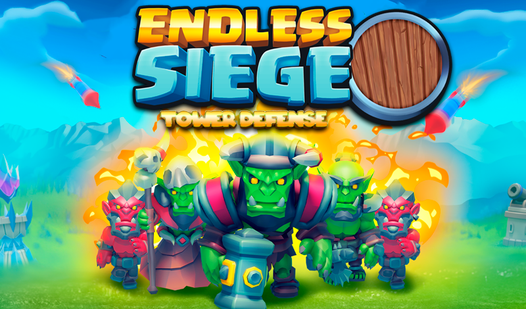
Endless Siege is a great game for practicing upgrade timing. The endless wave format means there's no finish line — you learn to stretch resources over time, which is exactly the habit you need to develop.
Endless Siege "Tower Defense"
Strategy fans who crave intense action will find their new obsession in Endless Siege Tower Defense. This addictive experience challenges you to defen...
▶ Play FreeEconomy towers and interest mechanics
Some TD games include towers or upgrades that generate passive income. These feel weak early but compound dramatically over time. If you see a "bank" tower, a "mine," or any gold-per-second mechanic — treat it like an investment. Place it early, let it generate income, and reinvest that gold. By wave 20, economy towers often pay for themselves five times over.
The upgrade path trap
Watch for upgrade trees that look powerful but redirect your damage away from where you need it. A tower that does "extra damage to flying enemies" is worthless if the current map has no fliers. Always read what's coming in the next few waves before committing to a specialization upgrade.
Common Mistakes New TD Players Make
Most new players hit the same walls. Here they are, so you can avoid them.
Mistake 1: Going wide instead of deep
Filling the map with level-1 towers feels productive. It's not. Ten weak towers lose to five strong ones in almost every scenario. The exception is the very beginning of a run when you need coverage — but even then, upgrade your best placement before expanding.
Mistake 2: Ignoring tower range
Placing a long-range tower in a cramped area wastes most of its range. Placing a short-range tower on an open stretch means it only fires twice before the enemy passes. Match tower type to map geometry.
Mistake 3: Forgetting about enemy speed
Fast enemies will outrun your slow towers even if they have full HP. You need either a slow debuff or towers with very high fire rate to handle speedsters. If a wave description says "quick" or "fast," set up your anti-speed defenses before the wave starts.
Mistake 4: Not reading wave previews
Most games show you what the next wave contains. Use this. If wave 12 is "armored infantry," upgrade your armor-piercing tower now. If wave 15 is "air assault," build an anti-air placement before it arrives. Reactive players always scramble; prepared players cruise.
Mistake 5: Spending income during the wave
Some games let you place or upgrade towers in real-time during a wave. New players spend the moment they have gold — often mid-wave when they're panicking. Better habit: queue your next build before the wave starts. Panic-buying under pressure leads to misclicks, bad placements, and wasted currency.
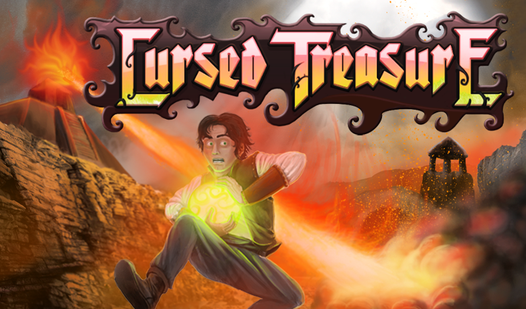
Cursed Treasure punishes all of these mistakes in a satisfying way. You're protecting gems from waves of heroes (the enemies, this time), and enemy variety ramps up quickly enough that players who don't adapt get overwhelmed fast.
Cursed Treasure
Strategy enthusiasts who enjoy playing the villain will find Cursed Treasure incredibly addictive as they safeguard their hoard from meddlesome heroes...
▶ Play FreeMistake 6: Under-building near the exit
Players focus on the entrance and mid-path, assuming enemies will die before reaching the exit. Then one fast enemy slips through and costs you three lives. Keep something at the exit — a high-DPS tower, a splash AoE, anything — as an insurance policy.
Mistake 7: Not using abilities or specials
Many TD games include active abilities: airstrikes, ice blasts, temporary barriers. New players forget these exist. Active abilities are often game-saving tools in boss waves and emergency situations. Map a mental reminder to check them before each difficult wave.
Best Free TD Games to Learn On
If you're looking for Tower Defense games online free to sharpen your skills, the following games each teach a slightly different aspect of the genre.
Zombies vs Plants: Home Defense teaches you prioritization. Zombie variants have wildly different behavior — runners, tanks, jumping enemies — and your plant-tower loadout needs to account for all of them.
Zombies vs Plants: Home Defense
Strategy fans who crave intense tower defense action will find their new obsession in Zombies vs Plants: Home Defense. Every level forces you to think...
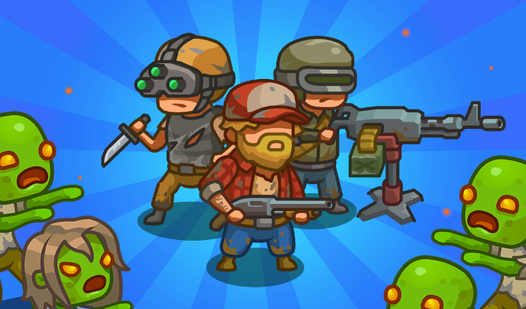
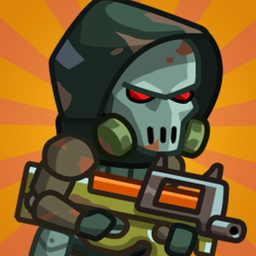
▶ Play FreeTower Train: Zombie Defense 2D adds a moving element to the formula. Your defense isn't static, which forces you to think about coverage in motion rather than just fixed placement.
Tower Train: Zombie Defense 2D
Command a high-stakes tactical defense as you fortify your subway station against relentless waves of mutants in Tower Train: Zombie Defense 2D. You w...
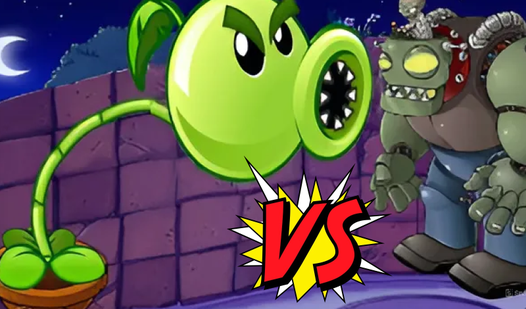
▶ Play FreePlants vs Zombies Night Defense is a great night-mode challenge that limits your starting resources and forces conservative early spending. Playing this teaches you discipline with your economy.

Plants vs zombies. Night defense of the house
Staring at the screen during a dull afternoon, you probably need a quick escape that packs a serious punch. Plants vs zombies. Night defense of the ho...
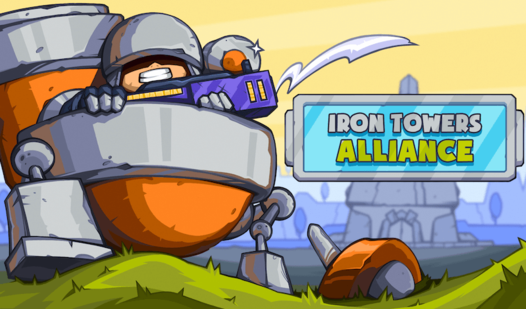
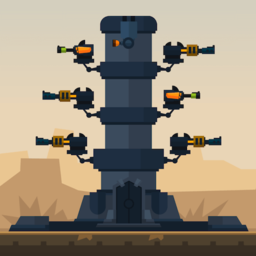
▶ Play FreeIron Towers Alliance focuses on tower synergies — some towers buff adjacent ones, creating placement puzzles rather than just coverage problems. This is a great step-up from basic TD games once you've got the fundamentals.
Iron Towers Alliance
Constructing an impenetrable fortress is only the first step in Iron Towers Alliance where your tactical choices determine the fate of your base. You ...
▶ Play FreeAOD - Art Of Defense is a polished TD experience with escalating difficulty that rewards players who've internalized the fundamentals. Good for testing whether your strategy actually holds up past the mid-game.

AOD - Art Of Defense
Deploy strategic defenses to intercept waves of relentless enemies in AOD - Art Of Defense as you fight to secure the future of humanity. You command ...
▶ Play FreeLazy Apocalypse: Zombie Tower Defense & Idle TD blends active TD with idle mechanics. You don't need to watch every wave manually — but the idle income still demands smart spending decisions when you do engage. Great for learning long-term economy management.

Lazy Apocalypse: Zombie Tower Defense & Idle TD
Staring at a blank screen during a midday slump is the worst, but you can turn that boredom into a thrilling battle for survival in minutes. Lazy Apoc...
▶ Play FreeHow to use these games as a learning tool:
- Start with one game and play it to failure. Don't restart until you lose.
- After losing, ask why: Was it a bad upgrade choice? Wrong tower type? Poor placement?
- Try again with one specific fix in mind.
- Move to the next game only when you can consistently reach wave 20+.
This deliberate practice approach builds pattern recognition faster than just grinding replays. Each loss is a data point, not a failure.