How to Play Ragdoll Games — Beginner's Guide to Physics Fun
If you've ever watched a floppy character tumble down a hill in slow motion and burst out laughing, you already understand the core appeal. Learning how to play ragdoll games takes about five minutes — but getting good at them, finding the funniest launches, and mastering sandbox destruction? That's a rabbit hole worth falling into.
This guide covers everything: what makes these games tick, how the controls work, which types are best for newcomers, and the top free ragdoll games online you can jump into right now without any installs.
What Makes Ragdoll Games Different
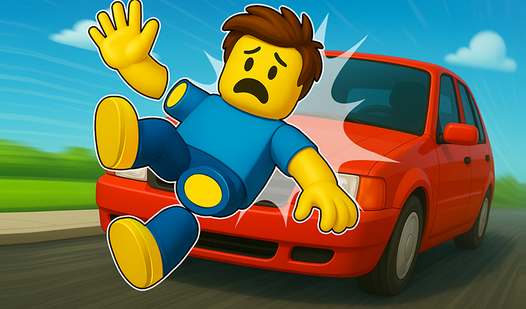
Most video game characters move like action figures — stiff, predictable, locked into animations. Ragdoll characters are the opposite. Their limbs are connected by simulated joints that react to every force in real time. Push one, and the whole body responds unpredictably. That unpredictability is the entire point.
The physics engine calculates weight, momentum, friction, and joint limits on the fly. When your character trips over a box, the game doesn't play a pre-recorded "trip" animation — it simulates every bone and tendon reacting to the impact. The result is something new every single time.
This matters for gameplay in a few important ways:
Emergent comedy. Nobody programs the funny moments. They happen because physics is chaotic. A swing that should look clean turns into a spinning disaster, and it's somehow more satisfying than anything scripted could be.
Replayability without new content. The same level plays differently each run because your ragdoll will never land exactly the same way twice. Sandbox ragdoll games especially benefit from this — you can spend an hour in one small arena just discovering new interactions.
Low skill floor. You don't need precise timing or memorized combos. Even beginners can cause complete chaos immediately, which makes these games extremely welcoming.
High skill ceiling. Once you understand how the physics responds, you can start predicting and controlling outcomes. A beginner smashes a ragdoll randomly. An experienced player lines up the perfect angle to chain three obstacles in one throw.
Basic Controls & How to Play Ragdoll Mechanics
Understanding how to play ragdoll games starts with accepting that you're not controlling a character in the traditional sense — you're applying forces to a system and watching what happens.
Mouse-based throwing and launching is the most common control scheme. You click and drag to set direction and power, then release. The arc indicator (shown in many games as a dotted line) tells you roughly where the ragdoll will go, but the landing physics are always a surprise.
Directional keys for movement appear in fighting and arena ragdoll games. WASD or arrow keys move your character, but the movement itself is often deliberately loose — your character stumbles and flails rather than gliding smoothly. Lean into it. Fighting stiff-legged is a trap; let the floatiness work for you.
Force application tools. Many ragdoll games give you hammers, cannons, explosions, or whips. These tools apply sudden impulse forces to the ragdoll's body. Aim for the torso for maximum spin. Aim for a limb to send the character pinwheeling.
Joint locking. Some games let you stiffen specific joints to control how much a body part flops. Locking the spine helps when you want a ragdoll to travel farther instead of collapsing into a heap on impact.
Key physics concepts to keep in mind:
- Angular momentum — a spinning ragdoll travels farther and bounces differently than a flat one
- Mass distribution — heavier body parts drag the ragdoll in their direction during a fall
- Friction — rough surfaces kill speed fast; smooth ones let ragdolls slide into beautiful chain reactions
- Elasticity — some games make walls bouncy, which completely changes your targeting strategy
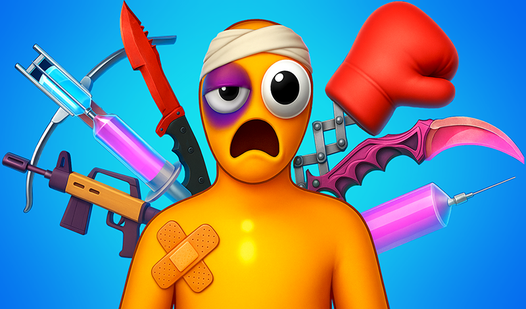
Once you've landed a few hits and watched your opponents crumple realistically, the physics intuition starts building fast. Sprunki Boxing puts you right in the middle of ragdoll brawls where every punch sends bodies flying with satisfying, exaggerated momentum — perfect for getting a feel for how force translates into motion.
Types of Ragdoll Games — Sandbox, Fighting, Stunt
Not all ragdoll games are the same. Knowing which type you're playing helps you set the right expectations and use the right strategies.
Sandbox / Playground
These are the most freeform. You're given a ragdoll (or several), a set of tools and obstacles, and no real objective. The entire goal is experimentation. Throw things, stack things, blow things up, see what happens.
Sandbox games reward curiosity over skill. The best moments come from asking "what if I do this?" and actually doing it. There are no fail states — only increasingly creative ways to make your ragdoll's day worse.
Smash Brainrot to Bits - 3D Ragdoll Playground
Staring at a blank screen while waiting for a meeting to end feels like a trap, but you can escape the monotony in seconds. Smash Brainrot to Bits - 3...
▶ Play FreeFighting / Arena
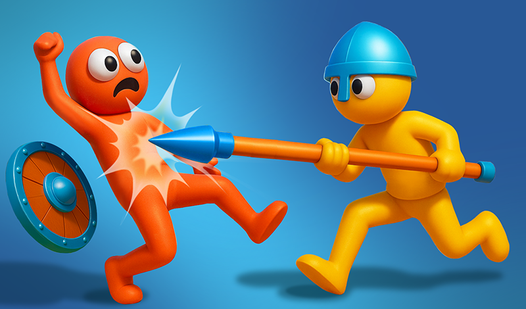
These games put your ragdoll against opponents in a defined space. Victory usually comes from knocking enemies out of bounds or reducing their health through physics-based hits. Controls are deliberately janky — that's not a bug, it's the mechanic. Learning to be effective despite the loose controls is the skill you're building.
Arena games have the highest skill gap between beginners and veterans. A new player might flail and accidentally win. A skilled player reads the physics, positions deliberately, and converts every hit into maximum damage.
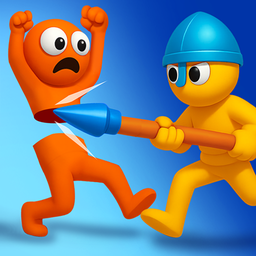
Ragdoll Arena! Fun Spear Battle!
Stuck in a boring meeting or just need a quick escape from reality? Ragdoll Arena! Fun Spear Battle! is the ultimate distraction that turns your scree...
▶ Play FreeStunt / Challenge
These give you specific objectives: land the ragdoll in a target zone, survive a gauntlet, chain a combo of obstacles. They blend the chaos of ragdoll physics with actual goal-oriented design. Great for players who want both the silliness and a sense of progression.
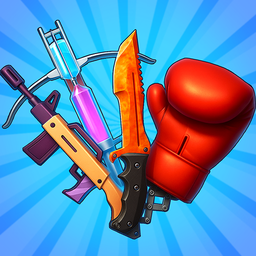
Fun Ragdoll Challenge! Mini Games Collection!
Fans of chaotic physics and wacky stickmen will find endless entertainment in this zany collection of challenges. Fun Ragdoll Challenge! Mini Games Co...
▶ Play FreeThis mini-games collection throws you across multiple challenge types — some purely comedic, others requiring genuine precision. It's one of the best introductions to the stunt subgenre because variety keeps you from hitting a wall on any single mechanic.
Destruction / Simulator
The goal here is pure damage. Combo multipliers, destruction percentages, score attacks. You're rewarded for causing the most chaos possible within a time limit or with a limited set of tools. Understanding how to chain collisions — one ragdoll hitting another, knocking them into an object, which then falls on a third ragdoll — is the core skill.
Best Free Ragdoll Games for Beginners
Here's where to start if you're new to the genre. All of these are free to play online without any downloads.
Robux Destruction! Ragdoll Show!
This one gives you wide-open freedom from the first second. The controls are forgiving enough that you can cause spectacular destruction immediately, but there's real skill embedded in the mechanics for players who want to push further. The "Ragdoll Show" format means you're essentially performing — the more dramatic the destruction, the better.
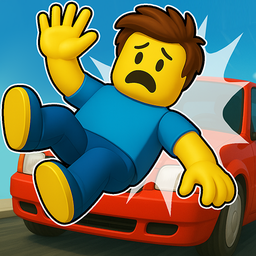
Robux Destruction! Ragdoll Show!
Fans of physics sandboxes and chaotic ragdoll games will find their new obsession here. Robux Destruction! Ragdoll Show! turns every session into a hi...
▶ Play FreeSquid Revenge - The Ragdoll Show!
The revenge framing gives the chaos a fun narrative hook. Ragdoll physics power every interaction, so each confrontation plays out differently. Great for beginners because the goal is simple — get back at those squids — but the physics keep it fresh across multiple sessions.
Ragdoll People & the Whip of Rage!
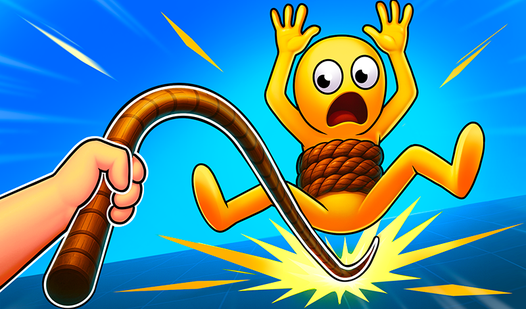
Possibly the most immediately satisfying entry point in the whole list. You get a whip. There are ragdolls. The physics simulation tracks every crack and impact in real time. New players will spend the first ten minutes just enjoying the sound design and the way bodies react to each hit. Veterans will start working out optimal strike angles to chain reactions.
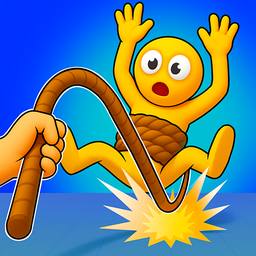
Ragdoll People & the Whip of Rage! Total Destroy!
Physics-based mayhem turns every level into a side-splitting comedy routine where chaos reigns supreme. Ragdoll People & the Whip of Rage! Total Destr...
▶ Play FreeRagdoll Gun Shooter! Cannon Spinner Playground
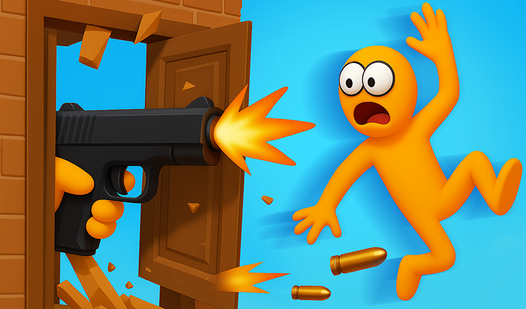
Mixes projectile physics with ragdoll bodies for a different kind of chaos. You're launching things at ragdolls and watching the collision physics do the rest. The cannon spinner mechanic specifically is worth playing around with — it creates unpredictable spin trajectories that are both frustrating and hilarious.

Ragdoll Gun Shooter! Cannon Spinner Playground
Ragdoll physics create comedy gold when you combine them with high-stakes shooting challenges. Ragdoll Gun Shooter! Cannon Spinner Playground turns ev...
▶ Play FreeHero Blocks Arena! Ragdoll Sword Fight!
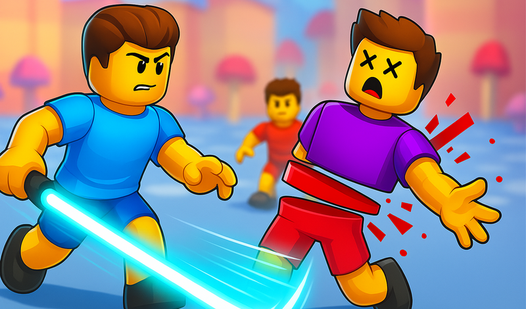
If you prefer a competitive structure to pure sandbox play, this arena game puts your ragdoll in sword fights with blocky opponents. The sword introduces a new physics element — not just body mass, but the weight and swing arc of the weapon itself.
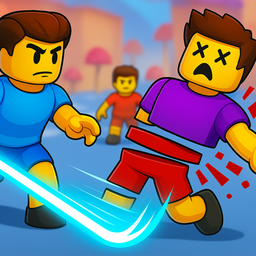
Hero Blocks Arena! Ragdoll Sword Fight!
Stuck in a boring meeting or just waiting for your coffee to brew, you deserve a chaotic escape that challenges your reflexes. Hero Blocks Arena! Ragd...
▶ Play FreePixel Playground: Ragdoll Noob
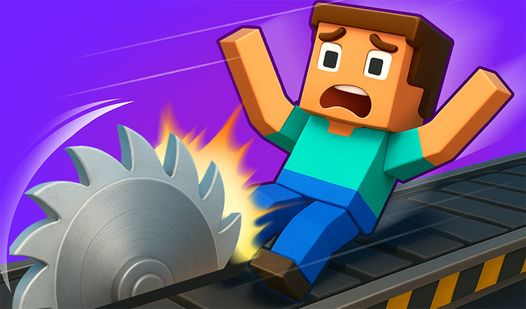
The pixel aesthetic makes it look simple, but the physics underneath are fully implemented. This is a good palate cleanser between heavier games — pick it up for 10 minutes, throw a noob around a pixelated environment, laugh, close the tab refreshed.
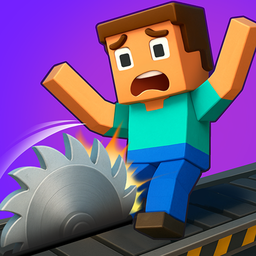
Pixel Playground: Ragdoll Noob
Toss the stickman through complex obstacle courses to rack up massive damage scores in Pixel Playground: Ragdoll Noob. This physics-based challenge ta...
▶ Play FreeAdvanced Tips & Tricks
Once you've got the basics down, these techniques separate casual ragdoll players from people who actually know what they're doing.
Aim for the Center of Mass
In most ragdoll games, the torso is the heaviest body part. Hitting it directly creates the most total body movement. Hitting limbs is flashier — a leg shot sends that limb flying — but if you want to maximize displacement, target the chest or stomach. The force distributes through the joints and moves the entire ragdoll.
Use Environmental Geometry
Walls, edges, and slopes are your friends. A ragdoll launched at a flat wall just bounces back. A ragdoll launched at a corner tumbles unpredictably and often covers much more distance. Edges catch limbs and create spinning effects. Look for geometry that will amplify your initial throw.
Master the Angle of Impact
Shallow angles create slides. Steep angles create bounces. A 45-degree impact usually maximizes horizontal distance. Experiment with impact angles in sandbox games first — you'll build intuition that transfers directly to stunt and fighting games.
Chain Your Forces
In destruction games especially, your score comes from chain reactions, not single impacts. Position your first ragdoll hit so that the body travels into a second target, not just into empty space. Pre-plan the chain two or three steps before you throw.
Embrace Failure as Data
Every "bad" throw teaches you something. Your ragdoll spun left when you expected it to go right? Note the joint angle that caused the spin. Your throw landed short? You released too early. Ragdoll physics are consistent — what works once will work again if you reproduce the same input conditions.
Learn Each Game's Joint Settings
Some games have looser joints than others. Loose joints mean more floppy, unpredictable landings. Tight joints mean the ragdoll holds together better and travels more predictably. Identify where on the spectrum each game sits within the first five minutes, and adjust your strategy accordingly.
Time Your Hits in Fighting Games
Arena and fighting ragdoll games are not just about button mashing. There's a rhythm to when your opponent is most vulnerable — usually right after they've absorbed a hit and their ragdoll is still settling from the impact physics. A second hit during that settling moment compounds the force rather than resetting it.
Try Every Tool
Sandbox games often have tools hidden in menus that most players never use. Gravity inverters, freeze tools, weight modifiers — these completely change how the physics behave and open up interactions that aren't possible with the default setup. Spend a session just cycling through every available tool before committing to a playstyle.