How to Play Freecell Solitaire: Rules & Strategy Guide
If you've ever wondered how to play Freecell Solitaire and why it's so addictive, you're in the right place. Unlike pure luck-based card games, Freecell rewards planning and sharp thinking — almost every deal can be won if you know what you're doing. This guide covers everything from the basic rules to advanced strategies, so whether you're brand new to the game or looking to sharpen your skills, you'll find what you need here.
Freecell Solitaire Rules and Setup
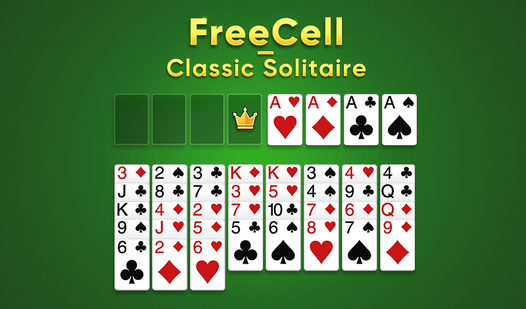
The Layout
How to play Freecell Solitaire starts with understanding the table:
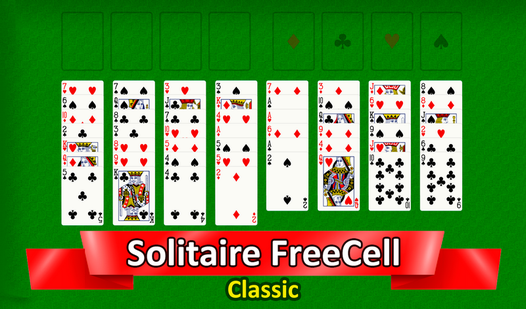
- Tableau: 8 columns of cards dealt face-up. The first 4 columns get 7 cards each; the last 4 get 6 cards each. Every card is visible from the start — no hidden cards.
- Free Cells: 4 empty slots in the top-left corner. Each can hold exactly one card at a time.
- Foundations: 4 empty slots in the top-right corner, one per suit (♠ ♥ ♦ ♣). Cards stack here in ascending order from Ace to King.
Objective
Move all 52 cards to the foundations, sorted by suit in order: A → 2 → 3 → ... → K.
What Moves Are Allowed?
Here are the rules you need to know:
- Only the bottom card of each tableau column is available to move.
- You can move a card to:
- A free cell (any single card)
- Another tableau column, but only on a card of the opposite color and one rank higher (red 7 goes on black 8, for example)
- A foundation pile, if it's the correct suit and next in sequence
- Free cells are temporary parking spots — you can store a card there and retrieve it later.
- An empty tableau column acts like a free cell but can hold a sequence of cards (more on that in strategy).
How Many Cards Can You Move at Once?
Technically, you can only move one card at a time. But most online games let you move stacks of cards as a shortcut, as long as you could have done it one card at a time given the number of available free cells and empty columns.
The formula: Maximum movable stack = (free cells + 1) × 2^(empty columns)
So if you have 2 free cells and 1 empty column, you can move up to 6 cards as a group.
This is one of the most important rules for beginners to internalize — your free cells and empty columns are your most valuable resources.
One of the best ways to get a feel for the layout and rules is to just start playing. This classic version puts everything right in front of you:
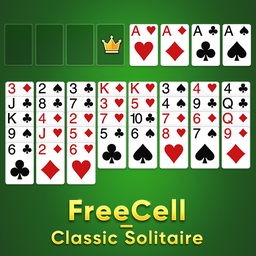
FreeCell - Classic Solitaire
Solitaire remains the ultimate mental workout for millions because it transforms a simple deck of cards into a complex test of patience and logic. Fre...
▶ Play FreeStep-by-Step Guide for Beginners
Step 1: Find Your Aces
Before anything else, scan the tableau for Aces. Any Ace can go straight to a foundation. Clearing Aces as soon as they're accessible frees up space and gets you moving in the right direction.
Step 2: Unblock Buried Cards
Look for cards that are sitting on top of cards you need. If a 2 of Hearts is buried under a pile, you need to move cards off it to get to it. This is where free cells come in — park blocking cards there temporarily.
Don't use all four free cells at once early in the game. Keep at least one or two available for flexibility.
Step 3: Build Tableau Sequences
Try to create descending, alternating-color sequences in the columns (black 9, red 8, black 7, etc.). Organized columns are easier to work with and let you move larger stacks later.
Step 4: Aim for Empty Columns
An empty tableau column is extremely powerful. It acts like an extra free cell — but better, because you can place ordered sequences there, not just single cards. Try to empty a column as early as possible in the game.
Step 5: Don't Rush the Foundations
This sounds counterintuitive, but sending cards to the foundation too early can backfire. If you move a red 4 to the foundation but still have a black 5 sitting in the tableau, you've lost a useful card. A good rule: don't move a card to the foundation unless moving it to the tableau wouldn't help.
Common Beginner Mistakes
- Filling all free cells early — this locks you out of moves
- Creating extra stacks instead of sequences — messy columns are hard to untangle
- Ignoring which suits need what — losing track of which foundations are behind
Try this clean, well-designed game to practice the fundamentals at a comfortable pace:

Epic Solitaire «FreeCell»
Arrange every card by suit from Ace to King in this classic test of mental agility. Epic Solitaire FreeCell demands careful planning as you organize t...
▶ Play FreeAdvanced Strategies to Win More Games
Most Freecell deals — somewhere around 99.999% — are winnable. The exceptions are a tiny handful of specific shuffles. That means if you lose, it's almost always a strategy problem, not bad luck. Here's how to approach the game at a higher level.
Think Ahead, Not Just One Move
Amateur players move whatever card happens to be available. Strong players think 3–5 moves ahead. Ask yourself: "If I move this card here, what does that open up? What does it block?"
Mentally trace sequences before committing. Undoing mistakes costs you free cell space and momentum.
Manage Free Cells Like Currency
Each free cell is a precious resource. Before parking a card there, ask: "Do I actually need this space, or am I just doing this because it's available?" Filling all four free cells is usually a sign the game is heading toward a dead end.
Ideally, you want to use free cells as temporary storage — move a card in, move it back out to the right place quickly.
Keep Low Cards Accessible
The game gets stuck when low cards (2s, 3s, 4s) are buried deep. Pay extra attention to where your low cards are and plan moves that keep them reachable. If a 3 is three cards deep, start working to uncover it immediately.
Use Empty Columns Wisely
An empty column is your most powerful asset. Don't fill it immediately just because you can. Sometimes the best move is to leave it empty and use it to maneuver large sequences.
When you do use an empty column, put a high-ranking card or a useful partial sequence there — something that still allows you to work around it.
Recognize When You're Stuck Early
If you find yourself with 4 cards in free cells, no empty columns, and no valid tableau moves — the game might be lost. Experienced players recognize this spiral early and either restart or undo several moves. Online games with unlimited undo are great for practicing this kind of recovery thinking.
This game is excellent for drilling the "use free cells wisely" habit:
Freecell 2025
Staring at a blank screen during a midday slump is the perfect excuse to sharpen your mind with a classic challenge. Freecell 2025 revives the traditi...
▶ Play FreeColor Awareness Matters
Since tableau moves require alternating colors, always know where your red and black cards of each rank are. If you need to place a red 7, you'll need a black 8 somewhere accessible. Keep this color map in your head as the game progresses.
The "Supermove" Rule in Practice
Remember the supermove formula? Use it to plan big stack movements. Before trying to move a 5-card sequence, count your free cells and empty columns. If the math doesn't work, you'll need to create more breathing room first — either by sending cards to foundations or clearing a column.
Freecell vs Spider Solitaire — Which Is Harder?
This is a question a lot of players ask when they start exploring different solitaire formats. The honest answer: it depends on what kind of challenge you prefer.
Freecell
- Skill-based: Almost every game is winnable with the right moves
- Full information: All cards are face-up from the start
- Strategic: Requires planning sequences and managing limited free cell space
- Less random: Losing rarely feels unfair — you can usually trace where it went wrong
Spider Solitaire
- More complex layout: 10 columns, 104 cards (two decks in standard mode), and cards are face-down at the start
- Luck plays a bigger role: New cards are dealt from the stock pile, and what comes up matters a lot
- Multiple suit options: Single-suit Spider is beginner-friendly; four-suit Spider is brutal even for experts
- Feels faster and more dynamic for some players
The verdict: Freecell is intellectually harder in the sense that it demands more upfront planning. Spider (especially four-suit) is harder to beat because luck plays a larger role and the sheer volume of cards creates more chaos.
Many players who are serious about Freecell find it more satisfying precisely because winning feels earned. When you crack a tough deal, you know it was your brain that did it.
For understanding the core Freecell objective — building those foundations suit by suit — this game makes it very visual and clear:
FreeCell Solitaire 2024
Staring at a blank screen during your coffee break is the perfect sign that you need a mental refresh. FreeCell Solitaire 2024 offers the ideal escape...
▶ Play FreeBest Free Freecell Games to Practice Online
If you want to get good at Freecell, repetition is key. Here are the best free options to practice with, each with slightly different features and feels.
FreeCell Classic Solitaire
The straightforward, no-frills version that stays true to the original game. Great for learning the rules since everything is laid out exactly as it should be. No flashy distractions — just cards, logic, and clean gameplay.
FreeCell - Classic Solitaire
Solitaire remains the ultimate mental workout for millions because it transforms a simple deck of cards into a complex test of patience and logic. Fre...
▶ Play FreeEpic Solitaire «FreeCell»
A polished version with a card deck that's easy on the eyes. When you're learning, being able to quickly read card values and suits without squinting matters more than you'd think. This one nails that.
Epic Solitaire «FreeCell»
Arrange every card by suit from Ace to King in this classic test of mental agility. Epic Solitaire FreeCell demands careful planning as you organize t...
▶ Play FreeFreecell 2025
A modern take with smooth animations and an interface that makes it easy to see which free cells you have available at a glance. Ideal for practicing the core skill of managing your free cells without them disappearing into the background.
Freecell 2025
Staring at a blank screen during a midday slump is the perfect excuse to sharpen your mind with a classic challenge. Freecell 2025 revives the traditi...
▶ Play FreeFreeCell Solitaire 2024
This version is particularly good for beginners because the foundations are always front and center. You always know exactly which suits are ahead and which are behind, which helps you plan foundation moves without losing track.
FreeCell Solitaire 2024
Staring at a blank screen during your coffee break is the perfect sign that you need a mental refresh. FreeCell Solitaire 2024 offers the ideal escape...
▶ Play FreeFreeCell Solitaire
One of the most popular versions online — and for good reason. Since nearly every deal in Freecell is solvable, this game is a great confidence builder. You can play dozens of games knowing that if you're losing, there's a lesson to be learned, not just bad luck to blame.
FreeCell solitaire
Strategic card games rely heavily on logic rather than luck, making FreeCell solitaire the ultimate test for your analytical skills. Unlike other vari...
▶ Play FreeMore Solitaire Variety
If you want to mix up your solitaire practice with other formats between Freecell sessions, these games offer great alternatives:
Solitaire Collection
Card games have been the ultimate way to sharpen the mind for centuries, and this digital suite brings that timeless experience to your fingertips. So...
▶ Play Free
Solitaire FreeCell Classic
Arrange a full deck of cards into perfectly ordered sequences to master Solitaire FreeCell Classic. You move cards across columns using four empty slo...
▶ Play Free
Solitaire Journey
Arrange shuffle cards into descending sequences of alternating colors to clear the board in Solitaire Journey. This classic experience challenges your...
▶ Play Free
Klondike Solitaire
Card enthusiasts seeking a classic mental challenge will find their perfect match in Klondike Solitaire. This timeless puzzle tests your patience and ...
▶ Play FreePutting It All Together
Learning how to play Freecell Solitaire is the easy part — the real fun is in getting better. Here's a quick recap of what matters most:
Rules summary:
- 8 tableau columns, 4 free cells, 4 foundations
- Move cards to foundations in suit order (A through K)
- Tableau: alternating colors, descending order
- Only one card per free cell
Key habits to build:
- Locate Aces and low cards immediately
- Use free cells sparingly — treat them like emergency parking
- Empty columns are gold — create them and protect them
- Build clean, organized sequences rather than scattering cards around
- Think multiple moves ahead before committing
Mindset:
- If you're stuck, look backward — what move 3 or 4 steps ago caused this?
- Losing a deal you could have won is information. Replay it and find where it diverged.
- Most losses in Freecell are recoverable if you catch the mistake early enough
The best way to internalize all of this is simply to play. A lot. Each game teaches you something new about card flow, sequence management, and reading the board. After 50–100 games, the strategy starts to feel instinctive rather than calculated.