How to Play Chess Online: Rules, Strategy & Free Games
Chess is one of those rare games that takes about ten minutes to learn and a lifetime to master. If you've been curious about how to play Chess but haven't known where to start — or if you already know the basics and want to sharpen your skills without paying for a subscription — you're in the right place. This guide covers every piece, every rule, solid beginner strategy, and the best free browser chess games you can jump into right now.
Chess Rules — How the Pieces Move
Before you can think about strategy, you need to know how to play Chess at the most fundamental level: what each piece does on the board.
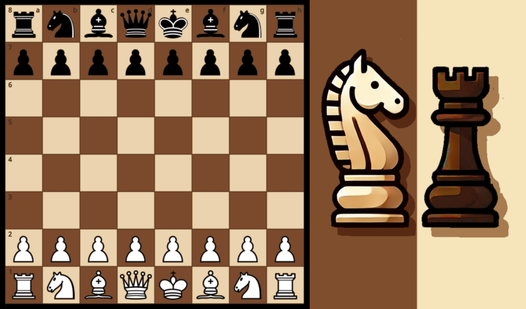
The Board A standard chess board is an 8×8 grid of alternating light and dark squares. Each player starts with 16 pieces: one king, one queen, two rooks, two bishops, two knights, and eight pawns. White always moves first.
King The king moves one square in any direction — up, down, left, right, or diagonally. It can never move into a square where it would be captured. Protecting your king is the entire point of the game.
Queen The queen is your most powerful piece. She can move any number of squares in any direction — horizontally, vertically, or diagonally — as long as her path isn't blocked. Losing your queen early is usually a disaster.
Rook Rooks move any number of squares horizontally or vertically. They're especially powerful in the endgame when the board is less crowded, and two rooks working together on open files can dominate.
Bishop Each player has two bishops, one on light squares and one on dark squares. Bishops move diagonally and stay on their color for the whole game. A bishop on an open diagonal is a fearsome attacker.
Knight The knight moves in an L-shape: two squares in one direction, then one square perpendicular (or vice versa). Knights are the only pieces that can jump over other pieces. They're tricky to use well but devastating when centralized.
Pawn Pawns move forward one square at a time (or two squares on their very first move) and capture diagonally. If a pawn reaches the opponent's back rank, it promotes — usually to a queen. En passant is a special capture that happens immediately after an opponent advances a pawn two squares past your pawn's capture square.
Special Moves
- Castling: The king moves two squares toward a rook, and the rook jumps to the other side of the king. This is allowed once per game per side, as long as neither piece has moved, there are no pieces between them, and the king is not in or passing through check.
- En passant: If your opponent's pawn rushes two squares forward and lands next to your pawn, you can capture it as if it only moved one square. This option must be taken on the very next move or it's gone.
- Check and checkmate: When your king is under direct attack, you're in check and must resolve it immediately. When there's no legal move to escape check, that's checkmate — game over.
Chess with a computer
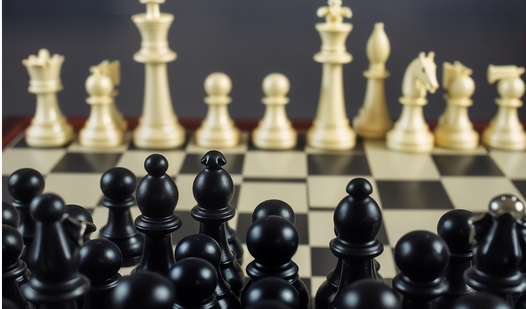
Mastering the ancient strategy of the royal game is a lifetime pursuit that begins with a single move. Chess with a computer offers the perfect digita...
▶ Play FreeBasic Chess Strategy for Beginners
Knowing the rules is one thing. Winning consistently is another. Here are the core strategic principles that strong players internalize early.
Control the Center The four central squares — e4, d4, e5, d5 — are the most valuable real estate on the board. Pieces placed near the center control more squares and have more mobility. Most openings revolve around fighting for central control. Classic beginner openings like 1.e4 e5 or 1.d4 d5 immediately stake a claim in the middle.
Develop Your Pieces In the opening, your priority should be getting your knights and bishops off the back rank and into active positions. Don't move the same piece twice in the opening unless there's a very good reason. Don't bring your queen out too early — she can be chased around by weaker pieces, wasting moves.
Castle Early King safety matters more than most beginners realize. Castling tucks your king behind a wall of pawns and activates a rook. Try to castle within the first 10 moves.
Think Before You Move Before playing a move, ask yourself: does this move hang (leave undefended) any of my pieces? Can my opponent capture something for free after I play this? This simple habit prevents the majority of beginner mistakes.
Tactics: The Short-Term Wins Chess tactics are forced sequences of moves that win material or deliver checkmate. The most common patterns:
- Fork: One piece attacks two enemy pieces simultaneously (knights are famous for this).
- Pin: A piece is attacked and can't move without exposing a more valuable piece behind it.
- Skewer: Like a pin, but the more valuable piece is in front — it has to move, leaving the lesser piece to be captured.
- Discovered Attack: Moving one piece reveals an attack by another.
Don't Give Away Pieces for Free
Every piece has a relative value: queen (9), rook (5), bishop (3), knight (3), pawn (~1). Losing a rook for a pawn is a losing trade. Keep track of what you're exchanging.
Endgame Awareness Even beginners benefit from knowing basic endgame ideas. King and queen vs. lone king is a forced checkmate. King and rook vs. lone king is also forced. King and two bishops can checkmate. King and pawn vs. king can lead to a draw if White's king can't escort the pawn — the "opposition" concept matters here.
Think in Plans, Not Just Moves The best players don't just react to threats — they form long-term plans. Look at your weaknesses and your opponent's weaknesses. Weak pawns, open files for rooks, bad bishops blocked by their own pawns — these become your targets.
Chess Tactical Battle
Chess has remained the king of strategy games for centuries, but adding modern combat mechanics changes everything you know about the board. Chess Tac...
▶ Play FreeHow to Play Chess Online for Free
One of the best things about chess in the modern era is how easy it is to find a game at any hour. You don't need a physical board, a club membership, or anything to download. Browser-based chess is completely free and surprisingly strong.
Playing Against an AI If you're still learning, playing against a computer is the ideal training ground. You can set the difficulty, take your time, and experiment with openings without the pressure of a human clock ticking. The AI doesn't get tired, doesn't tilt, and won't judge you for blundering your queen on move five.
Playing Against Other People Online Once you feel ready to test yourself, online multiplayer chess is incredibly accessible. Most platforms let you play unranked casual games immediately without creating an account. Time controls vary from bullet (1-2 minutes per player) to classical (30+ minutes), so you can pick whatever pace suits your schedule.
Chess Games Unblocked Many people look for chess games unblocked because school or workplace networks restrict gaming sites. Browser-based chess games that run directly in-page are usually accessible on most networks since they don't require separate client downloads or blocked ports. Just open the game URL and play.
Chess Games Online Free — What to Look For When picking a free chess platform, consider:
- Does it have an adjustable AI difficulty?
- Can you play without registering?
- Does it work on mobile?
- Does it offer puzzles or tutorials?
The games listed below check most or all of these boxes.
Stockfish Chess
Staring at the screen during a midday slump is the worst, but Stockfish Chess is the perfect mental reset to snap you out of it. This browser-based ex...
▶ Play FreeStockfish Chess is worth a special mention here. Stockfish is the world's strongest open-source chess engine, and browser implementations let you play against it directly — at whatever strength setting you choose. For serious improvement, playing against Stockfish at a difficulty slightly above your level is one of the most effective training methods available.
Chess - blindfold game
Mastering the board without looking is the ultimate mark of a chess grandmaster. This mental exercise forces you to build a vivid internal map, helpin...
▶ Play FreeChess - Blindfold Game is for players ready to push their visualization skills hard. In blindfold chess, you play without seeing the board — or with limited visual feedback — which forces your brain to build and maintain an internal map of the position. It sounds brutal, and it is, but regular blindfold practice dramatically strengthens your ability to calculate lines in normal games.
Best Free Browser Chess Games to Practice
Now for the fun part. Beyond the standard chess experience, there's a whole ecosystem of creative variants and alternative games that build different skills while keeping things fresh.
Shotgun Chess
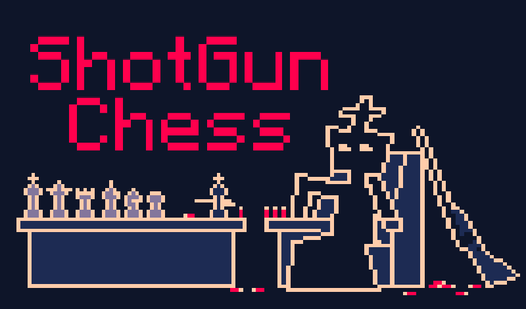
Shotgun Chess takes the classic game and injects shooter mechanics into it. Rather than simply calculating material, you're managing a hybrid of chess strategy and fast-reaction play. The twist changes your decision-making in interesting ways — you develop a more aggressive, tactical style because passivity gets punished differently than in standard chess.
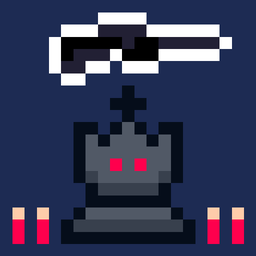
Shotgun Chess
Staring at a stagnant screen while your brain feels like mush is the ultimate mid-day struggle. Shotgun Chess is the chaotic cure for your boredom, re...
▶ Play FreeShogi: Japanese Chess
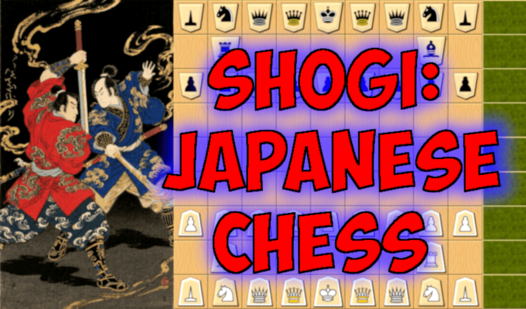
If you've ever felt like standard chess was getting a little predictable, Shogi will flip your assumptions completely. Shogi — the Japanese version of chess — adds one pivotal rule: captured pieces switch sides and can be dropped back onto the board by the player who captured them. This creates wildly dynamic positions where material is never truly gone. Shogi uses different pieces (some have multiple promotion paths), a different board size, and a different opening theory, but the skills you build carry back to standard chess in surprising ways.
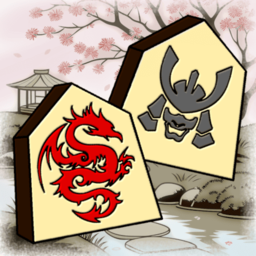
Shogi: Japanese Chess
Shogi is a legendary strategy challenge that brings the ancient tradition of japanese chess to your screen with a unique twist. Unlike Western chess, ...
▶ Play FreeTafl: Viking Chess
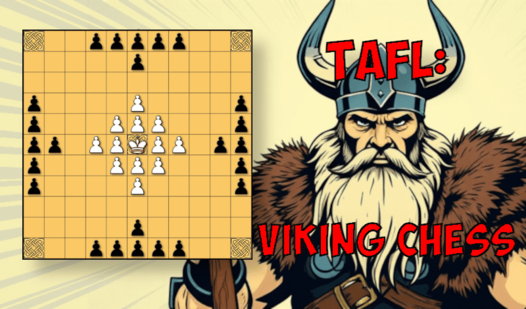
Before European chess arrived in Scandinavia, Vikings played Tafl — an asymmetric board game where one side defends a king trying to escape to the edge, while the other side tries to surround and capture him. Tafl is simpler than chess in some ways but demands a completely different strategic mindset because the two sides have entirely different goals. Playing Tafl builds your understanding of asymmetric positions and defensive technique in ways that transfer back to standard chess.
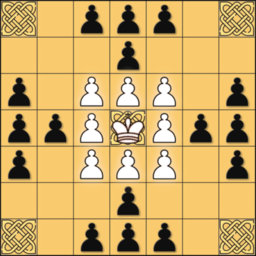
Tafl: viking chess
Outsmart your opponent by maneuvering pieces across the board to secure the escape of your monarch or trap the enemy king. Tafl: viking chess brings t...
▶ Play FreeChessman Battle
Chessman Battle mixes chess with autobattler mechanics. Instead of planning deep opening theory, you're managing a faster, more chaotic battlefield where chess pieces have stat-like properties and the action moves quickly. For players who find standard chess a bit slow or who come from autobattler games, this is a great bridge — you pick up piece interactions and value concepts without the full mental load of a classical game.
Chess Horde
Chess Horde is a popular chess variant where one side fields an army of 36 pawns (the "horde") against a standard chess army. The standard side wins by checkmating the opponent's king (yes, the horde has one king somewhere). The horde side wins by capturing every single one of the opponent's pieces. The power imbalance is dramatic but surprisingly balanced when played correctly — standard players have to think about piece coordination and active counterplay in a completely different way.
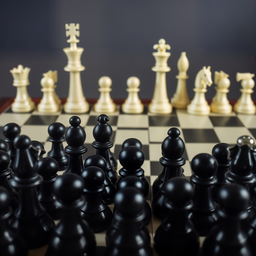
Chess horde
Tactical masterminds and strategy enthusiasts will find Chess horde the perfect playground to test their quick thinking against unpredictable opponent...
▶ Play FreeTips for Getting Better Fast
If you want to improve efficiently, here's what actually works:
Solve puzzles daily. Tactical puzzles are the fastest way to improve pattern recognition. Even 10-15 minutes a day of focused puzzle solving will compound over weeks.
Review your games. After every game — win or lose — go back and look for the moment things went wrong (or right). You don't need an engine for this at first; just ask yourself what you missed.
Play slower games occasionally. Blitz chess (3-5 minutes per player) is addictive, but rapid or classical time controls force you to actually think rather than rely on intuition. Slower games build deeper habits.
Learn one opening properly. Don't try to memorize 15 openings. Pick one for white and one response to e4 and one to d4 for black. Learn the ideas behind the moves, not just the moves themselves.
Study basic endgames. Most beginners neglect endgames entirely. Knowing how to convert a king-and-pawn endgame or a rook endgame wins games that you'd otherwise draw.
Play against players slightly stronger than you. Losing to a stronger player who makes you think hard every game is more educational than crushing weaker opposition.