How to Play Memory Chess for Kids
Memory chess is one of the most rewarding games you can introduce to a child. It blends the visual pattern-matching of classic memory card games with the strategic thinking that chess demands — and the result is something genuinely special. If you're wondering how to play memory chess for kids, you're in the right place. This guide walks through the rules, shares practical tips for parents and teachers, and points you toward the best free brain training games online so kids can keep practicing without spending a dime.
Whether your child is 4 or 12, memory-based games sharpen focus, build patience, and quietly develop skills that transfer directly into school performance and everyday problem-solving. Let's get into it.
What Is Memory Chess and How Does It Work
Memory chess is a hybrid game concept that exists in a few different forms — and that's actually part of its charm. At its core, the idea is to combine memory recall with chess-based thinking, creating a game where children have to remember positions, patterns, or piece locations rather than simply reacting to what's on the board in front of them.
There are two main versions you'll encounter:
Version 1: The Hidden Board Game Both players view a chessboard for a set amount of time (usually 30–60 seconds). The board is then covered or cleared, and players take turns placing pieces from memory. Whoever reconstructs the position most accurately wins.
Version 2: Blind Chess Adaptation Players take turns announcing moves without looking at the board. This is harder and usually reserved for older kids or those with some chess experience. It's essentially blindfold chess lite — the board is visible to a referee but not to the players.
Version 3: Memory Matching with Chess Themes This is the most beginner-friendly version and works exactly like the classic memory card game (flip two cards, find matching pairs) — but the cards feature chess pieces, board positions, or chess-related imagery. This version is perfect for young children who are just getting familiar with chess vocabulary.
All three versions develop spatial memory, concentration, and the ability to visualize abstract patterns — skills that are useful far beyond the chessboard. Children who play memory chess regularly tend to perform better on tasks that require sustained attention, which includes reading comprehension and math problem solving.
Sharp memory: Connect the pairs
Puzzle lovers and brain training enthusiasts, get ready for a sharp challenge! Sharp Memory: Connect the Pairs offers a delightful test of your recall...
▶ Play FreeMemory Chess Rules for Kids — Step by Step
The rules vary depending on which version you're playing, but here's a clean breakdown for each that works well with children.
The Hidden Board Version (Ages 6+)
What you need: A standard chessboard, a set of chess pieces, and a timer.
Setup:
- One player (or a parent) arranges a position on the board. This can be a real game position, a famous endgame, or just a random arrangement.
- The other player(s) study the board for 30–60 seconds.
- The board is covered with a cloth or the pieces are swept to one side.
How to play:
- Players take turns placing pieces back on the board, trying to recreate the original position from memory.
- A correct placement earns 1 point. An incorrect placement earns 0 points.
- After all pieces are placed, the cloth is removed and the original position is compared.
- The player with the most correct placements wins.
Kid-friendly tweak: Start with just the pawns. Then add in just the rooks. Gradually increase complexity as your child gets better.
The Card Matching Version (Ages 4+)
What you need: A memory card deck with chess pieces (or you can print one for free online).
Setup:
- Shuffle all the cards and lay them face-down in a grid.
How to play:
- Player 1 flips two cards face-up.
- If they match (two white knights, two black bishops, etc.), the player keeps the pair and takes another turn.
- If they don't match, both cards are flipped back face-down and it's the next player's turn.
- The player with the most pairs when all cards are matched wins.
Learning bonus: When a child flips a card showing a chess piece, name it out loud. Over a few sessions, children naturally memorize piece names and appearances without any formal teaching.
Memory Game: Square Challenge
Human memory is a muscle that thrives on consistent stimulation and rapid pattern recognition. Memory Game: Square Challenge pushes your cognitive lim...
▶ Play FreeBlind Move Chess (Ages 10+)
This version is for children who already know how chess pieces move.
How to play:
- Both players close their eyes (or sit back-to-back).
- A referee manages the board.
- Players announce moves in algebraic notation (e.g., "Knight to f3").
- The referee moves the pieces accordingly.
- Standard chess rules apply.
This version is genuinely challenging and builds extraordinary concentration. It's a great stepping stone toward competitive junior chess.
Tips to Improve Your Child's Memory With Chess Games
Playing memory chess is great — but a few habits can dramatically speed up how fast your child improves. These tips work for any age group and don't require any special equipment.
1. Start Small and Build Gradually
Don't put 32 pieces on the board on day one. Begin with 4–6 pieces in distinctive positions. Once your child can reconstruct that reliably, add two more pieces. Gradual scaling keeps the game fun and avoids frustration.
2. Use Chunking
Chess masters don't memorize individual piece positions — they see "patterns." Help your child do the same. Point out that a rook and a king in the corner together is "castled position." A cluster of pawns in a triangle is "pawn chain." Naming patterns makes them easier to store in memory.
3. Play in Short Sessions
Memory is consolidated during rest. A 15-minute game session every day is far more effective than a 90-minute session once a week. Short, regular play creates stronger neural pathways.
4. Describe the Board Out Loud
Ask your child to narrate what they see before the board is covered: "The white knight is on e4, the black bishop is on c6." Saying things out loud activates verbal memory alongside visual memory, creating a stronger combined trace.
5. Make It Competitive (Gently)
A little friendly competition between siblings or classmates adds motivation. Keep score across sessions. Let kids track their own improvement over time — children are motivated by seeing their own progress.

Lilo & Stitch: Coloring Book for Kids
Unleash your inner artist with Lilo & Stitch: Coloring Book for Kids, a delightful browser game where you bring your favorite Disney characters to lif...
▶ Play Free6. Mix in Other Memory Games
Memory chess improves faster when combined with other memory-building activities. Jigsaw puzzles, matching games, and pattern recognition games all exercise overlapping cognitive muscles. Online brain games are a convenient way to fit in extra practice between chess sessions.
7. Celebrate the Process, Not Just Wins
A child who remembers 8 out of 10 pieces correctly should be celebrated, even if the other player remembered 9. Progress-based praise builds intrinsic motivation and keeps kids engaged over the long term.
8. Connect It to Stories
Young children remember stories better than abstract information. Turn the chess pieces into characters. "The queen is protecting the king — where is she hiding?" Narrative framing makes spatial memory feel natural rather than mechanical.
Best Free Brain Training Games for Kids Online
You don't need a physical chessboard to build the skills that make memory chess easier. There's a solid range of free browser games that target exactly the same cognitive abilities — attention, working memory, pattern recognition, and visual sequencing. Here are the best options we've found, all playable for free right now.
Sharp Memory Games
The most direct preparation for memory chess is a classic pairs/matching game. These train the exact memory retrieval mechanics that hidden-board chess requires — you see something, it disappears, and you have to hold it in mind.
Sharp Memory: Connect the Pairs is one of the best implementations of this format. The game presents a grid of face-down tiles, and your child flips two at a time to find matching pairs. As they progress through levels, the grid grows and the matching window shortens.
Sharp memory: Connect the pairs
Puzzle lovers and brain training enthusiasts, get ready for a sharp challenge! Sharp Memory: Connect the Pairs offers a delightful test of your recall...
▶ Play FreePattern Recognition Puzzles
Spatial pattern games train the "chunking" ability we mentioned earlier — the skill of seeing groups of elements as a single unit rather than many individual pieces.
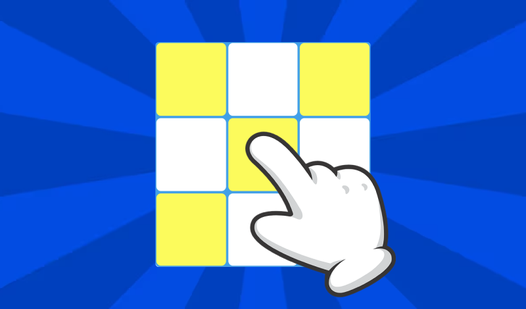
Memory Game: Square Challenge takes a different approach to memory training. Instead of card pairs, children must remember and reproduce sequences of highlighted squares. This directly mirrors what happens when a child tries to recall a chess position — they're reconstructing a spatial pattern from working memory.
Memory Game: Square Challenge
Human memory is a muscle that thrives on consistent stimulation and rapid pattern recognition. Memory Game: Square Challenge pushes your cognitive lim...
▶ Play FreeMemory: Russian Letters is a fantastic multilingual memory game that works through letter-pair matching. Even for English-speaking kids, the unfamiliar letter shapes make it an excellent focus exercise — the brain has to work harder when the symbols aren't automatically recognized, which strengthens memory formation.
Puzzle Games for Deeper Focus
Jigsaw-style puzzle games build the visual-spatial reasoning that underpins both chess and memory performance. Children who are good at mentally rotating and placing puzzle pieces tend to be significantly better at visualizing board positions.
Jigsaw Puzzles for Kids: Trains offers age-appropriate puzzles with clean, recognizable imagery. The train theme keeps young children engaged, while the puzzle mechanics quietly build spatial reasoning.
Assemble the Puzzle is another solid pick for slightly older kids — the pieces are more numerous and the target images more complex, giving the spatial reasoning circuits a real workout.
Assemble the Puzzle
Fans of brain training games will absolutely love Assemble the Puzzle for its relaxing yet mentally stimulating experience. This engaging puzzle chall...
▶ Play FreeAnimal Sound & Recognition Games
For very young children (ages 3–5) who aren't ready for chess-adjacent games, Animals for Kids and Their Sounds builds auditory memory and associative learning — the same underlying mechanisms that memory chess eventually draws on. It's a gentler on-ramp that keeps little kids engaged while still building cognitive foundations.

Animals for kids and their sounds
Learning about the natural world is a fundamental milestone for every curious toddler. Animals for kids and their sounds brings the vast wilderness to...
▶ Play FreeCreative and Coloring Games
It might seem counterintuitive, but coloring games genuinely support memory development. Structured coloring requires sustained attention and fine motor focus — two traits that translate directly into chess concentration. Kids who color regularly tend to have longer attention spans during board game sessions.
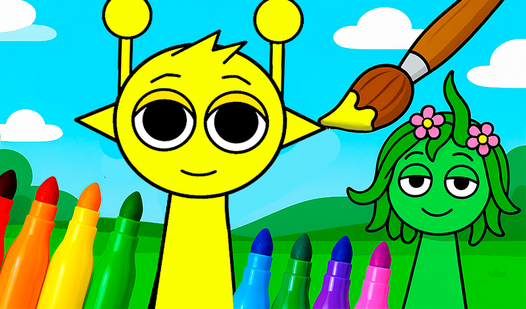
Sprunki - Coloring Book for Kids offers vibrant, structured coloring pages that keep children engaged for extended periods. The creative satisfaction also provides a good emotional counterbalance to the cognitive intensity of memory training.
Sprunki - Coloring Book for Kids
Artistic expression is a vital part of child development, and coloring remains one of the most effective ways to nurture early imagination. Sprunki - ...
▶ Play FreeBlue Tractor: Coloring Book for Kids is another calm, well-designed option. The familiar vehicle theme works well for kids who are less drawn to fantasy characters.
Blue Tractor: Coloring book for kids
Bring your favorite characters to life as you splash vibrant hues across every scene. Blue Tractor: Coloring book for kids offers a digital canvas whe...
▶ Play FreeMore Top Picks for the Grid
Here are additional games worth bookmarking for a well-rounded brain training rotation:
Develop Your Memory! is exactly what it sounds like — a dedicated memory training game designed specifically for cognitive exercise. It includes multiple exercise types and difficulty levels, making it useful across a wide age range.
Develop your memory!
Improving your cognitive sharpness is best achieved through interactive brain training exercises that challenge your focus. Develop your memory! turns...
▶ Play FreePuzzles Kids – Animals combines puzzle-solving with animal recognition, offering gentle cognitive challenge wrapped in familiar, engaging imagery.

Puzzles Kids - Animals
Drag and drop colorful shapes to assemble adorable creatures in Puzzles Kids - Animals. This browser-based experience makes learning animal names a br...
▶ Play FreeSave the Kitten: Games for Kids & Girls is a light puzzle-adventure game where children solve problems to rescue animals. The problem-solving structure builds logical thinking in a highly motivating context.
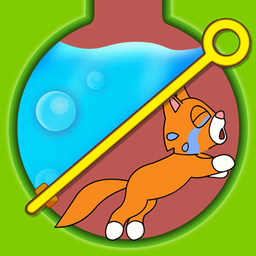
Save the Kitten: Games for Kids & Girls
Rescuing adorable kittens from the clutches of a mischievous cat requires lightning-fast reflexes and a steady hand. Save the Kitten: Games for Kids &...
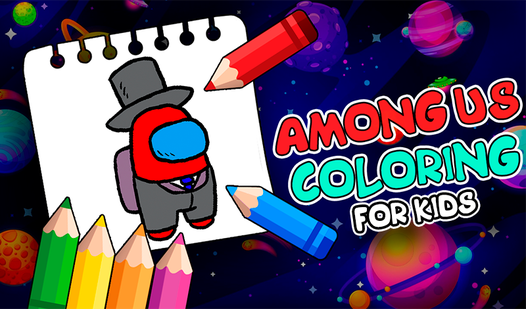
▶ Play FreeAmong Us Coloring for Kids takes the wildly popular game's characters and turns them into a calm, focused coloring experience — a clever way to channel existing enthusiasm into a quiet, attentive activity.
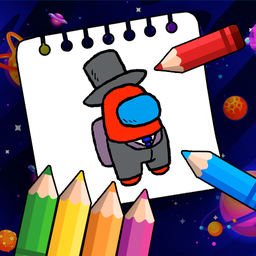
Among Us Coloring For Kids
Young fans of the impostor craze will adore spending time with Among Us Coloring For Kids. This creative digital art studio brings your favorite space...
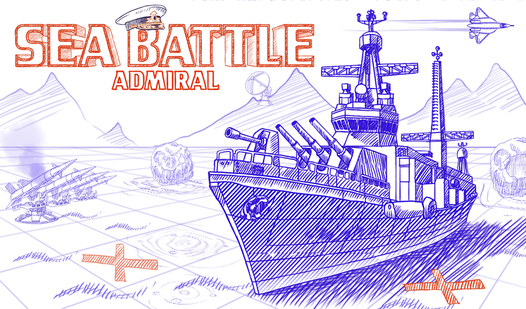
▶ Play FreeSea Battle Admiral introduces simple strategic thinking through naval grid warfare. It's an excellent next step for kids who have mastered basic memory games and are ready for a game that combines memory with decision-making.

Sea Battle Admiral
Staring at the clock during a long afternoon or just craving a quick mental challenge to break up the monotony, you need something that sparks your ta...
▶ Play FreeSprunki Kids offers a playful, musical-adjacent experience that works well as a palette cleanser between more cognitively demanding sessions.
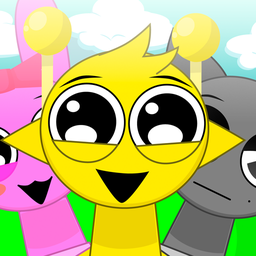
Sprunki Kids
Staring at the clock and waiting for a long meeting or class to end is the ultimate boredom test. Sprunki Kids turns those idle minutes into a creativ...
▶ Play FreeA Note on Screen Time and Balance
Online games are a fantastic supplement to physical chess — but the keyword here is supplement. The ideal routine pairs physical memory chess (with a real board, in real space, with another person) with online brain games for extra practice time. The physical game builds social skills, reading of opponent behavior, and the tactile spatial reasoning that comes from handling actual pieces. Online games fill in the gaps when a board partner isn't available.
A good weekly rhythm might look like: two or three physical memory chess sessions (10–20 minutes each) plus 15–20 minutes of online brain games on alternating days. That's enough to produce measurable improvement within a month.