How to Play Block Blast: Rules, Tips & Strategies
Block Blast has become one of the most addictive puzzle games on the internet — and it's easy to see why. The premise is deceptively simple: drag and drop shaped blocks onto a grid, fill complete rows and columns, and watch them disappear for points. But if you're wondering how to play Block Blast beyond just picking it up and going, this guide covers everything from the basic rules to advanced scoring combos that separate casual players from leaderboard legends. New to block puzzles or a returning player looking to sharpen your edge — this is your complete playbook.
Block Blast — Game Rules and Basics
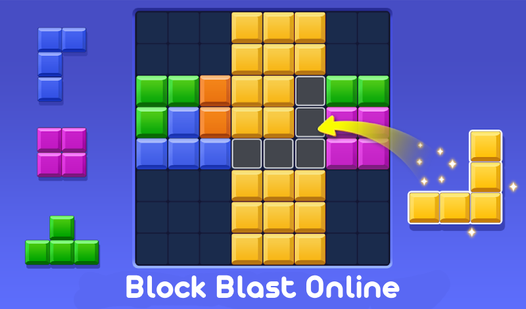
Before you can master anything, you need to understand what you're actually doing. Block Blast is a grid-based puzzle game — usually played on an 8×8 board — where your job is to clear lines by filling entire rows or columns with blocks.
The core loop:
- You're given a set of blocks (usually 3 at a time) with different shapes — some are simple squares, others are L-shapes, T-shapes, long bars, or irregular blobs.
- You drag each block onto the grid wherever it fits.
- Once a full row or column is filled, it clears automatically and earns you points.
- The game ends when none of the three available blocks can be placed anywhere on the board.
There's no timer in most versions — this isn't a race. The challenge is entirely spatial: how do you fit the pieces together so you keep the board clear and the game going as long as possible?
The controls are dead simple. Click (or tap on mobile) a block, drag it to where you want it, and release. If it fits, it drops. If it doesn't fit the space you're aiming for, the block snaps back. You can't rotate blocks in classic Block Blast — the shapes you get are the shapes you use. That's what makes planning ahead so critical.
Block Blast Online puts you straight into the action with a clean interface and the classic colored-block matching mechanic — a great place to see these rules in action from the first move.
Block Blast Online
Drag and drop colorful shapes onto the 8x8 grid to clear lines and rack up high scores. Strategy is the key to success as you carefully plan your plac...
▶ Play FreeThe grid starts empty, giving you plenty of breathing room. The first few moves feel almost too easy — that's the hook. The real challenge begins once the board fills up and your placement options shrink. Experienced players think 2–3 moves ahead from the very first block.
One more rule worth knowing: you can't move blocks once they're placed. No take-backs. Every placement is a commitment, which is exactly why the game rewards careful thinking over quick reflexes.
How to Play Block Blast: Placing Pieces Effectively
Good block placement is the difference between a 5,000-point game and a 50,000-point game. The goal isn't just to make things fit — it's to set up future clears while keeping the board as open as possible.
Think in lines, not single cells
Every block you place should contribute to completing a full row or column. Avoid dropping pieces in isolated spots that create gaps surrounded by filled cells — those gaps become traps. If a block doesn't get you at least one step closer to a complete line, reconsider where you're putting it.
Keep the corners and edges clear
Corners and edges are prime real estate for straight-line pieces and large blocks. The middle of the board tends to fill up fast, so keeping the perimeter accessible gives you options when you receive an awkward shape.
Group similar shapes together
When you receive blocks that share a common dimension — for example, two pieces that are each 3 cells wide — place them in the same horizontal zone so they contribute to the same row clears. Spreading pieces randomly across the board makes it hard to complete anything.
Always check all three pieces before placing any
This is the single most valuable habit you can build. Before you touch anything, scan all three available blocks and mentally plan where each one could go. Sometimes the obvious spot for piece one becomes terrible once you realize where piece two needs to go.
Block Puzzle: Block Builder
Puzzle lovers and fans of classic brain teasers will find Block Puzzle: Block Builder an incredibly addictive experience. This isn't just another bloc...
▶ Play FreeBlock Puzzle: Block Builder is a great game to practice this spatial thinking — its shape-fitting mechanic forces you to plan multiple steps ahead, building exactly the pattern recognition you need.
Leave escape routes
Don't fill rows from one side only. If you pack the left half of the board solid while the right side stays empty, you'll eventually receive a long horizontal bar you can't place. Fill rows evenly so any incoming piece can slot in somewhere.
Use the "almost complete" strategy
Leave one row or column intentionally one cell short. When you receive a single-cell block or a piece that plugs that gap, you clear the line instantly. Stack multiple near-complete lines and you can chain clears with one well-placed piece — that's where scores start multiplying fast.
Scoring System and Combos Explained
Points in Block Blast aren't just about clearing lines — they're about clearing multiple lines at once, which triggers combo multipliers that send your score through the roof.
Basic scoring
A single line clear (one row or one column) earns you a base amount of points. Two lines cleared simultaneously earns significantly more than twice the base. Three lines at once pushes it higher still. The game rewards efficiency at every level.
Combos: clearing multiple lines at once
This is the core of scoring strategy. If one block placement clears two rows simultaneously, you get a combo multiplier. High-level players regularly set up 4-, 6-, even 8-line combos by methodically filling most of the board except for precisely calculated gaps.
Think of the board as a reservoir you're filling. The goal isn't to fill it uniformly — it's to fill it just enough that one final piece triggers a cascade.
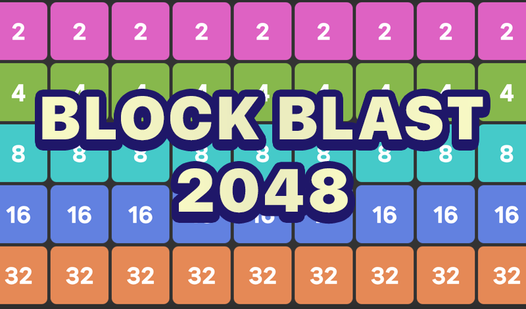
Block Blast 2048 adds a numeric twist to this concept, merging the number-matching mechanic of 2048 with block placement, so every clear also triggers tile merges. It's a fascinating evolution of the combo system and sharpens your ability to track multiple objectives at once.
Block Blast 2048
Number merge games have a unique way of keeping your brain sharp while providing that oddly satisfying flow state. Block Blast 2048 takes this classic...
▶ Play FreeStreak bonuses
Many versions of Block Blast reward consecutive clears — if you clear at least one line on every move in a row, you build a streak multiplier. Break the streak (a move with no clear) and you reset. This mechanic pushes skilled players to never waste a placement.
Big block bonus
Placing larger pieces — 4, 5, or 6-cell blocks — often earns bonus points just for the placement itself, separate from any line clears. Don't be afraid of big awkward shapes; place them smartly and they're actually point machines.
The cross-clear: simultaneous row + column
Clearing both a full row AND a full column with a single piece earns a massive bonus. This is the holy grail of Block Blast scoring. To set it up, you need one cell missing from a row and one cell missing from a column, and those two missing cells must be the same cell. It's rare and satisfying every single time.
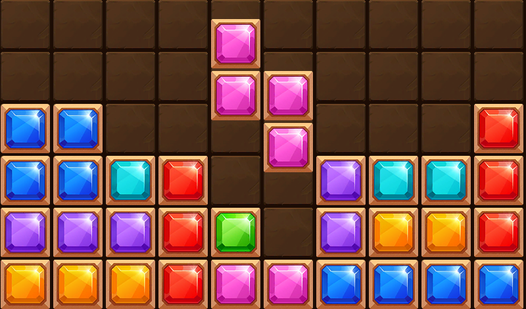
Block Puzzle Gem is built around chasing high scores and smashing your personal best — excellent for practicing cross-clear setups in a low-pressure environment.
Block Puzzle Gem
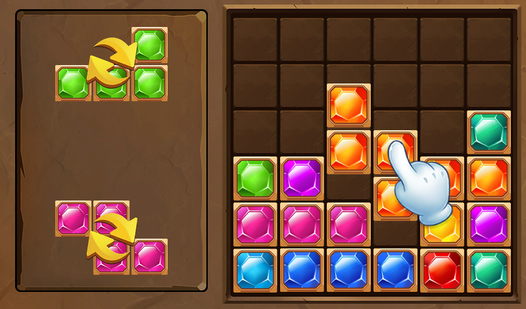
Ever wondered what makes classic puzzle games so endlessly engaging? Block Puzzle Gem takes that timeless appeal and polishes it to a brilliant shine,...
▶ Play FreeAdvanced Strategies for High Scores
Once you've got the basics and scoring down, these techniques separate good players from great ones.
The "column compression" technique
Instead of distributing placements evenly, focus on clearing complete columns first. Columns are narrower, so they fill faster. Once you start regularly clearing columns, your rows begin filling more evenly on their own, and combo opportunities appear naturally.
Prioritize problem shapes
Some block shapes are easy to place anywhere — like a single square or a 2×2 block. Others, like zigzags or irregular L-shapes, have very limited placement options. Always plan placement for your problem shapes first, then fit the easy pieces around them. Never "solve" your easy pieces only to find the awkward one has nowhere to go.
Shadow planning
When you pick up a piece, visualize every possible position it could occupy on the board. Mentally "shadow" those positions. Then look at which shadow positions also align with potential line clears. This shrinks your decision-making from "everywhere" to 3–5 real candidate positions — much more manageable.
Play relaxed games to train your eye
Many wood block games online free for adults are explicitly designed without pressure — no timers, gentle mechanics, pure placement puzzles. Playing these regularly trains your spatial pattern recognition without the stress of a filling board. Tap Wood Blocks Away is one of the best examples: designed specifically for relaxation, it lets you focus on clean placement technique and build good habits.
Tap Wood Blocks Away
Spatial puzzles offer a unique way to sharpen your focus while unwinding after a long day. Tap Wood Blocks Away challenges you to clear a complex 3d к...
▶ Play FreeChain reaction setups
The highest-level Block Blast strategy is setting up chain reactions: placing blocks so that one clear opens up space, which enables the next placement to trigger another clear, and so on. This requires visualizing the board 4–5 moves ahead — a skill that only comes from deliberate practice.
Use different games to build different skills
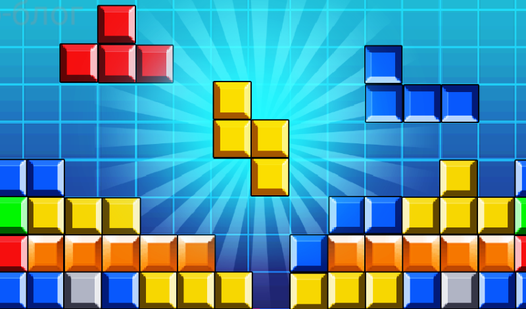
Different block puzzle variants test different aspects of your game. Color Block Blast adds color matching to the equation, which trains you to track multiple variables simultaneously.
Color Block Blast
Matching games have a way of turning a dull afternoon into a high-stakes strategic showdown. Color Block Blast elevates this experience by forcing you...
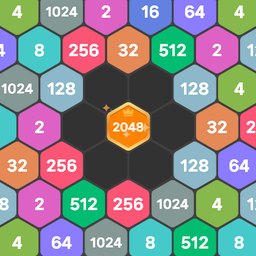
▶ Play FreeHexa Block 2048 uses a hexagonal grid and number merging, forcing you to think about spatial relationships in a fundamentally different way. Playing hex-grid puzzles then returning to square-grid Block Blast will noticeably sharpen your instincts.
Hexa Block 2048
Drag and drop numbered tiles onto the grid to combine matching values and watch your score soar in this addictive puzzle challenge. You will quickly f...
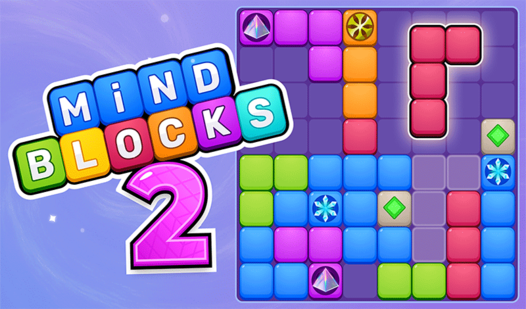
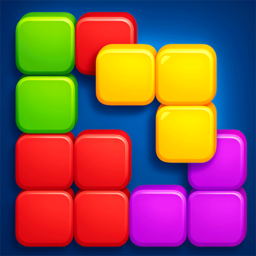
▶ Play FreeMind Blocks 2 pushes your spatial reasoning further with its logic-puzzle approach, training the deliberate, analytical side of your thinking that block puzzles demand at their highest levels.
Mind Blocks 2
Strategic thinkers and block puzzle enthusiasts will find their new obsession with Mind Blocks 2. This title tests your spatial awareness and logic as...
▶ Play FreeCommon Mistakes to Avoid
Even experienced players fall into these traps. Recognizing them early is half the fix.
Filling the center first
New players tend to drop pieces in the middle of the board, which fills the center fast and leaves a ring of empty cells around the edge. This is backwards. Central blocks are hardest to clear because they need both horizontal and vertical lines to be nearly complete. Start from the edges and work inward.
Ignoring future pieces
Block Blast shows you the next 2–3 pieces. Many players focus only on the current piece, making placements that work now but create impossible situations for the next shape. Always look ahead.
Leaving isolated cells
A single empty cell surrounded by filled cells is basically a dead cell — almost no block can reach it. Treat isolated cells as an emergency. The moment you create one, clearing it becomes your top priority, or it will haunt you for the rest of the game.
Panic-placing
When the board fills up and you feel the pressure, the temptation is to place quickly. Resist it. A panicked placement that doesn't set up a clear often accelerates the endgame. Slow down, find your best option, and commit.
Not using practice modes
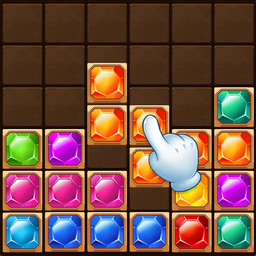
Many versions of block puzzle games offer untimed modes or lower-pressure variants. These are perfect for trying new strategies without the risk of ruining a good scoring run. Block Puzzle Smart Placement is a great example — it specifically trains optimal placement decisions, making it practically a tutorial in efficient strategy.
Block Puzzle Smart Placement
Staring at the clock and waiting for your next meeting or class to start can be incredibly draining when the minutes just refuse to tick by. Block Puz...
▶ Play FreeTreating every piece as equal
Not all blocks are created equal. A long straight bar clears entire lines with minimal setup. A 5-cell L-shape requires very specific board conditions. Weight your strategy around your most valuable and most dangerous pieces, not the easiest ones.
Neglecting column balance
Most players think in rows because of how we read. But columns matter just as much. Players who balance their row and column fill rates tend to create far more combo opportunities than those who only think horizontally.
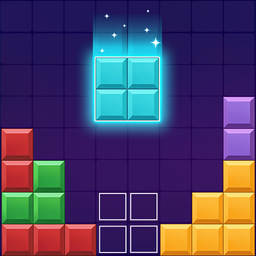
Block Puzzle: Falling Shapes tests your ability to avoid these mistakes in real time — the falling mechanic adds mild time pressure that forces quick, clean decisions.
Block Puzzle: Falling shapes
Falling blocks carry a unique thrill that has defined classic gaming for generations. Block Puzzle: Falling shapes takes this timeless concept and ref...
▶ Play FreeBlock Blast is one of those rare games that's genuinely easy to learn and genuinely deep to master. The rules take 30 seconds to understand. The strategy can keep you engaged for months. Among wood block games online free for adults that reward actual thinking, this is as good as it gets — every session teaches you something new about spatial reasoning, planning, and the satisfying geometry of fitting shapes into space.
Start with the basics, work your way up to cross-clears and combo chains, and you'll find that scores you once thought were impressive start looking like warm-up numbers.