Best Block Games With No Ads
If you've ever opened a puzzle game on your phone only to get bombarded by a 30-second unskippable ad after every single level, you know the pain. The best block games with no ads don't just save your sanity — they actually let you think. Browser-based block puzzles are a completely different world: no app store downloads, no aggressive monetization loops, just grids, shapes, and your brain. This guide pulls together the cleanest, most satisfying block puzzle and block building games you can play right now without getting interrupted every two minutes.
Whether you want a meditative solo challenge, something fast and competitive, or a building-style puzzle that rewards creativity, there's a slot on this list for you. All of these games run directly in your browser, with minimal or zero ad interruptions. Let's get into it.
Best ad-free block puzzle games online
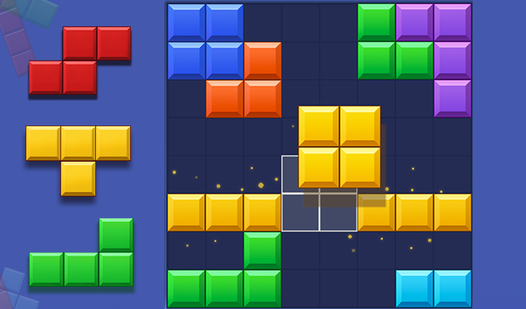
Classic block puzzles are the bread and butter of this genre. The core mechanic — drag or place shapes onto a grid to complete rows or columns — sounds simple, but the depth comes from thinking three or four moves ahead. The best versions of these games strip away everything that doesn't serve the puzzle: no timers screaming at you, no popups, just tiles and space.
Blocks and that's it does exactly what the name promises. This is a no-frills, brain-first puzzle game built around the same satisfying loop that made block puzzles popular in the first place. You get a grid, you get shapes, you place them. When a row or column fills up, it clears. The challenge escalates naturally without any artificial difficulty spikes or energy systems gating your progress. Studies on puzzle games have shown cognitive benefits — improved spatial reasoning, better short-term memory — and this kind of distraction-free environment is exactly where those benefits kick in. There's nothing pulling your attention away from the problem in front of you.
Blocks and that's it
Feeling that midday slump or need a quick mental refresh? Blocks and that's it is your perfect escape, offering a delightful challenge that sharpens y...
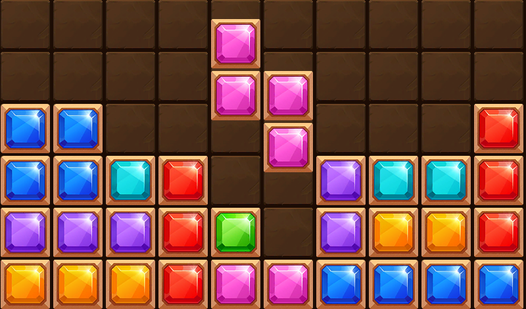
▶ Play FreeBlock Puzzle Gem takes the classic formula and adds a rotation mechanic that changes everything. Pieces come gem-themed and visually satisfying, but the real twist is that you can rotate shapes before placing them. That single addition transforms what could be a passive, reactive game into something much more active. You're no longer just finding a spot for a piece — you're evaluating four possible orientations and choosing the best one for your long-term board state. The gem aesthetic makes the experience feel polished without being distracting.
Block Puzzle Gem
Ever wondered what makes classic puzzle games so endlessly engaging? Block Puzzle Gem takes that timeless appeal and polishes it to a brilliant shine,...
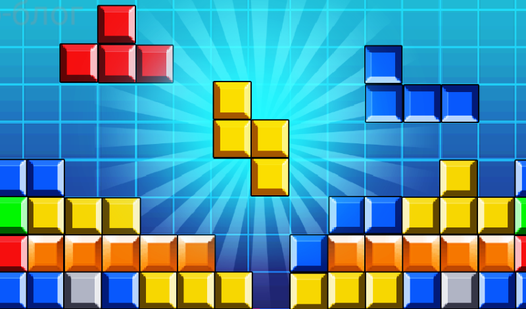
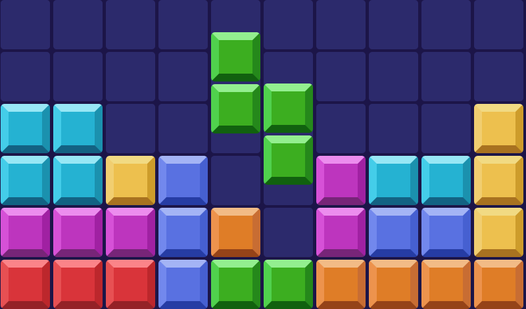
▶ Play FreeBlock Puzzle: Block Builder pushes the format further by introducing falling shapes. Think classic Tetris energy, but with a puzzle-game pace. Blocks descend and you need to slot them into place with intention — filling rows efficiently while leaving room for awkward pieces that will inevitably show up later. Strategic thinking is mandatory here, not optional. The game doesn't punish you with aggressive ad breaks; it lets the tension build organically through the stacking mechanic itself.
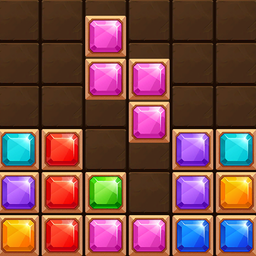
Block Puzzle: Block Builder
Puzzle lovers and fans of classic brain teasers will find Block Puzzle: Block Builder an incredibly addictive experience. This isn't just another bloc...
▶ Play FreeBeyond these three, there's a solid bench of other block puzzle titles worth keeping in your rotation:
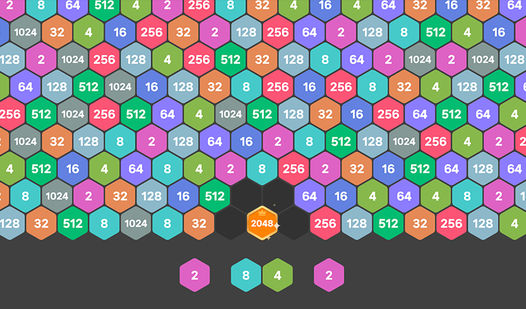
Block Puzzle: Lines of Blocks offers a clean variation on row-clearing gameplay, and Hexa Block 2048 combines hexagonal grid logic with number-merging mechanics — a mashup that sounds strange but plays beautifully once you get the hang of the angles.
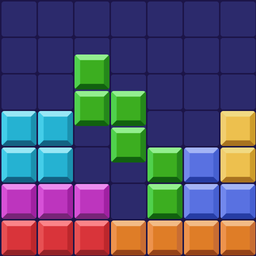
Block Puzzle: Lines of Blocks
Fans of retro arcade challenges will find their new obsession with Block Puzzle: Lines of Blocks today. This addictive game tests your ability to stac...
▶ Play Free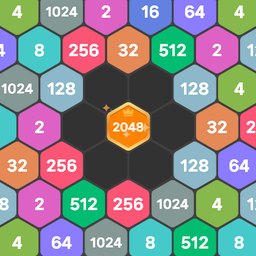
Hexa Block 2048
Drag and drop numbered tiles onto the grid to combine matching values and watch your score soar in this addictive puzzle challenge. You will quickly f...
▶ Play FreeBlock building and craft games
Not all block games are about clearing grids. A whole branch of the genre focuses on construction — placing blocks to build something, unblock a path, or solve a spatial puzzle that requires you to think in three dimensions (or at least two and a half). These games tend to be more forgiving with time pressure but demand a different kind of spatial intelligence.
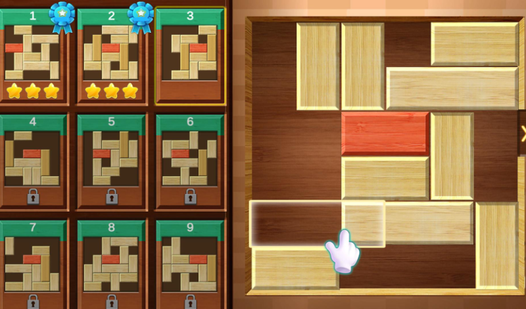
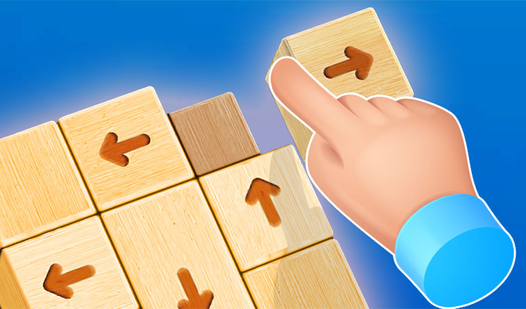
Wood Block Unblock is the kind of game you pick up for five minutes and put down forty minutes later, slightly dazed. The premise is straightforward: blocks are locked in position and you need to slide them in the right sequence to clear a path. It's the same fundamental logic as a sliding puzzle, but the wooden aesthetic and tactile feel of the pieces make it oddly satisfying. There's a reason sliding block puzzles have been around since the 1870s — the "aha" moment when a sequence clicks is genuinely rewarding.
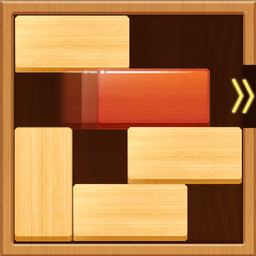
Wood Block Unblock
Logic games often provide the ultimate mental workout by forcing players to pivot their perspective when faced with a static grid. Wood Block Unblock ...
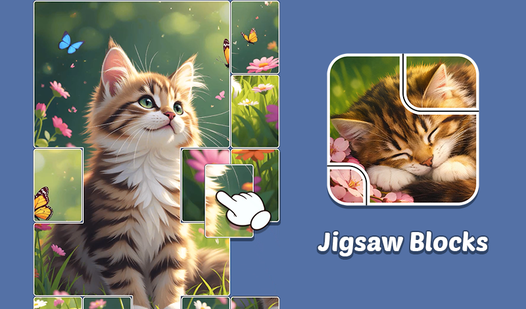
▶ Play FreeJigsaw Blocks takes a hybrid approach. Instead of a standard jigsaw puzzle with irregular organic shapes, the pieces are all block-based — angular, Tetris-like chunks that need to be fitted together to complete an image or fill a defined space. The rigid geometry makes the puzzle harder in some ways (no gradual shaping clues from curves) but more satisfying when you finally lock a piece into place. It's a great bridge between traditional jigsaw fans and block puzzle enthusiasts.

Jigsaw Blocks
Fans of calming visual challenges will find their new favorite pastime in Jigsaw Blocks, a creative blend of classic piece-matching and modern block m...
▶ Play FreeTap Wood Blocks Away works on a completely different axis — tap to break wooden blocks and clear the path for a ball or object to reach its goal. It's physics-adjacent puzzle logic rather than pure spatial planning, which makes it feel fresh. The tap-to-destroy mechanic is oddly cathartic, and the challenge comes from figuring out the correct order of demolition rather than construction. Sometimes solving a problem means taking things apart instead of building them up.
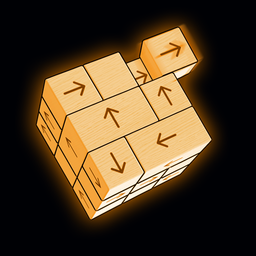
Tap Wood Blocks Away
Spatial puzzles offer a unique way to sharpen your focus while unwinding after a long day. Tap Wood Blocks Away challenges you to clear a complex 3d к...
▶ Play FreeOne thing these building and unblocking games share: they're fundamentally single-session friendly. You don't need to build up a persistent world over weeks or unlock a character upgrade tree. Each level is self-contained, which means the games are naturally low-pressure and don't need to rely on addictive monetization mechanics to keep you playing. The puzzle itself is the hook.
Block merge and match games
Merging and matching represent the most addictive branch of block gaming — the kind that makes you lose track of time completely. The core loop of combining identical blocks to create higher-value pieces taps into a deeply satisfying part of human psychology. When it's done well and without aggressive monetization, it's genuinely one of the best casual gaming experiences available.
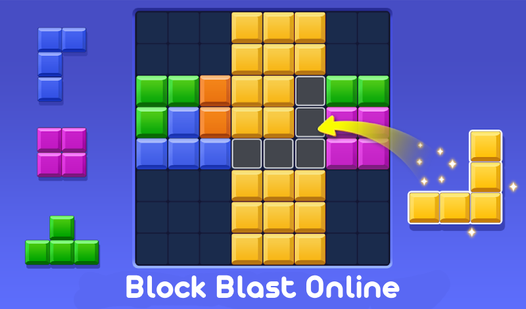
Block Blast Online is a color-matching block game that focuses on clearing groups of identical blocks. The mechanics are accessible — click or tap groups of matching colored blocks to remove them — but the strategy emerges quickly as you work out which clusters to clear first to set up chain reactions. It's simple enough to play with one hand while half-distracted, but deep enough that optimizing your score requires real planning.
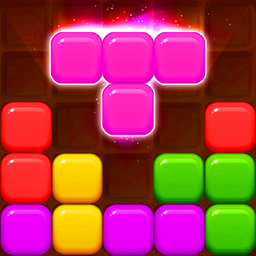
Block Blast Online
Drag and drop colorful shapes onto the 8x8 grid to clear lines and rack up high scores. Strategy is the key to success as you carefully plan your plac...
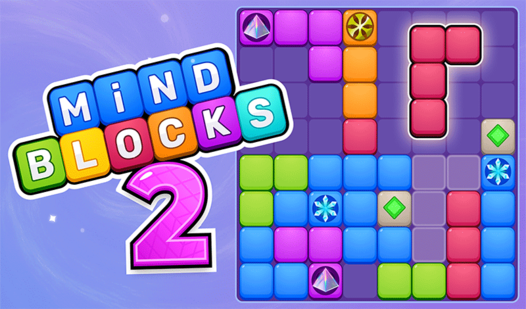
▶ Play FreeMind Blocks 2 sits at the more challenging end of the spectrum. This is a logic-forward puzzle game that uses block mechanics as a vehicle for increasingly complex spatial reasoning challenges. Each level is essentially a logic puzzle disguised as a block game, and the escalating difficulty means the game respects your intelligence instead of padding its content with repetition. If you've burned through easier block puzzles and want something that will actually make you pause and think, this is the right pick.
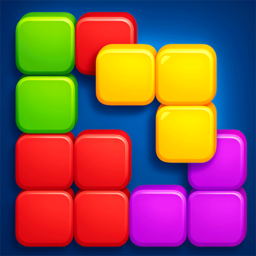
Mind Blocks 2
Strategic thinkers and block puzzle enthusiasts will find their new obsession with Mind Blocks 2. This title tests your spatial awareness and logic as...
▶ Play FreeBlock Breaker rounds out this category with a different kind of energy. The breaking mechanic flips the usual construction logic — here, the goal is destruction rather than placement. Blocks need to be broken, cleared, or dismantled, and figuring out the right approach to knock everything down efficiently requires the same spatial reasoning as building games, just in reverse. It's a great palette cleanser between more contemplative puzzle sessions.
What makes merge and match games particularly effective in a browser setting is that the sessions are naturally self-pacing. There's no narrative pressure, no checkpoint system, no reason to keep playing beyond the intrinsic enjoyment of the loop itself. That's a design philosophy that stands in direct contrast to mobile games built around keeping you engaged through FOMO mechanics and countdown timers.
Why browser block games have fewer ads
This is a question worth actually answering, because the difference between playing block puzzles in a browser versus a mobile app is genuinely significant.
Mobile apps — especially free ones — are built around what the industry calls the "freemium" model. The game is free to download, but the revenue comes from a combination of in-app purchases and advertising. Ad networks pay per impression and per click, which means the more ads you see, the more money the developer makes. This creates a direct incentive to show you as many ads as possible, as often as possible. Full-screen interstitials between levels, reward videos that unlock power-ups, banner ads stuck to the bottom of the screen — all of it is designed to maximize ad revenue from players who aren't spending real money.
Browser games exist in a different ecosystem. They're typically smaller projects built by indie developers, hobbyist coders, or game jams. The hosting costs are lower, the audience expects a lightweight experience, and the revenue model (when there is one) often relies more on traffic from game discovery platforms than on aggressive in-game advertising. There's also a cultural expectation in the browser gaming world that ads should be minimal — players will simply close the tab if the experience is too interrupted.
Platforms like FreeJoy.games specifically curate games for a clean playing experience. The selection process filters for games that work well in a browser environment, which tends to naturally eliminate the most ad-heavy titles that are built specifically for mobile monetization. The result is a library where you can actually play for extended periods without the constant context-switching that ad interruptions force on you.
There's also a technical dimension: browser games can't install tracking software or access device permissions the way apps can. That limits the ad targeting data available to advertisers, which reduces the economic incentive for aggressive ad placement in the first place. It's a structural advantage that browser gaming has over apps, not just a cultural one.
None of this means browser block games are completely ad-free in every case — some do show banner ads or occasional sponsored content. But the frequency and intrusiveness are typically much lower than what you'd encounter in a comparable mobile app. For players who want to actually focus on the puzzle in front of them, that difference matters.
The best block games with no ads aren't always labeled that way explicitly — but the browser format is your best bet for finding them. The combination of smaller developer overhead, different monetization expectations, and a platform culture that values playability over ad revenue creates a genuinely better environment for puzzle gaming.