Spot the Difference Games Free Online for Kids — TOP 13
Spot the difference games free online for kids are one of the few browser activities that feel completely like play while quietly building real skills. Two pictures, a handful of hidden changes, and the satisfying click when you find one — it's a simple formula that has kept children glued to screens (and paper books, and cereal boxes) for generations.
The 12 games below run directly in any browser, cost nothing, require no account, and range from gentle toddler-friendly puzzles to multi-thousand-level challenges that can keep an older kid busy for months. We've sorted them, described them honestly, and linked directly to each one.
Best Spot the Difference Games for Kids
These titles are the most accessible starting points — colorful, intuitive, and rewarding from the very first level. No tutorial required; kids figure them out in seconds.
1. Spot the differences: PAW PATROL
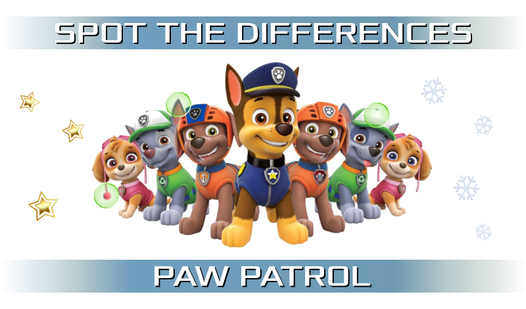
If your household runs on PAW Patrol energy, this game is practically homework your child will beg to do. Two side-by-side scenes from the beloved animated series appear on screen, and the mission is to find every change before time runs out. Chase, Marshall, Skye, and the rest of the team show up in their recognizable outfits, so kids who know the show feel immediately at home. The difficulty is calibrated for young players — differences are noticeable but not hidden in cruel ways — making it ideal for ages 4 and up. Parents appreciate that every pixel of content is kid-appropriate.
Spot the differences: PAW PATROL
Staring at the screen during a boring break and craving a quick mental refresh is a common struggle during busy days. Spot the differences: PAW PATROL...
▶ Play Free2. Spot the Cat. Hidden Cats
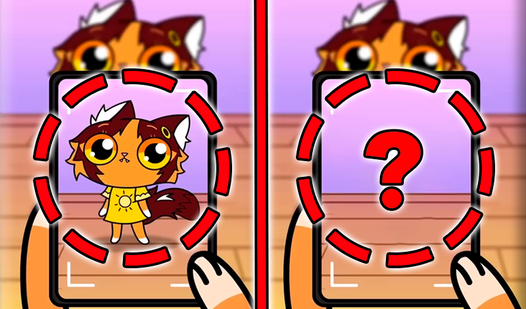
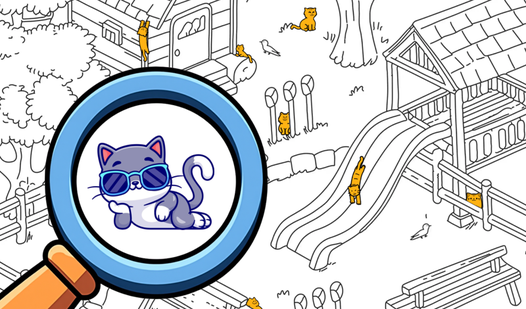
Cats have a talent for hiding in inconvenient places, and this game leans into that completely. Rather than comparing two images side by side, players scan a single richly illustrated scene to locate every hidden cat tucked away in the environment. Behind a bookshelf, inside a teapot, peeking out from a flower pot — the hiding spots are creative and consistently surprising. The art style is warm and inviting, and the "aha!" moment of spotting a particularly sneaky feline is genuinely fun for all ages. Younger kids who love animals will find this one especially charming.
Spot the Cat. Hidden Cats
Scan every inch of vibrant, hand-drawn scenes to find the cat hiding in plain sight. Spot the Cat. Hidden Cats turns your screen into a massive scaven...
▶ Play Free3. Fluffy Holidays: Spot the Differences
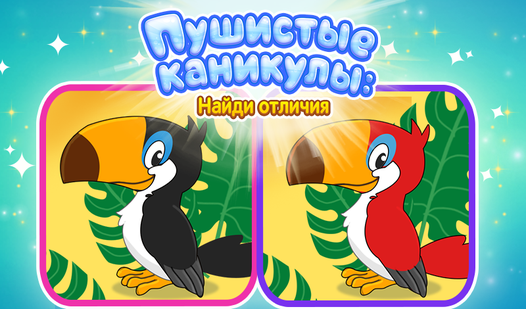
Murmyau is a round, fluffy character who accompanies players through a series of holiday-themed picture puzzles, and the overall mood is cozy from the first screen. Two festive scenes appear with several differences hidden between them, and the gentle difficulty curve makes this a great entry point for kids who are new to the genre. The sound design is warm and unhurried — no jarring buzzers, no panic-inducing countdown music — which creates exactly the right atmosphere for a relaxed puzzle session. Great for ages 5 and up, and the holiday visuals make it especially popular during winter months, though it plays well year-round.
Fluffy Holidays: Spot the Differences
Scan two nearly identical scenes to identify subtle variations before your opponents beat you to the punch. Fluffy Holidays: Spot the Differences turn...
▶ Play Free4. Worldtrip Find the Differences
This one works as a sneaky geography lesson. Each level takes place in a different country or at a famous landmark, with illustrated scenes that capture something distinctive about each location. Kids compare the two versions of the same scene, find the differences, and move on to the next destination. Over the course of the game, they pass through a surprising range of places around the world. The levels scale in difficulty, so younger players can enjoy the early stages while older kids get a real workout from the later ones. A reliable family pick.
Worldtrip Find the differences
Staring at the clock waiting for your shift to end or just need a quick mental escape from your daily routine? Worldtrip Find the differences is the p...
▶ Play Free5. Find the differences Simbochka Pimp
Thirty-three levels, a punchy art style, and music that actually makes you want to keep playing — Simbochka Pimp has more personality than most games in this category. The differences across levels vary in type and location, which keeps things fresh rather than repetitive. The soundtrack is energetic and upbeat without being annoying, which is a harder balance to strike than it sounds. Kids in the 6–10 range tend to respond especially well to this one, though the challenge level is manageable enough that younger players can tackle the earlier levels with a bit of patience.
Find the differences Simbochka Pimp
Training your brain to spot tiny visual inconsistencies is a classic way to sharpen focus while having a blast. Find the differences Simbochka Pimp ta...
▶ Play Free6. Find the Differences: Animals & New Year 2024
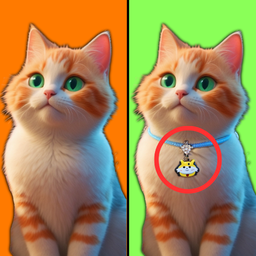
Cute animals wearing party hats, snowy scenes packed with festive details, and differences cleverly buried in all the visual noise — this game is a treat. The New Year theme means scenes are decorated with ornaments, streamers, and seasonal props, which creates excellent cover for the hidden changes. Finding a difference in a busy holiday scene feels more rewarding than finding one in a plain, sparse image. The difficulty level is well-suited to elementary school kids, and the animal characters keep younger players engaged even when a level takes a few extra minutes to complete.
Find the Differences: Animals & New Year 2024
Spotting tiny visual discrepancies is a classic brain teaser that keeps your mind sharp while providing a relaxing escape from daily routines. Find th...
▶ Play FreeHidden Object Games With Find-the-Difference Mode
These games blend the spot-the-difference mechanic with hidden object exploration, asking players to scan more carefully and think more systematically. A step up in challenge — and in satisfaction when you clear a level.
7. Purr tour Find differences
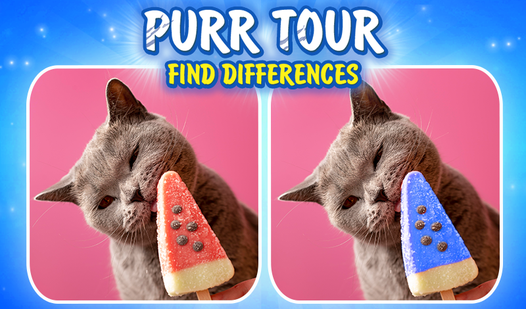
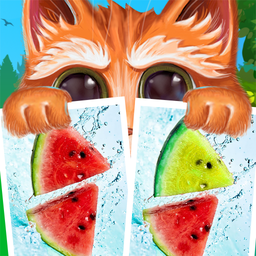
A kitten sets off on a world tour, and players help by solving picture puzzles at each destination. The illustrations are detailed and imaginative — more visually complex than the previous games — which means differences are genuinely tricky to locate. Not impossible, but the kind of challenging that makes finding each one feel like a small victory. Older kids (ages 7 and up) will appreciate the sense of progression as the kitten moves from location to location, and the variety of scenes keeps the gameplay from ever feeling monotonous. One of the stronger narrative-driven titles on this list.
Purr tour Find differences
Stuck in a boring meeting or just waiting for your coffee to brew, you need an instant mental refresh to brighten your day. Purr tour Find differences...
▶ Play Free8. FNaF find all 10 differences
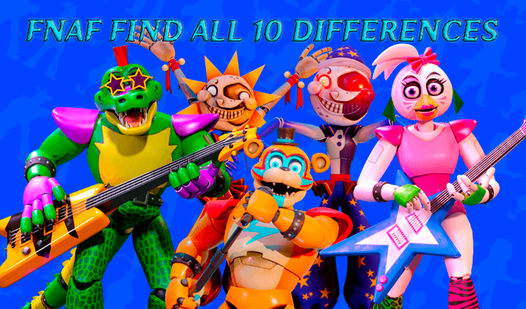
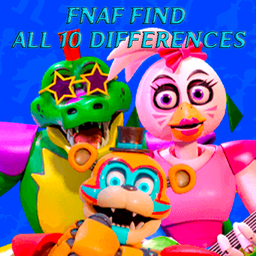
Five Nights at Freddy's has a massive following among kids and teens, and this game taps directly into that audience. Each round presents two images from the FNaF universe with exactly 10 differences between them. The atmosphere is suitably spooky — animatronic characters, dim lighting, familiar environments — but toned down enough that it doesn't cross into genuinely frightening territory. Ten differences per round sounds like a clear target, which makes the goal feel achievable even when the last few differences are genuinely well-hidden. Sessions are short, which makes it easy to play in quick bursts between other activities.
FNaF find all 10 differences
Fans of the iconic five nights at freddy horror series will love testing their sharp eyes with this challenging puzzle experience. You must carefully ...
▶ Play Free9. Find the Difference: Cartoons of the USSR
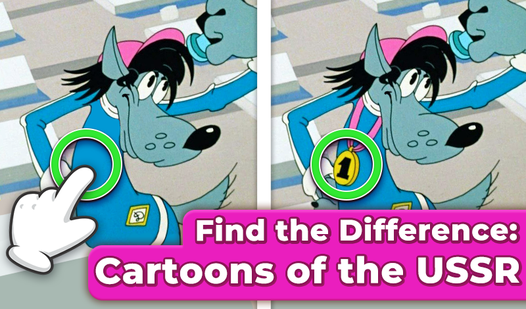
This one stands apart from everything else on the list. Built around classic Soviet animated films — think Cheburashka, Nu Pogodi, Hedgehog in the Fog — it wraps the spot-the-difference format in visuals that feel unlike anything produced by modern studios. For families where grandparents or parents grew up with these cartoons, playing together creates a natural conversation about childhood memories. For kids encountering the artwork for the first time, the distinctive illustration style is genuinely interesting. The differences are thoughtfully placed, the pacing is calm, and the whole experience has a gentle, nostalgic quality that is genuinely rare in browser gaming.

Find the Difference: Cartoons of the USSR
Spotting subtle variations between two images is the ultimate test for your brain and visual focus. Find the Difference: Cartoons of the USSR challeng...
▶ Play Free10. What's the difference?
Sometimes the best version of something is the most focused version. What's the difference? skips the elaborate themes and special mechanics and delivers the core format — two pictures, find the changes — with clean execution. No distracting animations, no over-complicated scoring, just the puzzle. For a child who has never played this type of game before, this is an excellent starting point precisely because there's nothing to figure out except the actual game. It's also a solid choice for kids who find busier titles overstimulating.

What's the difference?
Staring at the clock waiting for your shift to end or simply need a quick mental recharge during a hectic day? What's the difference? is the perfect d...
▶ Play Free11. Find The Difference - Forever
The name is not exaggerating. Over 4,000 levels means this game can genuinely occupy a child for months without repeating itself. The early levels are easy enough for young beginners, but the difficulty climbs steadily — by the time a dedicated player reaches the later stages, the challenge is real. The range of scenes is wide, which prevents the repetition that causes most games in this genre to feel stale after a few sessions. For families with a child who gets genuinely passionate about a game and wants to sink into it deeply, this is the title to bookmark.

Find The Difference - Forever
Scan two nearly identical photographs to spot the subtle errors hiding in plain sight. Find The Difference - Forever challenges your observational ski...
▶ Play Free12. Find The Difference: The Best
A newer entry that updates the classic format with sharper illustrations and a noticeably cleaner interface. The differences are creative — not just missing objects, but color changes, flipped elements, subtle texture alterations — which keeps experienced players guessing. Kids who have worked through several of the other games on this list will feel this one represents a quality step up. The title is confident, and the game mostly lives up to it.

Find The Difference: The Best
Spotting subtle variations between two images is the ultimate test of observational skills that keeps your brain sharp and focused. Find The Differenc...
▶ Play FreeHow Spot the Difference Games Help Kids Learn
Spot the difference games free online for kids are genuinely educational — not in a "we've made this medicine taste like candy" way, but in ways that researchers who study child development actually care about.
Sustained attention. Finding differences requires staying focused on a task that doesn't constantly reward you. Kids have to scan carefully, return to areas they've already checked, and resist the temptation to guess randomly. This is essentially attention training in a format children seek out voluntarily — which is pretty much the ideal situation.
Visual discrimination. The ability to tell two very similar things apart is a foundational cognitive skill. It shows up in reading (distinguishing letters like b, d, p, and q), in math (recognizing number shapes), and in everyday tasks like sorting objects or following instructions with diagrams. Spot-the-difference games build this skill directly and repeatedly.
Patience and persistence. Not every difference appears immediately. Some are genuinely difficult to find, and the only path forward is to keep looking rather than giving up. Children who play these games regularly practice staying calm under mild frustration and trying alternative approaches when their first strategy fails — skills that transfer well into academic settings.
Systematic scanning habits. Most experienced players develop a left-to-right, top-to-bottom scanning pattern when working through a puzzle. This mirrors the standard reading direction in most Western languages, making spot-the-difference games quietly supportive of early literacy habits in pre-readers.
Short-term visual memory. Many levels require players to remember what they've already found, or to hold a mental image of the first picture while examining the second. This engages visual working memory in active, practical ways.
Metacognition — knowing how you think. Older kids who play these games regularly start to develop strategies: "I always miss things in the bottom-right corner," or "color changes are easier to find than shape changes." That kind of self-aware thinking is exactly what educators try to build in classroom settings.
Confidence through clear feedback. Every spot-the-difference game has an unambiguous win state. You find all the differences and advance. That direct feedback loop — effort produces visible results — builds a healthy sense of competence that children carry forward.
For parents evaluating whether browser game time is worthwhile, this category sits solidly in the "yes" column. The sessions are short, the focus is high, and the skills being built are real.
Tips to Find All Differences Faster
Stuck on the same spot for five minutes? These strategies work for kids and adults equally well.
Check the edges and corners first. Most players instinctively focus on the center of an image. Game designers know this. Differences near the edges and in the corners are often the last ones found — which means checking there early can unlock some quick wins and reduce frustration.
Use a mental grid. Divide the image into sections — imagine a 3×3 or 4×4 grid overlaid on the picture. Work through each section methodically before moving to the next. This prevents the common trap of scanning the same interesting area repeatedly while ignoring a boring corner that holds the final difference.
Hunt color changes first. Color differences — a shirt that changed from red to blue, a sky that's a slightly different shade — tend to be easier to spot than structural changes like a missing object or an added element. Making a quick color pass before a detailed scan can pick up several differences fast.
Shift your gaze rapidly between the two images. Staring steadily at one image can cause you to stop seeing it. Try quickly alternating your focus between the two versions. The visual "jump" between them often makes a difference pop out that was invisible when you were looking steadily.
Take a short break. If you've been staring at the same level for more than a few minutes, look away for 30 seconds and then return. Fresh eyes catch things that tired, frustrated eyes miss almost completely. This works for kids and adults alike, and it's faster than continuing to stare.
Let young children point. Physical pointing helps young kids focus. Encouraging them to move their finger across the image section by section turns a mental scanning process into a physical one, which is much easier for small children to sustain. It also shows them what systematic scanning looks like in practice.
Talk through what you're seeing. For kids playing alongside a parent, narrating — "I've checked the left side, I've checked the sky, the tree looks different on this side..." — helps organize the search and often triggers noticing something in the process of describing it.
After finishing all 12 games on this list, there's one more title worth adding to your rotation:

Mary's Mystery: Hidden Object
Staring at the clock waiting for your shift to end or just need a quick mental escape from the daily grind? Mary's Mystery: Hidden Object turns your b...
▶ Play FreeMary's Mystery: Hidden Object wraps hidden-object gameplay in a light narrative — there's a mystery to solve, and finding objects moves the story forward. It's a natural next step for kids who've mastered spot-the-difference games and want something with a bit more structure around the puzzle-solving. The combination of visual search skills and story progression makes sessions feel more like playing a game than completing an exercise.