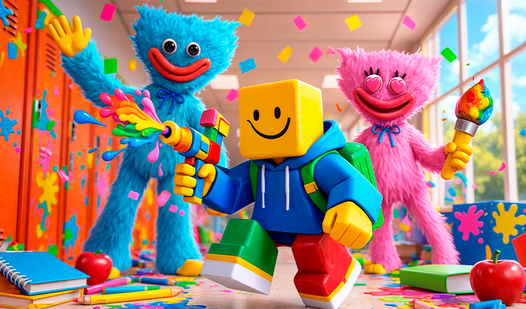
Pre School Games Free Online — Best Picks for Toddlers
Finding the right pre school games free online is harder than it sounds. The internet is full of options, but most aren't actually designed with toddlers and young children in mind. What works for a seven-year-old often overwhelms a three-year-old. What's marketed as "educational" is often just flashcard-style drilling with a cartoon mascot slapped on top.
This guide cuts through all of that. Below you'll find school-themed browser games that genuinely engage young children — games with simple mechanics, colorful visuals, and the kind of rewarding feedback loops that keep toddlers curious rather than frustrated. Every game here runs free in your browser. No downloads, no accounts, no subscriptions.
We've also included a section for parents on screen time and safe online play, because context matters as much as content.
Why Preschool Games Matter for Early Learning
Children between the ages of 2 and 5 are in an extraordinary developmental window. Their brains are absorbing language, patterns, cause-and-effect relationships, spatial reasoning, and social cues all at once — and they're doing it primarily through play. That's not a coincidence. Play is how young brains are designed to learn.
The challenge is that modern children are spending more time in front of screens, and not all screen time is created equal. Passive viewing — watching videos or sitting through auto-playing content — delivers very little developmental benefit. Active play, on the other hand, where a child is making decisions, reacting to feedback, and trying things out, is far more aligned with how early learning actually works.
That's where well-designed browser games come in. The best ones for this age group aren't trying to be digital worksheets. They're trying to be fun first — and the learning happens as a byproduct of genuine engagement. A child who's laughing, surprised, or strategizing is also a child whose brain is building new connections.
School-themed games carry an additional advantage: familiarity. Even a three-year-old who hasn't started school yet has absorbed the visual language of classrooms from books, shows, and conversations. Desks, chalkboards, backpacks, teachers — these are recognizable anchors. That familiarity lowers cognitive load and lets children jump into gameplay faster, which means they spend more time actually playing and less time being confused about the setting.
Brainrot School Quest is one of the strongest examples of this done right. It's a point-and-click adventure game built around absurd, funny school tasks — the kind of silly logic puzzles that feel like a game rather than a test. Young children who are still firmly in the "why?" phase of development will click around with genuine curiosity, experimenting to figure out what each element does. That exploratory behavior is early problem-solving in its purest form, and it's exactly what you want happening during screen time.
The takeaway here isn't that all games are good — it's that the right games, used thoughtfully, can be a meaningful part of a preschooler's play diet. The rest of this guide is about finding exactly those games.
Best Counting and Math Games — Pre School Games Free Online
Math anxiety is a real phenomenon, and research consistently shows it can take root earlier than most parents expect. By the time children hit kindergarten, some have already decided whether they're "a math person" or not — often based on very limited exposure. Free pre school games free online offer one of the most effective antidotes: they make numbers, counting, and basic logic feel fun before those concepts ever become "school subjects."
The trick is that the best math games for this age group don't look like math games. They disguise the numerical thinking inside a satisfying action loop. Instead of asking a child to count a row of apples, they create a situation where counting happens naturally — as a side effect of doing something engaging.
Consider cause-and-effect games. When a toddler presses a button and something surprising happens, they immediately want to understand the rule: if I do this, that happens. Then: what if I do it again? What if I do it faster? That iterative loop — hypothesis, action, result, new hypothesis — is the foundation of mathematical thinking. It's just wrapped in fun.
Don't Press It does this almost perfectly. The concept is deceptively simple: there's a big button, and you're told not to press it. Every child will press it anyway, which is the whole point. What happens next? What changes? Will the same thing happen again if I press it again? The game works because it converts the natural toddler impulse toward mischief into a genuine inquiry process. The feedback is immediate, visual, and satisfying — exactly what young learners need.

Don't press it
You stand alone in a mysterious high-tech facility with one simple rule staring you in the face. Ignoring the warnings is the only way to see what hap...
▶ Play FreeFor slightly older preschoolers ready for something with more repetition and rhythm, Clicker Schoolboy Runaway is an excellent pick. Clicker games work so well for young children because the core mechanic is immediately intuitive: click, something happens, click again. There's no instruction manual, no reading required, no complex setup. The school setting and cheerful art style keep the visuals inviting, while the simple loop naturally encourages pattern recognition and rhythm — both early mathematical skills — in a completely stress-free environment.
One thing parents can do to amplify the math value of any of these games: narrate what you see. "You pressed it three times — what do you think happens when you press it a fourth time?" That verbal layer, even in a brief conversation, connects the visual experience to language and number awareness. You're not turning the game into a lesson — you're just adding a layer of meaning that your child can absorb and build on.
The broader goal of these kinds of pre school games online free is simple: make numbers feel like toys, not tasks. If a child arrives at kindergarten already comfortable with the idea that counting and logic are fun rather than scary, they're starting with a significant advantage.
Shape, Color, and Puzzle Games for Toddlers
Shape recognition and color identification are two of the core targets of early childhood education — and for good reason. These skills aren't just about naming shapes and colors. They're about learning to categorize the world, to notice patterns, and to apply those patterns to new situations. Children who are solid on shapes and colors early tend to pick up reading, number recognition, and fine motor skills more readily.
Browser-based puzzle and shape games offer something physical puzzles can't match: they're always complete. No missing pieces, no chewed corners, no frustrated child holding a piece that doesn't fit anywhere. Everything resets instantly, so if a child gets stuck or makes a mess of the puzzle, one click starts it fresh.
Paper School FPE is a collaborative puzzle game where the goal is to unite students and teachers — which might sound simple, but the gameplay requires spatial awareness and planning to execute. Young children are drawn to the social dynamic (helping characters reach each other has emotional resonance), while the actual mechanics quietly exercise early spatial reasoning. This is a great game to play together with your toddler on a tablet, taking turns and talking through what might happen next. That kind of co-play adds enormous value to what the game already delivers on its own.

Paper school FPE
Staring at a blank screen during your lunch break is a recipe for boredom when you just need a quick mental reset. Paper school FPE is the perfect dig...
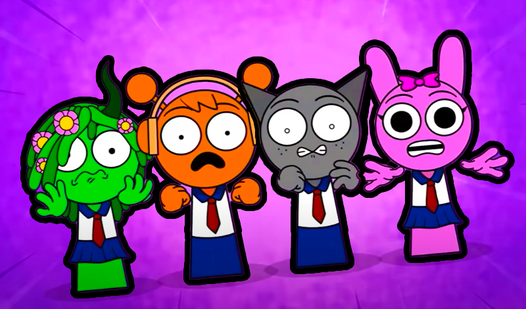
▶ Play FreeSprunki: School Merge Evolution introduces the merge mechanic — two of something combine into something new. This concept is a natural precursor to addition, and children tend to grasp it intuitively long before they're ready for formal arithmetic. More than that, watching things evolve and transform in sequence teaches basic ordering and progression: this comes first, that comes next. The school setting gives the evolving characters a familiar context, and the colorful, clean visuals make the transformations genuinely exciting to watch unfold.
Sprunki: School Merge Evolution
Casual gamers who enjoy satisfying progression loops will find their new obsession in Sprunki: School Merge Evolution. This quirky simulation challeng...
▶ Play FreeIf you're specifically targeting color exposure, pairing any of these games with a running color commentary can make a real difference. "Look at those two — they're both yellow. What happened when they merged? Did the color change?" You're not quizzing your child — you're modeling curiosity, and that's exactly the tone that makes learning stick.
Shape and puzzle games are also excellent for developing patience, a skill that doesn't always get enough credit in early childhood development. Learning to try something, see that it doesn't work, and try something else — without melting down — is a skill that serves children for life. Low-stakes digital puzzles are one of the gentler ways to practice it.
Creative and Drawing Games for Young Kids
Creativity at the preschool stage isn't about producing finished artwork. It's about making choices and seeing that those choices have visible results. That feedback loop — I did this, and now the world looks different — builds confidence, agency, and the foundation for all later creative expression.
Schoolboy Escape! Hide & Seek in School transforms a timeless childhood game into a browser experience. Beyond the fun of hiding and seeking, this kind of spatial exploration game builds awareness of space, position, and strategy — skills that map directly onto early geometry and reading (tracking where things are in relation to each other).

Schoolboy Escape! Hide & Seek in School
Fans of adrenaline-pumping stealth challenges will find themselves addicted to the tense corridors of Schoolboy Escape! Hide & Seek in School immediat...
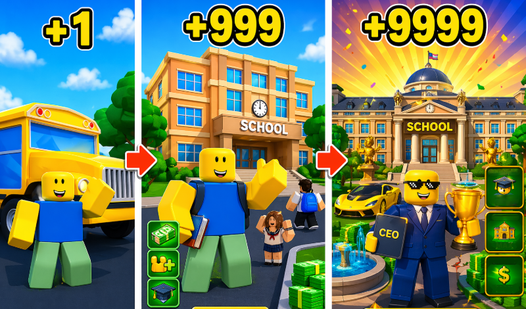
▶ Play FreeNubik Obbik: School Tycoon brings simple management and building mechanics to a school context. Even very young players respond to the satisfaction of building something up — placing rooms, watching a school come together. The same instinct that makes block-building compelling makes tycoon games engaging. It's structured creativity.
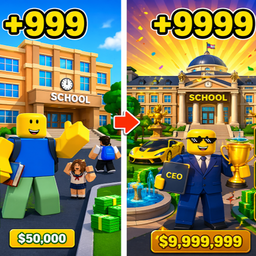
Nubik Obbik: School Tycoon.
Fans of creative management simulators and roblox style adventures will find their new obsession here. Nubik Obbik: School Tycoon challenges you to tr...
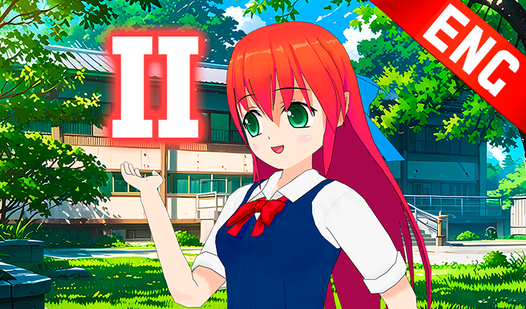
▶ Play FreeFor children approaching the preschool-to-kindergarten transition, School Love Story #2 offers story-based engagement. Narrative games build early literacy instincts — following a sequence of events, understanding that characters have feelings, making choices that affect what happens next. Even without reading, the visual storytelling carries the emotional logic clearly.
School Love Story # 2
Fans of interactive narratives and romantic drama will find themselves completely swept away by the sun-drenched atmosphere of School Love Story # 2. ...
▶ Play FreePoppy Playtime at School adds a bit of adventure and mild suspense — better suited to older preschoolers who enjoy a bit of excitement alongside their games. The school setting keeps things grounded while the gameplay rewards curiosity and exploration.
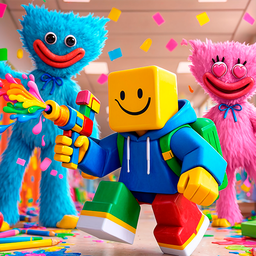
Poppy Playtime at School
Surviving a school day has never felt this intense, especially when your teachers are monsters and the hallways are filled with traps. Poppy Playtime ...
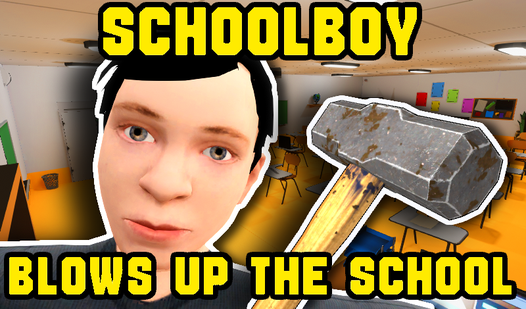
▶ Play FreeSchoolboy Blows Up The School is cartoon chaos in the tradition of classic animated mischief — think Tom and Jerry rather than anything alarming. Young children who enjoy slapstick humor will find the over-the-top results genuinely funny, and laughter during play is always a good sign.
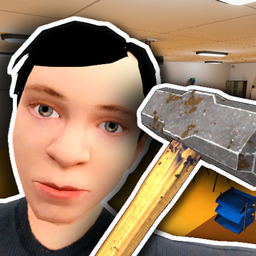
Schoolboy Blows Up The School
Chaos seekers and stress relief fans will find their new favorite hobby right here. Schoolboy Blows Up The School lets you unleash your inner rebel by...
▶ Play FreeSchoolboy Rocking Chair: The Way of the Quad delivers a quirky movement-and-timing experience. The unconventional character navigation keeps kids engaged and develops basic rhythm and timing awareness without any formal instruction.

Schoolboy Rocking Chair: The Way of the Quad
Crushing reps in the gym transforms a regular schoolboy into an unstoppable quad biker ready to dominate the track. Every session in the gym pumps up ...
▶ Play FreeYour Messenger: Chats at the Moon School takes the school concept somewhere imaginative — a school on the moon, experienced through a messenger chat format. For preschoolers who are starting to recognize letters or follow simple text, the format feels novel and exciting. For younger ones, the visual storytelling and space-school setting spark imagination on their own.
Safety Tips for Parents — Screen Time and Browser Games
Browser games for preschoolers are genuinely useful, but they work best when parents approach them with some simple structure. None of this needs to be complicated.
Set a timer before the session starts. Transitions away from screens are hard for young children — it's neurologically difficult, not a behavioral choice. A timer removes the conflict from the equation. It's not you ending the fun; it's the timer. Most pediatric guidelines suggest 15–20 minute sessions for children under 3, and 30–45 minutes for ages 3–5 depending on the content. Short and focused beats long and mindless every time.
Play alongside your child when you can. Even five minutes of sitting next to your toddler and narrating what you see dramatically increases the developmental return of any game. "Oh, the schoolboy is hiding behind the bookshelf — do you think the teacher will find him?" You're adding language, humor, and connection to the experience. That parental layer is one of the most powerful learning amplifiers that exists.
Stick to trusted platforms. Sites like FreeJoy.games are ad-light and designed for broad audiences. If your child ends up on an unfamiliar site with intrusive pop-ups or auto-playing ads, redirect them immediately. Pre school games free online are perfectly safe on reputable platforms — the key word is "reputable."
Use games as one part of a varied play day. Outdoor play, hands-on activities, reading, and imaginative play all offer things screens simply cannot replicate — physical sensation, fresh air, real-world social interaction. Browser games are best as a complement to those things, not a replacement. When they sit alongside a rich, varied day, their value is high and their downsides minimal.
Watch for the difference between engaged play and passive clicking. An engaged child is laughing, reacting, asking questions, trying new things. A passive child is staring blankly and clicking without really seeing. If you notice the latter, the game may not be the right fit for that moment. Switch games, or take a break altogether. The goal is active curiosity, not quiet compliance.
The best outcomes come when screen time is intentional rather than default — when a child sits down to play a specific game and then moves on to something else. That pattern, practiced from early childhood, builds a healthy relationship with technology that serves kids well as they grow up.