Best Number Games Online Free for Kids
Math doesn't have to feel like homework. The right number games online free for kids turn counting, addition, and number recognition into something children actually want to do — no downloads, no subscriptions, just open the browser and play.
Whether your child is just learning to count to ten or already tackling multiplication tables, there's a free online number game that fits exactly where they are. In this guide, we've rounded up the best picks from the FreeJoy catalog, broken them down by age group, and added practical tips to help parents make the most of game time.
Why Number Games Help Kids Learn Math
Education research consistently shows that children learn best when they're having fun. Number games tap into this by wrapping math concepts inside play — kids are focused on winning or completing a challenge, and the math just happens along the way.
Here's what makes browser-based number games particularly effective for young learners:
Immediate feedback. Unlike worksheets, games respond the moment a child acts. Get the answer right and something exciting happens on screen. Make a mistake and the game lets you try again — quietly, without judgment. This tight feedback loop accelerates learning in a way that passive studying rarely achieves.
Repetition without boredom. Mastering math facts requires repetition, but drills get old fast. A number puzzle or guessing game creates the same repetition in a context that keeps kids engaged round after round. Children can play 2048 for half an hour and perform hundreds of addition operations without ever feeling like they're doing math practice.
Visual and spatial learning. Many number games use colors, shapes, and spatial reasoning alongside numbers. This multi-sensory approach reaches different types of learners and helps children build mental models for numerical concepts. Color-by-number games are a perfect example — they connect numerals to a visual outcome in a way that's immediately satisfying.
Building genuine confidence. Early wins matter more than most parents realize. When a child successfully completes a number puzzle or cracks a guessing game, they associate numbers with achievement rather than frustration. That positive mindset carries directly into the classroom and influences how they approach math challenges for years.
No pressure, no grades. Online games create a low-stakes environment where kids can experiment freely. They'll take risks, try different strategies, and develop problem-solving instincts without worrying about being wrong in front of a teacher or classmates. Failure in a game is just another turn — a completely different emotional experience from getting a red mark on a test.
Bridging abstract and concrete. Young children struggle with abstract numbers precisely because numbers on their own don't mean anything yet. Games give numbers context: this number controls what color goes here, that number tells me how many spaces to move, this number is bigger than that one so it wins. Context is what transforms abstract symbols into real understanding.
The best part? Every game in this list is completely free and runs in any browser. No app store approval required, no installation, no account setup — just click and start playing.
Top 10 Number Games Online Free for Kids
These ten picks are all free, all browser-based, and all genuinely entertaining. The first five get a full spotlight on what makes each one worth your child's time. The rest follow with sharp summaries to help you find the right match quickly.
1. Lilo & Stitch: Coloring Book for Kids
Coloring and numbers might seem like separate skills, but color-by-number games bring them together in a surprisingly elegant way. In Lilo & Stitch: Coloring Book for Kids, children pick colors based on number-coded sections — which means they need to read numbers, match them to a color key, and pay careful attention to which zone they're filling in.
The adorable Lilo & Stitch characters keep even reluctant learners glued to the screen. There's also a genuine creative reward at the end: a fully colored scene featuring characters they love. For younger kids who are still building number recognition, this is one of the gentlest and most motivating entry points available. It's calm, creative, and gives a real sense of accomplishment when the picture comes to life.

Lilo & Stitch: Coloring Book for Kids
Unleash your inner artist with Lilo & Stitch: Coloring Book for Kids, a delightful browser game where you bring your favorite Disney characters to lif...
▶ Play Free2. Amazing Pictures. Color by Numbers
If your child likes coloring but needs more variety to stay engaged, Amazing Pictures. Color by Numbers delivers an impressive library of scenes to complete. Each image is divided into numbered zones, and kids fill them in by matching each number to the right color on the palette.
The game is wonderfully relaxing — great for winding down after school — but it's quietly doing a lot of educational work. Kids practice number recognition, sequential thinking, attention to detail, and fine motor coordination all at once. The satisfaction of watching a complex, detailed image appear piece by piece is genuinely hard to match. Many kids will sit through multiple pictures in a single session without any prompting.
3. Pictures by Numbers: Superheroes
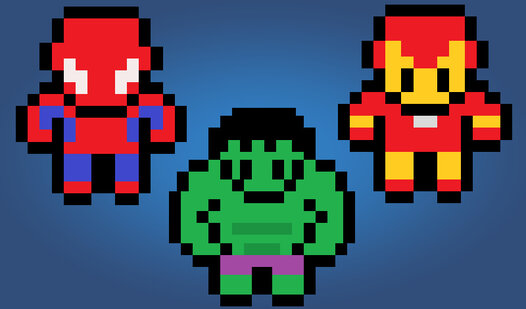
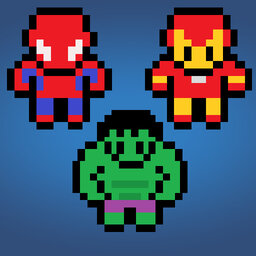
Superheroes make everything more exciting, and Pictures by Numbers: Superheroes uses that energy to keep kids motivated through every numbered zone. The mechanics are similar to other color-by-number games, but the subject matter — recognizable superhero characters — gives it a powerful extra pull for kids who already love comics or superhero movies.
Beyond number recognition, this game builds patience and sustained focus. Completing a detailed superhero portrait takes real time and careful attention. Kids who rush through the numbered sections end up with a muddled image — which quickly teaches them that accuracy matters. Both skills transfer directly to math class, where reading numbers carefully and working methodically make all the difference.
Pictures by Numbers: Superheroes
Fill every pixel with vibrant colors to bring iconic comic book legends to life in Pictures by Numbers: Superheroes. Matching pigments to the correct ...
▶ Play Free4. Bulls and Cows: Guess the Number
Bulls and Cows is one of the oldest number puzzles in the world, and it holds up brilliantly as an online game. The goal is to guess a hidden number based on clues: "bulls" are digits in the correct position, "cows" are correct digits placed in the wrong spot.
This game is pure logical thinking in action. Kids have to use deduction, eliminate possibilities, form hypotheses, and revise their thinking based on feedback — all while working with numbers. It's genuinely challenging for older kids and a fantastic introduction to logical reasoning and systematic problem-solving. Many children find themselves playing round after round, trying to beat their previous score or crack the code in fewer guesses. Parents who sit down to play often find it just as absorbing as their kids do.
5. 2048 Numerical Puzzle: The Square of Numbers
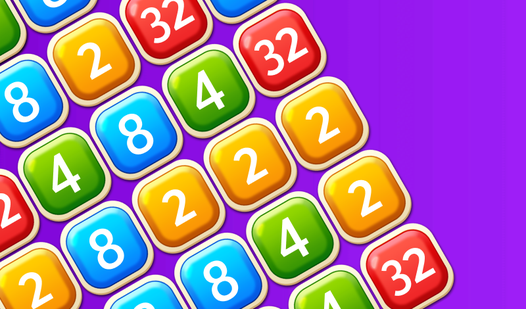
2048 has earned classic status for good reason. Players slide numbered tiles around a grid, combining matching numbers to create higher values — 2+2 makes 4, 4+4 makes 8, and so on until you reach the target 2048 tile (or try to!).
It sounds simple, but the strategy runs surprisingly deep. Kids practice addition constantly while also thinking spatially about where to place tiles to set up future moves. The game builds arithmetic fluency in a way that feels completely natural — most children don't even notice they're doing math until they've been playing for twenty minutes. The escalating challenge keeps older kids hooked long after younger ones would have moved on.
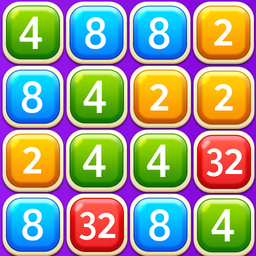
2048 Numerical Puzzle: The Square of Numbers
Staring at a blank screen during a lunch break often feels like a missed opportunity for some serious mental stimulation. 2048 Numerical Puzzle: The S...
▶ Play FreeThese next five round out the list with strong options for different learning styles and ages:
6. Learning Numbers 0 to 10
Built specifically for preschoolers and early elementary kids, this game targets the foundations: recognizing, writing, and counting numbers from zero to ten. It's structured, visually clear, and moves at a pace that doesn't overwhelm beginners. A great starting point for any child who's still building their relationship with numbers.
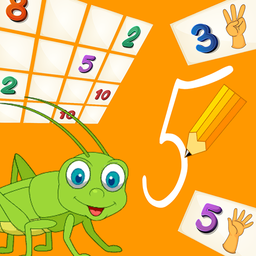
Learning Numbers 0 to 10
Staring at the screen during a dull afternoon break often leaves you craving something productive yet fun. Learning Numbers 0 to 10 arrives as the per...
▶ Play Free7. Math Crossword: Number Puzzle
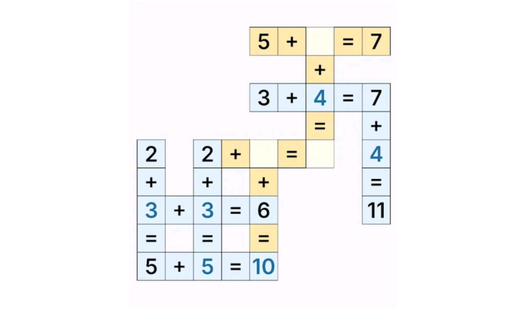
A crossword — but with numbers and arithmetic. Kids solve math clues to fill in the grid, combining the satisfying logic of crossword puzzles with basic math operations. It's a strong pick for children who've moved past counting and are ready to practice addition and subtraction in a fresh context that doesn't feel like schoolwork.
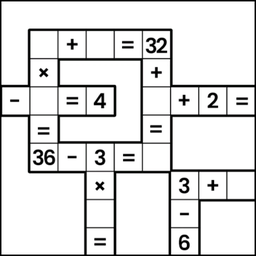
Math Crossword. Number Puzzle
Crosswords are usually about finding hidden words, but this unique brain teaser flips the script by turning arithmetic into your primary vocabulary. M...
▶ Play Free8. Among Us Coloring For Kids
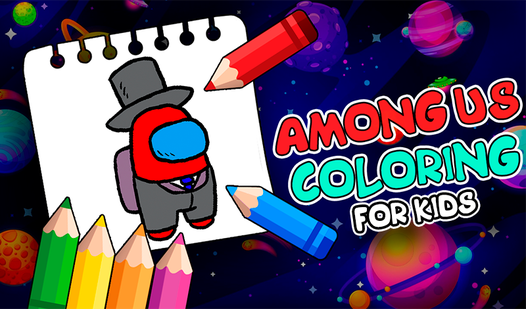
Using the wildly popular Among Us characters, this coloring game gives kids a creative outlet while incorporating number-based activities. The familiar crewmate faces make it an instant hit with kids who already love the franchise, and the coloring mechanics add a gentle structure that builds focus and fine motor skills.
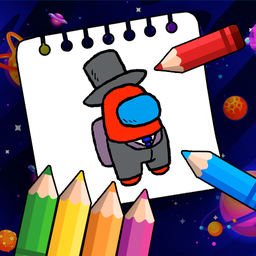
Among Us Coloring For Kids
Young fans of the impostor craze will adore spending time with Among Us Coloring For Kids. This creative digital art studio brings your favorite space...
▶ Play Free9. Draw the Numbers with Russian Voice
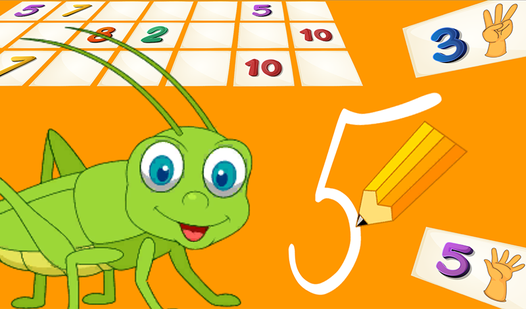
This creative game lets kids trace and draw numbers with audio guidance — a great tool for auditory learners and children who are working on handwriting alongside number recognition. The audio component adds a dimension that purely visual games miss, helping reinforce the connection between the sound of a number and its written form.
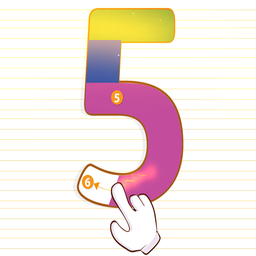
Draw the numbers with Russian voice
Kids who are eager to master counting will find Draw the numbers with Russian voice to be an incredibly engaging educational tool. This interactive ex...
▶ Play Free10. Puzzles Kids — Animals
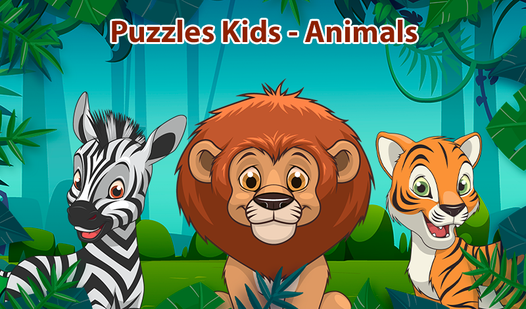
Animal-themed puzzles bring spatial thinking and number concepts together in a gentle, engaging format. Kids work through jigsaw-style challenges that reward patience and careful observation — skills that translate directly to mathematical thinking and the ability to approach complex problems step by step.

Puzzles Kids - Animals
Drag and drop colorful shapes to assemble adorable creatures in Puzzles Kids - Animals. This browser-based experience makes learning animal names a br...
▶ Play FreeNumber Games by Age Group
The best number games online free for kids aren't one-size-fits-all. Here's how to match the game to your child's developmental stage:
Ages 3–5: Building the Foundation
At this stage, kids are learning that numbers exist and what they represent. The core goals are recognition (knowing what "4" looks like), counting (saying numbers in sequence), and one-to-one correspondence (understanding that "3" means exactly three objects, no more, no less).
Games should be visually simple, forgiving of mistakes, and satisfying to complete quickly so young attention spans stay engaged.
Best picks for this age:
- Learning Numbers 0 to 10 — designed precisely for this developmental window, with clear visuals and simple, rewarding interactions
- Draw the Numbers with Russian Voice — excellent for children learning to write numbers for the first time, with audio reinforcement
- Lilo & Stitch: Coloring Book for Kids — simple numbered sections with beloved characters; completing one picture feels like a genuine achievement
Keep sessions short at this age — 10 to 15 minutes is plenty. The goal is building positive associations with numbers, not drilling facts.
Ages 6–8: Growing Confidence
Early elementary kids are working on addition, subtraction, and place value. They can handle more complex challenges and benefit from games that require reading larger numbers and following multi-step instructions.
Best picks for this age:
- Amazing Pictures. Color by Numbers — more complex images require careful number reading and sustained attention
- Pictures by Numbers: Superheroes — builds patience and focus alongside number recognition skills
- Math Crossword: Number Puzzle — introduces arithmetic operations in a new, engaging puzzle format
- Puzzles Kids — Animals — spatial reasoning work that complements and reinforces mathematical thinking
- Among Us Coloring For Kids — familiar characters make it easy to stay motivated through the number-matching process
Kids this age often respond well to self-imposed goals. Try timing how quickly they can complete a coloring page, or challenge them to beat their previous score.
Ages 9–12: Sharpening Skills
Older kids are ready for games with real strategic depth. They can handle multi-step thinking, larger numbers, and challenges that don't resolve in a few minutes.
Best picks for this age:
- 2048 Numerical Puzzle — deep spatial strategy with constant arithmetic practice; the escalating difficulty keeps older kids genuinely challenged
- Bulls and Cows: Guess the Number — logical deduction using number clues; teaches systematic thinking and process of elimination
- Math Crossword: Number Puzzle — can be approached at higher difficulty levels with more complex arithmetic operations
At this age, a little friendly competition helps. Challenge them to beat a high score, play Bulls and Cows side-by-side and see who cracks the code in fewer guesses, or race each other to a target tile in 2048.
Tips for Parents — Making Math Fun
Finding the right number games online free for kids is only half the work. Here's how to make the most of game sessions:
Play together sometimes. Sitting with your child — even for just five or ten minutes — transforms the experience. Ask them to explain their strategy in Bulls and Cows or why they made a particular move in 2048. Talking through their thinking out loud reinforces the math concepts and shows them that you find it interesting too.
Let them struggle a little. Resist the urge to jump in the moment your child gets stuck. A few minutes of genuine problem-solving — even without a solution — builds persistence and mathematical thinking. Offer encouragement freely, but let them do the actual figuring out.
Connect the game to real life. After a session of color-by-number games, point out numbered labels at the grocery store or on a house door. After playing 2048, talk about doubling: "If we have 4 of something and we double it, how many do we have?" The game becomes a springboard for conversations that happen naturally rather than feeling like extra school.
Set a timer, not a rule. Instead of "you can only play for 20 minutes," try "let's set a timer for 20 minutes and see how far you get." The framing is more positive and gives kids a sense of agency. When the timer goes off, they're more likely to pause willingly because they chose to accept the constraint.
Rotate games regularly. Variety keeps motivation high. If your child plays the same game every single day, it starts to feel like a routine obligation. Cycle through the list and introduce a new game when interest dips — novelty is a powerful motivator for young learners.
Celebrate the thinking, not just the result. When your child figures out the logic behind Bulls and Cows or finally pushes past a stuck point in a puzzle, praise the thinking process that got them there. "I love how you worked through that" is more useful than "good job" — it teaches kids that effort and strategy are what matter, not just getting the right answer.
Watch for the right challenge level. A game that's too easy gets boring fast. A game that's too hard leads to frustration. The sweet spot is a game where your child succeeds most of the time but still has to think. If they're breezing through without any effort, it's time to move to something more challenging.
Keep the mood light. If a session turns into a struggle or your child starts getting upset, step away and do something else. The goal is a positive relationship with numbers, and no single game session is worth damaging that. Come back another day — the games will still be there.