Sorting Games Online Free for Kids — Fun Learning Activities
Kids are natural sorters. Watch any toddler with a pile of blocks and they'll start grouping by color or size without anyone asking. Sorting games online free for kids tap directly into this instinct, turning what could be a dry classroom exercise into something genuinely fun to play. Whether your child is just learning to tell red from blue or already tackling patterns and multi-step categories, there's a browser game out there that fits exactly where they are right now — no downloads, no sign-ups, and nothing to install.
This guide covers the best free options available today, organized by age and skill level, with a look at the cognitive benefits that make these games worth bookmarking.
What Are Sorting Games and Why Kids Love Them
At their core, sorting games ask one simple question: where does this go? A red nut finds its matching red bolt. A pizza slice lands on the right shelf. An emoji slides into the correct row. The mechanics are easy to grasp, which is exactly why kids aged 2–8 return to them over and over again.
The appeal goes deeper than simplicity, though. Sorting games create that satisfying "click" moment — the psychological reward of putting something in exactly the right place. For young children, this isn't just fun; it's deeply motivating. They want to keep playing because every correct placement feels like a small personal win. That sense of competence, earned through actual decision-making, keeps them engaged far longer than passive entertainment would.
There's also the visual element to consider. The best sorting games online free for kids use bright colors, charming characters, and playful animations to hold attention without the experience feeling like homework. Animated food items dance across the screen. Magical objects shoot through glowing portals. Nuts spin into matching bolts with a satisfying click. The visual feedback is immediate, clear, and genuinely joyful.
Since most of these games run directly in the browser, parents don't need to worry about installing anything, managing permissions, or spending money. One link, one click, and your child is playing.
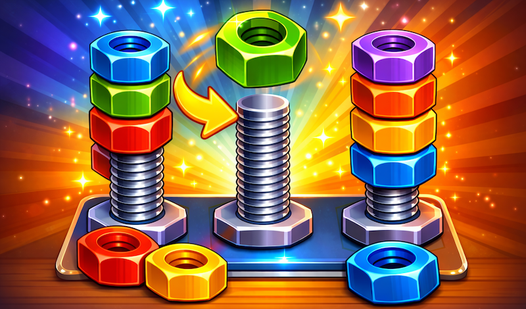
Nuts and Bolts: Color Sorting is a perfect example of this formula done right. Kids match colorful nuts to their corresponding bolts, reinforcing color recognition while building simple problem-solving habits. The visual feedback is immediate and satisfying — twist the right piece into place and it locks with a click, then the next challenge appears.
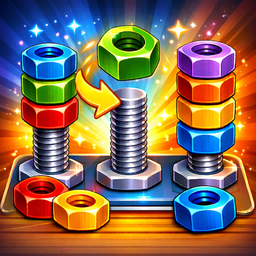
Nuts and bolts: color sorting
Staring at a blank screen during a midday slump is the worst, but finding a quick way to reset your focus is a total game changer. Nuts and bolts: col...
▶ Play FreeThe loop here — observe, decide, act, see result — is the foundation of early cognitive development. Games like this aren't just killing time. They're training the brain.
Best Sorting Games Online Free for Kids Under 5
Preschoolers need games that are forgiving, colorful, and quick to understand. Attention spans at this age are short, so the best options provide instant feedback and reset gracefully when a child makes a mistake, without making them feel bad about it. Complexity should come in slow, gentle waves — never all at once.
Sorting Nuts by Color is built precisely for this age group. The concept couldn't be more straightforward: different colored nuts need to go into the matching bins. There are no timers, no penalties for wrong answers, and no complicated rules to memorize. Just a gentle, repeating loop of color matching that builds visual discrimination skills without any frustration creeping in.

Sorting Nuts by Color
Arrange colorful hardware onto matching bolts to clear your board in this addictive logic challenge. You must carefully drag and drop each piece to en...
▶ Play FreeColor recognition is often the first sorting skill children develop, and it lays the groundwork for every more complex categorization that comes after. When a child confidently separates yellow nuts from red ones, they're practicing the same logical move that will later help them sort numbers from letters, verbs from nouns, or plants from animals. The subject changes, but the cognitive operation stays the same.
For something with a bit more narrative context, Alive Food: Shelf Sorting brings supermarket vibes to the living room. Animated food items need to be placed on the correct shelves — fruits here, dairy products there, packaged snacks somewhere else. The premise is instantly relatable for any child who has accompanied a parent to the grocery store, which makes the sorting logic feel natural rather than arbitrary. Children aren't just following rules; they're doing something that mirrors real life.
These games work especially well in a parent-child context. A grown-up can sit alongside a young child, naming the items out loud ("that's a banana — where do fruits go?") while the child handles the dragging and dropping. It becomes a conversation as much as a game. That kind of guided play amplifies the learning benefit significantly, turning screen time into quality shared time.
For preschoolers, the goal isn't speed or competition — it's pattern recognition and the quiet satisfaction of getting things right. Good early sorting games celebrate every correct answer with a small animation or cheerful sound effect, reinforcing positive behavior without turning the whole experience into a high-stakes performance.
Here are a few more excellent picks for the youngest players:
Lilo & Stitch: Coloring Book for Kids introduces color awareness in a creative, low-pressure format. Familiar characters from a beloved film keep engagement high, and the act of choosing and applying colors builds early decision-making alongside fine motor control.

Lilo & Stitch: Coloring Book for Kids
Unleash your inner artist with Lilo & Stitch: Coloring Book for Kids, a delightful browser game where you bring your favorite Disney characters to lif...
▶ Play FreeAnimals for Kids and Their Sounds pairs sorting and matching concepts with animal recognition and audio cues. Kids match animals to the sounds they make, which adds a sensory layer on top of visual categorization — great for children who respond well to sound-based learning.

Animals for kids and their sounds
Learning about the natural world is a fundamental milestone for every curious toddler. Animals for kids and their sounds brings the vast wilderness to...
▶ Play FreeJigsaw Puzzles for Kids: Trains introduces shape-based sorting and spatial reasoning through a puzzle format. Finding where each piece fits is a form of sorting — every wrong attempt gives information that helps narrow down the right answer.
The common thread across all of these is a low floor and a high ceiling — easy to start, but with room to develop more careful thinking over multiple sessions.
Sorting Games Online Free for Kids Ages 5 and Up
Once children hit 5 or 6, they're ready for sorting challenges that require more deliberate thinking. Multi-step sorting, category chains, overlapping rules, and time-based mechanics all become fair game. The games that work best for this age group feel like puzzles as much as sorting exercises — they reward planning, not just fast reactions.
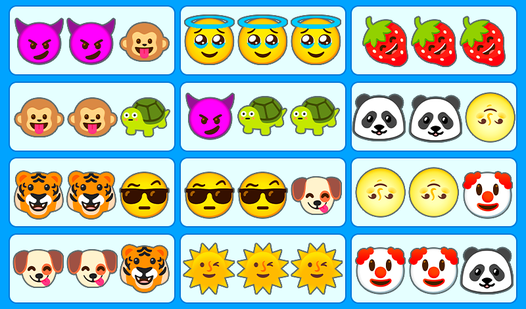
Put in Place: Emoji Sorting is a great example of this shift. Instead of simple drag-and-drop into obvious categories, kids need to arrange emojis so that three identical ones connect in a row — somewhere between sorting and match-3 puzzle logic. It requires quick visual recognition combined with forward planning: "if I put this one here, where will the next one go?" That kind of thinking is a significant step up from matching by color alone.
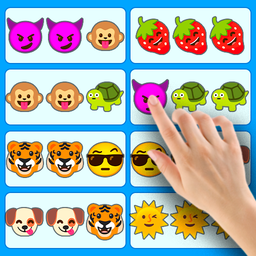
Put in place: Emoji Sorting
Fans of brain-teasing challenges will find their new obsession in Put in place: Emoji Sorting. This addictive puzzle experience tasks you with organiz...
▶ Play FreeThe emoji theme keeps things visually engaging and culturally familiar for today's kids. But the gameplay demands a level of strategic thinking that goes well beyond simple categorization. Children have to hold a plan in mind across multiple moves — working memory, spatial reasoning, and pattern recognition all firing at once.
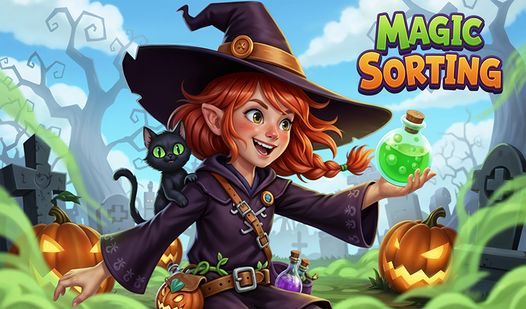
For something more atmospheric and imaginative, Magic Sorting takes kids into a fantasy world where magical objects need to be sorted through glowing portals. Wands, potions, crystals, and enchanted items fly across the screen, each needing to find the right destination. The theming is genuinely fun, and the sorting mechanics grow more complex as levels advance — multiple portals with overlapping rules, faster pacing, and objects that require a second look before categorization.
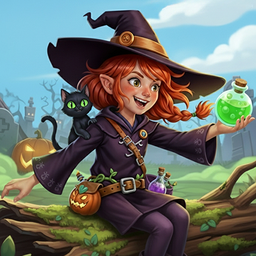
Magic Sorting
Sorting mystical clutter feels surprisingly satisfying when you realize everything in the wizarding world has its perfect place. Magic Sorting transfo...
▶ Play FreeThis kind of fantasy framing matters more than it might seem. When the context is compelling — a magical workshop, an alien spacecraft, a bakery that needs organizing — children stay engaged through challenges that would feel tedious in a plain, abstract format. The story isn't decoration; it's motivation.
School-age players also benefit from games that introduce time pressure without making it punishing. A gentle countdown teaches kids to think and act efficiently without freezing up when they're uncertain. The best implementations let children try again immediately after a miss, so the timer feels like a challenge rather than a threat.
Two more standouts for this age group:
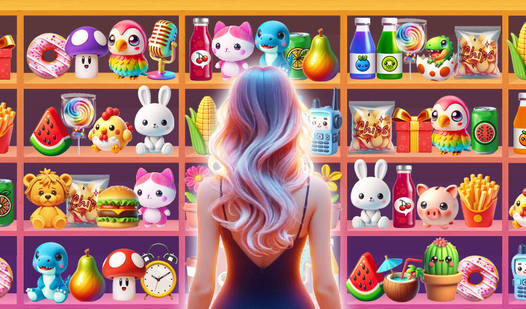
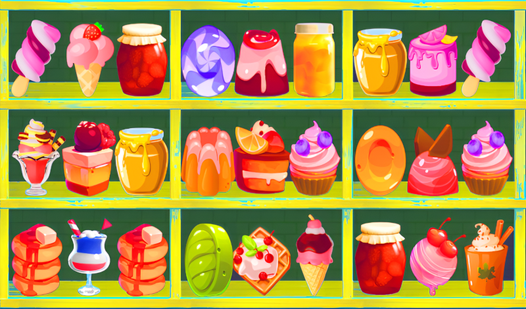
Sorting Sweets On Shelves asks kids to organize candy, chocolates, and snacks into the right sections. Multiple categories, visually similar items that require close inspection, and a pleasant confectionery theme that makes the whole thing feel like running a sweet shop.
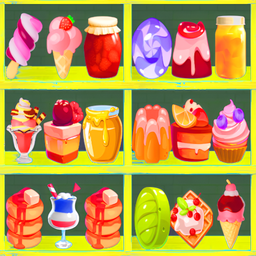
Sorting Sweets On Shelves
Fans of colorful puzzle challenges will find Sorting Sweets On Shelves to be the ultimate relaxing experience for their daily break. Organizing these ...
▶ Play FreeClean the Room: Shelves and Objects Sorting takes the shelf-organizing premise further, requiring children to categorize a broader variety of household objects across multiple storage areas. It's the most complex sorting game in this collection, and it rewards careful thinking and a systematic approach.
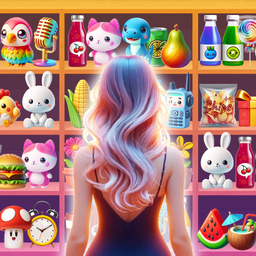
Clean the Room: Shelves and Objects Sorting
Staring at a cluttered desk while your mind drifts away is a common afternoon slump that needs a satisfying fix. Clean the Room: Shelves and Objects S...
▶ Play FreeThe progression from preschool to school-age games is really about adding layers: simple becomes complex, single attribute becomes multiple attributes, immediate response becomes planning ahead. Each layer builds on the last, and children who've played simpler sorting games first tend to pick up the more complex versions much faster.
How Sorting Games Build Cognitive Skills
It's easy to look at a sorting game and see "just a game." The cognitive work happening under the surface, though, is substantial — and it maps directly onto foundational skills that early childhood educators prioritize.
Classification is the obvious one. When a child decides that a blue nut belongs with other blue objects rather than other nuts of different colors, they're applying hierarchical categorization — a logical operation that underlies math, reading comprehension, and scientific thinking. Every sorting decision is a tiny act of reasoning, and the more a child practices it, the more automatic and flexible that reasoning becomes.
Working memory gets a genuine workout in multi-step sorting games. To sort efficiently across several categories simultaneously, kids need to hold a set of rules in mind while processing visual input and making motor decisions. "Top shelf: snacks. Middle shelf: fruits. Bottom shelf: drinks." Maintaining that structure across dozens of placements is real mental exercise.
Attention to detail is another underrated benefit. Noticing that two nearly identical items belong in different categories — this one has three dots, that one has four — trains children to observe carefully before acting. That habit of slowing down to look closely rather than grabbing the nearest option is one of the most transferable skills a child can develop.
Spatial reasoning appears in games where physical placement matters: organizing objects on shelves, fitting pieces into slots, arranging items across a grid. These mechanics build the same mental muscles children will later use in geometry, map reading, and practical everyday tasks like organizing a backpack or setting a table.
Executive function — specifically the ability to follow a rule consistently while adapting when the rule changes — is perhaps the deepest benefit. When a sorting rule shifts mid-level and children have to update their mental model quickly and keep going, they're practicing cognitive flexibility. That's one of the strongest predictors of academic success in early schooling.
The real beauty of all this is that none of it feels like work to a 4-year-old who's just trying to get their emojis into the right rows. The learning is baked into the play. The game provides the scaffold; the child does the climbing.