Money Games Online Free for Kids — TOP 10 Fun Picks
If you're looking for money games online free for kids, you've come to the right place. This list brings together ten browser games where children practice counting, build virtual businesses, manage budgets, and learn basic finance concepts — all while having a genuinely great time. No downloads, no subscriptions, just open the browser and play.
Money-themed games hit a sweet spot: they feel like pure entertainment but quietly teach kids how numbers, trade, and decision-making work in the real world. Whether your child is into obstacle courses, cooking, or running a giant factory, there's something here for every type of young player.
Best Money Counting Games for Kids Online
The games in this section center on collecting coins, growing wealth, and watching virtual bank accounts climb. They're fast-paced, colorful, and satisfying in the same way a piggy bank filling up feels great.
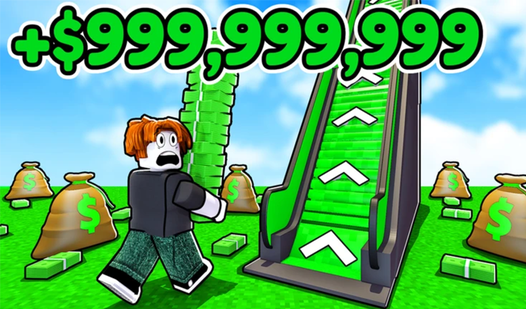
Obby: Money Tycoon. Tower to the Sky!
"Obby: Money Tycoon. Tower to the Sky!" lets you build a money factory and earn millions by running through obstacle courses, collecting cash, and upgrading your tower floor by floor. The loop is simple but deeply satisfying: gather coins, reinvest, watch your tower grow taller. Kids who love Roblox-style obbies will feel right at home. The game rewards persistence — if you miss a jump, you lose some coins, which is a painless way to learn that mistakes have small consequences.
Sprunk Factory. Become a Money Tycoon!
"Sprunk Factory. Become a Money Tycoon!" allows you to build your own factory and become a tycoon by managing production lines, hiring workers, and keeping customers happy. Think of it as a beginner-friendly business sim dressed up in bright, cartoonish graphics. Kids tap through upgrade menus and see their profit numbers rise in real time — a very concrete way to understand that reinvesting earnings beats spending everything at once.
Sprunk Factory. Become a Money Tycoon!
Building an empire from scratch is the ultimate power fantasy for any aspiring business mogul. Sprunk Factory. Become a Money Tycoon! turns this dream...
▶ Play FreeObby: Raft Tycoon. Ocean of Money!
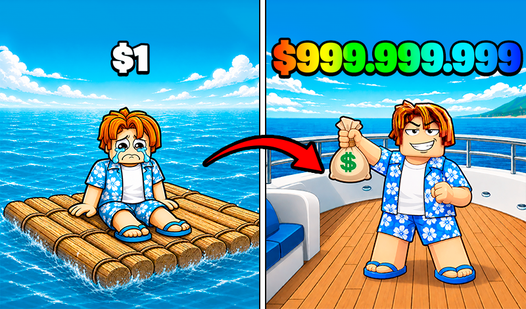
"Obby: Raft Tycoon. Ocean of Money!" challenges you to build your dream mansion on the water by collecting money as you race across floating platforms. The ocean setting makes it feel fresh compared to typical tycoon games. Between runs, players spend their earnings on expanding the raft and unlocking new areas. It's a clean demonstration of saving versus spending: rush through, blow all your cash on decorations, and your raft stays small. Plan ahead, and you end up with a floating palace.

Obby: Raft Tycoon. Ocean of Money!
Navigate a modest platform across an endless blue horizon while gathering essential resources to transform your humble raft tycoon setup into a sprawl...
▶ Play FreeMath Games With Money and Numbers
This section covers games that go beyond just collecting coins. Here, kids deal with numbers more directly — setting up systems, making calculations, and learning that money management involves more than grabbing cash off the ground.
Tycoon Obby: Money Millionaire
"Tycoon Obby: Money Millionaire" is a strategy game where you build different locations, each generating its own income stream. Players have to decide which location to upgrade next, which teaches basic opportunity cost: every coin you spend on one thing is a coin you can't spend somewhere else. The millionaire goal posts keep shifting upward, which motivates kids to keep counting and planning rather than stopping once they hit a comfortable number.
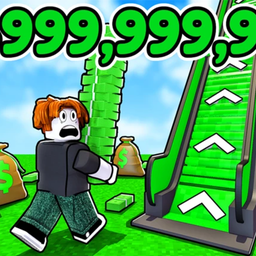
Tycoon Obby: Money Millionaire
Staring at a blank screen during a lunch break often feels like a chore, but turning that idle time into a massive construction project changes everyt...
▶ Play FreeBank Online: More Money Mod
"Bank Online: More Money Mod" combines clicker mechanics, investment simulator, and shopping spree fun into one game. Players open a virtual bank account, earn interest on deposits, and make purchase decisions. This is one of the more directly educational entries on the list — the interest mechanic alone introduces kids to the idea that money sitting in a bank grows over time. It's not a lecture; it's just a number that keeps ticking up, which kids find genuinely motivating.
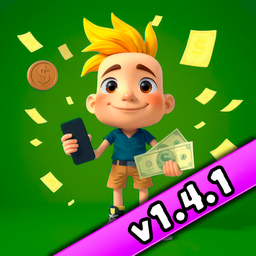
Bank Online: More Money Mod
Aspiring entrepreneurs and fans of addictive clicker titles will find their new obsession in Bank Online: More Money Mod. This vibrant experience turn...
▶ Play FreeBurger — Cooking Simulator for Little Kids
"Burger - Cooking Simulator for Little Kids" lets you rule your own burger cafe, taking orders, cooking food, serving customers, and counting your earnings at the end of each shift. It brings money math into a real-world context kids understand: you made food, customers paid you, here's your profit. Running the counter involves keeping track of prices and change, which gives younger players natural practice with small numbers without making it feel like homework.

Burger - Cooking Simulator for Little Kids
Stuck in a boring afternoon and craving a quick creative escape? Burger - Cooking Simulator for Little Kids is the perfect remedy to turn your downtim...
▶ Play FreeEnglish for Kids
"English for kids" helps kids learn English with animals and cars in short, playful lessons. While it's not a money game in the traditional sense, it fits here because financial literacy has a language component — knowing words like "price," "change," "buy," "sell," and "save" is part of understanding money. For younger children just starting out, building vocabulary alongside number skills gives them the full toolkit they need to understand money concepts as they grow.

English for kids
Staring at a blank screen during a five-minute break can feel like an eternity when you need a quick mood booster. English for kids turns that downtim...
▶ Play FreeBusiness and Tycoon Games for Young Players
Tycoon games are a fantastic gateway to financial thinking. Kids get to play CEO of their own tiny empire, making decisions about production, spending, and growth. The games below are more complex than simple collectors, but still completely playable for kids aged 7 and up.
Sprunki: A Money Magnate
"Sprunki: A Money Magnate" lets you control your own money tycoon factory, managing workers, handling production lines, and growing your fortune from a small startup to a full-scale operation. The Sprunki characters bring a fun, slightly quirky energy to the factory floor. What makes this one stand out is the sense of scale — starting with a tiny workshop and eventually running a massive industrial complex gives kids a real feeling of accomplishment. The game naturally shows that bigger rewards require longer planning horizons.
Money Movers 3 Guard Duty
"Money Movers 3 Guard Duty" puts you in the role of a security guard protecting money from thieves. This flips the usual perspective — instead of earning cash, you're responsible for keeping it safe. The puzzle-action gameplay requires kids to think strategically about positioning and timing. It's a different angle on financial thinking: understanding that protecting value matters just as much as creating it. The two-player cooperative mode is a bonus for siblings or parent-child sessions.

Money Movers 3 Guard Duty
Switching sides adds a thrill to the classic prison break genre by putting you in charge of the law instead of the criminals. Money Movers 3 Guard Dut...
▶ Play FreeBuild a City Obby Money Tycoon
"Build a City Obby Money Tycoon" lets you build cash ATMs and become the city's top banker. Players construct financial infrastructure for an entire virtual city, placing ATMs, banks, and money-handling facilities. The city-building angle adds a sense of civic responsibility — your financial decisions affect not just your own wealth but the whole virtual town. Kids end up thinking about where money flows and how infrastructure enables trade, which is genuinely sophisticated economic thinking packaged inside a fun obby format.
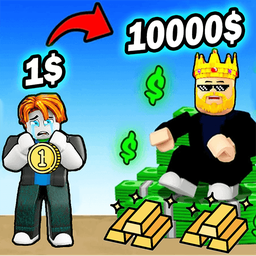
Build a City Obby Money Tycoon
Building a financial empire requires more than just luck when you are navigating a tricky obstacle course to reach the top. Build a City Obby Money Ty...
▶ Play FreeHow Money Games Online Help Kids Learn Math
The phrase money games online free for kids is searched thousands of times a month, and the reason is simple: parents know that math lessons stick better when there's a real-world hook. Here's what actually happens in the brain when kids play these kinds of games.
Counting and number recognition come first. Even the simplest tycoon games show numbers constantly — current balance, upgrade cost, earnings per second. Kids read these numbers hundreds of times per session without being asked to "practice math." By the end of a play session, a child who started shaky on four-digit numbers might be confidently comparing 1,450 coins to 2,300 coins and knowing instantly which is more.
Addition and subtraction happen naturally every time a player buys an upgrade. If you have 500 coins and an upgrade costs 175, the game forces you to figure out what's left. There's no "show your work" requirement — kids just do the mental math because they want to know if they can afford the next thing. That self-motivation is worth ten worksheets.
Multiplication and division start appearing in more complex tycoon games. If each worker earns 25 coins per minute and you hire four workers, how much do you earn per minute? Games that show production rates make this feel like a practical problem rather than an abstract exercise. Kids who "hate multiplication" often figure this out quickly because the payoff is real in-game progress.
Budgeting and delayed gratification are arguably the most important lessons. When a kid has 300 coins and a great upgrade costs 500, they have to wait and keep playing. That feeling of waiting, saving, and finally unlocking something teaches patience and goal-setting better than any story about piggy banks. Over many play sessions, kids internalize that spending everything immediately means slower progress long-term.
Risk and reward show up in games where you can invest resources with uncertain returns. Should you spend coins on a risky upgrade with a big potential payoff, or stick with a guaranteed small gain? These micro-decisions build financial intuition that transfers to real decisions as kids get older.
There's also a social element worth mentioning: when kids play tycoon games with friends or siblings, they often discuss strategies, compare balances, and argue about the best upgrade path. That conversation is financial reasoning happening out loud — kids teaching each other how to think about money.
The best money games online for kids don't lecture. They create situations where financial thinking is the natural way to succeed, and success feels great. That's why a kid who says "math is boring" will happily spend an hour figuring out the most efficient upgrade path in a tycoon game — they're doing the same mental operations, but the motivation is completely different.
Teachers and parents looking to extend the learning can ask simple questions after a play session: "How much did you earn today?" "What was the most expensive thing you bought?" "What would you do differently next time?" These conversations anchor the game experience to real-world language without making it feel like a test.
For younger kids (ages 4-7), the counting and recognition games are the best starting point — keep it simple, focus on bigger numbers being better, and let them enjoy the visual reward of growing stacks of coins. For older kids (ages 8-12), tycoon and business games with real upgrade trees and resource management will hold attention longer and teach more sophisticated concepts.