Math Games Online Free — Fun Ways to Practice Numbers & Logic
Math games online free — that phrase gets searched millions of times a month, and for good reason. Whether you're a parent looking for something educational your kid will actually enjoy, a student trying to sharpen your arithmetic before an exam, or just someone who likes a good mental workout, free math games hit a sweet spot that textbooks rarely do. No fees, no downloads, no stress — just numbers, logic, and the quiet satisfaction of cracking a puzzle that made you think.
This guide covers the best free math games you can play right now, broken down by style and audience. We'll look at what makes each one tick, who it's best for, and why math games are genuinely good for your brain at any age.
Why Play Math Games Online?
Let's be honest: math has a reputation problem. For a lot of people, the word triggers flashbacks of timed tests, red pen marks, and the creeping feeling that everyone else in the room understood something you didn't. But math games flip that experience completely.
When you're playing a game, the numbers aren't an obstacle — they're the tool you use to win. Instead of being graded on your speed, you're rewarded for accuracy and strategy. Instead of a classroom full of pressure, it's just you and a puzzle, at your own pace, with infinite attempts and zero judgment.
Math games online free have another big advantage: accessibility. You can play on a phone during a commute, on a laptop at home, or on a school computer between classes. There's nothing to install, no account required on most platforms, and no paywall blocking the good content. The barrier to entry is essentially zero.
The variety is remarkable too. "Math games" isn't one thing — it's a whole ecosystem. You've got crossword-style number puzzles, match-3 mechanics where the tiles are equations, logic deduction games like Sudoku, multiplication drills dressed up as arcade games, and brain-bending number connection challenges. There's something in there for a six-year-old just learning addition and a forty-year-old who wants to keep their mind sharp.
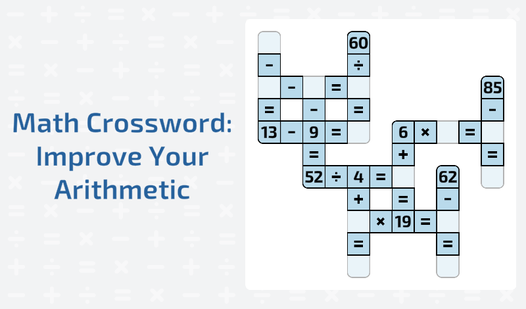
Take Math Crossword: Improve Your Arithmetic as a perfect example of the format done right. It's exactly what it sounds like — a crossword grid where every answer is a number, and every clue is a math equation. You work through addition, subtraction, multiplication, and division problems, and the grid structure means your answers have to be consistent both horizontally and vertically. It's not just calculation; it's logical deduction.
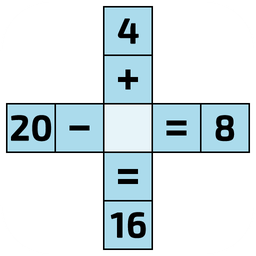
Math Crossword: Improve Your Arithmetic
Drag and drop number tiles into empty slots to solve complex equations in this addictive brain teaser. Math Crossword: Improve Your Arithmetic challen...
▶ Play FreeThe format works because it adds a layer of constraint that pure arithmetic drills don't have. Even if you're not 100% sure about one answer, the crossing letters — or in this case, crossing digits — help you self-correct. It's the math equivalent of having a safety net.
Best Free Math Games for Kids
Kids learn best when they don't realize they're learning. The trick is finding games with enough visual appeal and game-feel to hold attention, but enough mathematical substance to actually build skills. The best free math games for kids manage both.
Times Table - Learn Math is one of the most straightforward options for younger players. It targets multiplication specifically — arguably the single most important math skill for elementary students to internalize. Knowing your times tables fluently is the foundation for long division, fractions, percentages, and basically everything that comes later. This game turns that memorization process into something you actually want to do.
Times Table - Learn Math
Mastering the times table is a foundational skill that turns complex calculation into second nature for students and adults alike. Times Table - Learn...
▶ Play FreeFor kids who are a bit further along and ready for a real challenge, Mathematical BOOM! is genuinely impressive in its scope. Rather than focusing on a single operation, it bundles nine different math puzzles into one package. That variety is crucial for younger players — attention spans are short, and the ability to switch to a different style of puzzle keeps engagement high for much longer than any single-format game could.
The puzzles in Mathematical BOOM! range from quick arithmetic challenges to more involved multi-step problems. Some kids will race through one type and find another type humbling — which is exactly the right experience. Math is a wide field, and discovering that you're great at subtraction but need to work on division is genuinely useful self-knowledge.
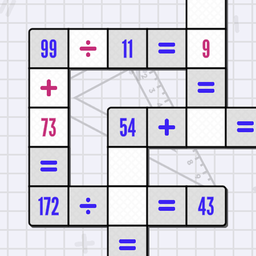
Mathematical BOOM!
Staring at a blank screen during a midday slump is the worst, but Mathematical BOOM! acts as the perfect mental reset button. This collection of nine ...
▶ Play FreeMath matches takes a different mechanical approach that works really well for younger kids. The match-style gameplay — pairing equations with their answers, or matching equivalent expressions — builds number recognition without the pressure of an empty answer box. It's lower stakes than a crossword, which makes it a great entry point for kids who feel anxious about math.

Math matches
Math enthusiasts and logic fans will find endless entertainment in Math matches where a single move changes everything. This addictive puzzle game cha...
▶ Play FreeThe key with all of these games is repetition through variety. A child who plays for twenty minutes is solving dozens of arithmetic problems without thinking of it as drilling. That's the magic of the format — the game is the motivation, and the math is what you have to do to play.
Number Puzzle & Logic Games
Not all math games are about arithmetic. Some of the most engaging ones are fundamentally about logic — using numbers as variables in a deduction puzzle rather than quantities to calculate. This category tends to attract players who like structure and rules, people who enjoy the feeling of narrowing down possibilities until only one answer remains.
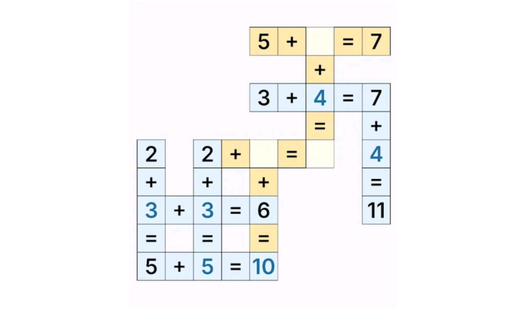
Math Crossword. Number Puzzle is a natural extension of the crossword format, combining the grid constraints of a traditional word crossword with mathematical operations. The puzzle experience is uniquely satisfying: you're not just solving one equation in isolation, you're managing a whole web of interdependencies. Changing one answer affects every cell it shares, so you have to think several moves ahead.
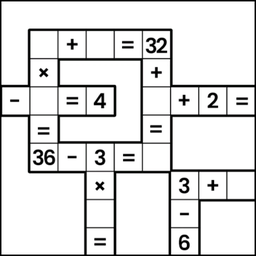
Math Crossword. Number Puzzle
Crosswords are usually about finding hidden words, but this unique brain teaser flips the script by turning arithmetic into your primary vocabulary. M...
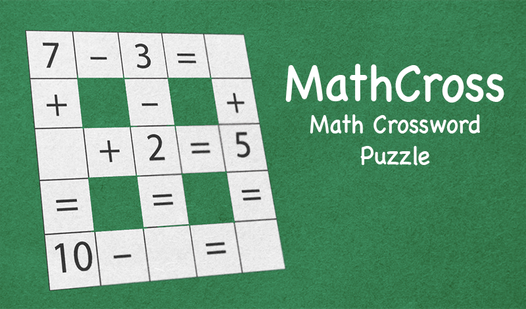
▶ Play FreeMathCross: Math Crossword Puzzle takes the crossword-math fusion and adds an extra layer of challenge. The arithmetic gets harder, the grids get more complex, and the deduction required to fill everything in correctly gets more rigorous. If you've worked through the more beginner-friendly crossword games and want something that will actually make you sweat, this is the step up.
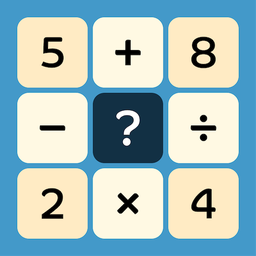
MathCross: Math Crossword Puzzle
Numbers are the universal language of logic, but rarely do they get to play the lead role in a grid-based brain teaser like they do here. MathCross: M...
▶ Play FreeSudoku Master is a classic that deserves mention here. Sudoku is often thought of as a number game, but it's really a logic puzzle — the actual values of the numbers are irrelevant; you could replace them with letters or symbols and the puzzle works exactly the same. What Sudoku teaches is systematic thinking: how to eliminate possibilities, how to use partial information to deduce certainties, how to hold multiple constraints in mind simultaneously.
These are skills that transfer directly to algebra, programming, and complex problem-solving in general. Sudoku isn't flashy, but it's one of the most cognitively demanding puzzle formats available in a free online format.
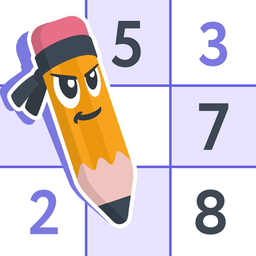
Sudoku Master
Fill every row, column, and 3x3 square with numbers one through nine to conquer the grid in this brain-teasing classic. Mastering Sudoku Master requir...
▶ Play FreeGrowing numbers: Connect and Purify does something different again. The number-connection mechanic — linking cells to build sequences or reach target values — adds a spatial reasoning component that most pure arithmetic games lack. You're thinking about paths and patterns, not just operations. It's a great option for players who find traditional math games too linear.
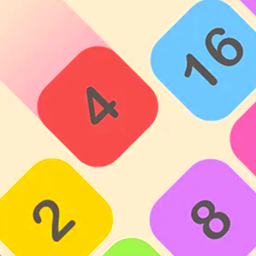
Growing numbers: Connect and Purify
Fans of brain-teasing challenges will find Growing numbers: Connect and Purify the perfect way to sharpen their mental skills. This addictive puzzle t...
▶ Play FreeLogic puzzles in this category share a common appeal: that moment when the answer clicks into place and you see why it had to be that way. There's a particular satisfaction in constraint-satisfaction puzzles that's hard to find elsewhere.
Math Games for Adults & Brain Training
The idea that math games are just for kids is completely wrong. Adults benefit from numerical and logical exercise just as much as younger players — arguably more, because cognitive sharpness isn't something you maintain by default. You have to use it.
Brain training research has its fair share of controversy — many apps claim benefits they can't back up. But the evidence for puzzles and number games is more solid than the marketing hype. Regularly engaging with logic and arithmetic tasks keeps the relevant neural pathways active, improves working memory performance, and can slow age-related cognitive decline. You don't need a subscription service promising to make you smarter. You just need to play math games regularly.
Math crossword puzzle is an excellent daily habit for adults who want structured mental exercise. The crossword format provides clear goals and measurable progress — either the grid fills in correctly or it doesn't. There's no ambiguity about whether you've solved it. That clarity is motivating in a way that vaguer "brain training" tasks often aren't.
Minesweeper Online might seem like an odd inclusion in a math games list, but hear me out. Classic Minesweeper is a probability and deduction game at its core. You're making inferences about where mines are likely to be based on the numbers revealed by safe cells. Each number tells you how many mines are in the eight surrounding squares — you use that information, combined with what you know from neighboring revealed cells, to deduce which squares are safe and which are lethal.
The math isn't arithmetic, but it's genuinely mathematical: you're doing combinatorial reasoning, probability estimation, and logical deduction in real time under mild pressure. Advanced Minesweeper players solve complex constraint systems intuitively. It's a legitimate cognitive workout wrapped in a simple-looking game.
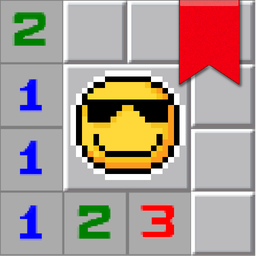
Minesweeper Online
Staring at the clock waiting for a meeting to end or just need a mental refresh between tasks is the perfect moment to sharpen your wits. Minesweeper ...
▶ Play FreeFor adults specifically, the best math games are ones that scale in difficulty. Games that stay easy lose their training effect quickly — your brain adapts, the challenge disappears, and you're just going through the motions. The crossword and logic puzzle formats tend to scale well because harder grids genuinely demand more from you, not just more repetition of the same skill.
The other thing adults tend to appreciate is games that respect their time. Free math games online that don't require account creation, that save progress automatically, and that can be picked up and put down without penalty — those fit into busy schedules in a way that more structured learning programs don't. A five-minute puzzle session on a lunch break is still a five-minute puzzle session. It adds up.
How Math Games Improve Skills
The learning benefits of math games aren't magic — they're mechanical. Understanding why they work helps you choose the right games for your goals.
Fluency through repetition. The most basic benefit is practice volume. A ten-minute session of multiplication-based games involves hundreds of arithmetic operations. A student doing the same amount of practice via worksheet would probably give up well before ten minutes. Games create intrinsic motivation to keep going, which means more repetitions, which means faster recall and better fluency.
Contextual problem-solving. Many math games embed arithmetic inside a larger puzzle context. When you're solving a crossword and realize that 7 × 8 has to be 56 because the crossing digit rules out every other possibility, you're using arithmetic as a tool for reasoning, not just as an isolated calculation. That's much closer to how math actually gets used in the real world.
Error feedback loops. In most math games, getting an answer wrong has an immediate, visible consequence — the puzzle doesn't solve, the grid doesn't complete, the timer runs down. That instant feedback is far more effective for learning than finding out days later that you got something wrong on a test. Players naturally analyze what went wrong and adjust.
Reduced math anxiety. This is perhaps the most underrated benefit. Math anxiety is real and measurable — it impairs performance even in people who know the material. Games reduce anxiety by making the context low-stakes and enjoyable. Regular positive experiences with numbers rebuild confidence gradually, and that confidence transfers to more formal mathematical contexts.
Working memory and attention. Logic games especially — Sudoku, crosswords, Minesweeper — require holding multiple pieces of information in mind while actively processing new information. That's working memory training in a direct, practical form. Stronger working memory makes learning math faster and easier.
The bottom line: math games online free aren't a replacement for proper learning, but they're a powerful complement. They build fluency, reduce anxiety, and make numerical thinking more accessible. And because they're free and instantly available, there's no reason not to make them a regular habit.