How to Play Math: Rules, Strategies & Free Games
If you've ever wondered how to play Math games and actually get good at them, you're in the right place. Math games online have exploded in popularity — not just as educational tools for kids, but as genuinely fun brain workouts for adults who want to keep their minds sharp. On FreeJoy you'll find dozens of free Math games with no registration, no downloads, and no pressure. Just numbers, logic, and that satisfying click when you crack a tricky equation.
This guide covers everything: the core rules, winning strategies, and a curated lineup of the best free Math games you can play right now.
What Is a Math Game?
Math games come in many shapes — crossword-style number puzzles, arithmetic challenges, equation builders, logic grids, matchstick puzzles, and more. Despite the variety, they share a common goal: use arithmetic (addition, subtraction, multiplication, division) to fill grids, complete sequences, or hit target numbers.
The beauty of math games as a genre is that the rules are almost always learnable in under a minute. You don't need to memorize complicated mechanics. The challenge lives entirely in the numbers — finding combinations, managing time pressure, spotting patterns. That's why math puzzle games hook both kids who are just learning multiplication tables and adults with PhDs in engineering.
Most Math games online follow one of these formats:
- Math crosswords — fill a grid so that each row and column satisfies an equation
- Number puzzles — arrange tiles or fill blanks so totals work out correctly
- Arithmetic challenges — answer equations as fast as possible under a timer
- Match puzzles — move matchsticks to make broken equations valid
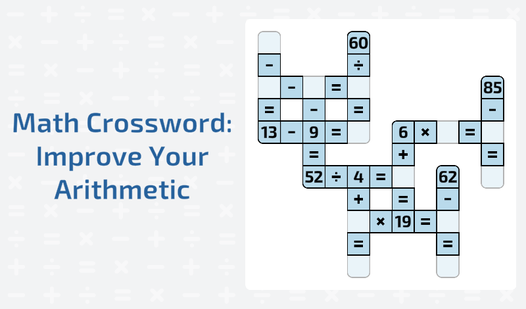
Let's start with Math Crossword: Improve Your Arithmetic — a classic entry point that teaches you the grid-filling mechanic cleanly and at a comfortable pace.
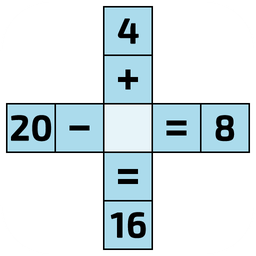
Math Crossword: Improve Your Arithmetic
Drag and drop number tiles into empty slots to solve complex equations in this addictive brain teaser. Math Crossword: Improve Your Arithmetic challen...
▶ Play FreeHow to Play Math: The Core Rules
Learning how to play Math games correctly from the start saves you a lot of frustration. While each game has its own twist, these fundamentals apply almost universally across the genre.
The Basic Grid Rules (Math Crossword Format)
- Every row and column must form a valid equation. If the grid shows
? + 4 = 9, the missing number is 5. Straightforward on its own — but when rows and columns intersect at shared cells, things get interesting fast. - Numbers usually range from 0 to 9 in single-cell grids. Larger or harder games may allow two-digit numbers.
- Operations are fixed by the grid. You're not choosing between + and ×; the grid tells you the operator. Your job is to find the right number.
- Intersection cells must satisfy both their row and their column. This is the real puzzle. A cell shared between two equations must work for both simultaneously.
- Start from the most constrained cells. If one equation already has all values filled except one, solve that first and let the answer ripple outward.
For Timer-Based Arithmetic Games
- You receive a stream of equations with one missing value.
- Answer correctly to score points and keep your streak alive.
- Wrong answers cost you time or lives, depending on the game.
- Speed matters, but accuracy matters more — one wrong answer can break a long combo.
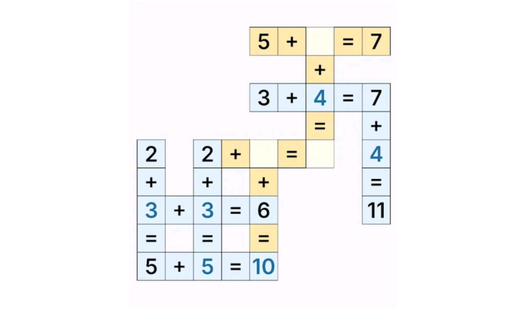
Math Crossword. Number Puzzle is a great next step — it layers crossword logic on top of a cleaner number-puzzle interface that rewards methodical thinking.
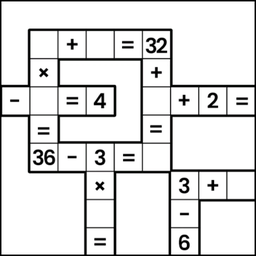
Math Crossword. Number Puzzle
Crosswords are usually about finding hidden words, but this unique brain teaser flips the script by turning arithmetic into your primary vocabulary. M...
▶ Play FreeFor Matchstick Math Games
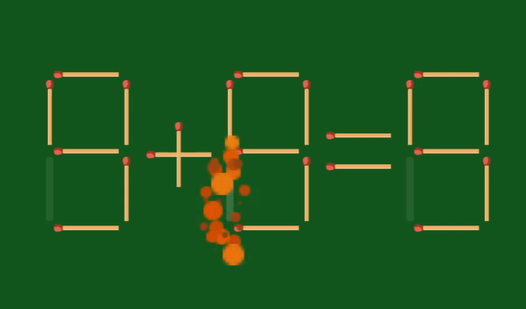
Matchstick puzzles operate by entirely different rules. You're shown an equation built from matchsticks — and it's currently wrong. Your task: move exactly one (or sometimes two) matchstick(s) to make it mathematically valid. The constraint is that you're not adding new sticks — only relocating existing ones. So a 6 can become a 9, a 0 can become an 8, and a broken equation becomes correct. It's visual, spatial, and arithmetically satisfying all at once.
Math matches is the go-to game for this format on FreeJoy.

Math matches
Math enthusiasts and logic fans will find endless entertainment in Math matches where a single move changes everything. This addictive puzzle game cha...
▶ Play FreeStrategies and Tips for Winning Math Games
Knowing the rules is half the battle. Here are strategies that genuinely improve your performance across all Math game formats.
Scan Before You Tap
Before filling in any number, scan the entire grid. Identify which equations have only one unknown — those are your freebies. Solve them immediately. Each answer you lock in reduces the unknowns in intersecting equations. Think of it as a domino chain: solving one cell often forces the answer in two or three others without any additional effort.
Use Elimination, Not Guessing
When a cell could be either 3 or 7, don't guess. Check the column that intersects it. If the column equation ? × 3 = 21 tells you the answer must be 7, you've eliminated 3 without trial and error. Train yourself to always cross-reference rows against columns before committing a number.
Work Backwards from Totals
For addition and subtraction grids, working from the result backwards is often faster than working forward. If ? + ? = 15 and you already know one of the unknowns is 8 (from its column equation), the other must be 7. This reverse arithmetic moves quicker than iterating from 0 upward through possibilities.
Memorize Common Multiplication Results
Speed matters in timed Math games. Players who have multiplication tables up to 12×12 burned into memory score dramatically higher. You don't need to be a human calculator — just internalize the most common products (6×7=42, 8×9=72, 7×8=56). That muscle memory frees up mental bandwidth for the strategic parts.
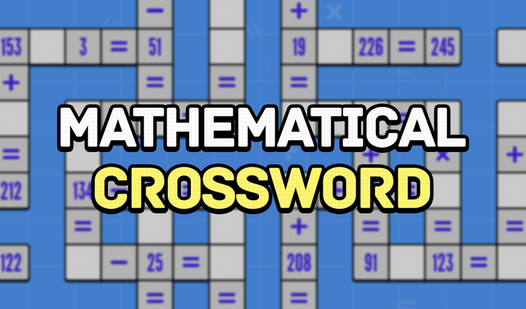
Mathematical BOOM! is perfect for drilling these skills — nine different puzzle modes hit every major arithmetic operation in a compact, focused package.
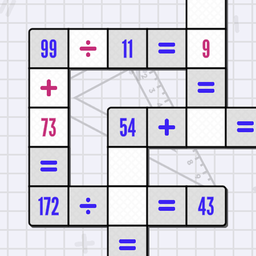
Mathematical BOOM!
Staring at a blank screen during a midday slump is the worst, but Mathematical BOOM! acts as the perfect mental reset button. This collection of nine ...
▶ Play FreePrioritize Intersection Cells
In crossword-style Math games, intersection cells are where the real difficulty lives. Focus attention on cells that appear in multiple equations simultaneously. Getting those right first makes everything else fall into place. Getting them wrong cascades errors across the whole grid.
Use Mental Chunking
When solving a multi-step equation mentally, chunk it into pieces. Instead of computing 14 - 7 + 3 in one go, treat it as (14 - 7) = 7, then 7 + 3 = 10. Your working memory has limits — chunking respects those limits and dramatically reduces errors.
Timed Games — Build Accuracy First
Many timed Math games start slow and ramp up. In the opening seconds, resist the urge to rush. Build your streak carefully with accurate answers. Mistakes early trigger penalties that cost more time than you saved by rushing. Get into a rhythm of correct answers, then let the speed come naturally.
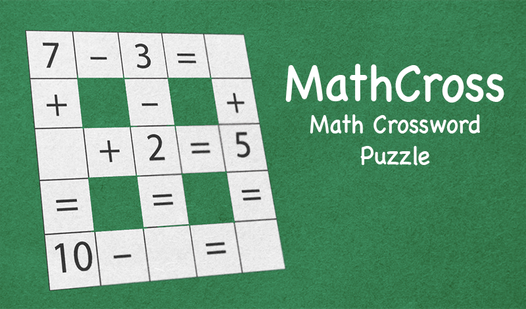
MathCross: Math Crossword Puzzle is excellent for applying all of these strategies in a structured, well-paced environment.
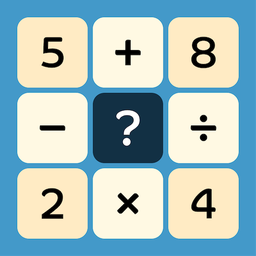
MathCross: Math Crossword Puzzle
Numbers are the universal language of logic, but rarely do they get to play the lead role in a grid-based brain teaser like they do here. MathCross: M...
▶ Play FreeWhy Math Games Are More Than Just Practice
Math games aren't only about keeping multiplication tables fresh. Puzzle-solving consistently exercises working memory, pattern recognition, and cognitive flexibility. Math games specifically train:
- Number sense — an intuitive feel for whether a result looks right before you verify it
- Error detection — spotting when something is off before checking formally
- Persistence — the habit of trying multiple approaches rather than abandoning a problem
- Focus — timed games train sustained attention as much as arithmetic
These are transferable skills that show up well beyond gaming. Kids who play math games regularly tend to perform better in tests not because they memorized more formulas, but because they're comfortable sitting with a problem and working through it methodically.
For adults, regular math puzzles are increasingly linked to slower cognitive decline. The enjoyment is real, and so are the long-term benefits.
Mathematical crossword takes this seriously with progressively harder grids designed to genuinely challenge experienced players rather than just confirm what you already know.
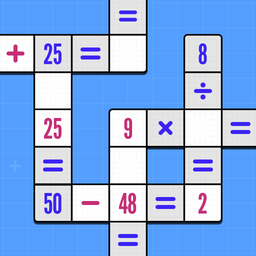
Mathematical crossword
Drag numbers and operators into empty grid slots to solve equations and complete the logic grid. Mathematical crossword challenges you to balance rows...
▶ Play FreeBest Free Math Games on FreeJoy
Here's the full curated lineup — all free, all playable in your browser without any account or download.
Math Puzzles: Crosswords
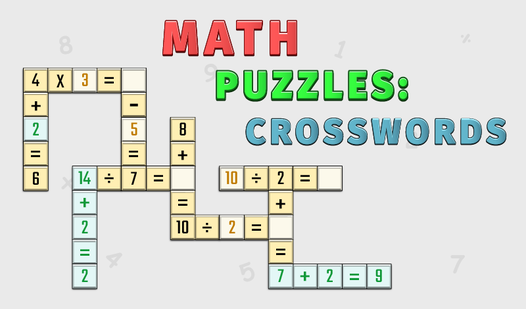
A multi-format collection that brings traditional crossword structure together with arithmetic challenges. Great for players who love the spatial logic of crosswords but want the extra mental push of making numbers work in two directions simultaneously. The difficulty scales well from beginner grids to genuinely tough challenges.
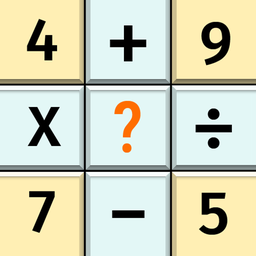
Math Puzzles: Crosswords
Staring at a blank screen during a coffee break is a recipe for boredom when you could be sharpening your mind instead. Math Puzzles: Crosswords is th...
▶ Play FreeTimes Table - Learn Math
Don't let the word "learn" fool you — this game gets competitive fast. It's structured around multiplication tables, but the pace ramps up to a point where even adults who consider themselves comfortable with arithmetic feel the pressure. Excellent for drilling the multiplication facts that come up constantly in crossword-style Math games.
Times Table - Learn Math
Mastering the times table is a foundational skill that turns complex calculation into second nature for students and adults alike. Times Table - Learn...
▶ Play FreeMath and Crossword: Numbers and Arithmetics
This one combines both worlds explicitly — crossword-style grid filling alongside direct arithmetic challenges in the same session. It's one of the more ambitious entries in this lineup, covering addition, subtraction, multiplication, and division in a single integrated experience that keeps switching modes to stay fresh.
Math and Crossword: Numbers and arithmetics
Staring at the clock while your brain turns to mush is the ultimate afternoon struggle. Math and Crossword: Numbers and arithmetics arrives just in ti...
▶ Play FreeA Mathematical Exercise with Numbers for Logic
Logic-first, arithmetic second. The real challenge here is reasoning about which numbers can possibly satisfy multiple simultaneous constraints before you even start filling cells. If you enjoy puzzles where you stare at the grid for 30 seconds and then the answer suddenly snaps into focus, this is your game.
Infinite Math
Procedurally generated puzzles mean this one genuinely never ends. The difficulty scales continuously, so you can play for five minutes or an hour and always find it appropriately challenging. No two sessions are the same, which makes it ideal for daily practice without repetition boredom.
Math Crossword Puzzle
A clean, focused implementation of the core math crossword format. No frills, no distractions — just a well-constructed grid and a satisfying solve when every cell clicks into place. Great for players who want the fundamental experience without extras pulling at their attention.
How to Get Better at Math Games Faster
A structured approach builds skill faster than random playing:
Week 1 — Foundations. Stick to one format. Pick crossword-style or timer-based and spend a week on it. Don't jump between formats yet. The goal is to internalize the specific thought patterns that one format requires until they feel automatic.
Week 2 — Speed work. Once the logic feels natural, push for time. Set soft mental goals (finish a grid in under 3 minutes, then under 2). Speed forces your brain to stop consciously computing and start recognizing patterns instead.
Week 3 — Expand. Add a second format. Notice which skills transfer (number sense, elimination) and which don't (the visual scanning you use in a crossword grid doesn't map directly to matchstick puzzles). Adapting between formats is itself a valuable skill.
Week 4 — Difficulty escalation. Seek out the hardest puzzles you can find. Getting stuck is productive — that's precisely where actual skill building happens. Easy puzzles just confirm what you already know.
Common Mistakes Players Make
Filling in numbers without cross-referencing. Always check the intersecting equation before confirming a cell value. This single habit eliminates most errors.
Trying to hold everything in mind at once. Work one equation at a time and build from there. The grid remembers your previous answers — use it as your working memory.
Ignoring the result and only working left to right. The total on the right side of an equation is a constraint. Use it actively, not just as a check after you've filled everything in.
Quitting when stuck. Stuck means you're at the exact point where learning happens. Step away for 30 seconds, come back, and look at the grid fresh. A different entry point usually reveals itself.
Playing only easy difficulty. Comfortable is not challenging. Challenging is not educational. Always play at the edge of your current ability.
Tips for Kids Playing Math Games
Math games are excellent for children, but approach matters:
- Start with addition-only puzzles. Multiplication grids can feel overwhelming before times tables are solid.
- Celebrate the process, not just correct answers. "I saw you try three different numbers before finding the right one — that's exactly how math works" is more valuable feedback than just marking something correct.
- 10-15 minutes is enough. Short, regular sessions beat long grinding marathons for younger players.
- Let the game deliver feedback. The game tells them when they're wrong. That immediate loop is valuable — hovering and correcting before the game does removes the learning experience.
- Play alongside them sometimes. Making math social removes the anxiety many kids feel around numbers.
Times Table - Learn Math works particularly well for ages 7-12 as a daily 10-minute habit before homework.
Math Games for Adults: What to Look For
Adults have different needs. You're probably not here to learn multiplication from scratch — you want cognitive stimulation, a genuine break from work, or something that feels productive during downtime. Look for:
- Adjustable difficulty — you want to be challenged, not frustrated into quitting
- No forced tutorials — you can figure out the mechanics; you don't need the game explaining 2+2
- Clean interface — cluttered UIs add cognitive load that distracts from the actual math challenge
- Procedural generation — hand-crafted puzzle sets run out; generators that create new puzzles keep things indefinitely fresh
Infinite Math and Mathematical BOOM! both meet these criteria well for adult players looking for a serious brain workout.