How to Play Solitaire Marbles: Rules, Strategies & Tips
If you've ever wondered how to play solitaire marbles — that classic board puzzle where you jump pegs over each other until only one remains — you're in the right place. Marble solitaire (also called peg solitaire or brainvita) is one of the oldest single-player puzzle games in existence, and it's surprisingly deep once you understand its mechanics. This guide covers everything: the rules, the board layouts, the strategies that actually work, and where you can play great solitaire games online for free right now.
What Is Marble Solitaire?
Marble solitaire is a board game for one player. The board has a grid of holes (or indentations), and you start with a marble — or peg — in almost every hole except one. The goal sounds simple: keep jumping marbles over each other until you're left with a single marble sitting exactly in the starting empty hole. The catch? It's fiendishly difficult to achieve.
The game has roots going back to the 17th century in France. According to legend, it was invented by a French nobleman imprisoned in the Bastille who needed something to keep his mind sharp. Whether or not that story is accurate, peg solitaire has been captivating puzzle enthusiasts for centuries, and it's not hard to see why. The rules take seconds to learn, but mastering the game can take years.
Different Names, Same Game
You'll hear marble solitaire called by several names depending on where you are:
- Peg solitaire — the most common name in North America and UK
- Brainvita — the name used widely in India
- Marble solitaire — when physical marbles are used instead of pegs
- Hi-Q — a popular branded version sold in toy stores
All of these refer to the same core puzzle concept. The board shape can vary — English, European, triangular — but the jumping mechanic stays identical across every version.
Board Layouts
The two most popular board configurations are:
English Board: A cross-shaped board with 33 holes arranged in a plus sign. The center hole starts empty. This is the version most people picture when they think of peg solitaire.
European Board: A slightly larger board with 37 holes, also cross-shaped but with the corners filled in. It gives you a bit more room to maneuver.
Triangular Board: A triangle of 15 holes, often seen in pubs and restaurants as a tabletop puzzle. This version is smaller and more approachable for beginners.
Each layout has its own set of solutions, and the English board in particular has been studied extensively by mathematicians. The number of possible game states is enormous — around 23 billion for the English board alone.
Rules of Peg Solitaire
Learning how to play solitaire marbles properly means understanding the one core rule that governs everything: the jump.
The Basic Move
A marble can jump over an adjacent marble into an empty hole directly beyond it. The jumped marble is then removed from the board. That's it. That's the entire ruleset.
More specifically:
- Jumps must be horizontal or vertical — no diagonal moves
- You must jump over exactly one marble per move
- The marble you land on must be empty
- The marble you jump over is captured and removed
- You cannot pass or skip a turn if a valid jump exists
Chain Jumps
One marble can make multiple jumps in a single turn if the trajectory allows it. These chain jumps are critical — stringing together three, four, or five captures in a single move is what separates competent players from great ones. Learning to spot chain jump opportunities ahead of time is probably the single biggest skill improvement you can make.
Win and Lose Conditions
You win if you end the game with exactly one marble remaining — ideally in the center hole of the English board (though some versions just require one marble anywhere).
You lose if you still have multiple marbles on the board but none of them can make a valid jump. This happens more often than you'd expect, especially when you haven't thought a few moves ahead.
Notation
If you want to record or share your solutions, most peg solitaire enthusiasts use a simple coordinate system. On the English board, columns are labeled a–g and rows 1–7. A move is written as the starting position followed by the ending position: d1-d3 means a marble jumps from d1 over d2 and lands on d3 (removing d2).
Step-by-Step Winning Strategy
Now for the part most players actually want: how do you actually win? Here's the honest answer — peg solitaire is hard, and "winging it" almost never works. You need a deliberate strategy.
1. Think in Groups, Not Individual Marbles
The biggest beginner mistake is focusing on one marble at a time. Instead, think about groups. Notice clusters of marbles that are isolated from the rest of the board — these are problems waiting to happen. An isolated group with no way to connect back to the main body is essentially dead weight. Your job is to keep the board connected.
2. Work from the Edges Inward
Marbles stuck in the corners and edges of the board have fewer movement options than marbles in the center. Generally, you want to clear the edges and corners first, then use the center of the board as your "workspace" for the endgame. If you leave corner marbles until the end, they'll often be stranded with no valid jumps.
3. The Pagoda Pattern
One of the most famous strategies for the English board is the "pagoda" approach. You aim to create a cross or diamond of marbles in the center mid-game, then systematically collapse them into one. Several published solutions follow this pattern, and it's worth studying one complete solution before trying to freestyle your own.
4. Look Three Moves Ahead (Minimum)
Every move you make changes the board state. Before committing to a jump, ask yourself:
- What will the board look like after this move?
- Will any marbles become isolated?
- Does this open up a chain jump opportunity two moves from now?
Three-move lookahead is the minimum viable thinking depth for this game. Stronger players think five or more moves ahead, especially in the endgame.
5. Save Chain Jumps
Don't burn your chain jump opportunities the moment you spot them. Sometimes it's worth making a few preparatory moves first so that when you trigger the chain, it cleans up a larger portion of the board. Chain jumps that clear five or six marbles at once are the most satisfying plays in the game — and usually the ones that put you in a winning position.
6. The Endgame Is Different
When you're down to 5-6 marbles, the strategy shifts completely. At this point, every remaining move matters enormously, and you need to think all the way to the end. Most players find it helpful to work backward from the target: where does the last marble need to be? What's the second-to-last move? Count backward through the required sequence.
7. Use Symmetry
The English board is symmetric, and this is actually useful. Many elegant solutions exploit the board's symmetry to simplify decision-making. If you can maintain a roughly symmetric marble pattern through the mid-game, you'll have more predictable endgame options.
Common Mistakes to Avoid
- Clearing one side of the board too aggressively — this strands marbles on the opposite side
- Ignoring corner marbles — they need to be addressed early
- Making moves that feel productive but aren't — just because you captured a marble doesn't mean the move was good
- Not counting remaining marbles — track your progress; if you're down to 5 and none can jump, you've already lost
Best Marble Solitaire Games to Play Free
Once you've got the marble solitaire concept down, you might want to explore other solitaire formats. The logic skills you build playing peg solitaire transfer beautifully to card-based solitaire games — both require planning ahead, pattern recognition, and the discipline to think before you act. Here are the best free options to try on FreeJoy right now.
Klondike Solitaire
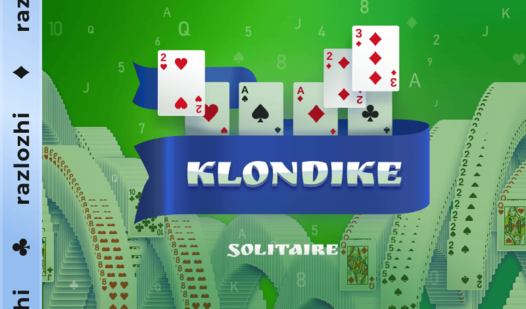
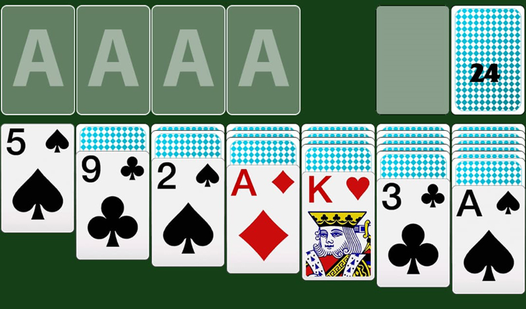
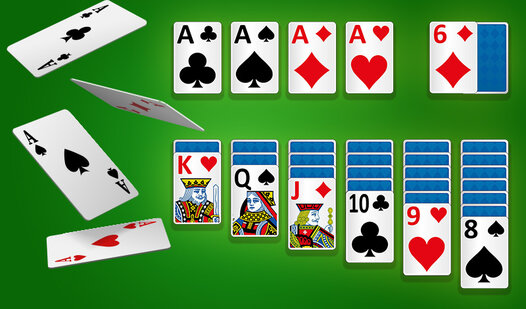
Klondike is the classic card solitaire game — the one most people think of when someone says "solitaire." You deal 28 cards into seven tableau columns and work to move all 52 cards to four foundation piles, sorted by suit from Ace to King. The decision-making is similar to marble solitaire in that every move affects your future options, and there's no such thing as a "safe" move that doesn't carry consequences.
Klondike Solitaire
Card enthusiasts seeking a classic mental challenge will find their perfect match in Klondike Solitaire. This timeless puzzle tests your patience and ...
▶ Play FreeSpider Solitaire (1, 2, and 4 Suits)
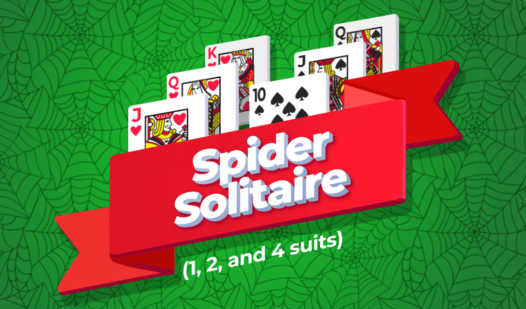
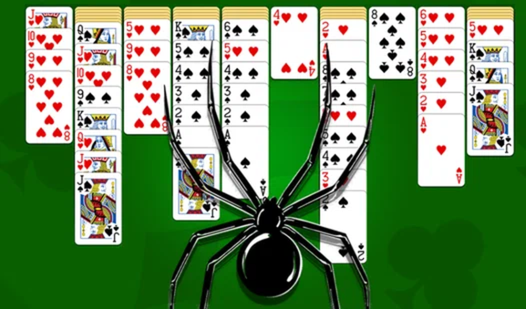
Spider Solitaire is arguably the most challenging mainstream card solitaire variant. You're trying to build complete sequences of 13 cards in the same suit, from King down to Ace, across ten tableau columns. The one-suit version is manageable for beginners; the four-suit version is brutally difficult and requires the kind of deep planning that marble solitaire veterans will find familiar. Three difficulty levels in one game means you can scale up as your skills improve.
Spider Solitaire (1, 2, and 4 suits)
Arrange descending sequences of the same suit from king to ace to clear the board. Spider Solitaire offers a classic card game experience with multipl...
▶ Play FreeFreeCell Solitaire 2024
FreeCell is unique among solitaire games because almost every deal is solvable — the randomness is minimal, and skill is the dominant factor. You have four "free cells" where you can temporarily park cards, giving you a buffer to maneuver the tableau. It's a game where planning matters enormously, and the satisfaction of solving a FreeCell hand through pure logic mirrors the feeling of cracking a marble solitaire puzzle.
FreeCell Solitaire 2024
Staring at a blank screen during your coffee break is the perfect sign that you need a mental refresh. FreeCell Solitaire 2024 offers the ideal escape...
▶ Play FreeMahjong Solitaire For Free
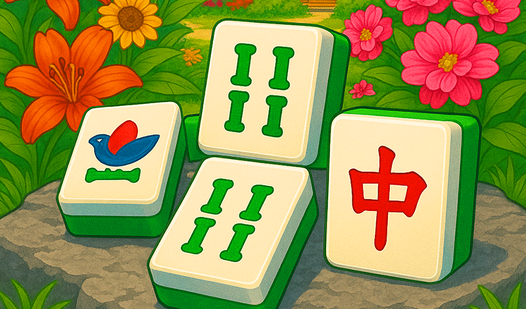
Mahjong solitaire swaps cards for tiles arranged in elaborate stacks. You match pairs of identical tiles to clear the board, but only "free" tiles — those not covered by other tiles and accessible from at least one side — can be selected. The spatial reasoning required is closer to marble solitaire than any card game: you're constantly evaluating which tiles to remove now versus which to save for later, knowing that uncovering certain tiles might block you further down the line.
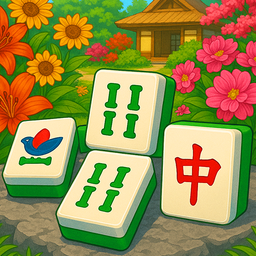
Mahjong Solitaire For Free
Match pairs of identical tiles to clear the board in this relaxing brain teaser. Your main objective is to identify free pieces and remove them from t...
▶ Play FreeDreamland Solitaire
Dreamland Solitaire puts a magical spin on classic Klondike with a beautifully illustrated fantasy setting. Underneath the aesthetic, the mechanics are solid Klondike, but the visual design makes extended play sessions genuinely pleasant. If you're looking for a calming puzzle experience after the brain-burning focus that marble solitaire demands, Dreamland's atmosphere hits that spot.
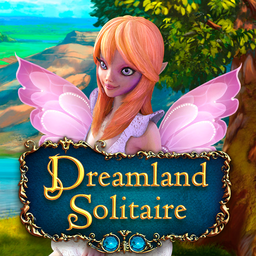
Dreamland Solitaire
Fans of card games will find a new obsession in Dreamland Solitaire as it blends relaxing strategy with a charming magical aesthetic. Your main missio...
▶ Play FreeMore Solitaire Games Worth Trying
The FreeJoy catalog has a deep selection of solitaire variants. Here are more options to explore:
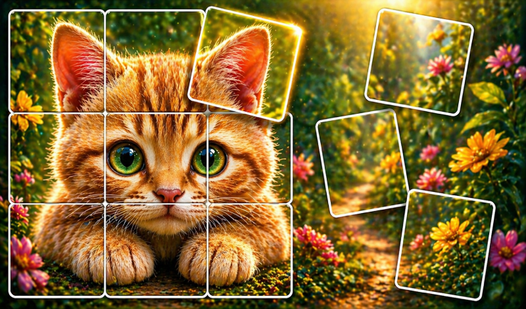
Jigsaw Solitaire blends jigsaw puzzles with card mechanics for a genuinely unusual hybrid experience.
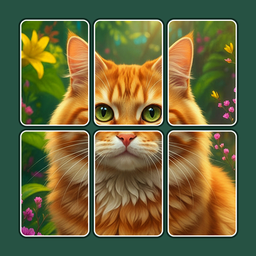
Jigsaw Solitaire
Fans of logic challenges and beautiful visuals will find Jigsaw Solitaire the ultimate way to decompress after a long day. This refreshing take on the...
▶ Play FreeSolitaire Swift focuses on speed — a great option when you want quick sessions without a long setup.
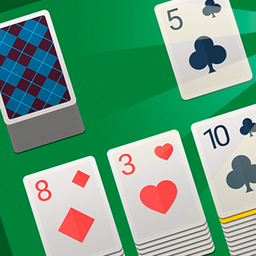
Solitaire Swift
Clear the board by matching cards one rank higher or lower regardless of their suit or color. Solitaire Swift keeps your brain sharp as you strategica...
▶ Play FreeMaps – Solitaire Spider brings the Spider format to an adventure-themed board, adding light progression to the classic ruleset.
Maps - Solitaire Spider
Card game enthusiasts who enjoy a good mental workout will find Maps - Solitaire Spider the perfect companion for a quick break. This addictive challe...
▶ Play FreeSolitaire for 1 and 3 Cards lets you choose between drawing one card at a time (easier) or three cards at a time (harder), giving you direct control over the difficulty.
Solitaire for 1 and 3 cards
Staring at a blank screen during a midday slump is the worst, but a quick round of Solitaire for 1 and 3 cards is the perfect mental reset. This class...
▶ Play FreeJigsolitaire is another hybrid format, worth trying if you've exhausted the standard Klondike variants and want something fresh.

Jigsolitaire
Staring at a blank screen during a midday slump is the worst, but finding a quick way to reset your brain is a total game changer. Jigsolitaire acts a...
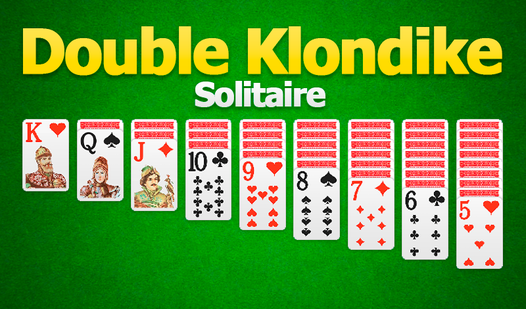
▶ Play FreeDouble Klondike Solitaire uses two decks and a wider tableau — more cards, more complexity, and more satisfying when you win.
Double Klondike Solitaire
Arrange cards by suit from Ace to King across eight foundation piles in this challenging variation of the classic card game. Double Klondike Solitaire...
▶ Play FreeIncredible Solitaire offers a polished all-around solitaire experience with clean visuals and smooth gameplay.
Incredible Solitaire
Solitaire challenges have been the ultimate way to sharpen your focus and pass the time for generations. Incredible Solitaire takes this classic exper...
▶ Play FreeSolitaire Klondike – Deluxe is the premium version of the Klondike experience, with refined graphics and additional game modes.
Solitaire Klondike - Deluxe
Card games remain the ultimate way to sharpen your mind while enjoying a relaxing break during a busy day. Solitaire Klondike - Deluxe brings the clas...
▶ Play FreeMarble Solitaire Tips for Beginners
Before you close this guide and go jump some marbles, here are a few practical tips worth memorizing:
Start with the triangular board. The 15-hole triangle is a much gentler introduction than the 33-hole English board. There are fewer states to track and the solutions are shorter. Once you can reliably solve the triangle, step up to the English board.
Write down your moves. Seriously. When you find a solution, write it down. Peg solitaire is hard enough that rediscovering a solution from scratch every time is frustrating. Building a personal notation record of solutions you've found lets you study what worked and why.
Play the same puzzle multiple times. Each attempt teaches you something about the board's structure. Players who rotate between many different puzzles tend to improve more slowly than those who focus on mastering one board at a time.
Don't be afraid to restart. There's no shame in resetting and trying again. Unlike many games, peg solitaire has no score to protect and no time limit to respect. Restarting the moment you recognize a losing position saves time and teaches restraint.
Study published solutions — then forget them. Read through a complete solution for the English board once to understand the types of move sequences that work. Then put it away and try to rediscover the solution on your own. The understanding sticks much better when you've done the work yourself.
Treat every game as practice. Even a "failed" game where you end up with three marbles instead of one tells you something. Where did the board get stuck? Which area became isolated first? Treat each attempt as data, and you'll improve faster than you'd expect.