Benefits of Solitaire Game: Why Playing Cards Is Good for You
Ask anyone who's ever lost track of time arranging red queens on black kings, and they'll tell you — solitaire isn't just a way to kill time. The benefits of solitaire game go far deeper than most people expect. From giving your brain a gentle workout to melting away stress after a long day, this classic card game has been quietly improving lives for centuries. And now that you can play solitaire games free online anytime, anywhere, there's never been a better moment to pick up the habit.
Whether you're a longtime fan or someone who's only clicked through a few rounds out of curiosity, this article breaks down exactly why solitaire deserves a regular spot in your routine — and which versions are worth your time.
Mental Health Benefits of Solitaire
One of the most underrated things about solitaire is what it does to your mental state. Unlike competitive games that pump you full of adrenaline and anxiety, solitaire operates at your own pace. There's no opponent to beat, no timer breathing down your neck (unless you choose to add one), and no social pressure. Just you, the cards, and a quiet goal.
That calm, focused state solitaire puts you in is sometimes called a "flow state" — a psychological condition where you're fully absorbed in a task that's challenging enough to keep you engaged but manageable enough that you don't feel overwhelmed. Flow states are strongly linked to feelings of happiness and reduced anxiety. Solitaire is one of the most accessible ways to trigger this state, and you don't need meditation training or special equipment to get there.
For people dealing with mild anxiety or restlessness, having a structured task with clear rules is genuinely soothing. The game gives your mind something concrete to latch onto, which prevents it from spiraling into rumination or worry. Some therapists even describe simple card games as a form of "active mindfulness" — you're present, focused, and calm without having to try hard to achieve that state.
There's also something psychologically satisfying about the visual order solitaire creates. Watching scattered cards gradually organize into neat, sequential piles taps into a basic human love of order and completion. That sense of satisfying progress — even in a small game — carries real emotional weight.
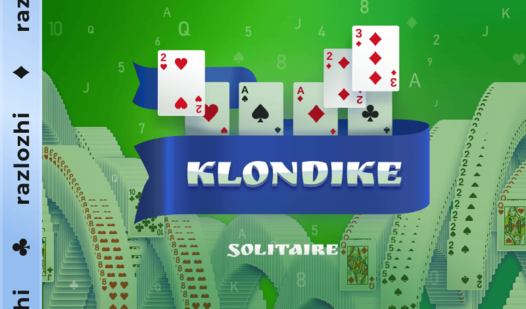
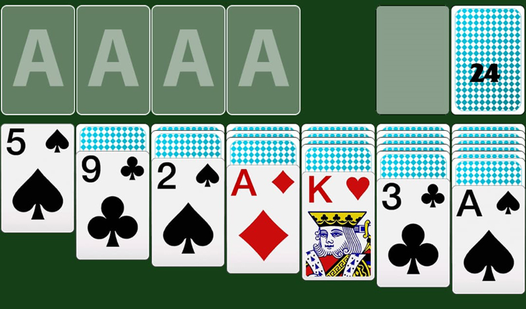
The classic version most people picture is Klondike Solitaire, and for good reason. Its rules are simple, the gameplay loop is deeply satisfying, and it's the foundation for pretty much every solitaire variant that came after.
Klondike Solitaire
Card enthusiasts seeking a classic mental challenge will find their perfect match in Klondike Solitaire. This timeless puzzle tests your patience and ...
▶ Play FreeBeyond the calm, solitaire also gives isolated individuals a meaningful way to spend time. For older adults especially, having a mentally engaging solo activity can reduce feelings of loneliness and keep daily routines structured. It's a small thing, but routine and gentle mental engagement matter a lot for long-term mental health.
Cognitive Benefits — Memory, Focus & Problem-Solving
Here's where the benefits of solitaire game get particularly interesting. What looks like a simple card-shuffling exercise is actually a surprisingly rich workout for your brain.
Memory. Every game of solitaire requires you to keep track of what cards have been played, which are still in the deck, and what's buried under face-down piles. You're constantly updating a mental model of the game state, even if you're not consciously aware of it. Over time, this trains your working memory — the mental "clipboard" you use to hold and manipulate information moment to moment.
Focus and attention. To play well, you can't just make random moves and hope for the best. You need to look several steps ahead, evaluate options, and pay attention to the entire board. This kind of sustained, directed attention is exactly the mental skill that gets harder as we age and easier when we practice it regularly. Solitaire is essentially a low-stakes attention training session.
Strategic thinking. Good solitaire players develop a sense for sequencing — which moves to prioritize, when to hold back, when to take a risk. This isn't just pattern recognition; it's genuine planning and decision-making under uncertainty. Research on card games consistently shows that regular players demonstrate better problem-solving skills and more flexible thinking.
Processing speed. Players who clock their games and try to improve their times gradually sharpen how quickly they can assess situations and act. This translates in subtle ways to everyday tasks that require quick thinking.
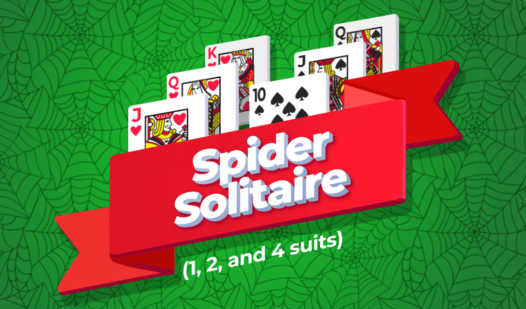
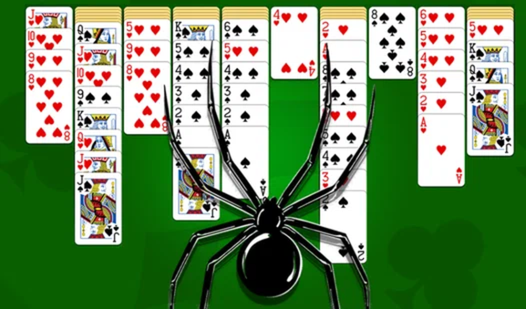
Spider Solitaire takes these cognitive demands to a whole new level. The 2-suit and 4-suit versions especially require serious forward planning and memory, since you're managing eight columns of cards and tracking multiple sequential builds at once.
Spider Solitaire (1, 2, and 4 suits)
Arrange descending sequences of the same suit from king to ace to clear the board. Spider Solitaire offers a classic card game experience with multipl...
▶ Play FreeFor younger players, solitaire builds foundational logic skills and introduces them to concepts like sequences, suits, and conditional thinking in a fun, low-pressure context. For older adults, maintaining regular mental engagement through games like solitaire is associated with slower cognitive decline. The research here is still evolving, but the consensus is clear: using your brain in varied, engaging ways is better than not using it.
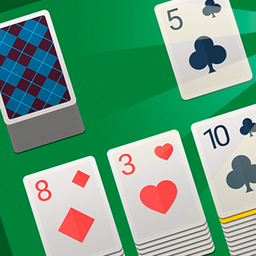
If you want variety without leaving your comfort zone, Solitaire Swift packages three different gameplay modes into a single clean interface — great for exercising slightly different cognitive muscles each session.
Solitaire Swift
Clear the board by matching cards one rank higher or lower regardless of their suit or color. Solitaire Swift keeps your brain sharp as you strategica...
▶ Play FreeSolitaire as a Stress Relief Tool
Let's be honest — a lot of people don't open a solitaire game because they're thinking about cognitive training. They open it because they need a break. And that's a completely valid and effective use of it.
The benefits of solitaire game as a stress relief tool are well-documented in casual form. The game gives your brain a permission slip to stop worrying about the big things for a while. It's absorbing enough to crowd out intrusive thoughts, but not so demanding that it adds its own layer of stress.
The repetitive, rhythmic nature of the gameplay — drawing cards, checking columns, moving stacks — creates a gentle, predictable pattern that many people find as calming as other rhythmic activities like knitting or doodling. Your nervous system interprets repetitive, controlled actions as a signal that things are okay. Over time, that response can become conditioned, so just opening a solitaire game starts to cue a more relaxed mental state.
There's also the matter of micro-breaks. Studies on productivity consistently show that short mental breaks — even five to ten minutes — significantly improve focus and output when you return to work. Solitaire is ideal for this: it has a natural endpoint, doesn't require social interaction, and gives your default mode network (the brain's "rest" state) a chance to reset.
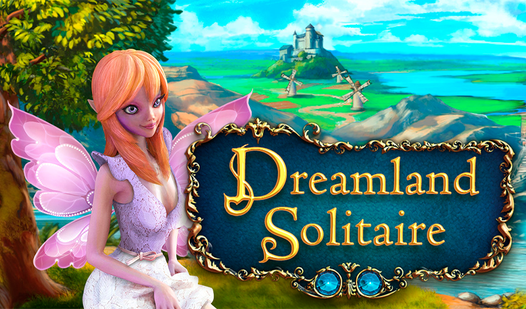
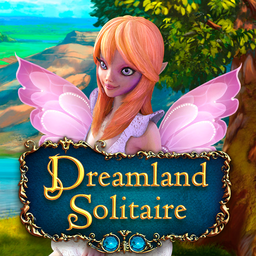
Dreamland Solitaire is specifically designed to maximize the relaxing side of solitaire. Its soft visual aesthetic, gentle animations, and low-pressure pacing make it feel like a mini-vacation for your brain.
Dreamland Solitaire
Fans of card games will find a new obsession in Dreamland Solitaire as it blends relaxing strategy with a charming magical aesthetic. Your main missio...
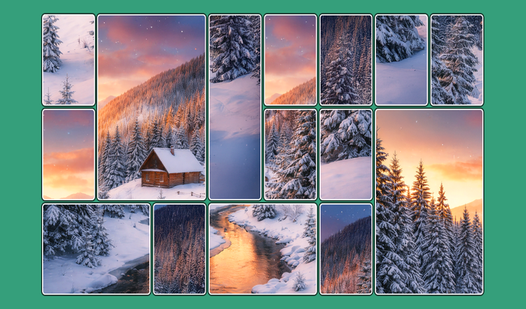
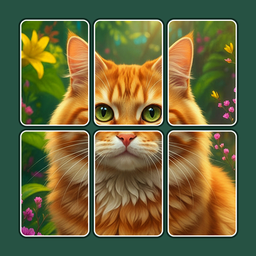
▶ Play FreeAnd if you want solitaire that blends the calming qualities of puzzle games with card mechanics, Jigsaw Solitaire is a genuinely lovely option. It combines the familiar sliding mechanics of jigsaw puzzles with solitaire gameplay, creating a slower, more meditative experience.
Jigsaw Solitaire
Fans of logic challenges and beautiful visuals will find Jigsaw Solitaire the ultimate way to decompress after a long day. This refreshing take on the...
▶ Play FreeOne thing worth understanding about solitaire as stress relief is that it works partly because of its low stakes. Losing a round costs you nothing. You can restart immediately with no penalty. That kind of consequence-free engagement is rare in adult life, where most activities carry real stakes. The psychological freedom of that is more significant than it sounds.
Best Free Online Solitaire Games to Try
If you want to actually experience the benefits of solitaire game rather than just read about them, here's a curated rundown of the best solitaire games online available right now — all free to play.
The great news about how to play solitaire online in 2024 is that the best versions are completely free, don't require downloads, and run beautifully in a browser. The era of installing software or paying for card game apps is over for most players.
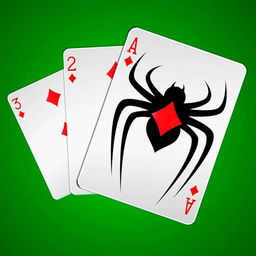
Maps - Solitaire Spider is a standout for players who love geography as much as cards. It wraps Spider Solitaire gameplay in a map-themed visual design, making each session feel like a mini travel experience. Surprisingly addictive for something that sounds gimmicky.
Maps - Solitaire Spider
Card game enthusiasts who enjoy a good mental workout will find Maps - Solitaire Spider the perfect companion for a quick break. This addictive challe...
▶ Play FreeSolitaire for 1 and 3 Cards gives you control over difficulty right from the start. Drawing 1 card at a time is more forgiving; drawing 3 is how most serious Klondike players prefer it. This version handles both modes cleanly and without fuss.
Solitaire for 1 and 3 cards
Staring at a blank screen during a midday slump is the worst, but a quick round of Solitaire for 1 and 3 cards is the perfect mental reset. This class...
▶ Play FreeIncredible Solitaire earns its name with polished visuals and smooth card physics. If aesthetics matter to you — and for a relaxing game, they should — this is one of the nicest-looking free solitaire games available online.
Incredible Solitaire
Solitaire challenges have been the ultimate way to sharpen your focus and pass the time for generations. Incredible Solitaire takes this classic exper...
▶ Play FreeScorpio - World Best Solitaires packs an enormous variety of solitaire formats into a single game. If you're still figuring out which solitaire variant you like best, this is the most efficient place to experiment.
Scorpio - world best solitaires!
Staring at a stagnant screen while your coffee gets cold is a classic sign that you need a mental refresh right now. Scorpio - world best solitaires! ...
▶ Play FreeSpider Solitaire Cards keeps things clean and classic. No frills, no distractions — just well-implemented Spider Solitaire with smooth performance. Exactly what you want when you just want to play.
Spider Solitaire Cards
Staring at a blank screen during a midday slump is the worst, but a quick mental reset can change your entire outlook. Spider Solitaire Cards serves a...
▶ Play FreeThe variety available when you play solitaire games free online today is genuinely impressive. There are themed versions, competitive leaderboard versions, multi-difficulty versions, and everything in between. Finding your preferred variant is part of the fun.
How Often Should You Play Solitaire?
This is a question that comes up more than you'd expect, and the honest answer is: it depends on what you're using it for.
For stress relief and mental breaks, short sessions are better than marathon ones. Ten to twenty minutes per break, a few times throughout the day, is an ideal pattern for most people. This keeps the game from becoming its own distraction while still delivering the cognitive and relaxation benefits it offers.
For cognitive training purposes, consistency matters more than session length. Playing for thirty minutes daily is more beneficial than playing for three hours one day and nothing for the rest of the week. The brain builds habits and neural pathways through repeated, spaced engagement — not through rare intensive bursts.
For pure enjoyment, obviously, play as much as you want. Solitaire is not a game that causes the kind of addictive engagement loops that some modern mobile games engineer. Its natural structure — discrete games with clear endpoints — helps keep sessions self-limiting for most people.
The one thing to watch is if solitaire starts functioning as avoidance rather than relief. There's a difference between taking a healthy mental break and using the game to avoid dealing with tasks or emotions. If you notice the latter, it's worth reflecting on. For the vast majority of players, though, solitaire is a healthy, low-risk activity with genuine upsides.
The best solitaire games online tend to be the ones that respect your time — clear interfaces, no forced ads every thirty seconds, and smooth performance. The games listed in this article all meet that bar.
There's also something to be said for the social dimension of solitaire, even though it's a solo game. Sharing a particularly good win, discussing strategy, or recommending a new variant to a friend keeps the experience connected to other people in a light, low-stakes way. Online communities around solitaire are surprisingly active and friendly.