How to Play Psychology Games: Rules and Strategies
Psychology games occupy a unique space in online gaming — they challenge your mind, test your social instincts, and reward players who can think several steps ahead. If you've been curious about how to play Psychology-style games, what the rules look like, and which strategies actually work, you're in the right place. This guide covers everything from the basics of psychological gameplay to advanced tactics, plus a curated list of free games you can try right now.
What Are Psychology Games?
At their core, Psychology games are about understanding people — or outsmarting them. Unlike pure skill games (like shooters or platformers), Psychology-style games ask you to model another person's thinking. You need to predict what your opponent will do, manipulate their expectations, read subtle cues, and sometimes project false signals to mislead them.
This category is broad. It includes card games built on bluffing, social deduction games where hidden roles create tension, communication games that expose how humans interact under pressure, and even puzzle games that mirror cognitive processes like memory and pattern recognition.
The unifying thread? Your brain is the most important tool. Raw reaction time matters less than the ability to anticipate, adapt, and stay calm when things get unpredictable.
Why Psychology Games Are Worth Playing
Beyond entertainment, these games genuinely sharpen real-world skills. Regular players often report improvements in:
- Reading social cues — recognizing hesitation, overconfidence, or nervousness in others
- Decision-making under uncertainty — acting without complete information
- Emotional regulation — keeping a calm exterior when you're under pressure
- Strategic patience — knowing when to act and when to wait
These aren't trivial benefits. Whether you're in a business negotiation, a competitive sport, or just navigating complex social situations, the mental muscles you build through Psychology games transfer directly.
How to Play Psychology: Core Rules and Mechanics
Knowing how to play Psychology games starts with understanding their shared structural DNA. While every game has its own specific rules, most Psychology-oriented games share a few common mechanics.
Hidden Information
Almost every Psychology game involves asymmetric information — you know something your opponent doesn't, and vice versa. The game becomes a contest of inference. You try to figure out what they're hiding; they try to figure out what you're hiding.
In card games, this might mean concealed hands. In social deduction games, it's hidden roles. In communication games, it's the gap between what someone says and what they actually mean.
Signaling and Misdirection
Because you hold hidden information, your actions carry signals. When you make a move, you reveal something about your position — or you deliberately reveal false information to mislead. This is the core tension of psychological gameplay.
Beginners tend to play straightforwardly, acting exactly as their position dictates. Intermediate players learn to bluff. Advanced players learn to bluff about bluffing — acting weak when strong, strong when weak, and varying their patterns enough that opponents can't find a reliable read.
Voice Chat Online captures this dynamic brilliantly. It connects you with random players in real-time voice communication, creating a live social laboratory. You have to manage impressions, pick up on vocal cues, and navigate the social dynamics of interacting with strangers — exactly the skills Psychology games are designed to develop.
Voice Chat Online
Social butterflies and those craving genuine connections will love Voice Chat Online for its stress-free approach to meeting new people. This platform...
▶ Play FreePattern Recognition and Cognitive Traps
Many Psychology games embed cognitive traps — situations designed to exploit how human brains naturally (and incorrectly) process information. Gambler's fallacy, confirmation bias, and anchoring effects all show up in well-designed Psychology games.
Recognizing these traps in yourself is half the battle. When you've lost five hands in a row and feel like you're "due" for a win, that's a cognitive trap. Skilled Psychology game players develop metacognitive awareness — they monitor their own thinking patterns for these distortions.
Psychology Strategies That Actually Work
Here's where understanding how to play Psychology games gets practical. These strategies apply across a wide range of game types.
Strategy 1: Establish a Baseline First
Before you start manipulating opponents, you need to understand their baseline behavior. How do they act when they have a strong position? What changes when they're uncertain? How do they respond to pressure?
In the first few rounds of any Psychology game, prioritize information gathering over winning. Play somewhat conventionally so your opponents reveal their natural patterns. Once you understand how they think, you can exploit those patterns.
Strategy 2: Control Your Own Tells
A "tell" is any behavioral pattern that leaks information about your position. In card games, it might be how long you pause before betting. In social games, it might be a particular phrase you use when uncomfortable.
The best way to eliminate tells isn't to suppress them — that often creates new, obvious tells. Instead, deliberately introduce variation. Pause equally on strong and weak hands. Use the same phrasing regardless of your position. Make randomness a deliberate part of your style.
Spider Solitaire is a surprisingly effective training tool for this. The game demands that you evaluate multiple solution paths simultaneously and commit to one without certainty — building exactly the kind of deliberate, un-rushed decision-making that masks tells in social play. Available in 1, 2, and 4-suit variants for increasing difficulty.
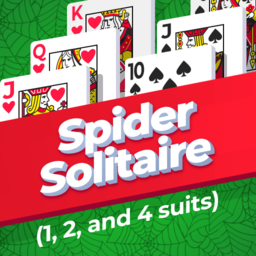
Spider Solitaire (1, 2, and 4 suits)
Arrange descending sequences of the same suit from king to ace to clear the board. Spider Solitaire offers a classic card game experience with multipl...
▶ Play FreeStrategy 3: Model Your Opponent's Model
This is the advanced move. Don't just think about what your opponent knows — think about what they think you know. And then think about what they think you think they know.
This recursive modeling sounds dizzying, but it becomes intuitive with practice. It's what allows experienced players to set up elaborate multi-step traps, planting false information several moves in advance and watching their opponent walk into it.
Strategy 4: Use Patience as a Weapon
Psychological pressure builds over time. Players who are uncertain, confused, or under stress tend to make impulsive moves. If you can maintain composure while your opponent grows anxious, they'll often make the mistake for you.
Klondike Solitaire, though a solo game, trains this exact quality. There's no opponent to rush you, which means impatience is entirely self-imposed — and recognizing it teaches you how impatience feels before you're playing against someone who can exploit it.
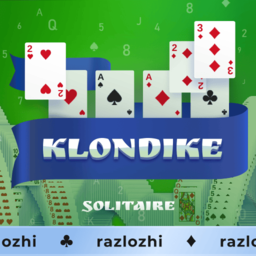
Klondike Solitaire
Card enthusiasts seeking a classic mental challenge will find their perfect match in Klondike Solitaire. This timeless puzzle tests your patience and ...
▶ Play FreeStrategy 5: Vary Your Patterns Deliberately
Predictability kills you in Psychology games. If you always bluff from a specific position, your opponents will figure it out. The solution isn't to bluff randomly — random isn't the same as unpredictable in a strategic sense. Instead, vary your patterns based on what story you're trying to tell.
Think of each game as a narrative. What does your opponent believe about you? Is that belief serving you or working against you? Adjust your pattern to reshape their belief.
The Role of Social Psychology in Gaming
Psychology games draw heavily from actual social psychology research. Several concepts show up repeatedly in both game design and effective strategy.
The Theory of Mind
Theory of Mind is the cognitive ability to attribute mental states — beliefs, intentions, desires — to others. It's what allows us to understand that another person has a different perspective than our own. This is the foundational skill for all Psychology games.
Interestingly, Theory of Mind can be trained. Multiplayer games that require you to model other players' thinking are, in a very real sense, exercises in social cognition.
Loss Aversion
People feel losses more intensely than equivalent gains. This isn't rational, but it's consistently human. Skilled Psychology game players exploit this by framing situations in terms of what opponents stand to lose rather than gain — increasing their risk aversion and making them play more conservatively when you need space.
Durak is one of the most psychologically rich implementations of these concepts. The Russian card game requires constant bluffing, opponent reading, and strategic hand management. The goal isn't to score the most points — it's to not be the last person holding cards, which creates very different psychological incentives than most Western card games.
Durak
Staring at the clock and waiting for your shift to end can be mind-numbing, but a quick round of Durak is the perfect remedy for your boredom. This cl...
▶ Play FreeAnchoring Effects
The first number or option presented in a decision shapes all subsequent evaluation. In games, whoever sets the initial terms of an exchange often has a structural advantage. Skilled players recognize when they're being anchored and consciously recalibrate.
Free Psychology Games You Can Play Right Now
Here are the best free games that develop or embody psychological gameplay skills, all available online without registration.
Sea Battle 2
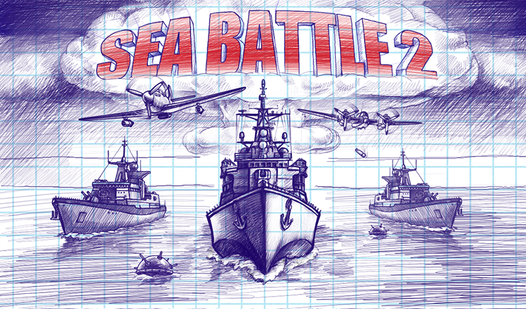
Pure strategic prediction. Sea Battle 2 (naval warfare strategy) is essentially applied game theory — you're modeling where your opponent placed their ships, updating your probability estimates with each shot, and trying to minimize the information you reveal about your own guesses. The psychological layer comes from the fact that your opponent is doing exactly the same thing to you simultaneously.
Sea Battle 2
Deploy your fleet across the grid and outsmart opponents in this classic naval warfare experience. Sea Battle 2 brings the nostalgia of pen-and-paper ...
▶ Play FreeBackgammon Narde Online
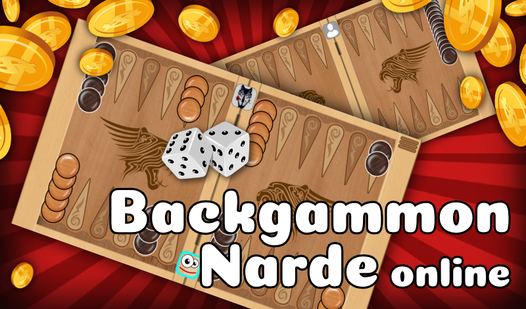
Backgammon involves both luck and skill, which creates an interesting psychological dimension: you can't fully control outcomes, only optimize decisions under uncertainty. This mirrors real-world high-stakes decisions more closely than pure skill games. Learning to play confidently despite incomplete control is a genuine psychological skill.
Backgammon Narde online
Staring at the screen during a long afternoon slump is the perfect excuse to sharpen your mind with a classic challenge. Backgammon Narde online bring...
▶ Play FreeDreamland Solitaire
Solitaire variants consistently appear in discussions of cognitive training because they require sustained attention, working memory, and forward planning — all core psychological capacities. Dreamland Solitaire wraps these demands in an atmospheric visual design that reduces anxiety and makes extended play sessions more comfortable.
Dreamland Solitaire
Fans of card games will find a new obsession in Dreamland Solitaire as it blends relaxing strategy with a charming magical aesthetic. Your main missio...
▶ Play FreeHorror Tale 2
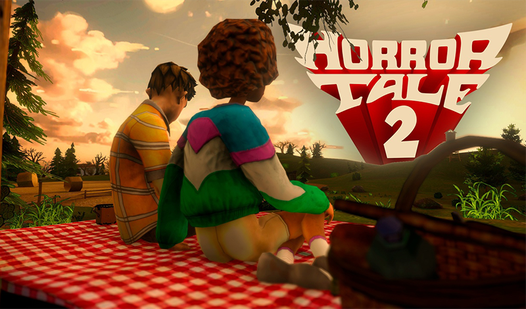
Horror games are a direct probe of psychological state. They're designed to create stress, uncertainty, and fear — and then reward players who can manage those states well enough to keep making good decisions. Horror Tale 2 tests this specifically: can you think clearly when everything in your environment is designed to make you panic?

Horror Tale 2
Staring at the clock during a long afternoon, you probably need a quick escape from the mundane. Horror Tale 2 acts as the perfect antidote, pulling y...
▶ Play FreeQuiz: Favorite Films of the USSR
Knowledge quizzes might seem distant from Psychology gameplay, but competitive quiz formats develop a specific psychological skill: confidence calibration. You need to know not just what you know, but how confident to be in what you know. Overconfidence and underconfidence are both costly. This quiz, focused on Soviet cinema, trains that calibration in an engaging format.

Quiz: Favorite Films of the USSR
Staring at the clock waiting for your shift to end or just bored mid-commute often feels like a drag. Quiz: Favorite Films of the USSR is the perfect ...
▶ Play FreeAttack on the Village of Noob and Friends
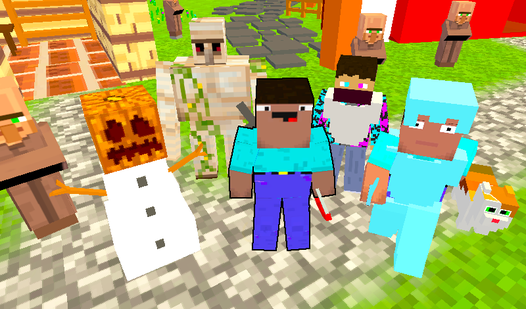
Multiplayer games with social dynamics, alliances, and conflict create rich psychological environments. This game involves coordinating attacks, managing trust with other players, and navigating the social complexity of group conflict — all territory where psychology dominates skill.
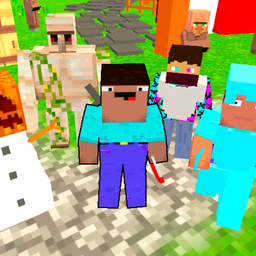
Attack on the village of noob and friends
Staring at the screen during a mid-day slump is the worst, but finding the right distraction can turn your entire mood around. Attack on the village o...
▶ Play FreeBuilding a Psychology Games Practice
If you want to genuinely improve at Psychology games, treat it like any skill development: deliberate practice, reflection, and progressive challenge.
Start with solo games. Solitaire variants and puzzle games develop core cognitive capacities — pattern recognition, working memory, attention — without the social pressure of live opponents. Build these foundations before stressing them with competition.
Move to games against AI. Most online card and strategy games offer AI opponents. These are imperfect psychological models, but they're useful for learning the mechanics of bluffing and prediction without consequences.
Play live with low stakes. Free online multiplayer is the ideal training ground. The stakes are low enough that losing doesn't hurt, but the social dynamics are real because human opponents genuinely try to win.
Review your decisions, not just your results. After a session, think about specific decisions — not whether you won or lost, but whether the reasoning behind your choices was sound. Good process produces good results over time; focusing on outcomes creates bad habits.
Seek out harder opponents. Deliberate practice means operating at the edge of your competence. Playing only against opponents you can beat consistently produces comfort, not growth.
Common Mistakes in Psychology Games
Even players who understand the theory make these recurring errors:
Over-complicating strategy against simple opponents. Elaborate multi-step deceptions are wasted on players who aren't paying attention. Against unsophisticated opponents, simple and direct is usually better than clever.
Confusing randomness with unpredictability. Acting randomly doesn't make you unpredictable in a strategically useful way — it just makes you chaotic. Effective unpredictability means varying patterns in ways that serve a narrative.
Projecting your own psychology onto opponents. You might find certain situations stressful that don't affect your opponent the same way. Understanding their psychology requires observing them, not extrapolating from yourself.
Neglecting the emotional layer. Games involve emotions — frustration, excitement, anxiety, overconfidence. Tracking your own emotional state during play, and noticing how it affects your decisions, is as important as any strategic consideration.
Ignoring momentum. Extended games have psychological momentum. A player who has been losing often becomes either reckless or overly conservative. Recognizing when momentum is working for you (and pressing the advantage) or against you (and resetting the dynamic) is a key skill.
Why Psychology Rules Strategy Games
Most strategy games eventually come down to psychology once both players reach technical competence. The game theory, the math, the optimal plays — these become table stakes. What separates advanced players is the psychological layer: who can stay calmer, read the opponent more accurately, manage their own cognitive biases more effectively, and execute under pressure.
This is why Psychology games specifically — those designed to surface and exploit psychological dynamics — are so valuable as training tools. They put the psychological layer front and center, forcing you to engage with it directly rather than treating it as a secondary concern behind mechanical skill.
The games listed in this guide range from direct social interaction (Voice Chat Online) to cerebral strategic prediction (Sea Battle 2) to cognitive training wrapped in relaxing formats (Klondike, Spider Solitaire). Together, they cover the full spectrum of skills that psychological gameplay demands.