How to Play Lego: Rules, Strategies & Free Games
If you've ever wondered how to play Lego — whether you're picking up a physical brick set for the first time or jumping into a Lego online game — you're in exactly the right place. Lego is more than stacking plastic bricks; it's a whole creative universe with its own logic, its own visual language, and a surprising amount of strategic depth once you get past the surface. This guide covers everything: the basic rules, practical strategies that actually help, and the best free Lego games you can play right now in your browser without downloading anything.
What Is Lego?
Lego started in 1932 in a small workshop in Billund, Denmark. The founder, Ole Kirk Christiansen, built wooden toys and named his company from the Danish phrase "leg godt" — play well. The iconic interlocking plastic brick arrived in 1958, and that basic design has remained essentially unchanged ever since.
Today, Lego spans an enormous range of formats:
- Physical sets — from 50-piece starter kits to 10,000-piece architectural monstrosities that take a full weekend
- Console and PC video games — the TT Games series covering Star Wars, Marvel, Batman, Harry Potter, and dozens more
- Online browser games — free, instant-play experiences that capture the building spirit without requiring a download
- Creative competitions — MOC (My Own Creation) contests, speed builds, themed challenges with real prizes
- Lego Education — dedicated kits used in classrooms worldwide to teach engineering, robotics, and programming
The physical and digital worlds have grown so intertwined that most serious Lego fans engage with both. You might build a physical set, then jump into a browser game to try a color variation you couldn't afford in bricks, then watch YouTube builders for inspiration. It's a hobby ecosystem, not just a toy.
How to Play Lego: The Core Rules
Understanding how to play Lego properly means mastering two different sets of rules: one for physical bricks and one for the digital games.
Physical Lego: The Fundamentals
Sort before you build. This sounds tedious until you've spent 20 minutes hunting for a single 1×2 tile in an unsorted pile of 5,000 pieces. Even a rough sort by color or size dramatically speeds up the build. Experienced builders use shallow trays, muffin tins, and small bowls to organize mid-build.
Understand the stud system. Every standard Lego brick is measured in studs — the round raised bumps on top. A 2×4 brick is 2 studs wide and 4 studs long. A 1×1 plate is one stud in each direction. Once you internalize this grid system, you can estimate dimensions, plan layouts, and troubleshoot connection problems instantly.
Follow the manual, at least the first time. Official Lego instruction booklets are genuinely remarkable pieces of engineering communication. They teach you advanced techniques through simple steps, without ever labeling them as "advanced." Building the intended model first gives you an education in clever construction before you start improvising.
Don't force pieces. If a connection requires pressure, something is wrong. Lego's system is designed so that correct connections click in smoothly and incorrect ones don't fit at all. Forcing mismatched pieces risks cracking them — and a cracked Lego brick is surprisingly sad.
Build from the base up. Stability in large Lego builds comes from a solid foundation. Large baseplate tiles, spread weight evenly across the bottom layer, let you build taller and more complex structures without wobble. This principle applies equally to physical builds and browser construction games.
Use odd numbers for visual interest. This comes from graphic design, but experienced Lego builders apply it constantly: groups of 3, 5, or 7 elements look more natural and interesting than groups of 2 or 4. Three windows on a wall, five trees in a landscape, seven studs on a decorative edge. Your eye accepts odd groupings as organic rather than mechanical.

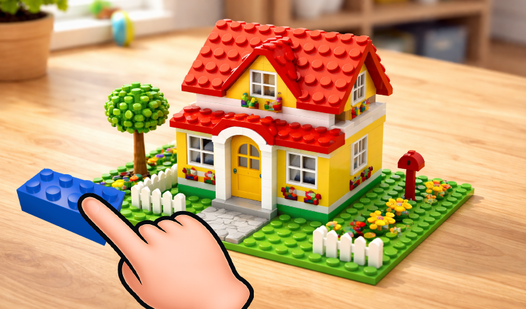
Lego constructor
Staring at a blank screen while your brain feels like mush is the ultimate afternoon slump. Lego constructor is the perfect digital pick-me-up that tu...
▶ Play FreeLego Video Games: The Basic Loop
The TT Games Lego series follows a consistent logic across all its titles. If you understand the loop, every new game becomes instantly approachable:
Collect studs obsessively. Studs are the in-game currency and scattered everywhere. Smash every box, barrel, vase, and vehicle you see. You'll need studs to unlock characters, vehicles, and extras.
Fill the True Jedi bar. Each level has a stud target. Hit it to achieve True Jedi status and unlock a Minikit piece or bonus content. You usually can't hit the target on a first playthrough — the game expects you to come back.
Replay with different characters. Most areas in Lego games are only accessible to characters with specific abilities — a grapple hook, a magic wand, super strength, hacking skills. Completing a level unlocks free play, where you can return with any characters you've collected and reach previously blocked areas.
Break the environment constantly. Lego game environments are almost entirely destructible, and hidden items are everywhere. If you haven't smashed every object in a room, you haven't finished that room.
Use co-op whenever possible. Every mainline Lego game supports split-screen co-op. Two players covering different parts of a level collect more studs, solve puzzles faster, and have significantly more fun.
How to Play Lego: Strategies That Actually Help
Moving from knowing the rules to genuinely getting good at Lego — physical or digital — requires a few key shifts in how you approach building.
Master SNOT Technique
SNOT stands for "Studs Not On Top." It means building with bricks oriented sideways or inverted to create smooth surfaces, complex angles, and realistic textures. Every time you see a curved car body, a smooth wall, or a rounded dome in an official Lego set, SNOT technique is responsible. It looks complicated but the concept is simple: any brick can be a connection point from multiple directions.
Use Technic Pieces as Hidden Skeleton
Lego Technic was originally designed for mechanical models with moving parts. But experienced builders use Technic beams, axles, and connectors as internal structural support — hidden inside large creations to provide rigidity without adding visual bulk. Think of it like rebar inside concrete.
Limit Your Color Palette in MOC Builds
MOC means "My Own Creation" — Lego builds you design yourself without an official set. The number one mistake beginners make is using too many colors. Look at any official Lego set: 2-3 primary colors, 1-2 accent colors. That's it. Random color mixing makes even well-designed structures look chaotic. Pick your palette before you start placing pieces and stick to it.
Study Real-World References
The best builders constantly reference photographs of real structures, vehicles, and objects. Want to build a convincing Gothic cathedral? Study the proportions of real ones — the flying buttresses, the tower placement, the relative height of nave vs transept. Lego bricks can approximate almost any shape if you understand the geometry of what you're replicating.
Speed Build for Creative Development
Set a 15-minute timer and build something from whatever bricks you have on hand. No plan, just build. Timed constraints force improvisation and teach you to work with limitations rather than spending time searching for the "perfect" piece. Most experienced builders credit speed builds with some of their biggest creative breakthroughs — constraint produces invention.
Lego Zoo: Collect All the Animals
Staring at the clock and waiting for your day to brighten up is a struggle we all know too well. Lego Zoo: Collect All the Animals is the perfect crea...
▶ Play FreeIn Digital Lego Games: Prioritize Exploration Over Speed
The Lego video game formula rewards thorough exploration far more than speedrunning. Players who rush through levels miss most of the content, studs, and characters. Move through each environment systematically — clear the left side, then right, smash everything, check every corner. You're not trying to finish; you're trying to harvest the level completely.
Lego Online: The Best Free Games Right Now
Browser-based Lego games have come a long way. The best ones genuinely capture what makes physical building satisfying — the spatial reasoning, the creative decisions, the click of pieces coming together — while adding things bricks can't do, like infinite undo, physics simulation, and challenge modes.
Here are the best free Lego games available on FreeJoy, with tips for each.
Lego Constructor 3D
Lego Constructor 3D takes the building experience into three dimensions. You place bricks in a 3D grid, rotate your view freely, and build structures that look good from every angle. The spatial challenge is significantly higher than 2D builders — you have to think about depth and height simultaneously.
Starting strategy: build a simple enclosed box shape first to get comfortable with the 3D grid. Then deconstruct it and build something more ambitious. Understanding how the axes relate to each other is the entire learning curve; once it clicks, the game opens up.

Lego Constructor 3D
Staring at a blank screen while your brain feels like mush is a universal struggle during work or study hours. Lego Constructor 3D offers the perfect ...
▶ Play FreeLego Batman City Speed
Lego Batman City Speed is an action-racing game set in the distinctive Lego Batman visual universe. You're racing through Gotham City streets, dodging obstacles, collecting power-ups, and maintaining momentum through turns and straightaways.
The rhythm of this game is everything: learn the track layout, anticipate obstacle placements, and brake slightly before corners rather than through them. Speed boosts should take priority over coins when both are available simultaneously. The Lego visual style — dark backgrounds, bright brick-built obstacles, chunky character models — makes the speed feel faster than it actually is, which is a great design trick.

Lego Batman City Speed
Staring at the clock waiting for a break is a drag when you could be tearing up the streets of Gotham. Lego Batman City Speed is the ultimate digital ...
▶ Play FreeBuild Lego Cars
Build Lego Cars is a focused vehicle construction game where you assemble cars piece by piece from a parts library. The satisfaction comes from the methodical assembly loop — identify the piece, place it correctly, watch the car take shape.
The critical starting tip: always begin with the wheel axles and work outward. Wheel alignment issues propagate through the entire build — a slightly off axle makes everything else sit wrong. Get the rolling chassis solid first, then add the body. This mirrors how real car manufacturing actually works, which gives the game an unexpected authenticity.

Build Lego Cars
Staring at the screen during a dull afternoon can feel draining when you just need a quick mental escape. Build Lego Cars offers the perfect remedy by...
▶ Play FreeLego Master!
Lego Master! introduces a competitive element — you're given a target model and a selection of pieces, and you race to replicate it as quickly and accurately as possible. It's a test of both visual reading skills and execution speed.
The key insight: spend the first 10-15 seconds only studying the target image before placing a single piece. Identify the largest structural elements, then plan your placement order from the outside in. Players who immediately start placing pieces almost always have to backtrack, which costs more time than the initial analysis.

Lego Master!
Snap colorful bricks together to build intricate structures in Lego Master! and unleash your inner architect. You navigate a virtual workshop where ev...
▶ Play FreeConstruction Set - 3D Builder
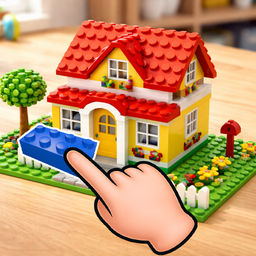
Construction Set - 3D Builder is an open sandbox builder — no target model, no timer, just a block library and empty space. This is the freest creative environment in the collection.
Give yourself constraints to make it more interesting. Pick a theme (medieval village, space station, underwater lab) and a size limit (fits in a 20×20 stud area). Self-imposed rules produce more interesting builds than total freedom. The sandbox format also makes this the ideal game for trying out color combinations and structural techniques before committing to them in a more structured game.
Construction Set - 3D Builder
Staring at a blank screen during your lunch break is a recipe for boredom that Construction Set - 3D Builder fixes in seconds. This digital brick buil...
▶ Play FreeBlock-Based Games Beyond the Brick
The Lego spirit — block-based worlds, spatial reasoning, building and obstacle-navigating — extends into a broader category of browser games worth knowing.
Obby: Fish Training
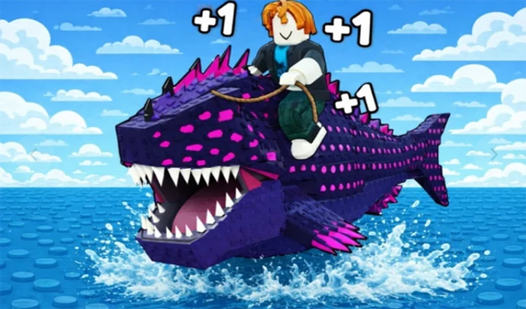
Obby: Fish Training puts you through a series of obstacle course challenges in a colorful block-built environment. The gameplay demands precision movement and pattern recognition. Think of it as the platformer version of Lego's physical dexterity — you're navigating through constructed spaces rather than building them.

Obby: Fish training
Midday slump hitting hard and need a refreshing escape from the daily grind? Obby: Fish training offers the perfect underwater remedy by letting you n...
▶ Play FreeObby: Brainrot Tower Defense
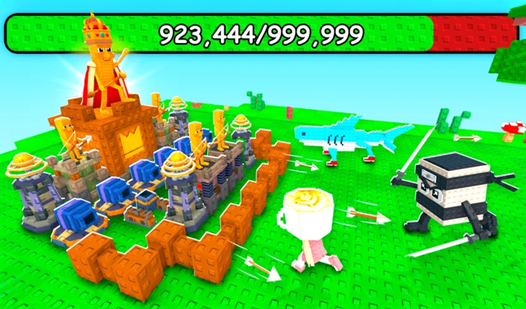
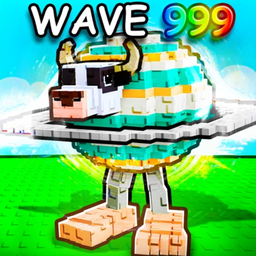
Obby: Brainrot Tower Defense applies block-world aesthetics to a strategy context. You're placing defensive structures, managing resources between waves, and adapting to different enemy types and approach vectors. The spatial planning required here — where to build, what to prioritize, how to use the terrain — is genuinely similar to the structural thinking behind complex Lego builds.
Obby: Brainrot Tower Defense
Fans of strategic challenges will find endless excitement in Obby: Brainrot Tower Defense as they defend their base against relentless waves. This int...
▶ Play FreeObby: Dig Down
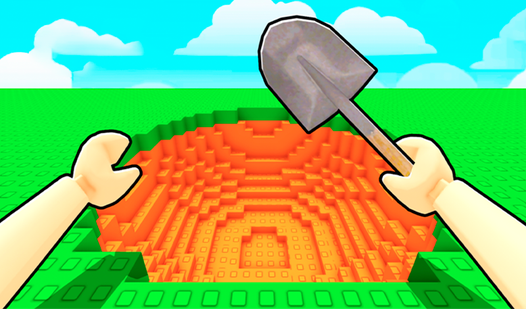
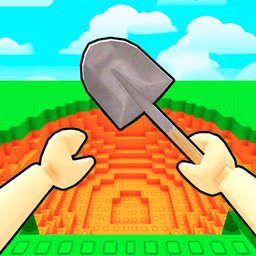
Obby: Dig Down reverses the usual building-upward logic and sends you excavating. You're navigating underground block environments, dealing with physics constraints and collapse risk. It's a useful reminder that block-based games have as much depth below the surface as above it.
Obby: Dig Down
Fans of digging simulators and block-breaking challenges will find their new obsession in Obby: Dig Down. This addictive mining adventure tasks you wi...
▶ Play FreeWhy Lego Translates So Well to Online Games
There's something specific about Lego that makes it an unusually strong fit for digital formats. Unlike most physical toys, Lego's appeal is fundamentally systematic — the pleasure comes from understanding a rule set (the stud grid, the connection system, the piece library) and then using those rules to create something new. That systematic nature maps directly to game design.
Digital Lego environments can do things physical bricks cannot: infinite undo, impossible color combinations, gravity-defying structures, piece libraries that would cost thousands of dollars to own physically, instant sharing with other players, and scoring systems that give structure to freeform creativity.
The best browser Lego games don't try to replace physical building — they complement it. They let you experiment with designs that would be prohibitively expensive in physical bricks, test color palettes before ordering parts, or simply enjoy the building loop during a five-minute break. Free, instant-play browser games remove every remaining barrier: no account, no download, no payment. Open the page, start building.
Getting Started: Your First Session
The most effective way to start is to stop planning and just play. Open any of the games above, spend five minutes clicking around with no goal. Get familiar with the controls. Build something small and imperfect.
Then set a challenge: build one recognizable object — a car, a house, an animal — using only the available pieces. Clear constraints focus creativity and give you a concrete measure of progress. After that, try Lego Master! for speed and accuracy practice. Move to the 3D builders to develop spatial reasoning. Add the Obby games for action-based variety.
The range of Lego-adjacent games on FreeJoy covers every mood: contemplative creative building, competitive speed challenges, strategic planning, and reflex-based action. There's no single right way to engage with this world — just keep building.