How to Play Against Computer: Rules, Tips & Best Games
Playing games against a computer is one of the most accessible and satisfying ways to sharpen your skills, kill time, and actually have fun — all without waiting for a friend to come online. Whether it's chess, checkers, sea battles, or card games, the "against computer" format has been a staple of online gaming for decades, and for good reason: the AI is always ready, it scales to your level, and it never rage-quits.
This guide covers how to play against computer in the most popular game categories, the core rules you need to know, and practical strategies that will help you stop losing to a machine. You'll also find a curated selection of the best free games to play right now — no registration, no downloads.
What Does "Against Computer" Actually Mean?
When a game offers an "Against Computer" mode, it means you're competing against an AI-controlled opponent rather than a human player. The computer follows the same rules you do, but its decision-making is handled by algorithms — ranging from simple random moves in beginner modes to sophisticated minimax trees and evaluation functions in harder difficulties.
This setup has a few big advantages:
- Always available. No need to wait for matchmaking or schedule a game with someone.
- Adjustable difficulty. Most games let you pick Easy, Medium, or Hard, so you can grow into the challenge.
- Zero pressure. You can think as long as you like, make mistakes, and learn without judgment.
- Great for practice. Playing against computer is the fastest way to internalize rules and test new strategies.
The term "against computer" covers dozens of game types — board games, card games, strategy games, puzzle games — but the core experience is the same: you versus a machine.
Core Rules Across Popular "Against Computer" Game Formats
Before jumping into strategy, it helps to understand how the major game categories work. Here's a quick rundown of the rules for the most popular formats.
Checkers (Draughts)
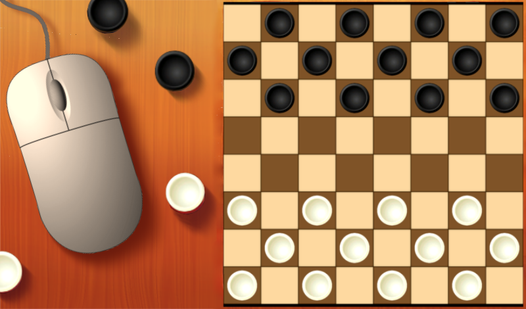
Checkers is one of the most iconic against-computer games. The standard rules:
- Played on an 8×8 board, each player starts with 12 pieces on the dark squares.
- Pieces move diagonally forward only, one square at a time.
- Captures are mandatory — if you can jump an opponent's piece, you must.
- Multiple jumps in one turn are allowed if they're available.
- When a piece reaches the opponent's back row, it becomes a King and can move diagonally in any direction.
- The player who captures all opponent pieces (or leaves them with no legal moves) wins.
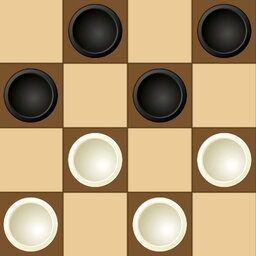
Checkers vs Computer
Strategic board games have challenged human intellect for centuries, and Checkers vs Computer brings that timeless intensity directly to your screen. ...
▶ Play FreeRussian Checkers
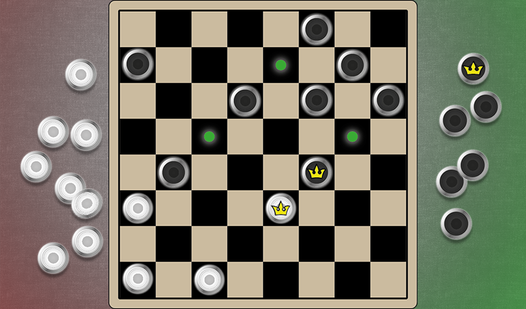
Russian Checkers follows mostly the same structure but with some key differences that make the game feel noticeably sharper:
- Kings can move any number of squares diagonally (like a bishop in chess).
- Capturing with a King can also move any number of squares after the jump.
- You must take the maximum number of captures available in a turn.
- A piece becomes a King as soon as it lands on the back row — even mid-capture sequence.
These rules mean Russian Checkers games tend to be more tactical and can end faster than standard checkers. The King's long-range movement completely changes endgame calculations.
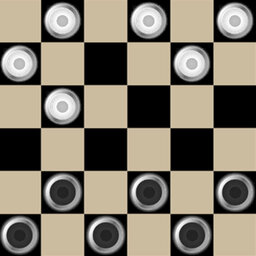
Russian Checkers vs. computer
Mastering strategy on a 64-square board remains the ultimate test of patience and tactical foresight for any board game enthusiast. Russian Checkers v...
▶ Play FreeChess
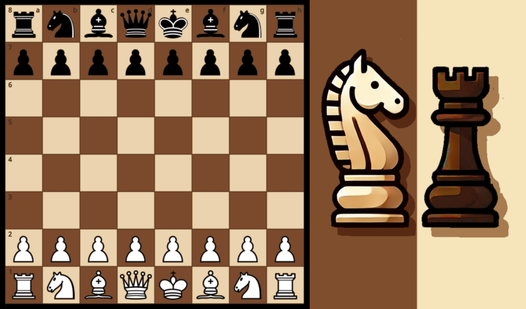
Chess is the gold standard of against-computer play. The rules are fixed and well-documented, but here's the quick version:
- Played on an 8×8 board with 16 pieces per side.
- Each piece type has unique movement: pawns move forward, knights jump in an L-shape, bishops move diagonally, rooks move in straight lines, queens combine rooks and bishops, and kings move one square in any direction.
- The goal is checkmate — putting the opponent's king in a position where it's under attack and can't escape.
- Special moves include castling (king + rook swap), en passant (pawn capture), and pawn promotion.
When playing against computer, difficulty levels typically correspond to how many moves ahead the AI calculates. Easy mode might look 2-3 moves ahead; Hard mode can look 10+.
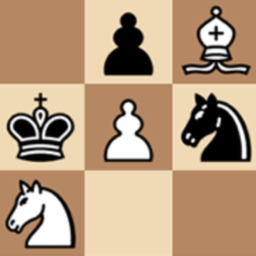
Chess with a computer
Mastering the ancient strategy of the royal game is a lifetime pursuit that begins with a single move. Chess with a computer offers the perfect digita...
▶ Play FreeSea Battle (Battleship)
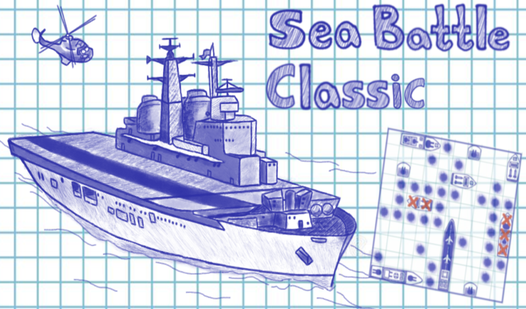
Sea Battle against the computer is a classic guessing game with a strategic layer:
- Each player places ships of different sizes on a 10×10 grid (hidden from the opponent).
- Players take turns calling out coordinates to "fire" at.
- If a shot hits a ship, it's marked; if it sinks the ship entirely, that ship is declared sunk.
- The first player to sink all of the opponent's ships wins.
Against computer, the AI typically uses a pattern-based or probability-based targeting system. On harder difficulties, it hunts efficiently once it scores a hit.
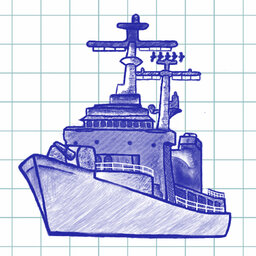
Sea Battle Classic
Tactical thinkers and fans of classic board games will find endless entertainment in Sea Battle Classic. This digital recreation perfectly captures th...
▶ Play FreeStrategies That Actually Work Against Computer AI
Playing against a machine is different from playing against a human. AI opponents have no emotions, no bad days, and no bluffing — but they do have exploitable patterns, especially at lower difficulty levels.
General Principles
Control the center. In board games like chess and checkers, central control gives your pieces more mobility and attacking options. AI at beginner levels often doesn't contest the center aggressively — take advantage.
Force predictable responses. Computers are deterministic: given the same position, they'll make the same move. If you find a line of play the AI handles poorly, you can repeat it.
Play for the endgame. Many AI opponents at medium difficulty excel at tactical combinations but struggle in pure endgames with few pieces. Simplifying the position when you're ahead in material is often the right call.
Don't rush. Unlike online PvP, there's no clock pressure against a casual AI. Take your time to spot threats before moving.
Checkers-Specific Tips
- Trade pieces when you're ahead in position, not material. Kings are worth much more than regular pieces, so avoid exchanges that leave you without king potential.
- Force the AI to the edges. Pieces on the edge of the board are restricted — they can only capture in one direction.
- In endgames with kings, the "opposition" (maintaining diagonal alignment with the enemy king) is key to forcing wins.
Chess-Specific Tips
- Open with 1.e4 or 1.d4 to immediately contest the center. Avoid passive openings against lower-level AI — it won't punish you for passive play, but you'll give up initiative for free.
- Look for double attacks (forks, pins, skewers). AI at easy/medium difficulty often misses multi-purpose moves.
- In the endgame, activate your king. It becomes a powerful piece once queens are off the board, and many beginners — human or AI — forget this.
Sea Battle Tips
- Spread your ships to avoid giving the AI a target-rich zone.
- When hunting AI ships, fire in a diagonal pattern first to cover the grid efficiently — no ship is smaller than 2 squares.
- Once you get a hit, fire adjacent squares immediately rather than returning to your pattern.
A Different Kind of "Against Computer" Experience
Not every against-computer game is a serious strategy contest. Some games use the "computer" concept in playful or creative ways.
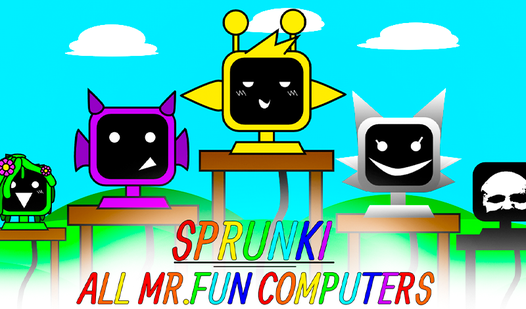
Take Sprunki All MR.FUN Computers — a wildly creative music-mixing game where virtual computers and quirky characters become instruments. You're not battling the machine; you're collaborating with it to make chaotic, fun music. It's a great palette cleanser between intense chess or checkers sessions, and completely free to play.
Sprunki All MR.FUN Computers
Staring at a blank screen during a midday slump is the worst, but your creative block ends right here. Sprunki All MR.FUN Computers is the ultimate mu...
▶ Play FreeBest Free Against Computer Games on FreeJoy
Here's a broader look at games you can play against computer or in solo mode right now — no account needed.
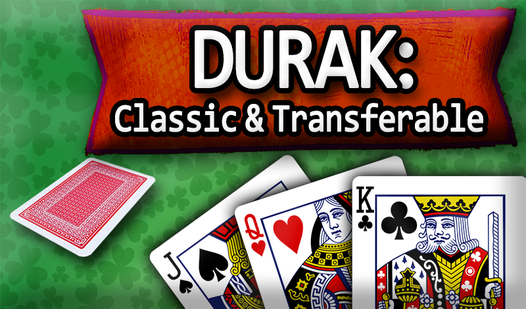
Durak: Classic & Transferable
Durak is the most popular card game in Russia and Eastern Europe, and its against-computer implementation is surprisingly deep. The goal is to not be the last player holding cards. You attack with cards, and the defender must beat them with higher cards of the same suit or any trump. The "Transferable" variant adds the ability to pass attacks to the next player, which dramatically changes the strategy.
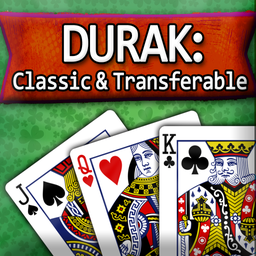
Durak: Classic & Transferable
Card games have a unique way of testing your memory and strategic foresight under pressure. Durak: Classic & Transferable brings this legendary challe...
▶ Play FreeBilliards 3D: Russian Pyramid
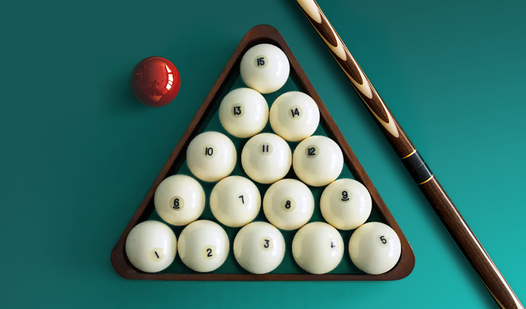
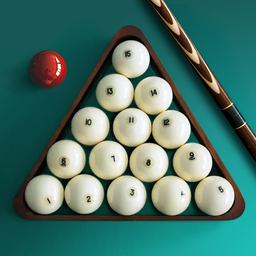
Russian Pyramid is a demanding billiards format — 15 red balls and 1 cue ball, pockets barely wider than the balls themselves. Against the computer, you'll need precise aim and smart positional play. It's much less forgiving than 8-ball pool and rewards patience.
Billiards 3D: Russian Pyramid
Russian Pyramid is a test of precision and nerves that sets itself apart from standard pool games with its tighter pockets and heavier balls. Billiard...
▶ Play FreeSolitaire Klondike 2023
Klondike Solitaire is technically against the deck rather than an AI opponent, but it belongs in any "solo vs computer" list. The goal: sort all 52 cards into four foundation piles by suit and rank. Simple concept, genuinely satisfying when it clicks.
Solitaire Klondike 2023
Strategic thinkers and card game enthusiasts will find endless entertainment in the classic challenge of Solitaire Klondike 2023. Sorting cards by sui...
▶ Play FreeGalaxy Warriors
If you want something action-based, Galaxy Warriors is a classic scrolling space shooter where you're fighting waves of enemy ships — all controlled by the computer. It's fast, arcade-style, and tests reflexes rather than strategic planning. A good change of pace from board games.
Galaxy Warriors
Fans of high-octane space shooters will find their new obsession in Galaxy Warriors, a classic arcade experience that brings the chaos of deep space t...
▶ Play FreeReversi (Othello)
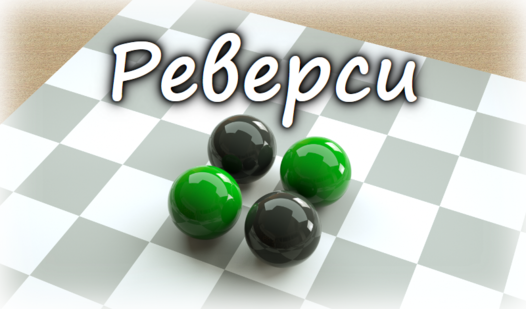
Reversi is one of the most underrated strategy games available against computer opponents. The board starts with four pieces in the center; players take turns placing pieces that flip the opponent's pieces between two of your own. The entire board can flip in the final moves — leads change constantly, and the AI can be brutal on higher difficulties.

Reversi
Mastering the board is an art form that transforms a simple grid into a tense battlefield of strategy and foresight. Reversi challenges your ability t...
▶ Play FreeHow to Get Better at Playing Against Computer
If you keep losing to the AI, a few habits will accelerate your improvement:
Start on Easy, then climb. There's no shame in beating Easy mode before moving to Medium. Every difficulty jump forces you to understand a new concept — don't skip the foundation.
Analyze your losses. Most against-computer games end with a clear turning point where you made the mistake that decided the game. Identify that moment. Was it a piece you forgot to protect? A ship placement that was too clustered? A card you should have saved?
Replay positions. In chess and checkers, if you can replay from a specific position, do it. Trying different approaches to the same situation is how patterns get internalized.
Read the AI's logic. At lower difficulties, AI moves are often suboptimal in predictable ways. Recognizing these patterns lets you exploit them intentionally.
Play different games. Switching between chess, checkers, and card games builds transferable skills — pattern recognition, planning ahead, resource management — that apply across formats.
Why "Against Computer" Is Still the Best Way to Learn
Online multiplayer is exciting, but it's not always the best learning environment. You lose quickly, you get matched against players of wildly different skill levels, and there's no time to think through positions carefully.
Against computer play removes those pressures. You set the difficulty, you control the pace, and you can experiment freely. Every mistake is a lesson rather than a frustrating loss to a stranger.
The best approach is to use against-computer as your training ground and multiplayer as your testing ground. Get comfortable with a game's rules and basic strategies against the AI, then take those skills into competitive play.
FreeJoy has a solid selection of classic and modern against-computer games, all free and playable directly in the browser. No installation, no account creation, no waiting.