Color Memory Game Unblocked: Play Free & Train Your Brain
Whether you have five minutes between classes or a long afternoon with nothing but a browser, a color memory game unblocked is one of the most satisfying ways to spend that time. No app store. No account. No waiting. Just you, a grid of colors, and your brain trying to keep up.
This guide covers everything you need to know: what these games actually are, how they work, which ones are worth your time, and what science says about why playing them makes you sharper. Plus a handpicked list of the best color memory games free to play right now.
What Is a Color Memory Game?
A color memory game is any game that asks you to remember, match, or reproduce colors — usually under time pressure or across increasing difficulty. The classic version is a grid of face-down cards: you flip two at a time, trying to find matching pairs. Get them right, they disappear. Get them wrong, they flip back and you try to remember where they were.
But modern color memory games have expanded far beyond the card-flip format. Today you'll find:
- Sequence games — watch a pattern of colored squares light up, then repeat it in order
- Palette matching — recreate a color mix by adjusting sliders or selecting swatches
- Sort-and-match puzzles — organize colored pieces into the right containers or groups
- Recognition challenges — identify which shade was shown briefly before it disappears
What all of these have in common is that they train your working memory — the mental scratchpad you use to hold and manipulate information in the moment. Color is an especially effective trigger for memory because the brain processes visual information faster than text or numbers. A color you saw two seconds ago leaves a stronger trace than a number you read a second ago.
The "unblocked" part matters too. Many casual gaming sites are filtered by school or workplace networks. Color memory game unblocked versions run directly in your browser, require no downloads or plugins, and pass through most content filters without issues — making them actually playable during a lunch break or study hall.
Sharp memory: Connect the pairs
Puzzle lovers and brain training enthusiasts, get ready for a sharp challenge! Sharp Memory: Connect the Pairs offers a delightful test of your recall...
▶ Play FreeHow to Play Color Memory Games
The rules vary by game type, but the core loop is almost always the same: see, remember, reproduce. Here's a breakdown of the main formats and how to get good at each.
Classic Card Matching
You start with a grid of face-down cards — could be 4×4, 6×6, or larger. Each card has a color, pattern, or image on the back. On your turn, you flip two cards. If they match, they're removed (or stay face-up). If not, they flip back over.
How to win: Don't just click randomly. After each failed flip, actively say to yourself what color was at what position. Treat the board like a mental map. Start from the corners and edges — it's easier to anchor positions spatially when they're at the boundary.
Sequence Repetition
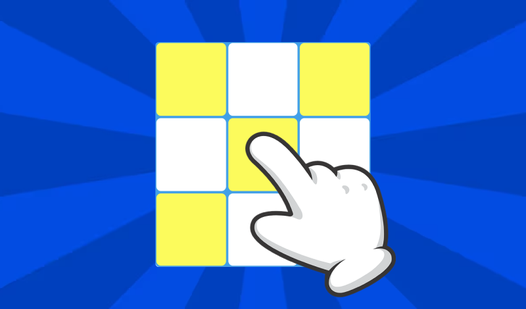
The game lights up a sequence of colored squares — one, then two, then three, and so on. After each sequence, you repeat it by clicking the squares in the same order. One wrong tap and you start over.
How to win: Break sequences into chunks. Instead of trying to hold "red, blue, green, yellow, red, blue" as six items, chunk it as "red-blue-green" + "yellow-red-blue." Your brain handles three-item groups much more comfortably than six individual items.
Memory Game: Square Challenge does this beautifully — the colored squares light up in rhythm, and the pace increases just fast enough to keep you on edge without becoming unfair.
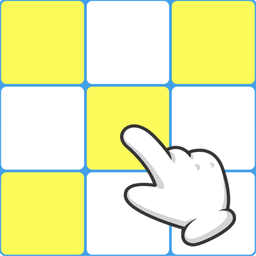
Memory Game: Square Challenge
Human memory is a muscle that thrives on consistent stimulation and rapid pattern recognition. Memory Game: Square Challenge pushes your cognitive lim...
▶ Play FreeColor Palette Matching
These games show you a target color or palette and ask you to recreate it — either by mixing colors or selecting from a range of options. This tests a different kind of memory: perceptual memory, your ability to retain fine distinctions between similar shades.
How to win: Look for anchor points. Instead of trying to remember "a slightly warm mid-blue," note that it's "roughly halfway between sky blue and cobalt, maybe 10% more green." Descriptive anchors stick better than vague impressions.
Color Puzzle: Create a Palette puts this to the test in a surprisingly deep way. You're not just picking from a palette of eight options — you're building color combinations that require genuine attention to hue, saturation, and value.

Color Puzzle: Create a Palette
Arrange vibrant squares into perfect gradients to complete your masterpiece in Color Puzzle: Create a Palette. This relaxing color puzzle experience c...
▶ Play FreeSort and Group Puzzles
These games give you a set of colored objects — tiles, balls, water, nuts — that need to be sorted into containers by color. The challenge isn't just memory but planning: which moves to make in what order so you don't box yourself into a dead end.
How to win: Always think one or two moves ahead. Clear a container first if you can, so you have somewhere to temporarily park pieces while you untangle the rest.
Best Color Memory Games Unblocked
Here are the top picks available right now — no downloads, no sign-ins, just click and play.
Sharp Memory: Connect the Pairs
The cleanest implementation of the classic card-matching format. The cards use a mix of colors and symbols, the grid scales with difficulty, and there's a satisfying rhythm to a good run. Great starting point if you're new to memory games or want something you can pick up and put down quickly.
Sharp memory: Connect the pairs
Puzzle lovers and brain training enthusiasts, get ready for a sharp challenge! Sharp Memory: Connect the Pairs offers a delightful test of your recall...
▶ Play FreeMemory: Russian Letters
Don't let the name put you off. Memory: Russian Letters pairs each letter card with a color-coded visual, which means even if you don't know Cyrillic, you're navigating the board using color as your primary memory cue. It's a clever double-layer challenge — you're learning to associate unfamiliar symbols with colors while managing a classic memory grid. Surprisingly effective as a brain workout.
Sprunki — Color Puzzle
Sprunki brings its signature character energy to color matching memory game online gameplay. The Sprunki characters serve as colorful, memorable anchors on each card — and because each character has a distinct visual personality, your brain tends to remember them better than abstract color patches. If you find pure color grids a bit dry, this is the version that keeps you grinning.
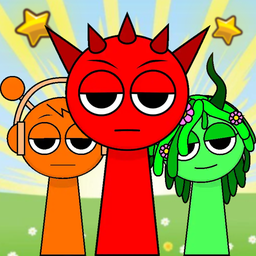
Sprunki - color puzzle
Staring at a blank screen while your brain feels like mush is the ultimate mid-day struggle. Sprunki - color puzzle is the perfect remedy to inject so...
▶ Play FreeBlock Puzzle Color Puzzles
A tile-placement puzzle with a color-matching twist. You need to place blocks so same-colored tiles align, which requires holding the current board state in mind while planning placements several moves ahead. More strategic than pure memory, but the color-tracking element is real.
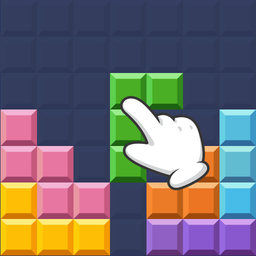
Block Puzzle Color Puzzles
Drag and drop colorful shapes onto the board to clear lines and rack up high scores in Block Puzzle Color Puzzles. You will constantly manage space wh...
▶ Play FreeNut Sort: Color Puzzle Game
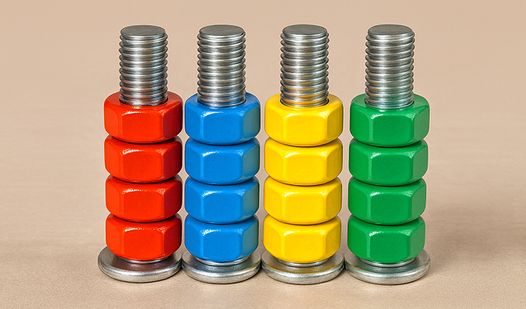
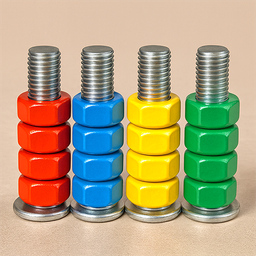
Bolts, nuts, and tubes. Sort them by color without getting stuck. The puzzle logic is deeper than it looks — you'll find yourself three moves in, staring at a completely jammed board, realizing you needed to plan from the start. Satisfying to solve, infuriating in the best way.
Nut Sort: Color Puzzle Game
Organize colorful rings onto metal bolts by matching every shade to its perfect home. You must carefully strategize each move to ensure every bolt end...
▶ Play FreeMatch the Colors — Puzzle for Everyone
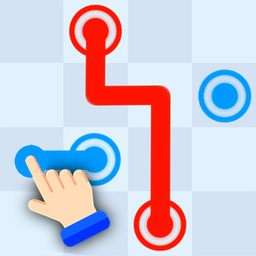
Exactly what it says. A friendly, accessible color-matching puzzle that works for all ages. The difficulty curve is gentle enough for younger players but has enough depth to keep adults engaged. A solid pick if you want something to share with family.
Match the Colors - puzzle for everyone
Connect vibrant dots of matching shades by drawing precise lines across a grid in Match the Colors - puzzle for everyone. Every move requires careful ...
▶ Play FreeDevelop Your Memory!
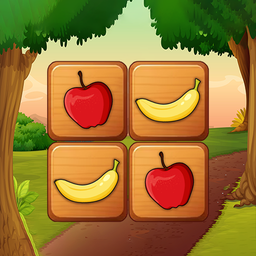
A straightforward memory trainer that doesn't dress itself up. The interface is minimal, the challenge is real, and there's a clear progression system that shows you improving over time. If you're serious about using games to actually train your memory — not just play casually — this one is worth returning to regularly.
Develop your memory!
Improving your cognitive sharpness is best achieved through interactive brain training exercises that challenge your focus. Develop your memory! turns...
▶ Play FreeWater Match: ASMR Water Sort
Pours colored water between tubes until each tube contains only one color. The ASMR sound design makes this one oddly calming — and that relaxed state might actually help you think more clearly. The puzzles get genuinely complex at higher levels, requiring careful sequencing to avoid creating unsolvable configurations.

Water Match: ASMR Water Sort
Sorting liquids might seem like a simple chore, but the rhythmic satisfaction of filling glass containers creates an addictive flow that keeps your br...
▶ Play FreeSudoku Classic (9)
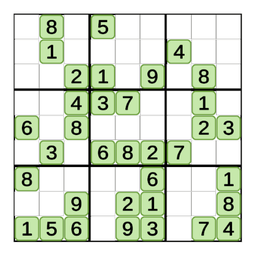
Technically a number puzzle, but color-coded Sudoku uses hue to help you track regions and rows — and that color layer adds a genuine memory component. If you're already a Sudoku fan, the color variant is a fresh challenge. If you've never played Sudoku, the color version is actually a more intuitive entry point than the classic numbered grid.
Sudoku classic (9)
Logic enthusiasts and fans of classic brain teasers will find Sudoku classic (9) to be the ultimate test of mental clarity. This timeless puzzle chall...
▶ Play FreeHow Memory Games Improve Your Brain
Playing a color memory game unblocked at lunch isn't just a way to kill time. There's real neuroscience behind why these games help — and real limits to what they can do.
What Actually Happens in Your Brain
When you play a memory game, you're primarily exercising your prefrontal cortex — the region responsible for working memory and attention control — and your hippocampus, which handles the formation and retrieval of new memories. Color adds another layer: visual processing happens in the occipital lobe, and the brain links a visual cue (a specific red) to a spatial position (top-left corner of the grid), building a richer memory trace that's easier to retrieve.
This multi-region activation is part of why memory games feel like genuine mental effort. You're not passively consuming content — you're actively encoding, holding, and retrieving information on a short cycle. That's exercise, not entertainment.
Working Memory and Daily Life
Working memory is the cognitive resource you use for following multi-step instructions, doing mental math, holding someone's argument in mind while you formulate a response, or remembering a phone number long enough to dial it. It has a limited capacity — typically around four chunks of information at once — but that capacity isn't fixed. It can be trained.
Studies on working memory training show that consistent practice on tasks that push your current limits can expand capacity over time. Memory games, especially ones that increase difficulty as you improve, are a practical way to apply that principle.
The Color Advantage
Color is one of the most powerful memory cues available to the human brain. We evolved in an environment where color carried survival information — ripe vs. unripe fruit, safe vs. dangerous animals. That evolutionary heritage means our brains are hardwired to pay attention to color and retain it well.
Color matching memory game online formats leverage this by making color the primary information you need to track. You train your brain to make finer color distinctions — a skill that transfers to real-world tasks like design work, art, and even reading social cues from faces and body language (which rely heavily on subtle color changes in skin tone).
Limits to Know About
Memory games are genuinely useful, but they're not magic. The research is clear that benefits are strongest when:
- The game gets harder as you improve — if it never challenges you, it's not training anything
- You play consistently — occasional sessions help less than regular short sessions
- You combine games with other cognitive activities — sleep, exercise, and reading all contribute to memory health in ways games can't replace
The best approach is to treat memory games as one tool in a broader mental fitness routine, not a shortcut to a photographic memory.
Which Format Trains What
| Game Format | Primary Skill Trained |
|---|---|
| Card matching | Spatial memory, recognition |
| Sequence repetition | Sequential working memory, attention |
| Palette matching | Perceptual memory, color discrimination |
| Sort puzzles | Planning, executive function |
| Color Sudoku | Pattern recognition, logic |
Different formats hit different cognitive muscles. Rotating through them — spending a few minutes on a sequence game, then a card match, then a sort puzzle — gives you broader training than grinding one format endlessly.
Making It a Habit
The easiest way to build a memory game habit is to attach it to something you already do. Waiting for coffee to brew? One round of card matching. Commuting? Sequence game on the phone. Five minutes before a meeting? A quick palette puzzle. Short sessions are fine — even two or three minutes of genuine mental engagement counts.
The key is consistency over intensity. Twenty minutes spread across a week beats a two-hour session once a month by a significant margin for building and maintaining cognitive habits.