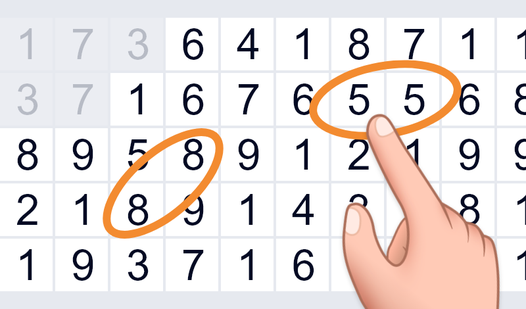
Best Math Games Online Free — TOP 18 Educational Number Games
Math doesn't have to feel like homework. The best math games flip the script — you're solving equations, training your brain, and having a genuinely good time without realizing how much you're learning. Whether you're a kid trying to nail multiplication tables or an adult keeping your mind sharp, free online math games give you a practical way to practice without textbooks or pressure.
This list covers the TOP 18 best math games available right now on FreeJoy, plus a deeper look at how to pick the right game for your skill level. We've tested everything here — from fast-paced number puzzles to logic-heavy challenges — so you don't have to guess.
TOP 18 Best Free Math Games Online
1. Math Crossword: Improve Your Arithmetic
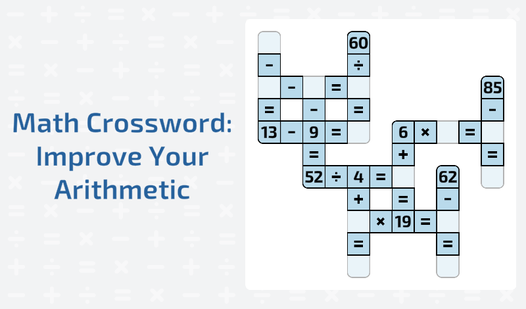
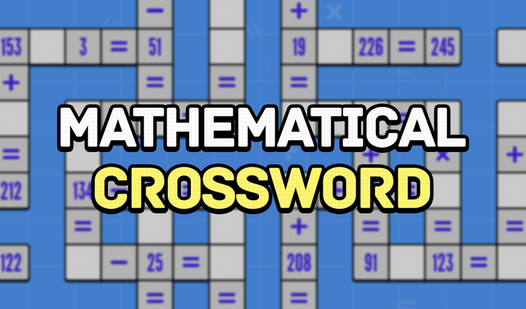
Take everything you know about crossword puzzles and replace the words with equations. Math Crossword: Improve Your Arithmetic does exactly that — each cell connects to arithmetic problems that run across and down the grid. You're filling in answers the same way you'd fill in letters, but the mental workout is pure number-crunching. It's surprisingly satisfying once the grid locks into place. Good for anyone who likes classic puzzle formats but wants more of a math challenge.
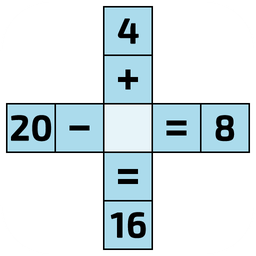
Math Crossword: Improve Your Arithmetic
Drag and drop number tiles into empty slots to solve complex equations in this addictive brain teaser. Math Crossword: Improve Your Arithmetic challen...
▶ Play Free2. Mathematical BOOM!
Nine different math puzzle types in one game. Mathematical BOOM! is a solid pick if you want variety — each mode targets a different skill, so you can train addition one round, then switch to something that tests your logic or speed. It avoids the repetitive grind that kills most math apps. There's always a different challenge ready when the current one starts feeling easy.
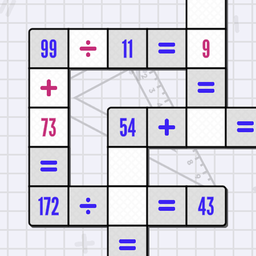
Mathematical BOOM!
Staring at a blank screen during a midday slump is the worst, but Mathematical BOOM! acts as the perfect mental reset button. This collection of nine ...
▶ Play Free3. Math Crossword. Number Puzzle
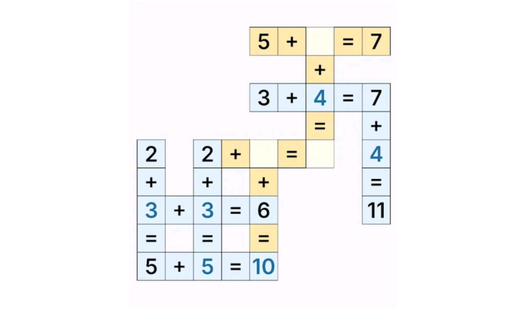
This one takes a different angle from the standard arithmetic drill. Math Crossword. Number Puzzle asks you to solve equations and then place the answers correctly in a grid — both dimensions have to work simultaneously. It's not just about getting the math right; you also need to think about placement and intersections. That extra layer of spatial reasoning makes it more engaging than straightforward drills.
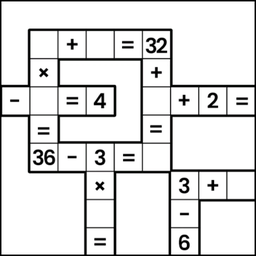
Math Crossword. Number Puzzle
Crosswords are usually about finding hidden words, but this unique brain teaser flips the script by turning arithmetic into your primary vocabulary. M...
▶ Play Free4. Times Table - Learn Math
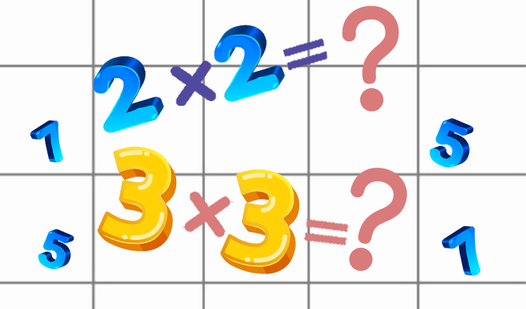
Multiplication tables are the foundation of most mental math, and this trainer makes the process less painful. Times Table - Learn Math walks you through the tables systematically, tracks where you're struggling, and keeps you practicing those specific spots. It works for kids just starting out and adults who want to sharpen their recall speed. No frills, but it does the job well.
Times Table - Learn Math
Mastering the times table is a foundational skill that turns complex calculation into second nature for students and adults alike. Times Table - Learn...
▶ Play Free5. Math Matches
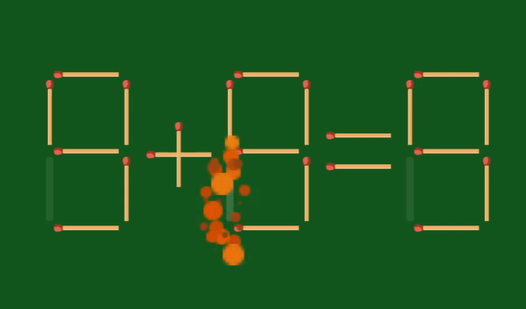
Picture those matchstick puzzles where you move one stick to fix a broken equation. Math Matches runs on exactly that concept, with over 10,000 problems across two difficulty levels. Easy mode gets you comfortable with the mechanic; hard mode will genuinely challenge your logical thinking. It's a different kind of math challenge — less calculation, more visual problem-solving — which makes it a great break from number-heavy games.

Math matches
Math enthusiasts and logic fans will find endless entertainment in Math matches where a single move changes everything. This addictive puzzle game cha...
▶ Play Free6. Infinite Math
Speed matters here. Infinite Math throws a continuous stream of addition, subtraction, multiplication, and division problems at you, and your job is to keep up. The "infinite" part isn't an exaggeration — there's no end screen, just a running score that shows how far your skills can take you. Great for warming up your arithmetic speed before an exam or just testing your mental math limits.
7. Multiplication Table Math Game
Dedicated entirely to multiplication, this trainer turns times tables into a game format that actually holds your attention. Multiplication Table Math Game uses structured rounds and feedback to reinforce the tables without the monotony of rote repetition. Kids tend to respond well to it because progress feels visible — you can see yourself getting faster and making fewer mistakes as you go.
8. Math: Riddles
This is where the list gets more demanding. Math: Riddles combines number problems with geometric shape logic, creating multi-step challenges that require you to hold multiple ideas in your head at once. It's aimed at players who've moved past basic arithmetic and want something that genuinely tests analytical thinking. If other math games feel too easy, start here.
9. Sudoku Master
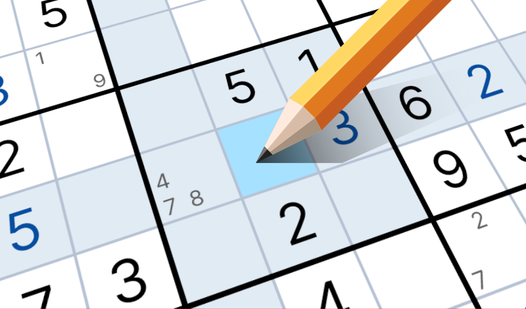
Sudoku sits at the intersection of logic and number placement — technically it requires no arithmetic at all, but it builds the same systematic thinking that underlies strong math skills. Sudoku Master features hand-crafted puzzles across skill levels, so beginners aren't thrown into deep water and experienced players get puzzles that actually challenge them. The interface is clean and the progression feels well-paced.
Sudoku Master
Fill every row, column, and 3x3 square with numbers one through nine to conquer the grid in this brain-teasing classic. Mastering Sudoku Master requir...
▶ Play Free10. 2048 Cubes
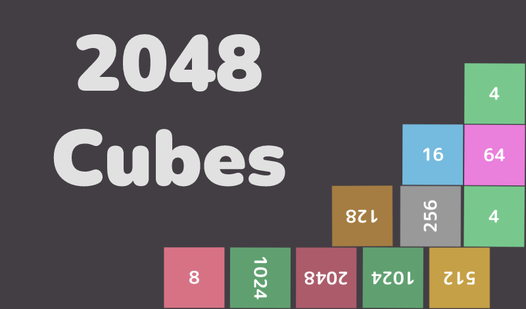
A physics twist on the classic 2048 number-merging puzzle. Instead of a flat grid, blocks fall and stack, and you're merging matching numbers while managing the physical pile-up. 2048 Cubes adds a layer of spatial judgment to the familiar powers-of-two mechanic. It's casual enough to pick up in five minutes, but the physics element means each game plays out slightly differently.
2048 Cubes
Staring at a blank screen during a lunch break often feels like a missed opportunity to sharpen the mind. 2048 Cubes turns those idle moments into a h...
▶ Play FreeMath Games by Skill Level — Elementary to Advanced
Not all math games are built for the same player. Here's how to match your skill level with the right type of game.
Elementary (ages 6-10): Focus on games that reinforce basic operations — addition, subtraction, and early multiplication. Times Table - Learn Math and Multiplication Table Math Game both target this range directly. The feedback loops are encouraging rather than punishing, which matters when kids are still building confidence with numbers.
Middle school (ages 11-14): At this level, players benefit from games that combine multiple operations and start introducing logic. Infinite Math works well because it covers all four basic operations with increasing speed requirements. Math Crossword: Improve Your Arithmetic adds a puzzle layer that makes practice feel less mechanical.
High school and adults: Math: Riddles and Mathematical BOOM! are the picks here. They require multi-step thinking, pattern recognition, and the ability to work with number relationships rather than just single operations. Math Matches also fits well at this level — the matchstick format requires logical reasoning that goes beyond basic calculation.
All levels: Sudoku Master and 2048 Cubes don't strictly require arithmetic, but they build the kind of systematic thinking that supports mathematical ability at every stage. They're also genuinely fun regardless of where you are with formal math.
Fun Ways to Practice Math Through Gaming
The reason math games work — when they're designed well — is that they attach the learning to something that already has your attention. You're not drilling because someone told you to. You're drilling because you want to beat your last score or solve the next puzzle.
A few practical approaches that work across different math games:
Short daily sessions beat long occasional ones. Twenty minutes of Infinite Math every morning will improve mental arithmetic speed faster than two hours on a Sunday. The brain consolidates skills during sleep, so frequency matters more than duration.
Mix game types intentionally. If you only play speed-based games, you'll get faster at recall but not necessarily better at reasoning. Rotate between something like Infinite Math for speed and Math: Riddles or Math Matches for logic. The two types of practice complement each other.
Use difficulty progression. Most of the games listed here have multiple difficulty levels for a reason. Start accessible, build confidence, then move up. Jumping straight to the hardest mode often leads to frustration and quitting.
Play puzzle games without the clock when possible. Timed modes are great for speed training, but untimed modes — like the sudoku puzzles in Sudoku Master or the crossword grids in Math Crossword. Number Puzzle — let you think more carefully and develop actual problem-solving strategies rather than just fast reflexes.
The best math games succeed because they respect your attention. If a game feels like work, you won't stick with it. Pick the ones where you lose track of time.
Best Math Games for Classroom Use
Teachers and parents looking for games to use in educational settings have a few specific needs: the games should be accessible without much setup, work in a browser, require no accounts or downloads, and target specific skills. Every game on this list meets those criteria.
Here are the strongest picks for classroom or homework contexts:
For multiplication practice: Times Table - Learn Math and Multiplication Table Math Game are both structured around the curriculum-standard multiplication tables. They move through the content systematically, which makes them easy to assign for specific tables (the 7s this week, the 8s next week).
For logic and problem-solving: Math Matches works well as a class activity because the matchstick format is visually interesting and easy to project. It also generates natural discussion — students can debate which move is correct and explain their reasoning.
For independent practice: Mathematical BOOM! is effective for classroom stations because the nine different modes mean a group of students can all be working on different skills simultaneously. One student might be on addition while another works on a more complex puzzle type.
For challenge activities: Math: Riddles and Math Crossword. Number Puzzle are good for students who finish early and need something more demanding. The difficulty ceiling is high enough that they're genuinely challenging for mathematically strong students.
All of the games here run in a browser without downloads, which eliminates the usual IT headaches. They're free, so there's no cost barrier. And the session lengths are flexible — most games work in a 10-minute window or a full 30-minute period.
More Free Math Games to Explore
These titles round out the options for anyone who wants to keep building their collection of math practice games. Each covers a slightly different angle on number skills and logical thinking.
MathCross: Math Crossword Puzzle
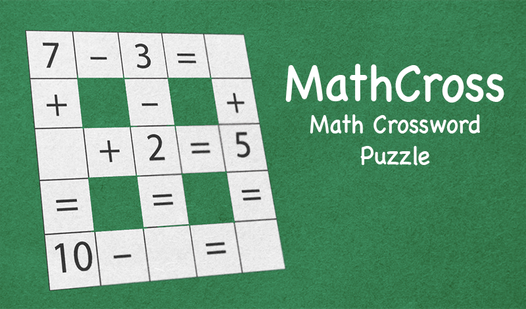
Numbers are the universal language of logic, but rarely do they get to play the lead role in a grid-based brain teaser like they do here. MathCross: M...
▶ Play Free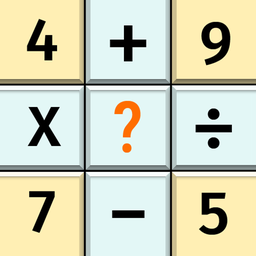
Math Puzzles: Crosswords
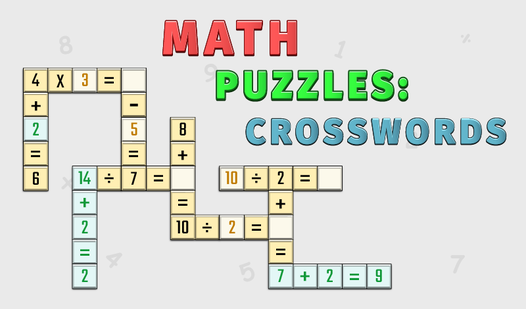
Staring at a blank screen during a coffee break is a recipe for boredom when you could be sharpening your mind instead. Math Puzzles: Crosswords is th...
▶ Play Free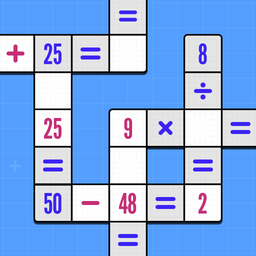
Mathematical crossword
Drag numbers and operators into empty grid slots to solve equations and complete the logic grid. Mathematical crossword challenges you to balance rows...
▶ Play Free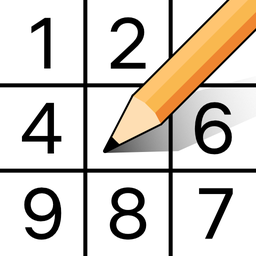
Sudoku
Logic puzzles have a unique way of sharpening the mind while providing a satisfying sense of accomplishment when every box finally clicks into place. ...
▶ Play Free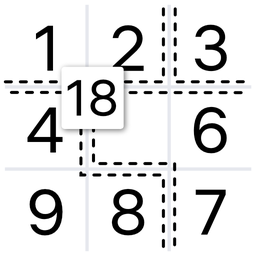
Killer Sudoku
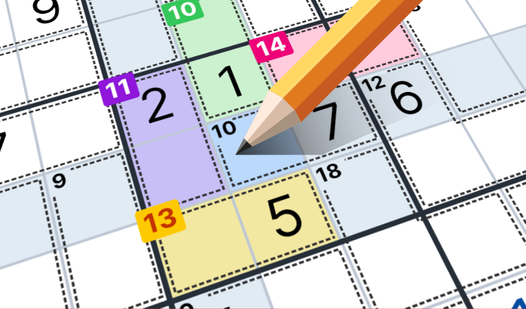
Killer Sudoku takes the standard grid logic you already know and adds an addictive mathematical twist that keeps your brain firing on all cylinders. T...
▶ Play Free
2048 Marmelade
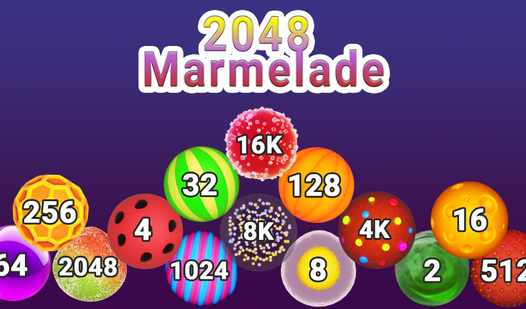
Fans of addictive brain teasers will adore the colorful twist on the classic 2048 formula found in 2048 Marmelade. This vibrant puzzle experience task...
▶ Play Free
Number Match - Classic number game
Fans of logic puzzles and fans of 2048 will find their new obsession with Number Match - Classic number game. This addictive challenge tasks you with ...
▶ Play FreeFAQ
Are these math games really free to play?
Which math games are best for kids just learning multiplication?
Do these games work on mobile?
Can adults benefit from playing math games, or are they just for kids?
What's the difference between math puzzle games and math training games?
Pick a game that matches where you are right now. Start with something that feels slightly challenging but not frustrating — that's the zone where learning actually happens. All the games here are free, no setup required. Choose one and start playing.