Best Klondike Solitaire Games Online — TOP 18 Free in 2026
Klondike. The name alone brings back memories — a rainy afternoon, a shuffled deck, cards spread across the kitchen table. It's the game most people picture the moment someone says "solitaire," and for good reason: simple to learn, endlessly replayable, and just tricky enough to keep you coming back. If you're hunting for the best Klondike Solitaire games to play online for free in 2026, you've landed in the right place. This list covers everything from classic one-card draws to two-deck challenges, anime-themed variants, and satisfying scoring systems.
What Is Klondike Solitaire?
Klondike Solitaire is the most widely played card game on the planet — and has been since Microsoft bundled it with Windows 3.0 back in 1990. At its core, the game is played with a standard 52-card deck. Cards are dealt into seven tableau columns (with the top card face-up), a stockpile, a waste pile, and four foundation piles in the corners.
Your goal: move all 52 cards to the four foundations, sorted by suit in ascending order — Ace through King. You build tableau columns in alternating colors and descending rank (red 7 on black 8, black 6 on red 7, and so on).
What makes Klondike tick is the tension between what you can see and what's hidden. About half the cards start face-down. Every time you flip a new card, you either gain a helpful move or watch your options narrow. That's the hook.
Draw 1 vs. Draw 3 — What's the Difference?
- Draw 1 (Flip 1): Easier. You turn over one stockpile card at a time, giving you full control and better visibility. Recommended for beginners.
- Draw 3 (Flip 3): Harder. You reveal three cards at once but can only use the top one. This limits your choices dramatically and makes the game more about patience and planning.
Most online Klondike games let you choose which mode you prefer. Both have their fans, and knowing the difference is the first step toward getting a good score.
TOP 10 Best Klondike Solitaire Games Online
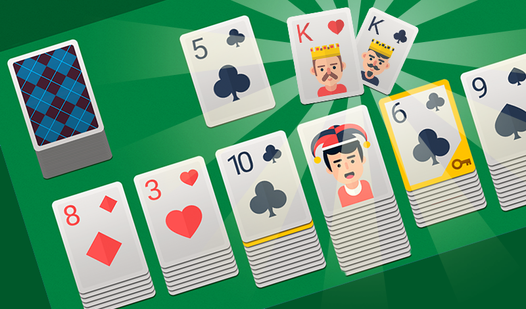
1. Klondike Solitaire
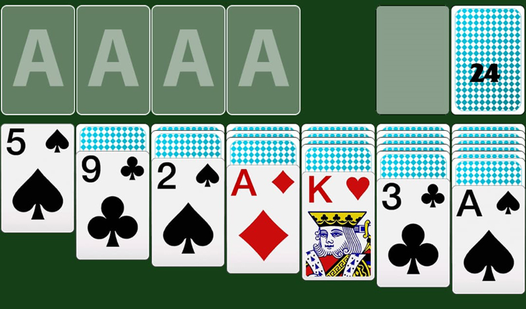
This is the version you picture when you close your eyes and think "solitaire." Clean cards, smooth animations, no distractions. The interface is intuitive — drag and drop or tap to auto-move cards — and the game loads instantly in any browser. Whether you prefer Draw 1 for a relaxing session or Draw 3 for a brain workout, this one handles both beautifully. It's the benchmark every other Klondike variant gets measured against.
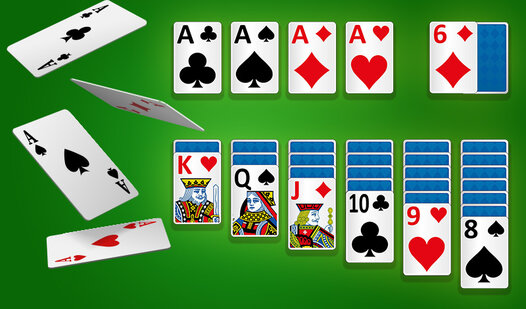
Klondike Solitaire
Card enthusiasts seeking a classic mental challenge will find their perfect match in Klondike Solitaire. This timeless puzzle tests your patience and ...
▶ Play Free2. Solitaire for 1 and 3 Cards
A polished take on the classic that gives you the draw-1 and draw-3 choice right from the start. The card design is clean, the auto-complete feature kicks in at the right moment, and the undo button doesn't punish you for experimenting. This is the kind of game you can leave open in a browser tab and return to throughout the day without losing your place or your progress.
Solitaire for 1 and 3 cards
Staring at a blank screen during a midday slump is the worst, but a quick round of Solitaire for 1 and 3 cards is the perfect mental reset. This class...
▶ Play Free3. Klondike Classic (1 or 3 Cards)
Where this version shines is in its customization. You pick your draw mode, your card back, and even the felt color. Small choices, but they add up to a game that feels personal. The scoring system tracks your moves and time, giving you a real number to chase on your next run. If you care about improving your best score in Klondike Solitaire, this is a solid place to grind.
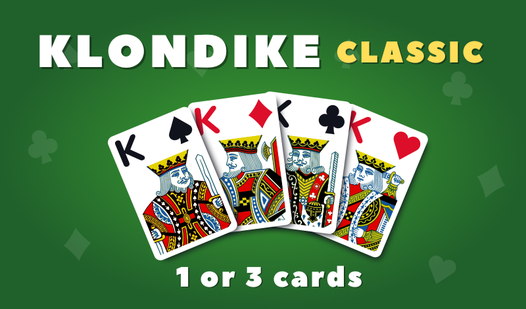
Klondike Classic (1 or 3 cards)
Stack cards in descending order by alternating colors to clear the board and master the art of Klondike Classic strategy. You organize the deck into f...
▶ Play Free4. Solitaire Klondike — Deluxe
The word "Deluxe" earns its place here. Three difficulty levels — Easy, Normal, and Hard — mean this game grows with you. Easy mode tilts the deck in your favor with favorable card arrangements. Hard mode deals a genuinely brutal hand. The animations are satisfying without being slow, and the victory screen is genuinely cheerful. A great all-rounder for players who want a bit of progression built into their solitaire sessions.
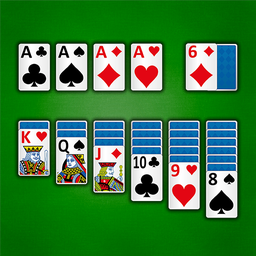
Solitaire Klondike - Deluxe
Card games remain the ultimate way to sharpen your mind while enjoying a relaxing break during a busy day. Solitaire Klondike - Deluxe brings the clas...
▶ Play Free5. Double Klondike Solitaire
What if one 52-card deck wasn't enough? Double Klondike uses two full decks shuffled together — 104 cards, nine tableau columns, and eight foundation piles waiting to be filled. The strategic space opens up considerably, and the game takes longer to complete (or fail). Winning feels genuinely earned. If standard Klondike has started to feel too familiar, this is the natural next step up.
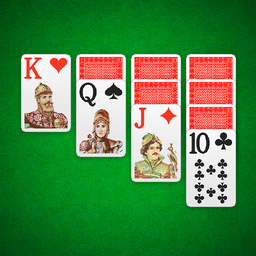
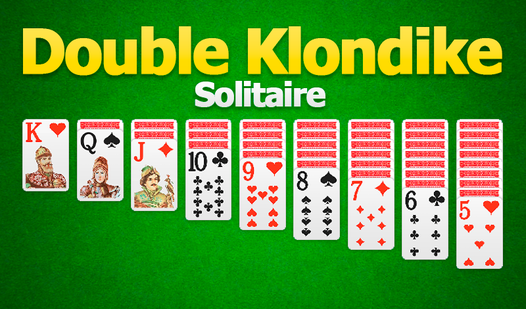
Double Klondike Solitaire
Arrange cards by suit from Ace to King across eight foundation piles in this challenging variation of the classic card game. Double Klondike Solitaire...
▶ Play Free6. Klondike — Anime Girls
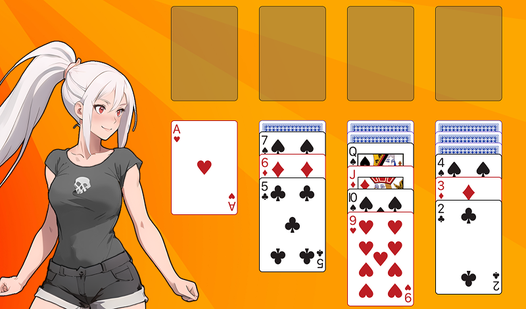
Yes, this exists. And yes, it's actually fun. The core Klondike gameplay is unchanged — same rules, same draw options — but as you complete tableau sequences, you unlock illustrated anime character cards. It turns the usual card backs into collectibles, which adds a small but real layer of motivation to keep playing. The illustrations are tasteful and the artwork is genuinely pretty. A surprisingly good fit for people who want their solitaire with a side of personality.

Klondike - anime girls
Solitaire games remain the ultimate test of patience and logic, but adding a touch of charm makes every move feel more rewarding. Klondike - anime gir...
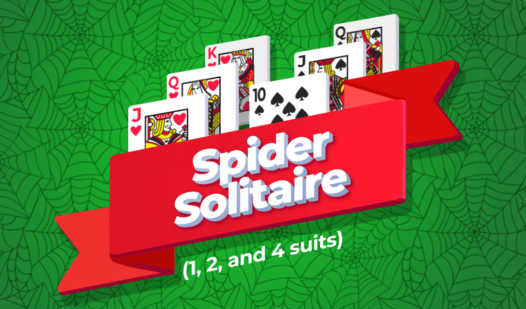
▶ Play Free7. Spider Solitaire (1, 2, and 4 Suits)
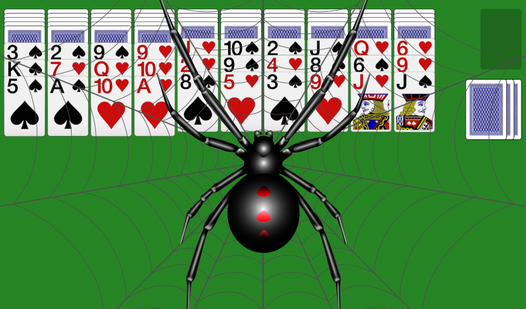
Spider Solitaire is Klondike's trickier cousin, and this version gives you all three difficulty modes in one place. One suit is almost meditative — methodical and satisfying. Two suits introduces the color-matching challenge. Four suits is legitimately hard and deeply rewarding when you crack it. The interface handles the larger tableau well, and the card animations stay smooth even when you're juggling ten columns at once. If you enjoy Klondike, Spider is the natural place to level up.
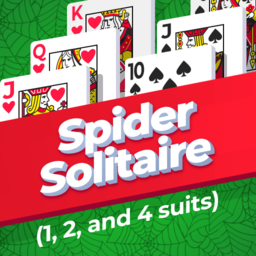
Spider Solitaire (1, 2, and 4 suits)
Arrange descending sequences of the same suit from king to ace to clear the board. Spider Solitaire offers a classic card game experience with multipl...
▶ Play Free8. FreeCell — Classic Solitaire
FreeCell is the solitaire variant where almost every deal is theoretically winnable — and you can prove it with enough planning. The four free cells in the corner act like a short-term parking lot for cards you can't place yet. The strategy is tighter than Klondike, with less randomness and more emphasis on thinking several moves ahead. This version has a beautiful minimalist design that stays out of your way and lets you focus on the puzzle. A must-play for anyone who likes Klondike but wants something more deterministic.
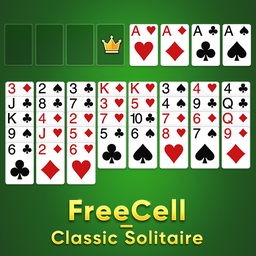
FreeCell - Classic Solitaire
Solitaire remains the ultimate mental workout for millions because it transforms a simple deck of cards into a complex test of patience and logic. Fre...
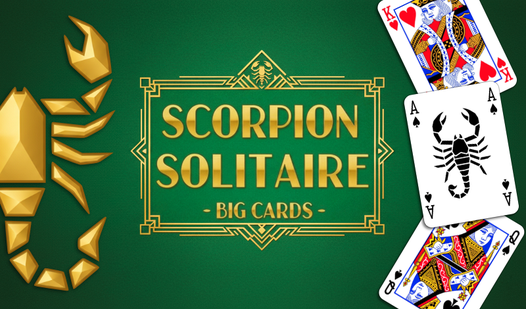
▶ Play Free9. Scorpion Solitaire — Big Cards
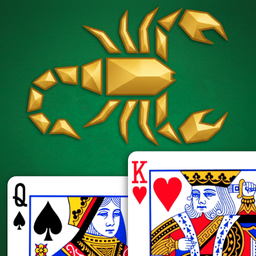
Scorpion is a lesser-known variant that deserves way more attention. The big cards make it accessible on any screen size, and the rules — where you build sequences within each suit rather than in alternating colors — create a different kind of challenge. You can only move groups of face-up cards, and the game deals three reserve cards to the tableau if you get stuck. Fewer players know this variant, which makes winning it feel like a genuine secret skill.
Scorpion Solitaire - Big Cards
Solitaire fans who crave a brain-teasing challenge will find Scorpion Solitaire - Big Cards the ultimate test of their tactical patience. This version...
▶ Play Free10. Jigsaw Solitaire
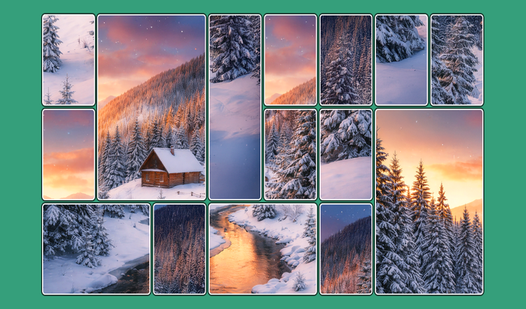
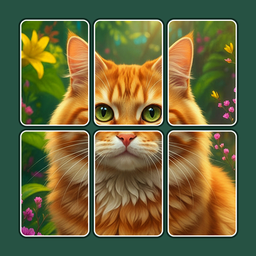
The wildcard on this list — and a genuinely creative one. Jigsaw Solitaire keeps the card-stacking mechanics familiar to any Klondike fan but wraps them in a jigsaw puzzle format. As you clear columns, pieces of an image come together. It's a calming, visually rewarding experience that appeals to players who want something a little different from their card games. The difficulty curve is gentle, making it perfect for relaxing play sessions.
Jigsaw Solitaire
Fans of logic challenges and beautiful visuals will find Jigsaw Solitaire the ultimate way to decompress after a long day. This refreshing take on the...
▶ Play FreeMore Solitaire Games Worth Your Time
The TOP 10 above covers the cream of the crop, but the catalog runs deep. Here are more games worth bookmarking:
Spider Solitaire 2024
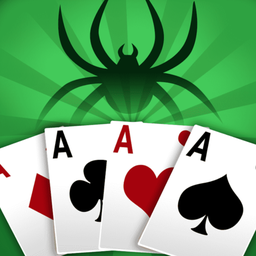
Staring at the clock waiting for your next meeting or just need a mental reset during a long afternoon? Spider Solitaire 2024 is the ultimate browser-...
▶ Play Free
Solitaire Swift
Clear the board by matching cards one rank higher or lower regardless of their suit or color. Solitaire Swift keeps your brain sharp as you strategica...
▶ Play Free
Incredible Solitaire
Solitaire challenges have been the ultimate way to sharpen your focus and pass the time for generations. Incredible Solitaire takes this classic exper...
▶ Play Free
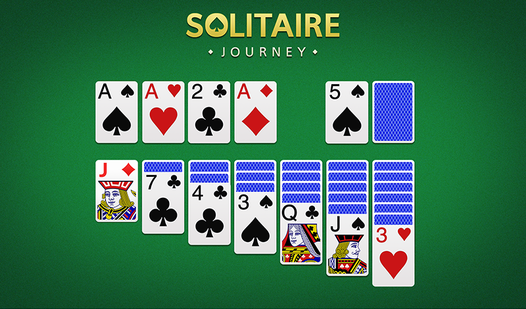
Solitaire Journey
Arrange shuffle cards into descending sequences of alternating colors to clear the board in Solitaire Journey. This classic experience challenges your...
▶ Play Free
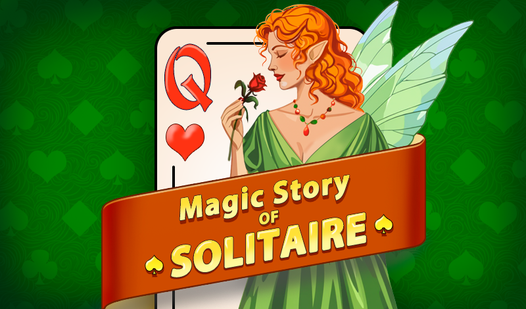
Magic Story of Solitaire
Staring at a blank screen during a midday slump is the worst, especially when your brain just needs a quick, satisfying distraction. Magic Story of So...
▶ Play Free
Mahjong Solitaire For Free
Match pairs of identical tiles to clear the board in this relaxing brain teaser. Your main objective is to identify free pieces and remove them from t...
▶ Play Free
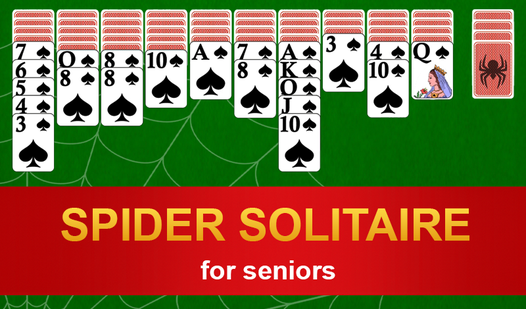
Spider Solitaire for Seniors
Card games remain the gold standard for mental agility because they force the brain to recognize patterns and plan several steps in advance. Spider So...
▶ Play FreeKlondike Solitaire Scoring — What's a Good Score?
One of the most common questions from new players: what is a good score in Klondike Solitaire?
The answer depends on which scoring system the game uses. The two most common systems are Standard Scoring and Vegas Scoring.
Standard Scoring (Windows Classic Rules)
This is the most common system in browser-based games:
| Action | Points Earned |
|---|---|
| Move card to foundation | +10 |
| Move card from waste to tableau | +5 |
| Turn over a face-down tableau card | +5 |
| Move card from foundation back to tableau | −15 |
| Each 10 seconds of play | −2 |
A time penalty applies every 10 seconds, so speed matters.
What counts as a good score?
- Under 100 — you're still learning, which is totally fine
- 100–500 — a solid, competent game
- 500–1,000 — you're playing well and managing the time penalty
- 1,000+ — you're finishing quickly and efficiently
- 1,280 — the theoretical maximum for a perfect game in Draw 3 mode
In Draw 1 mode, scores above 700 are considered strong. In Draw 3 mode, cracking 500 is an achievement — the limited card access makes it genuinely hard to accumulate points quickly.
Vegas Scoring
Vegas scoring treats the game like a real bet. You "pay" $52 at the start (one dollar per card), and earn $5 for each card successfully moved to a foundation. Win with all 52 cards placed, and you walk away with $260 minus your $52 buy-in = $208 profit.
Most sessions end in the red, which is why Klondike was historically considered a gambling game. Breaking even consistently puts you well above average.
Does Winning Always Give a High Score?
Surprisingly, no. You can win a Klondike game with a relatively low score if you took a long time or relied heavily on the undo button. Conversely, strong early foundations and fast play can rack up solid points even in games you ultimately lose.
The takeaway: if you care about a high score, prioritize moving cards to foundations early, minimize undo usage, and play quickly once the path becomes clear.
Tips to Win Klondike Solitaire More Often
Klondike has a reputation for being luck-heavy, and that's partly true — some deals really are unwinnable no matter what you do. But your decision-making has a much bigger impact on win rate than most players realize. Here are practical tips that actually work:
1. Expose Face-Down Cards First
Your priority should almost always be flipping face-down tableau cards. Every hidden card is a potential blocker. The sooner you see what's underneath, the sooner you can make informed decisions. Don't rush cards to the foundations if doing so prevents you from uncovering hidden cards.
2. Don't Empty Tableau Columns Too Fast
An empty column is powerful — you can place any King there. But emptying a column early without having a King ready to fill it just wastes space and limits your moves. Wait until you have a King (ideally with a long sequence attached) before clearing a column.
3. Think About Which King Goes Where
Not all Kings are equal. If you have a choice between placing a red King and a black King in an empty column, think about which color sequences you're building. Placing the wrong King can block entire chains of moves later in the game.
4. Move Aces and Twos Immediately
Aces and Twos should go to the foundations as soon as you see them, almost without exception. There's almost never a reason to leave an Ace in the tableau — it can't help build any sequence, and it's only useful in the foundation.
5. Be Cautious Moving Cards to Foundations Mid-Game
For higher cards (8 through King), sending them to the foundation too early can leave you without low cards to build sequences. If you're mid-game and you have a 7 in the foundation but need it to fill a sequence gap, you'll lose flexibility. Hold off until you're sure you won't need it back.
6. Play Draw 1 First, Then Move to Draw 3
If you're new to Klondike, start with Draw 1. It's more forgiving, gives you more control, and helps you internalize the rules of sequence building. Once Draw 1 feels easy, Draw 3 is a genuinely different challenge — it sharpens your planning and teaches you to think further ahead.
7. Use Undo Strategically, Not Reflexively
Undo is your friend for exploring possibilities, but using it constantly disrupts your flow and tanks your score. When you're unsure about a move, pause and think it through before committing. Use undo to explore a fork in the road, pick the better path, then play forward.
8. Pay Attention to the Stockpile Cycle
In Draw 3, you cycle through the stockpile multiple times. Track which cards you've seen and where they are in the cycle. If you know a useful card is three cards deep in the next pass, plan around it now.