How to Play Klondike Solitaire Online — Rules & Strategy
If you've ever wondered how to play Klondike Solitaire, you're in good company. This is the most widely recognized card game on the planet — the one most people simply call "Solitaire." Whether you grew up playing it on a Windows PC or discovered it through a mobile app, Klondike has a way of pulling you back in. This guide covers everything: the rules, the setup, smart strategies, and the best places to play Klondike Solitaire games online free, right in your browser.
What Is Klondike Solitaire?
Klondike Solitaire is a single-player card game played with a standard 52-card deck. The goal is to move all cards to four foundation piles, one per suit, arranged from Ace up to King. It sounds simple — and the basic rules are — but actually winning a hand requires patience, careful sequencing, and a bit of strategic foresight.
The game originated in the Klondike region of Canada during the late 19th-century gold rush era, though historians debate the exact origin story. What's undeniable is that it became a global phenomenon once Microsoft bundled it with Windows 3.0 in 1990. For an entire generation, "Solitaire" was Klondike — nothing more needed to be said.
Today, you can play Klondike Solitaire games unblocked directly in your browser on platforms like FreeJoy.games. No installs, no sign-ups, no waiting. Just click and play.
The anatomy of a Klondike game
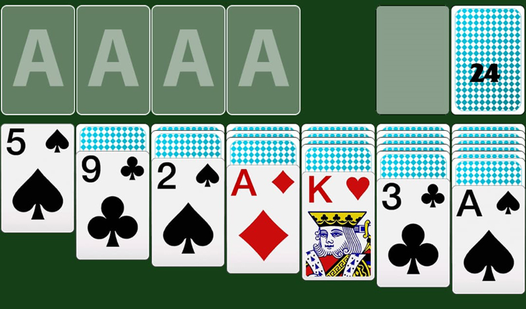
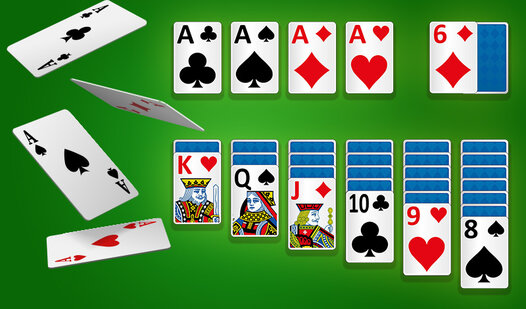
A standard Klondike layout consists of four areas:
- The Tableau — seven columns of cards. The first column has 1 card, the second has 2, and so on up to 7. Only the top card in each column is face-up.
- The Stock (Draw Pile) — the remaining cards, face-down. You draw from here when you run out of tableau moves.
- The Waste Pile — cards drawn from the stock that you haven't played yet.
- The Foundations — four empty slots where you build each suit from Ace to King.
Klondike Solitaire
Card enthusiasts seeking a classic mental challenge will find their perfect match in Klondike Solitaire. This timeless puzzle tests your patience and ...
▶ Play FreeKlondike Solitaire Rules Explained
Understanding the rules of Klondike Solitaire is the foundation of everything else. There aren't many, but each one matters.
The Tableau Rules
Cards in the tableau are stacked in alternating colors and descending order. A red 9 can go on a black 10. A black Queen can go on a red King. You cannot place a card on one of the same color or a lower value.
Only Kings (or stacks headed by a King) can be moved to empty tableau columns. This is a key rule that beginners often overlook — when a column clears out, you can't just park any card there.
The Foundation Rules
Foundations are built by suit in ascending order: Ace → 2 → 3 → ... → King. Once a card is on a foundation, it generally stays there (though some versions let you move it back to the tableau if you need to unblock something).
Drawing from the Stock
In the classic version, you flip over cards from the stock one at a time (Draw 1) or three at a time (Draw 3). Draw 1 is more forgiving and better for beginners. Draw 3 adds a layer of challenge because you can only play the top card of each group of three — meaning you'll need to cycle through the stock multiple times.
When the stock runs out, flip the waste pile over to reuse it. In some rule sets, you get unlimited redeals. In others, you get only one or three passes through the deck.
Winning the Game
You win when all 52 cards are stacked on the four foundations. At that point, most games trigger a satisfying card cascade animation — well earned.
Klondike Classic (1 or 3 cards)
Stack cards in descending order by alternating colors to clear the board and master the art of Klondike Classic strategy. You organize the deck into f...
▶ Play FreeStep-by-Step How to Play Klondike Solitaire
Let's walk through an actual game from the first move.
Step 1 — Scan the Tableau First
Before touching anything, take a few seconds to look at all seven columns. Identify which face-up cards can move and where they can go. Are there any Aces visible? Move those to the foundations immediately — they unlock the game.
Step 2 — Flip Face-Down Cards
Every time you move a face-up card off a column, the card beneath it flips over. This is the core engine of the game. Your first priority should be making moves that reveal hidden cards, especially in the longer columns.
Step 3 — Prioritize Longer Columns
The longer columns (columns 6 and 7, with 6 and 7 cards respectively) have the most face-down cards. Clearing them gives you the most information and the most flexibility. Focus your early moves on uncovering these stacks.
Step 4 — Draw from the Stock Wisely
Don't draw from the stock the moment you feel stuck. First, exhaust all tableau moves. The stock is a backup resource, and you want to use it strategically rather than burning through it mindlessly.
Step 5 — Watch Your Empty Columns
When a tableau column empties out, resist the urge to immediately fill it with the first King you see. Think about which King benefits you most — the one that lets you attach the most cards underneath it.
Step 6 — Build Foundations Evenly
Don't race to stack one suit while ignoring the others. If Hearts are at 8 but Spades are at 2, you'll run into trouble when cards you need for the tableau are all locked in the wrong foundation sequence. Try to keep foundations roughly balanced.
Step 7 — Cycle the Stock When Necessary
If you're stuck, go through the stock. In Draw 1 mode, every card is visible on its cycle. In Draw 3, you may need to go through the stock two or three times before the right card surfaces.
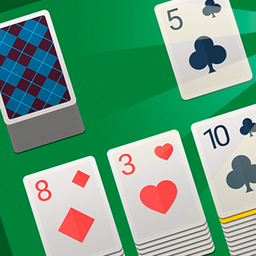
Solitaire Swift
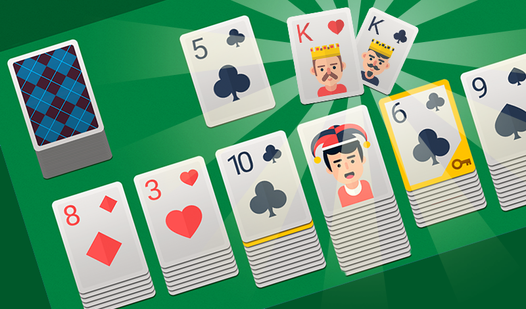
Clear the board by matching cards one rank higher or lower regardless of their suit or color. Solitaire Swift keeps your brain sharp as you strategica...
▶ Play FreeWinning Strategies and Tips
Most people treat Klondike Solitaire as pure luck. It's not. Roughly 79–82% of deals are theoretically solvable with perfect play, though real-world win rates with average play hover around 30–40%. Here's how to push yours higher.
Always move Aces and Twos immediately
This one is non-negotiable. Any Ace or Two that appears — in the tableau or from the stock — should go to the foundation right away. They have no useful role on the tableau and every useful role on the foundation.
Don't move Kings to empty columns too early
An empty column is a powerful resource. A King planted there might feel like progress, but it locks down that space. Wait until you have a meaningful sequence to attach to that King before filling the vacancy.
Prefer moving cards that uncover hidden cards
Given two equal moves, always choose the one that reveals a face-down card. Information is everything in Klondike. The more cards you can see, the better decisions you can make.
Play Draw 1 to learn, Draw 3 to challenge yourself
If you're new to Klondike Solitaire, start with Draw 1. It gives you access to every stock card on each cycle and makes wins far more achievable. Once you're comfortable with the strategy, switch to Draw 3 — it's noticeably harder and more rewarding when you crack it.
Think two or three moves ahead
Before moving a stack, ask: what does this enable? Will moving this red 7 onto the black 8 let you uncover a hidden card? Will it block something you'll need later? Solitaire rewards players who pause to think rather than react.
Use the undo button — but sparingly
Most online versions of Klondike Solitaire include an undo button. Use it to recover from obvious mistakes, but don't lean on it as a crutch. If you undo every unfavorable draw, you're not really improving your strategy.
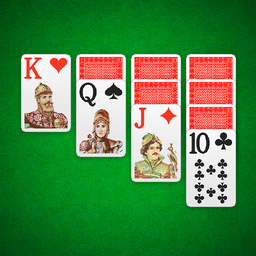
Double Klondike Solitaire
Arrange cards by suit from Ace to King across eight foundation piles in this challenging variation of the classic card game. Double Klondike Solitaire...
▶ Play FreeBest Free Klondike Solitaire Games Online
FreeJoy.games has a solid collection of Klondike Solitaire games online free — no downloads, no accounts, just instant play. Here are the top picks:
Solitaire Klondike - Deluxe
A polished, full-featured version with smooth animations and clean visuals. Great for both quick sessions and longer play.
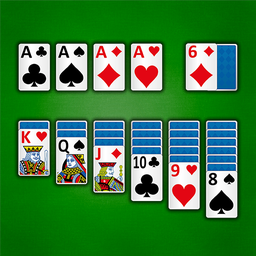
Solitaire Klondike - Deluxe
Card games remain the ultimate way to sharpen your mind while enjoying a relaxing break during a busy day. Solitaire Klondike - Deluxe brings the clas...
▶ Play FreeSolitaire Klondike Vegas
Vegas mode changes the scoring system — you bet a virtual stake and aim to win it back through card moves. It adds pressure and makes you think more carefully about every decision.
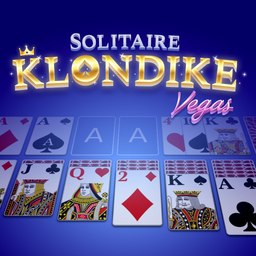
Solitaire Klondike Vegas
Sorting cards into perfectly ordered piles provides a satisfying mental workout that keeps you coming back for one more round. Solitaire Klondike Vega...
▶ Play FreeSolitaire for 1 and 3 Cards
A clean implementation that lets you toggle between Draw 1 and Draw 3 modes on the fly. Perfect if you want to compare how the two rule sets feel without switching games.
Solitaire for 1 and 3 cards
Staring at a blank screen during a midday slump is the worst, but a quick round of Solitaire for 1 and 3 cards is the perfect mental reset. This class...
▶ Play FreeSpider Solitaire (1, 2, and 4 Suits)
Not strictly Klondike, but if you enjoy card solitaire games, Spider is the natural next step. It uses two decks and the goal is to build complete suit sequences from King to Ace. The 1-suit version is approachable; the 4-suit version is brutally challenging.
Spider Solitaire (1, 2, and 4 suits)
Arrange descending sequences of the same suit from king to ace to clear the board. Spider Solitaire offers a classic card game experience with multipl...
▶ Play FreeSpider Solitaire 2024
A modern take on the Spider format with updated graphics and smooth performance across devices. Good for players who want the Spider experience with a fresh interface.
Spider Solitaire 2024
Staring at the clock waiting for your next meeting or just need a mental reset during a long afternoon? Spider Solitaire 2024 is the ultimate browser-...
▶ Play FreeFreeCell Solitaire 2024
FreeCell is another excellent alternative once you've mastered Klondike. Nearly every deal is solvable, but you need to plan several moves ahead — it's as much a puzzle as it is a card game. Great for building strategic thinking that carries back to Klondike.
FreeCell Solitaire 2024
Staring at a blank screen during your coffee break is the perfect sign that you need a mental refresh. FreeCell Solitaire 2024 offers the ideal escape...
▶ Play FreeCommon Mistakes Beginners Make
Even with the rules down, a few habits consistently hurt new players.
Filling empty columns too fast — Empty tableau columns are your most valuable real estate. Filling them with a random King just because the space is there wastes the opportunity to use that column for strategic maneuvering.
Ignoring suit color on the tableau — Cards must alternate colors, but beginners sometimes focus on just descending order and make a black 8 → black 7 move that's actually illegal. Always double-check color alternation before committing.
Moving cards to the foundation prematurely — It sounds backwards, but sometimes you don't want to send a card to the foundation too soon. If you've got a black 6 that's useful for stacking on the tableau, and you push it to the foundation, you might block a sequence you need. Think before you commit.
Cycling the stock endlessly without a plan — If you're flipping through the stock hoping something useful appears, you're already in trouble. Aimless cycling wastes time and doesn't change your situation. Step back, re-examine the tableau, and identify what specific card you actually need.
Klondike vs. Other Solitaire Variants
Klondike is the most popular, but the solitaire family is large. Here's how it compares to a few close relatives:
FreeCell — All cards are visible from the start, and there are four "free cells" where you can temporarily park cards. Nearly every deal is winnable, making it a great choice when you want to feel like skill (not luck) determines the outcome.
Spider Solitaire — Played with two decks, no foundation building in the traditional sense. You build complete sequences of one suit (King to Ace) and remove them from the tableau. More complex than Klondike, with dramatically higher difficulty on 4-suit mode.
Pyramid Solitaire — Cards are laid out in a pyramid, and you pair cards that add up to 13 to remove them. Very different rhythm from Klondike — faster, more visual, and more dependent on the initial deal.
Golf Solitaire — A stripped-down version where you clear cards from a tableau by playing cards one higher or lower than the current card. Quick, breezy, and a great palate cleanser between Klondike sessions.
Klondike sits in the sweet spot: complex enough to reward strategy, simple enough to explain in five minutes.